
Views: 222 Author: Loretta Publish Time: 2026-02-17 Origin: Site


Content Menu
● Before You Start: Safety and Tools
>> Turn the system off correctly
>> Know what you should not DIY
>> Compare the thermostat reading to the room
>> Power-related thermostat issues
● Step 2: Air Filter and Airflow
>> How often should you change it
● Step 3: Outdoor Condenser Coils
>> Signs the outdoor unit may be the issue
>> How to clean the condenser coil safely
● Step 4: Condensate Drain Line
>> Symptoms of a clogged drain line
● Step 5: Duct Leaks and Vent Issues
>> Sealing basics for homeowners
● Symptom-Based Troubleshooting
>> If your AC will not turn on at all
>> If the indoor fan runs but air is warm
>> If airflow is weak and cooling is poor
>> What homeowners can observe safely
● When to Stop DIY and Call a Professional
>> Homeowner monthly checklist
>> Seasonal professional tune-up
● Final Call to Action: Restore Your Comfort with Mega Services Heating & Cooling
● FAQ: Central AC Troubleshooting
>> 1) Why is my central AC blowing warm air?
>> 2) Can a dirty air filter really make my AC stop cooling?
>> 3) What should I do if my evaporator coil is frozen?
>> 4) How do I clean a clogged AC drain line with vinegar?
>> 5) Why is my outside AC unit not turning on?
When your central air conditioner is not cooling, or will not turn on at all, you can often solve the problem with a few safe checks before paying for a service call. This guide walks you through a step-by-step central AC troubleshooting checklist, explains what each symptom usually means, and shows you when DIY should stop and a licensed HVAC technician should take over.
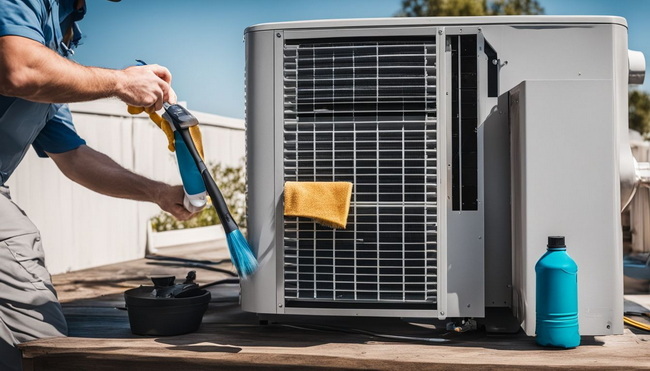
Central air systems combine electricity, moving parts, and refrigerant, so safe preparation matters as much as any fix.
- Set the thermostat to OFF first.
- Shut off power at the breaker or outdoor disconnect before opening panels or reaching near wiring.
Having tools ready prevents rushed decisions and reduces the chance of damaging delicate parts like fins and coils. Recommended basics include:
- Flashlight
- Screwdrivers
- Shop vacuum
- Coil brush and fin comb
- Work gloves and safety glasses
If your troubleshooting points to refrigerant issues (possible leak, recharge, gauges, brazing) or internal electrical diagnosis, stop and call a professional. Refrigerant systems and high-voltage components require proper training and certification to handle safely.
Thermostat settings are a very common cause of “AC not working,” especially after weather swings, recent power outages, or someone changing settings accidentally.
- Mode: set to COOL, not HEAT or OFF.
- Setpoint: set the temperature at least a few degrees below the current room temperature so the system is clearly calling for cooling.
- Fan: choose AUTO if you want the blower to run only during cooling cycles, or ON for continuous circulation.
If the thermostat's displayed temperature is far off from the actual room temperature, your system may short-cycle or fail to cool properly. Use a separate room thermometer to compare, and consider calibration or replacement if the difference is significant.
If the thermostat display is blank or unresponsive, the problem may be dead batteries (for battery-powered models) or lost power to the air handler or furnace control board. Replace batteries if applicable, and verify that the indoor unit has power.
A clogged air filter can restrict airflow so severely that your home will not cool efficiently, and it can contribute to a frozen evaporator coil.
- Filter looks gray, matted, or heavily dusty.
- Some rooms feel warmer than others.
- Airflow from supply vents is noticeably weaker than usual.
1. Turn the system off at the thermostat.
2. Locate the return grille or filter slot (wall, ceiling, or at the air handler cabinet).
3. Replace the disposable filter or clean it if it is a washable type (vacuum or rinse and allow it to fully dry before reinstalling).
Filter change frequency depends on usage, indoor air quality, filter type, and whether there are pets or smokers in the home. A practical approach is to inspect the filter monthly and replace it whenever it looks dirty enough to restrict airflow, rather than waiting for a fixed date on the calendar.
Pro tip: If your AC worked well yesterday and today it is barely cooling, a dirty filter is one of the most likely culprits. Check it before assuming something more serious is wrong.
Your outdoor unit must release heat effectively for your home to cool properly. Dirty condenser coils and blocked airflow can make your AC blow warm air or cool very slowly.
- AC runs constantly, but indoor temperature barely drops.
- Outdoor unit is surrounded by leaves, grass clippings, or other yard debris.
- You notice higher energy bills for the same or worse comfort.
1. Shut off power at the breaker or outdoor disconnect.
2. Remove loose debris around the unit and maintain clear space on all sides for airflow.
3. Gently brush coil fins and rinse with water from the inside out when possible. Avoid bending fins, and use a fin comb if they get distorted.
4. Reinstall panels securely and restore power.
Be careful not to spray directly into electrical compartments or control boxes. If the coil is heavily impacted with dirt or grease, professional cleaning may be more effective and safer.
Central AC systems remove moisture from the air as they cool. If the drain line clogs, water can back up and trigger float switches, cause leaks, and reduce performance.
- Water pooling near the indoor unit or in the drain pan.
- Musty or moldy odor when the AC runs.
- AC stops intermittently if a safety float switch trips to prevent overflow.
- Turn off the system at the thermostat and breaker.
- Locate the condensate drain line outlet outside, or an access tee near the indoor unit.
- Use a wet/dry vacuum on the outside drain termination to pull out blockages, if accessible.
- For routine maintenance, many homeowners pour a small amount of distilled white vinegar into the access tee, allow it to sit, and then flush with water to help reduce algae and biofilm buildup.
If you are not comfortable identifying and accessing the drain line, or if the system has significant water damage, contact a professional.
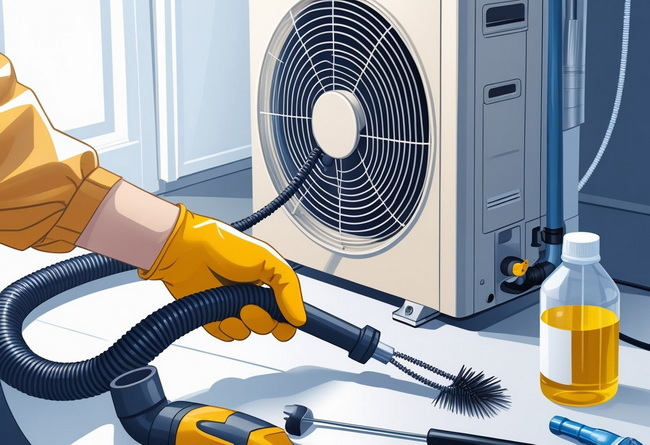
Leaky or damaged ducts can waste conditioned air, create hot and cold spots, and make your AC feel undersized even when the equipment is fine.
- Make sure supply vents are open and not blocked by furniture, rugs, or curtains.
- Check accessible duct runs in attics, basements, or crawlspaces for gaps, disconnected joints, or visible damage.
Use foil tape or mastic sealant on accessible joints and gaps. Avoid typical cloth duct tape, which often fails in high heat and humidity over time. If your ductwork is difficult to access, or if you suspect major leakage, consider a professional duct inspection.
A symptom-based approach helps you quickly narrow down likely causes and search for more specific solutions, such as “outside AC unit not turning on” or “AC running but not cooling.”
- Check that the thermostat is set to COOL and to a temperature below the room reading.
- Verify that the thermostat has power or fresh batteries.
- Confirm that the AC breaker and, if present, the outdoor disconnect switch are in the ON position.
- Look for signs of a tripped condensate safety switch, such as a full drain pan or obvious drain blockage.
If the system still does not respond after these checks, avoid repeated breaker resets and call a professional technician.
- Recheck thermostat mode and temperature setting.
- Go outside and see if the outdoor unit is running. If it is off, there may be an electrical or control issue.
- Inspect the outdoor area for debris or overgrown plants restricting airflow.
At this point, do not attempt to open the electrical panel of the outdoor unit. Internal components should only be inspected by trained personnel.
- Inspect and replace the air filter if dirty.
- Make sure vents are open and unobstructed.
- Check for obvious duct issues in accessible areas.
- Watch for signs of ice on refrigerant lines or near the indoor unit, which can indicate a frozen coil.
If you notice repeated icing or very weak airflow even with a clean filter and open vents, schedule a service visit.
A frozen evaporator coil is a common cause of weak airflow, poor cooling, and rising indoor humidity.
- Dirty or heavily restricted air filter.
- Closed or blocked supply and return vents.
- Coil surface contaminated with dust and debris.
Over time, poor airflow allows the coil temperature to drop below freezing, causing moisture in the air to form ice on the coil and suction line.
1. Turn the thermostat to OFF to stop cooling.
2. Set the fan to ON if appropriate for your system to help thaw the coil more quickly.
3. Leave doors and vents open to improve airflow while ice melts.
4. Replace the air filter once the system is off and accessible.
After the coil has fully thawed, restore normal settings and monitor operation. If freezing returns quickly, there may be a deeper issue requiring professional diagnostics, such as airflow imbalance, coil contamination, or other system problems.
When your indoor blower runs but the outdoor unit does not start, the cause is often electrical or mechanical at the outdoor condenser.
- Listen for a humming or buzzing sound from the outdoor unit when the thermostat is calling for cooling.
- Look to see whether the condenser fan is spinning.
- Check that the breaker and disconnect are in the ON position.
If you hear humming but the fan does not move, or if the unit repeatedly tries and fails to start, internal components such as capacitors or contactors may be involved.
Do not remove the service panel or attempt to test or replace internal electrical parts, including capacitors. These components can store a dangerous charge even with the power off. Leave all internal electrical work to trained HVAC technicians.
Homeowner troubleshooting is best used for safe, surface-level checks: filters, thermostat settings, visible debris, drain maintenance, and simple visual inspection.
Call a professional HVAC technician if any of the following apply:
- The breaker keeps tripping after you reset it.
- The evaporator coil or suction line freezes again soon after thawing and changing the filter.
- You notice burning smells, melted or discolored wiring, or loud grinding or arcing sounds.
- The outdoor or indoor unit shows visible damage, corrosion, or oil staining around sealed components.
- You suspect refrigerant issues, or the system has never cooled well since installation.
A trained technician has the tools and experience to test electrical circuits, measure system performance, and safely work on refrigerant and sealed components.
Most emergency “AC not cooling” calls begin as small maintenance issues. A simple routine can reduce breakdown risk and improve comfort and efficiency.
- Inspect and replace air filters whenever they are visibly dirty.
- Clear leaves, grass clippings, and debris from around the outdoor unit.
- Keep bushes and structures at least a couple of feet away from the outdoor coil for proper airflow.
- Periodically check the condensate drain outlet to confirm steady drainage when the unit is running in humid weather.
- If your system design allows, flush the condensate drain line using a safe method to help prevent clogs.
Schedule a professional tune-up at least once a year, ideally before the peak cooling season. A technician can:
- Inspect electrical connections and components.
- Check system controls and safety devices.
- Evaluate airflow and temperature split across the coil.
- Inspect and clean coils as needed.
- Identify early warning signs before they become major repairs.
Professional preventive maintenance helps extend equipment life, improve efficiency, and maintain more stable comfort.
If you have worked through this central AC troubleshooting guide and your system still will not turn on or is not cooling properly, it is time to bring in a trained technician. Do not risk further damage by repeatedly resetting breakers, running a frozen system, or opening electrical compartments on your own.
Contact Mega Services Heating & Cooling today to schedule expert AC repair, maintenance, or a full comfort evaluation. Our certified technicians will diagnose the root cause, explain your options in clear language, and help you restore a safer, more comfortable, and more energy-efficient home as quickly as possible.
Contact us to get more information!
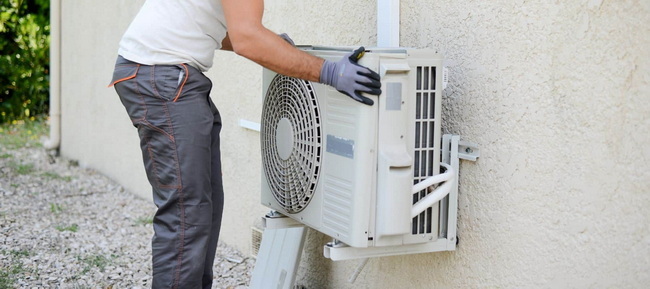
Your AC may blow warm air if the thermostat is not set to COOL, if the outdoor unit is not running, or if the outdoor coil is dirty and cannot release heat effectively. Incorrect fan settings, such as running the fan in ON mode after a cooling cycle, can also make air feel warmer than expected.
Yes. A dirty air filter restricts airflow across the evaporator coil, which reduces cooling capacity and can eventually cause the coil to freeze. When the coil is iced over, airflow drops and the system may blow lukewarm air or shut down to protect itself.
Turn the thermostat to OFF and allow the ice to melt completely before restarting the system. Change the air filter, open closed vents, and make sure airflow is not blocked. If the coil freezes again soon after you restore normal operation, stop running the system and schedule a professional inspection.
Turn the system off, locate the drain access tee near the indoor unit, and remove the cap. Carefully pour a small amount of distilled white vinegar into the line, allow it to sit, and then flush with water. Repeat periodically as a preventive measure. If you see standing water, heavy slime, or old water damage, contact a professional for a more thorough cleaning.
If the indoor fan runs but the outside unit does not start, check the thermostat settings, breaker, and disconnect switch, then listen for humming or buzzing at the outdoor unit. If you hear unusual sounds, see no fan movement, or find that the breaker trips repeatedly, do not open the panel or attempt repairs yourself. Call a qualified technician to diagnose and fix the issue safely.
1. https://airprosusa.com/how-to-troubleshoot-central-ac/
2. https://www.trane.com/residential/en/resources/troubleshooting/air-conditioners/
3. https://www.epa.gov/section608/section-608-technician-certification
4. https://www.trane.com/residential/en/resources/blog/frozen-evaporator-coil-causes/
5. https://aplusairconditioning.com/blog/clean-ac-condensate-drain-line-vinegar/
6. https://www.ambientedge.com/blog/how-to-clean-an-ac-drain-line-with-vinegar/
7. https://www.lennox.com/residential/lennox-life/consumer/outside-ac-unit-not-turning-on


