
Views: 214 Author: Mega Services Publish Time: 2026-07-25 Origin: Site


Content Menu
● AC Tonnage Chart by Square Footage
● How to Find Your Current AC Tonnage
● Why Square Footage Alone Is Not Enough
● The Most Accurate Sizing Method
● FAQ
>> 1. How many tons of AC do I need for my home?
>> 2. Is 1 ton of AC equal to 12,000 BTUs?
>> 3. Can I use my old AC size for a new system?
>> 4. What happens if my AC is too large?
>> 5. How do I find my AC tonnage from the model number?
>> 6. What is the best way to size an air conditioner?
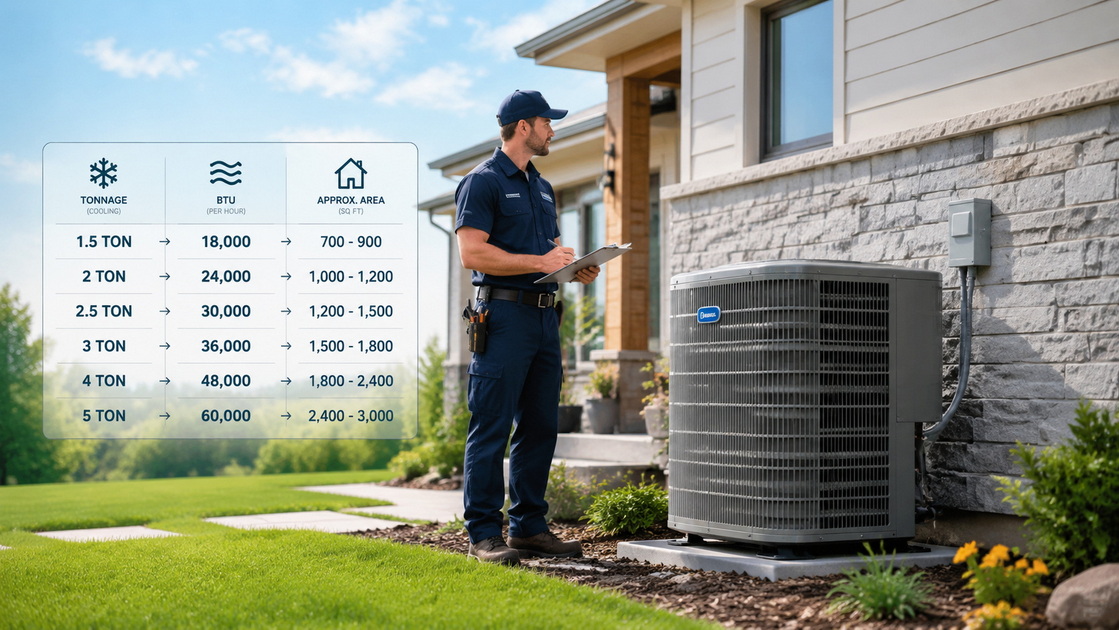
In HVAC, tonnage refers to cooling capacity, not the physical weight of the unit. One ton of air conditioning equals 12,000 BTUs per hour, which means the system can remove 12,000 BTUs of heat from a home each hour. [acdirect]
A 2-ton unit provides 24,000 BTUs of cooling, while a 3-ton unit provides 36,000 BTUs. This simple conversion is the foundation of every AC tonnage chart and sizing guide. [hvacdirect]
A square-footage chart is a useful starting point when estimating air conditioner size. In general, many homes need about 1 ton of cooling for every 400 to 600 square feet, but the exact number depends on insulation, ceiling height, climate, and window exposure. [youtube]
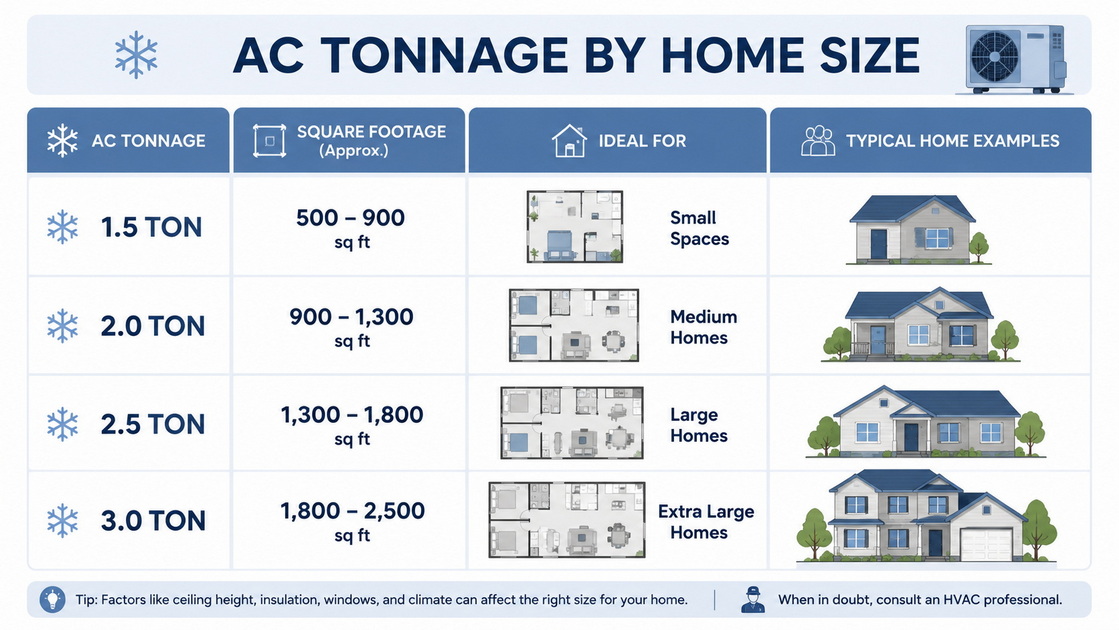
| Home Size | Approximate AC Size |
|---|---|
| 600 to 1,000 sq ft | 1.5 to 2 tons |
| 1,000 to 1,400 sq ft | 2 to 2.5 tons |
| 1,400 to 1,800 sq ft | 2.5 to 3 tons |
| 1,800 to 2,300 sq ft | 3 to 4 tons |
| 2,300 to 3,000 sq ft | 4 to 5 tons |
This chart should be treated as an estimate, not a final answer. Two homes with the same square footage may need very different AC sizes because of layout, sun exposure, insulation levels, and duct design. [hvacloadcalculate]
The conversion from BTUs to tons is easy. Divide the BTU rating by 12,000 to find the tonnage. [youtube]
Here are the most common residential sizes:
- 18,000 BTUs = 1.5 tons. [acdirect]
- 24,000 BTUs = 2 tons. [hvacdirect]
- 30,000 BTUs = 2.5 tons. [acdirect]
- 36,000 BTUs = 3 tons. [hvacdirect]
- 42,000 BTUs = 3.5 tons. [acdirect]
- 48,000 BTUs = 4 tons. [hvacdirect]
- 60,000 BTUs = 5 tons. [acdirect]
This is helpful when comparing equipment labels or checking whether a current system is the right size. [hvacdirect]
If you are replacing an existing system, the unit label is usually the fastest way to find its size. Many HVAC model numbers contain a two-digit capacity code such as 18, 24, 30, 36, 42, 48, or 60. [aireserv]
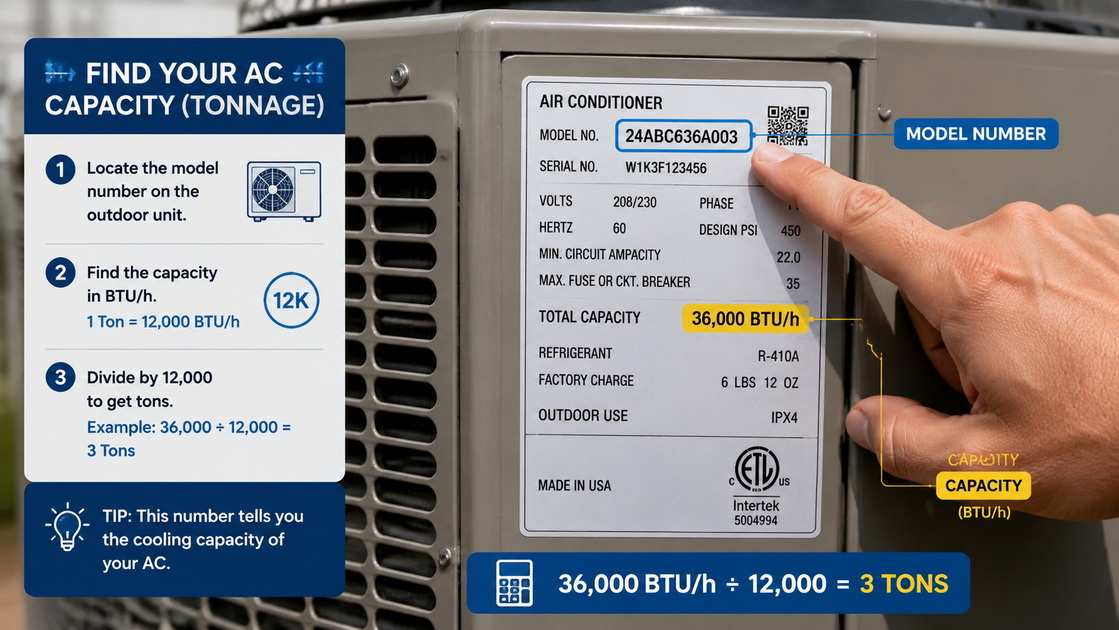
A simple process looks like this:
1. Locate the model number on the outdoor condenser or air handler. [aireserv]
2. Find the capacity number inside the model number. [acdirect]
3. Divide that number by 12 to estimate the tonnage. [youtube]
4. Confirm the result if the model number format is unfamiliar. [aireserv]
For example, a model with "30" in the capacity code usually indicates a 2.5-ton system. [hvacdirect]
Square footage is only one part of the sizing equation. A home with large west-facing windows, weak insulation, or a hot upper floor may need more cooling than a similar-sized home with shade and stronger building envelope performance. [acca]
Other factors that affect AC sizing include:
- Insulation quality.
- Ceiling height.
- Window size and orientation.
- Duct condition and leakage.
- Number of occupants.
- Heat-producing appliances and electronics. [kobiecomplete]
Because of these variables, a tonnage chart should be used as a guide, not a final sizing tool. [hvacloadcalculate]
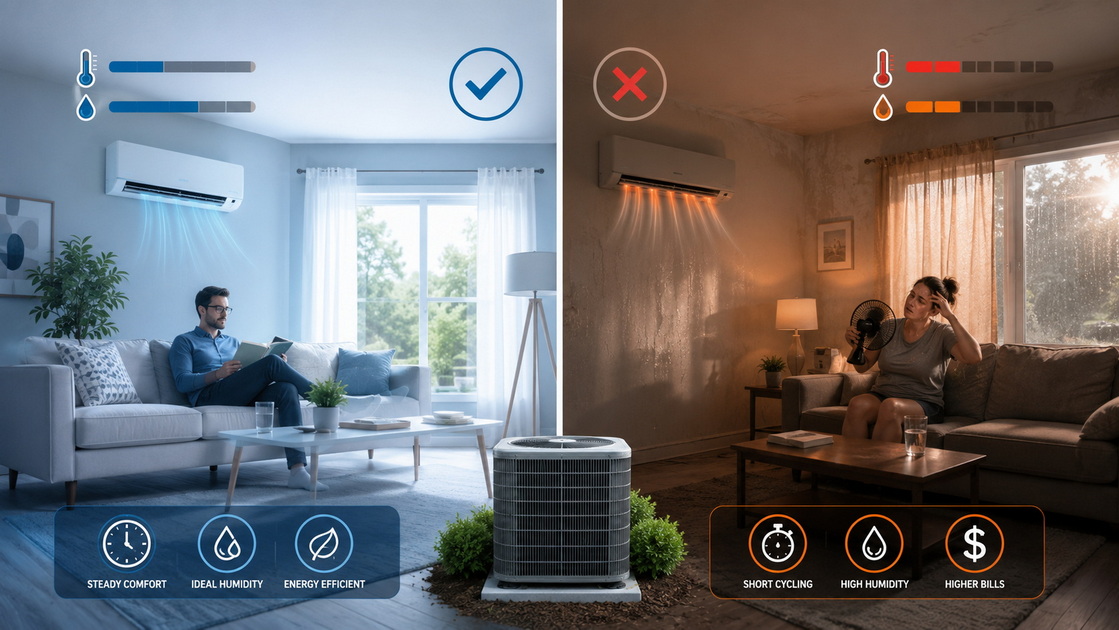
Many homeowners assume a larger AC unit will cool better. In reality, an oversized system can create comfort problems and higher operating costs. [airondemand]
Common issues with an oversized unit include:
- Short cycling, which increases wear and tear.
- Poor humidity removal.
- Uneven temperatures in different rooms.
- Higher energy use over time. [airondemand]
A properly sized system runs long enough to cool the home evenly and remove moisture from the air. That is why choosing the correct tonnage matters as much as choosing a high-quality unit. [acca]
The most reliable way to size an AC system is with a Manual J load calculation. This method evaluates the home's actual heat gain and heat loss instead of relying on square footage alone. [acca]
A proper load calculation considers:
- Home size and layout.
- Insulation levels.
- Window type and placement.
- Duct design.
- Orientation to the sun.
- Local climate conditions. [acca]
This approach helps avoid the common mistake of replacing an older system with the same size even when the home has changed. [acca]
It is a good idea to review AC sizing if your home has changed or if your comfort has worsened. A new addition, improved insulation, upgraded windows, or ductwork changes can all affect the right system size. [hvacloadcalculate]
You should also recheck tonnage if:
- The system runs constantly.
- Some rooms are hotter than others.
- Indoor humidity feels high.
- Utility bills have increased.
- The current unit was installed years ago without a proper load calculation. [airondemand]
These signs often point to a sizing mismatch rather than a simple equipment problem. [airondemand]
A tonnage chart is useful, but smart homeowners use it with a few practical checks. First, always compare the chart estimate with the actual home conditions. Second, inspect the current unit label before assuming a replacement size. [acdirect]
A good rule of thumb is this: if your home has unusual features such as vaulted ceilings, many windows, or a finished attic, a standard chart may understate or overstate your needs. [hvacloadcalculate]
The best AC size is the one that matches your home's real cooling load. That usually means combining a square-footage estimate with a professional load calculation and a review of the current system's model information. [acca]
If you are planning a replacement, upgrading your HVAC system, or noticing comfort issues, the safest next step is a sizing assessment from a qualified HVAC technician. [airondemand]
An AC tonnage chart is a helpful first step, but it should never be the only step. The right unit size improves comfort, reduces wasted energy, and helps your system perform the way it should for years to come. [airondemand]
If you are unsure about your home's cooling needs, a professional sizing check can save you from expensive mistakes and future comfort problems. [hvacloadcalculate]
It depends on square footage, insulation, windows, ceiling height, and climate. A rough estimate can be made with a tonnage chart, but a Manual J calculation is more accurate. [hvacloadcalculate]
Yes. One ton of cooling equals 12,000 BTUs per hour. [youtube]
You can use it as a starting point, but it may not be the right choice if your home has changed or if the old system was not sized correctly. [acca]
An oversized unit may short cycle, fail to remove enough humidity, and wear out faster than a properly sized system. [youtube]
Look for the two-digit capacity number in the model number, then divide by 12 to estimate tons. [hvacdirect]
The best method is a Manual J load calculation performed by an HVAC professional. [acca]
- Logan Inc. — [AC Tonnage Chart: Sizing Your Unit]
- Trane — [What is HVAC Tonnage and Why Does it Matter?]
- ACCA — [Manual J Residential Load Calculation]
- Aire Serv — [How Many Tons is My AC?]
- HVAC Direct — [How to Size Your Air Conditioner or Heater]
- AC Direct — [AC Tonnage Size Calculator]
- Housebarons — [How to Find AC Tonnage]
- HVAC Direct YouTube — [What is Tonnage and how to calculate]
- Air on Demand — [How Oversized AC Units Make Humidity Problems Worse]


