
Views: 214 Author: Mega Services Publish Time: 2026-09-04 Origin: Site


Content Menu
● How a Heat Pump Works With Your Thermostat
● Recommended Heat Pump Thermostat Settings
● Best Winter Thermostat Settings for a Heat Pump
>> A Simple Winter Thermostat Routine
>> Why Large Temperature Changes Can Cost More
● Understanding AUX Heat and Emergency Heat
>> Do Not Turn the Thermostat Up Extra High
● Best Summer Thermostat Settings for a Heat Pump
>> Improve Comfort Before Lowering the Temperature
● Should You Use Auto Mode With a Heat Pump?
● Smart Thermostats and Heat Pump Compatibility
>> Questions to Ask Before Replacing Your Thermostat
● Thermostat Settings for Dual-Fuel Heat Pumps
● Common Heat Pump Thermostat Mistakes
>> Making Large Temperature Adjustments
>> Ignoring Uneven Temperatures
>> Replacing a Thermostat Without Checking Compatibility
● When a Thermostat Adjustment Is Not Enough
● Heat Pump Maintenance Supports Better Performance
● A Comfortable, Efficient Home Starts With the Right Settings
>> 1. What is the best heat pump thermostat setting in winter?
>> 2. Should I keep my heat pump thermostat at the same temperature?
>> 3. Why does AUX Heat turn on when I change the thermostat?
>> 4. Is it okay to use Emergency Heat on a heat pump?
>> 5. What should I set my heat pump thermostat to in summer?
>> 6. Does turning the thermostat lower make the home cool faster?
>> 7. Should I use Auto mode on a heat-pump thermostat?
>> 8. Can I install any smart thermostat with a heat pump?
A heat pump can provide dependable heating and cooling while helping reduce household energy use—but only when it is operated correctly. The best heat pump thermostat settings usually involve maintaining a comfortable, stable indoor temperature, avoiding large temperature swings, and making sure backup heat does not run more often than necessary.
At Mega Services Heating & Cooling, we help homeowners maintain safe, comfortable, and energy-efficient living environments through professional heating, air-conditioning, heat-pump installation, repair, and maintenance. One of the most common questions homeowners ask is simple: *What temperature should I set my heat pump thermostat to?*
The answer depends on several factors, including the outdoor temperature, your home's insulation, ductwork, thermostat type, household comfort preferences, and the type of backup heat connected to the system. However, most heat-pump homes can benefit from a few proven thermostat-setting habits.
> Quick answer: In winter, start with 68°F to 70°F while you are home. In summer, start with 75°F to 78°F. Use Heat mode during heating season and Cool mode during cooling season. Avoid dramatic temperature changes that can trigger expensive auxiliary heat.
Unlike a traditional gas furnace, a heat pump does not create heat through combustion. It transfers heat from one location to another.
During winter, the outdoor unit absorbs available heat from the outside air and moves it indoors. During summer, the system reverses the process by moving indoor heat outside. This makes a heat pump an all-in-one heating and cooling solution for many households.
Your thermostat is the control center for this process. It tells the system when to heat, cool, stop, or use supplemental heating. When the thermostat is programmed incorrectly—or when it is adjusted too aggressively—the system may operate less efficiently than intended.
A properly configured thermostat helps your heat pump:
- Maintain more consistent indoor comfort.
- Run in longer, steadier cycles when appropriate.
- Reduce unnecessary use of backup electric heat.
- Control indoor temperature more accurately.
- Support reliable year-round heating and cooling.
- Reduce unnecessary strain on major HVAC components.
For most homeowners, the goal is not to constantly adjust the thermostat. The goal is to find a comfortable setting and let the heat pump operate as designed.
The following temperature ranges are practical starting points for many homes. Your ideal setting may vary based on insulation, humidity, system design, local climate, household activity, and personal preference.
| Home Situation | Recommended Starting Setting | Helpful Guidance |
|---|---|---|
| Winter while home | 68°F to 70°F | Choose the lowest comfortable temperature and keep it steady |
| Winter while sleeping | 66°F to 68°F | Use only a small setback, especially with electric backup heat |
| Winter while away | 65°F to 68°F | Avoid deep setbacks that force the system to recover quickly |
| Summer while home | 75°F to 78°F | Raise the temperature gradually while maintaining comfort |
| Summer while sleeping | 74°F to 78°F | Adjust for humidity, airflow, bedding, and comfort needs |
| Summer while away | 80°F to 85°F | Raise the setting rather than turning the system off completely |
| Thermostat fan setting | Auto | Use continuous fan operation only when recommended |
| Thermostat mode | Heat or Cool | Choose the seasonal mode instead of frequent automatic switching |
These settings are guidelines, not strict rules. Homes with young children, older adults, pets, health-related temperature needs, or unusual insulation conditions may require a different comfort range.
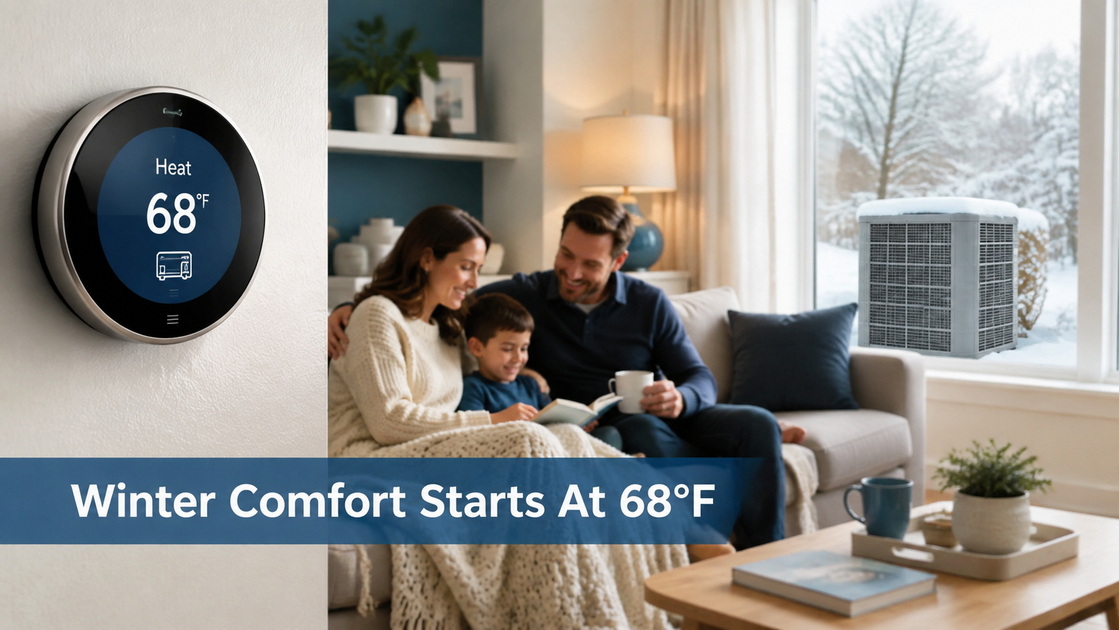
For many households, a winter thermostat setting between 68°F and 70°F offers a reasonable balance of comfort and energy efficiency.
The most important habit is consistency. A heat pump often performs best when it is allowed to maintain a stable temperature rather than being forced to make large recoveries after a deep overnight setback.
For example, if the house is normally set to 70°F and the thermostat is lowered to 62°F overnight, the system may need to work much harder in the morning. In certain systems, that recovery demand can activate auxiliary heat.
A safer approach is to make small changes.
1. Set the thermostat to Heat mode.
2. Choose a daytime comfort setting, such as 68°F or 69°F.
3. If desired, lower the temperature by only 1°F to 3°F at night.
4. Return the thermostat to the normal daytime setting gradually.
5. Watch for frequent AUX Heat operation during morning recovery.
6. Reduce the setback if auxiliary heat runs too often.
7. Schedule an inspection if the system struggles to maintain temperature.
A smaller setback may not be ideal for every home, but it is usually a smart starting point for households with an all-electric heat pump and electric resistance backup heat.
Many homeowners assume that turning the thermostat down several degrees overnight always saves energy. With a conventional furnace, a substantial setback can sometimes be effective. With a heat pump, the result depends on the system, backup heat type, outdoor conditions, insulation level, and recovery schedule.
If the thermostat is raised too quickly, the heat pump may not be able to meet demand fast enough on its own. The thermostat may then activate supplemental heat to bring the house back to the desired temperature.
Electric resistance heat produces warmth quickly, but it usually uses more electricity than the heat-pump compressor. This is why deep setbacks can sometimes reduce comfort while increasing operating costs.
A better rule is this: make smaller adjustments and monitor how the system responds.
Heat-pump thermostats may display messages such as AUX Heat, Auxiliary Heat, or Emergency Heat. These terms are important because they affect how your system heats the home.
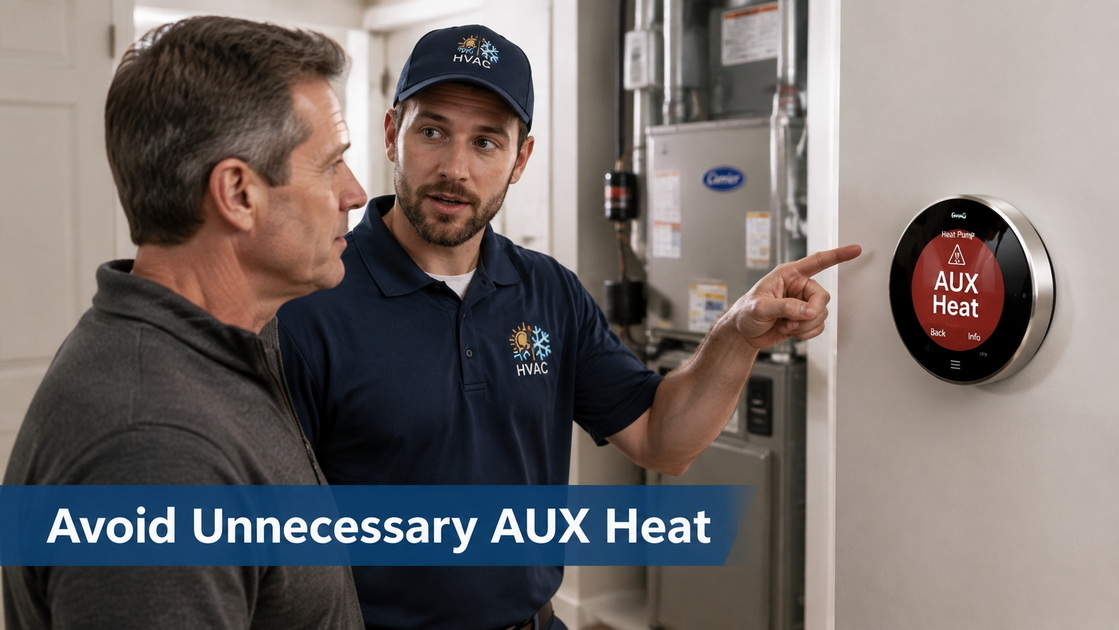
AUX Heat is supplemental heating that turns on automatically when the heat pump needs extra support. It is common during very cold weather, during defrost cycles, or when the system needs to recover after a large thermostat adjustment.
Auxiliary heat may activate when:
- Outdoor temperatures are unusually low.
- The heat pump is temporarily defrosting.
- The thermostat has been raised several degrees at once.
- The home is recovering from a large temperature setback.
- Airflow is restricted by a dirty filter or blocked vents.
- The system has a maintenance or performance issue.
- The home loses heat faster than the heat pump can replace it.
Occasional AUX Heat use is normal. Frequent use during mild weather may indicate that the thermostat settings, system configuration, airflow, or equipment performance should be reviewed.
Emergency Heat is different from AUX Heat.
Emergency Heat is a manual setting that typically turns off the outdoor heat-pump operation and relies only on the backup heat source. It is generally used only when the outdoor heat pump is not working correctly or when a qualified HVAC technician instructs you to use it.
Do not leave the thermostat in Emergency Heat mode unnecessarily. Because the system may be operating only on backup heat, this setting can significantly increase electricity use in systems with electric heat strips.
If the indoor temperature is 66°F and you want it to reach 70°F, set the thermostat to 70°F.
Setting the thermostat to 75°F will not heat the house faster. Instead, it can increase the likelihood that the thermostat will call for auxiliary heat.
This is one of the easiest thermostat habits homeowners can change. Set the desired temperature once, then give the heat pump time to do its job.
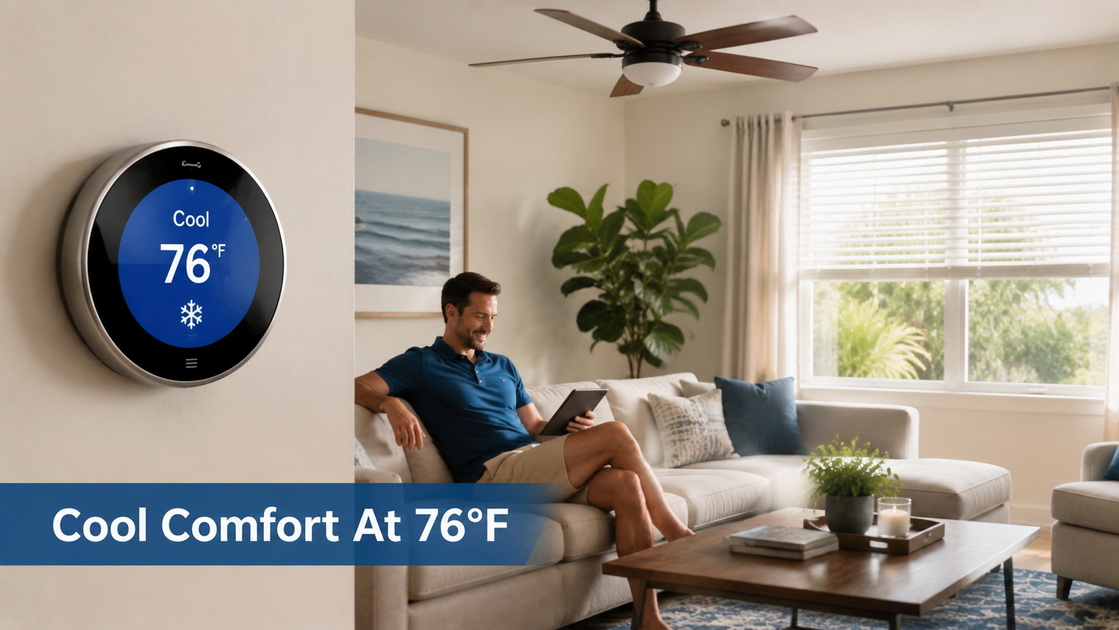
During cooling season, a starting setting of 75°F to 78°F is practical for many homes. The best summer temperature is the highest setting that still allows your family to feel comfortable.
Lowering the thermostat does not make the home cool faster. A thermostat only tells the system when to stop cooling; it does not increase the speed of cooling by being set dramatically lower.
For example, if your home is 80°F and you want it to reach 76°F, set the thermostat to 76°F—not 68°F.
If 77°F feels warm, the thermostat may not be the only issue. Humidity, airflow, sun exposure, and indoor air circulation strongly affect comfort.
Before lowering the setting several degrees, consider these practical steps:
- Close blinds, curtains, or shades on sunny windows.
- Use ceiling fans to improve air movement.
- Keep supply vents open and clear.
- Keep return-air grilles free from furniture and rugs.
- Replace or clean filters regularly.
- Check that exterior doors and windows are properly sealed.
- Limit heat-producing appliance use during the hottest part of the day.
- Use bathroom and kitchen exhaust fans only as long as needed.
- Schedule service if certain rooms stay noticeably warmer than others.
Ceiling fans do not lower the room's actual temperature. However, they can improve the feeling of comfort by moving air across the skin. This may allow some homeowners to maintain a slightly higher thermostat setting during summer.
Auto mode allows a thermostat to switch between heating and cooling automatically. It can sound convenient, especially during spring and fall. However, it may not be the best default setting for every heat-pump household.
When temperatures fluctuate sharply between cool mornings and warm afternoons, Auto mode can cause the system to change between heating and cooling more often than necessary.
For example, the system may heat the home during a cool morning. Later, direct sunlight or warmer outdoor temperatures may raise the indoor temperature enough for cooling to begin. That repeated switching can create inconsistent comfort and unnecessary system operation.
For most homes, it is better to use:
- Heat mode during the heating season.
- Cool mode during the cooling season.
- Auto mode only when outdoor conditions are mild and stable.
If you prefer Auto mode, make sure there is a reasonable temperature separation between the heating and cooling settings. For example, setting Heat to 68°F and Cool to 76°F provides an 8°F range where the system does not need to switch modes.
A smart thermostat can provide convenient scheduling, mobile controls, temperature alerts, and usage insights. However, heat-pump compatibility matters more than appearance or brand name.
A thermostat should be selected and configured for the specific HVAC equipment in your home. Some systems use one heating stage and one cooling stage. Others use multiple stages, auxiliary electric heat, a gas furnace backup, humidity controls, zoning equipment, or communicating controls.
Before installing a new thermostat, verify that it supports:
- Heat-pump heating and cooling operation.
- The correct number of heating and cooling stages.
- Auxiliary heat control.
- Dual-fuel configurations, when applicable.
- Variable-speed or communicating equipment.
- Proper defrost and staging behavior.
- Indoor humidity features, if installed.
- Remote room sensors, if needed.
- Your home's existing thermostat wiring.
An incorrectly configured thermostat can create comfort problems, excessive backup-heat use, poor humidity control, or unnecessary equipment cycling.
- Does my system use electric heat strips, a gas furnace, or another backup heat source?
- Is my heat pump single-stage, two-stage, or variable-capacity?
- Does my current system require a communicating thermostat?
- Is the existing thermostat wired correctly?
- Is there a compatible C-wire or alternate power solution?
- Can the thermostat limit unnecessary AUX Heat operation?
- Does the thermostat support my zoning or indoor-air-quality accessories?
- Will the thermostat settings be professionally configured after installation?
A thermostat upgrade should improve system control—not introduce new operating problems.
Some homes use a dual-fuel system. This setup combines an electric heat pump with a gas furnace. The heat pump typically provides efficient heating during mild and moderately cold weather, while the furnace takes over when temperatures fall below a certain point.
The correct switch-over temperature, sometimes called a balance point or lockout setting, depends on several factors:
- Outdoor temperature.
- Heat-pump capacity.
- Furnace efficiency.
- Electricity rates.
- Natural gas or propane costs.
- Home insulation.
- Ductwork condition.
- Household comfort preferences.
There is no universal dual-fuel setting that works for every property. An HVAC professional should evaluate system performance and configure the thermostat controls based on your equipment and local conditions.
A properly configured dual-fuel system can help homeowners balance operating costs and indoor comfort throughout the winter.
Small thermostat habits can have a big impact on comfort and operating cost. Avoid these common mistakes.
Turning the thermostat up or down by several degrees will not change how quickly the system heats or cools. It can cause comfort swings and may trigger auxiliary heat in winter.
Emergency Heat should generally be used only when the heat pump itself cannot operate and a technician recommends it. Leaving it on can cause the system to rely heavily on backup heat.
Frequent heating and cooling changes during transitional weather can create unnecessary operation. Switch manually between Heat and Cool when seasons change.
Closing too many vents, blocking return grilles, using heavily clogged filters, or placing furniture over vents can reduce HVAC performance. Good airflow is essential for heat-pump comfort.
A thermostat cannot solve every comfort issue. Hot and cold rooms may be related to duct leakage, poor insulation, window exposure, airflow imbalance, thermostat location, system size, or maintenance needs.
Not every smart thermostat works correctly with every heat pump. Improper wiring or programming can lead to frequent AUX Heat use, short cycling, or loss of important system functions.
If you constantly adjust the thermostat but the home still feels uncomfortable, the underlying issue may be mechanical or structural.
A professional evaluation may be needed if you notice:
- AUX Heat runs often when temperatures are not severely cold.
- The heat pump runs continuously but cannot reach the set temperature.
- Airflow is weak from supply vents.
- Certain rooms are consistently warmer or colder than others.
- The thermostat display does not match the room temperature.
- The outdoor unit develops heavy or persistent ice buildup.
- The system produces unusual sounds.
- Indoor humidity feels unusually high in summer.
- The system turns on and off repeatedly in short cycles.
- Your energy bills increase unexpectedly.
- The heat pump is more than a decade old and performance has declined.
In many cases, the solution involves more than changing the thermostat. A maintenance visit can identify dirty coils, airflow restrictions, duct leakage, refrigerant concerns, electrical issues, sensor problems, thermostat calibration errors, or other conditions that affect system performance.
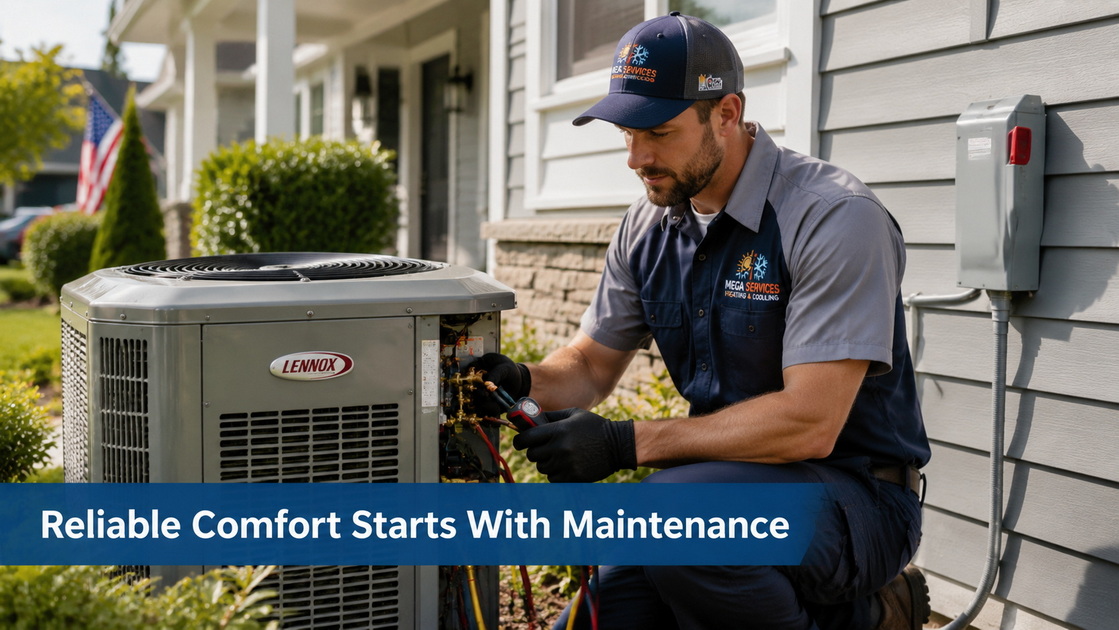
Thermostat settings are only one part of efficient heating and cooling. A well-maintained heat pump is more likely to deliver stable comfort, reduce avoidable backup-heat use, and operate reliably through changing weather.
Routine maintenance can help identify issues before they become major repairs. It may include checking filters, airflow, electrical connections, indoor and outdoor coils, thermostat operation, refrigerant performance, drainage, safety controls, and general equipment condition.
Homeowners can also support system performance by:
- Checking filters regularly.
- Keeping the outdoor unit free from leaves, snow, grass, and debris.
- Maintaining clear space around the outdoor unit.
- Keeping vents and return grilles unobstructed.
- Paying attention to changes in system noise or runtime.
- Scheduling service before peak heating and cooling seasons.
The best heat pump thermostat settings are not always the lowest winter temperature or the coldest summer setting. They are the settings that keep your household comfortable while allowing the system to operate steadily and efficiently.
Start with a stable winter setting around 68°F to 70°F and a summer setting around 75°F to 78°F. Avoid large temperature swings, understand when auxiliary heat is operating, and make sure your thermostat is correctly matched to your heat-pump system.
Mega Services Heating & Cooling is committed to helping homeowners enjoy dependable comfort, safer indoor living conditions, and more efficient heating and cooling performance. Whether your home needs heat-pump maintenance, repairs, thermostat support, system troubleshooting, or a complete comfort-system upgrade, our experienced team is ready to provide professional guidance and dependable service.
For many households, 68°F to 70°F while home is a practical starting range. A small nighttime setback of 1°F to 3°F may work well, but large setbacks can cause some systems to use more auxiliary heat during recovery.
A steady temperature is often a good strategy for heat pumps, especially when the system uses electric resistance backup heat. If you use a setback, keep it modest and monitor whether AUX Heat activates frequently.
AUX Heat can turn on when the heat pump needs extra help meeting the heating demand. It may occur during very cold weather, defrost cycles, large thermostat increases, deep setback recovery, airflow problems, or equipment performance issues.
Emergency Heat should normally be used only when the outdoor heat pump is not working properly or when a qualified technician advises you to use it. It often relies entirely on the backup heat source and may increase electricity use.
A summer setting of 75°F to 78°F is a useful starting point for many homes. The best setting is the highest temperature that keeps your household comfortable while accounting for humidity, airflow, and sun exposure.
No. Setting the thermostat far below the desired temperature does not cool the home faster. Set it directly to the temperature you want, then allow the system time to reach that setting.
Heat mode in winter and Cool mode in summer are often the better choices. Auto mode can cause unnecessary switching between heating and cooling when outdoor temperatures change sharply during spring or fall.
No. The thermostat must be compatible with your heat-pump system, heating and cooling stages, auxiliary heat, wiring, and any communicating, zoning, or humidity-control features. Professional verification can prevent costly configuration mistakes.


