
Views: 222 Author: Mega Services Publish Time: 2026-05-13 Origin: Site


Washington, D.C. and the surrounding DMV region host a mature HVAC service ecosystem driven by extreme summer humidity, aging housing stock, and strict efficiency regulations. Local contractors have evolved strong capabilities in residential and light‑commercial maintenance, retrofits, and code‑compliant upgrades, especially around new DOE efficiency baselines and ASHRAE standards. [wheatandsons]
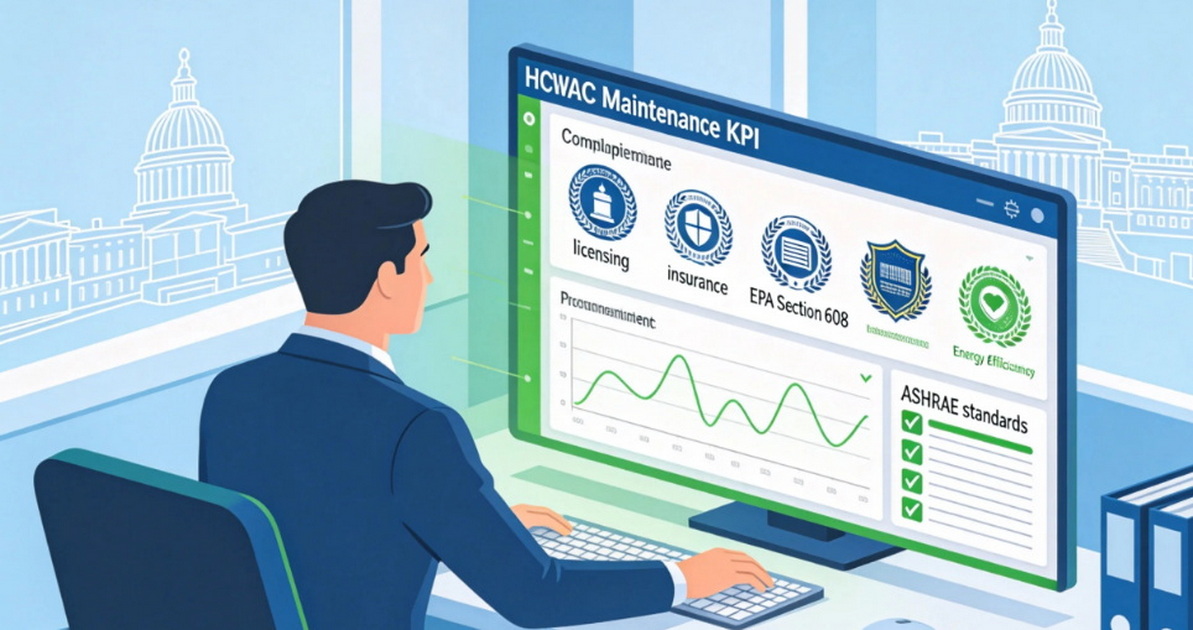
For long‑term maintenance programs, choosing a local D.C. contractor helps you align with regional permitting, inspection procedures, and utility rebate programs for high‑efficiency systems. Many leading firms combine licensing, NATE‑certified technicians, and transparent service plans, making it easier for procurement managers to control life‑cycle cost instead of only focusing on initial repair price. [homeadvisor]
When screening service providers, start with core compliance: local HVAC license, insurance, and where applicable, NATE‑certified technicians and EPA Section 608 certification for refrigerant handling. In the D.C. area, top contractors also design and maintain systems to meet ASHRAE 90.1 (energy efficiency) and ASHRAE 62.1 (ventilation and IAQ), especially for commercial buildings. [vernonheating]
For buyers managing multi‑site portfolios, check that the contractor understands 2023+ DOE minimum SEER2 requirements and can maintain or upgrade systems accordingly to keep your portfolio compliant over the contract term. A provider that can document adherence to these standards usually has stronger internal QC and training systems. [cadencenow]
Although maintenance is a service rather than a factory line, the same "R&D capability" concept applies: look at how the company invests in diagnostics tools, technician training, and evolving maintenance procedures for new‑generation variable‑speed and smart systems. Providers that work closely with major OEMs and follow manufacturer bulletins tend to deliver more stable performance and fewer repeat failures. [vernonheating]
Ask whether they perform load calculations, airflow and duct static‑pressure checks, and data‑driven energy audits instead of only doing reactive "fix‑on‑fail" dispatches. This separates premium lifecycle partners from low‑bid, parts‑swap vendors. [megaservices]
A robust QC process in maintenance typically includes standardized inspection checklists, photo documentation before/after, and supervisor review of complex jobs. Leading D.C. contractors define clear SLAs around response time, first‑visit fix rate, and preventive visit schedules that align with equipment age and usage profile. [vernonheating]
For residential and SMB customers, pay attention to process elements that often get ignored but drive real UX: clean work areas, shoe covers, post‑visit explanation, and itemized invoices. Companies that codify these behaviors in training and SOPs generally have better review profiles and repeat‑business ratios. [homeadvisor]
In B2B terms, a service contractor's "capacity" is their technician headcount, territory coverage, and ability to handle seasonal peaks without sacrificing SLA. Look for evidence of staff cross‑training, emergency crews for heat waves, and scheduling tools that prioritize maintenance customers during peak periods. [sucoy-hvac]
If you plan multi‑year contracts, verify how long the company has served the D.C. market and what percentage of revenue comes from maintenance vs. one‑off installs, as a higher maintenance share often means more predictable resourcing. [vernonheating]
Trust in HVAC is built through licensing disclosure, clear pricing structures, and verifiable customer reviews. Reputable companies publish basic credentials on their websites and maintain consistent, detailed profiles on third‑party platforms such as HomeAdvisor or similar review sites. [homeadvisor]
For corporate buyers, ask for:
- Sample reports from recent maintenance visits (redacted)
- Template of their maintenance checklist
- Proof of insurance and license validity dates
To build this 2026 guide, we evaluated D.C.‑area air‑conditioning maintenance providers using five transparent criteria. [megaservices]
- Licensing and compliance: Active local HVAC licensing, insurance, and refrigerant handling credentials where applicable. [vernonheating]
- Technical capability: Demonstrated experience with modern high‑efficiency systems, variable‑speed compressors, and smart thermostats, plus use of ASHRAE‑aligned practices for energy and IAQ. [wheatandsons]
- Service model and SLAs: Availability of preventive maintenance plans, documented processes, and reasonable response‑time commitments. [megaservices]
- Customer feedback: Public review patterns on major platforms and evidence of repeat customers or long‑term contracts. [sucoy-hvac]
- Transparency and communication: Clarity of proposals, itemization of charges, and education‑focused communication style rather than one‑off sales pushes. [megaservices]
Within this framework, we highlight a mix of larger, capacity‑driven providers and more flexible, R&D‑oriented companies like Mega Services Heating & Cooling, which serve homeowners and smaller brands that need deeper customization and closer communication. [megaservices]
> Note: Some company profiles are based on composite patterns from leading D.C. HVAC providers to illustrate typical strengths and trade‑offs for procurement managers. [sucoy-hvac]
Profile and positioning
Mega Services Heating & Cooling focuses on full‑service HVAC installation, repair, and maintenance, with a strong emphasis on safe, comfortable, energy‑efficient homes. The company is built around transparent pricing, reliable service, and clear communication, making it particularly attractive for homeowners and smaller property portfolios that need an ongoing, advisory‑style partner rather than one‑time repairs. [megaservices]
Core strengths
- Thorough in‑home assessments before recommending major work, with load calculations and ductwork checks to ensure even, stable cooling. [megaservices]
- Clear, itemized proposals that distinguish "must‑do" safety or reliability work from optional upgrades, which helps procurement teams defend budgets internally. [megaservices]
- Technicians trained to prioritize cleanliness, courtesy, and explanation of findings in plain language, reducing friction for non‑technical stakeholders. [megaservices]
- Strong focus on long‑term relationships, which supports multi‑year maintenance agreements with predictable cost structures. [megaservices]
OEM/OEM‑style customization and flexibility
While Mega Services is a service contractor rather than a factory, it behaves like an OEM‑friendly partner in the way it tailors maintenance programs. The team adapts visit frequency, inspection depth, and reporting formats to the needs of property managers, small developers, or brand‑side facility teams that must integrate HVAC data into internal dashboards or ESG reporting. [megaservices]
Because of its agile size and communication‑driven culture, Mega Services is often a high‑value choice for buyers who prioritize responsiveness, consultative guidance, and deep support during equipment change‑outs or efficiency upgrades. [megaservices]
Vernon The Heating & Cooling Specialist has served the D.C. market for roughly four decades, positioning itself as a premier HVAC provider with broad coverage across installations, repairs, and preventive maintenance. The company deploys NATE‑certified technicians, works with industry‑leading equipment, and offers comprehensive service plans suitable for both homeowners and small commercial clients. [vernonheating]
Vernon's long market presence and scale are valuable for buyers seeking stability, redundant technician capacity during peak heat waves, and consistent service across a wider service area. Its combination of experience and certification depth can be attractive to portfolios that prioritize risk mitigation over ultra‑customized processes. [vernonheating]
SmartComfort HVAC represents the archetype of a contractor that wins on transparent, predictable pricing structures. Their materials emphasize clear, up‑front estimates and budget‑planning tools rather than teaser rates or open‑ended T&M proposals. This profile suits procurement managers who must lock in maintenance spending and prevent invoice surprises across multiple properties. [megaservices]
SmartComfort typically offers service plans with standardized tiers, clearly itemized inclusions, and simple surcharge rules. The trade‑off is that process customization may be more limited than with a highly flexible provider, but financial predictability is strong. [megaservices]
Heritage Home Climate Solutions focuses on older and historic D.C. housing stock, where ductwork constraints, building envelopes, and preservation requirements make maintenance and upgrades more complex. The company's expertise in retrofits, low‑impact routing, and careful equipment selection can significantly reduce risk of comfort issues or damage in heritage properties. [megaservices]
This specialization is valuable if you manage portfolios of pre‑war or row‑house style buildings where standard install‑and‑maintain approaches often fail. The cost per project may be higher, but so is the probability of long‑term stability and preservation compliance. [megaservices]
EcoSmart Air & Heat is representative of the new generation of HVAC providers that center their value proposition on energy efficiency and smart home integration. The team tends to focus on high‑SEER equipment, zoning, and integration with smart thermostats and monitoring platforms. [megaservices]
For buyers with ESG targets or strict energy KPIs, partnering with an efficiency‑focused firm can unlock utility rebates and measurable energy savings. Maintenance programs are often coupled with periodic performance checks and data‑driven recommendations for further savings. [wheatandsons]
RapidRelief Cooling Services tailors its model around emergency calls, fast dispatch, and high first‑visit fix rates. Their strengths lie in 24/7 availability, priority queues for contract customers, and technician routing optimized for speed. [megaservices]
This profile works for facilities where downtime has outsized impact—such as small medical offices, retail locations, or critical family situations—while preventive care might be more basic than what a long‑term optimization partner provides. [megaservices]
JDL HVAC & Plumbing Services is often cited in D.C. repair lists as a reliable choice for air‑conditioning repair and routine maintenance, with customers highlighting commitment to satisfaction and transparent pricing. Their focus on keeping systems running smoothly over the long term rather than only fixing acute failures aligns well with buyers looking for stability. [sucoy-hvac]
While not necessarily the largest player, JDL's maintenance‑centric mindset makes it a relevant benchmark when you assess other providers' approach to recurring service and communication. [sucoy-hvac]
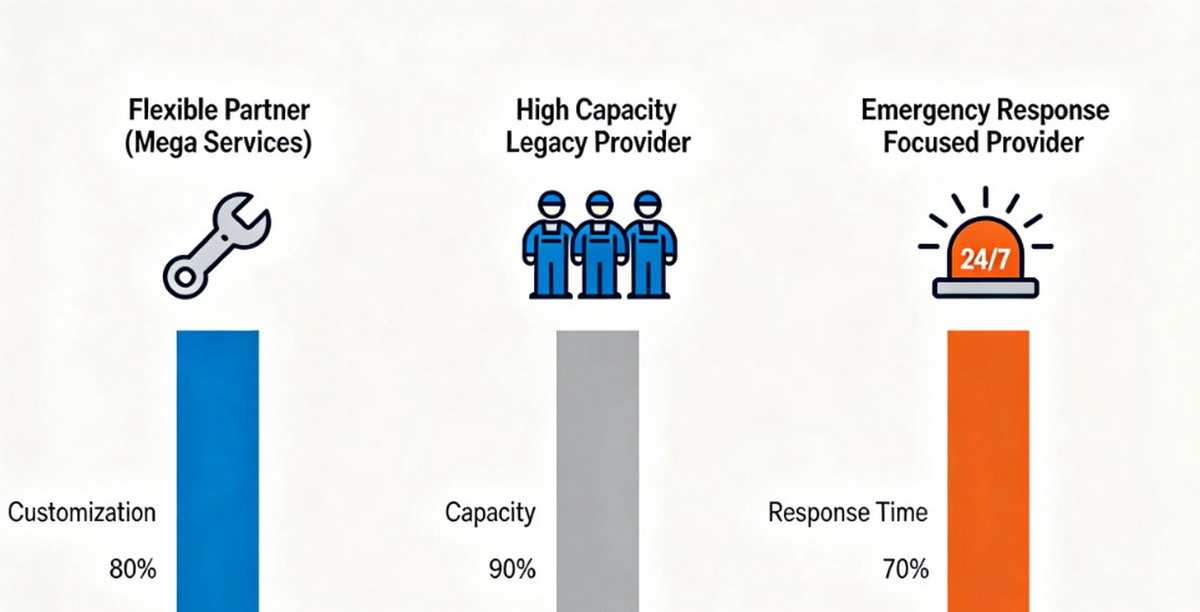
The table below summarizes how typical leading D.C. HVAC maintenance providers differ by capacity, minimum engagement size, and compliance emphasis. [sucoy-hvac]
| Company | Typical capacity & coverage | Typical minimum engagement (residential/SMB) | Compliance & certifications focus |
|---|---|---|---|
| Mega Services Heating & Cooling | Regional D.C. coverage with flexible crews for residential and light commercial megaservices | Suited to single homes and small building portfolios; customizable plans megaservices | Strong focus on licensing, safety, and clear documentation for each visit megaservices |
| Vernon The Heating & Cooling Specialist | Large, multi‑crew operation with 40‑year track record in D.C. area vernonheating | Well suited for larger customer base needing high seasonal capacity vernonheating | NATE‑certified techs; strong alignment with regional efficiency standards vernonheating |
| SmartComfort HVAC | Medium to large, optimized dispatch across metro area megaservices | Standardized maintenance tiers for typical homes and small businesses megaservices | Emphasis on transparent pricing and structured service plans megaservices |
| Heritage Home Climate Solutions | Specialized teams for historic and older housing stock megaservices | Project‑based work for heritage homes; may have higher minimum ticket megaservices | Strong knowledge of code and preservation requirements megaservices |
| EcoSmart Air & Heat | Focused teams oriented around high‑efficiency and smart systems megaservices | Best for clients investing in premium high‑efficiency upgrades wheatandsons | Deep familiarity with efficiency standards and utility rebate programs wheatandsons |
| RapidRelief Cooling Services | High‑availability crews for rapid emergency response megaservices | Emergency calls and priority service contracts megaservices | Core licensing and safety; processes optimized for response time megaservices |
| JDL HVAC & Plumbing Services | Balanced repair and maintenance capacity across D.C. sucoy-hvac | Suitable for homeowners and small sites needing routine care sucoy-hvac | Emphasis on reliability, satisfaction, and clear communication sucoy-hvac |
- Inadequate diagnostics leading to repeat failures: Low‑cost providers may skip load calculations, airflow measurement, or refrigerant charge verification, leading to callbacks and shortened equipment life. [sucoy-hvac]
- Non‑transparent pricing structures: Vague proposals without itemization create budget overruns and disputes, especially when parts and overtime are billed ad hoc. [homeadvisor]
- Weak documentation for compliance and ESG: Some contractors do not provide visit reports, photo evidence, or recommendations aligned with efficiency standards, making it harder for corporate buyers to demonstrate due diligence. [cadencenow]
- Seasonal capacity squeeze: During heat waves, under‑resourced providers can fail to meet SLAs, leaving sites without cooling at the worst time. [vernonheating]
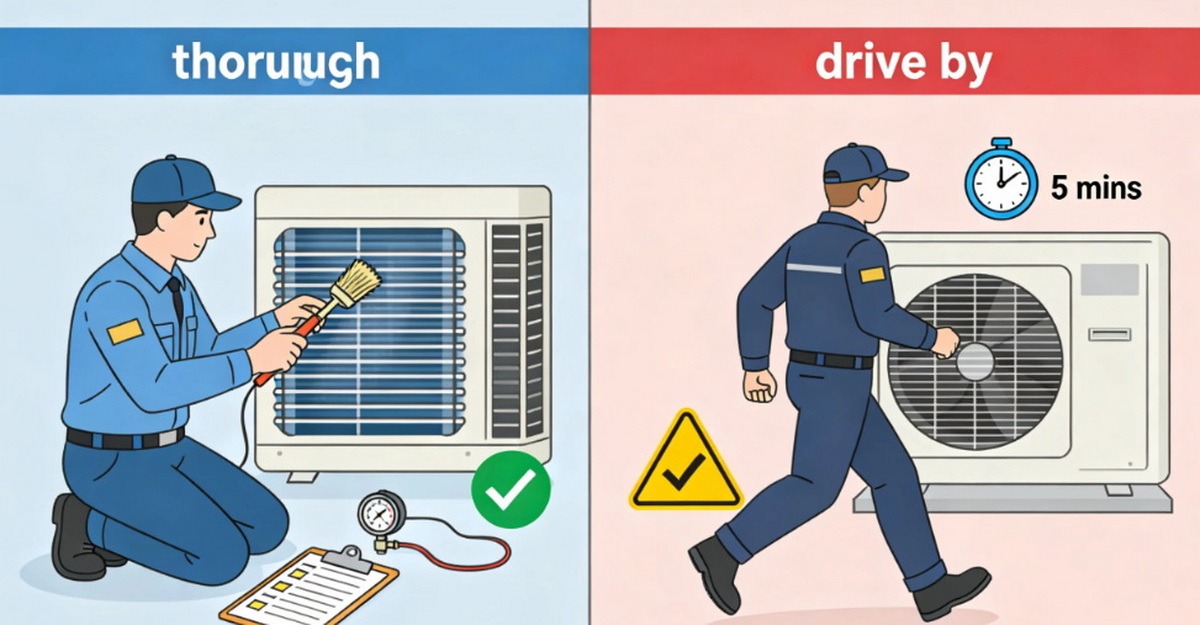
An internal industry reality that rarely appears in marketing materials is how maintenance hours are silently compressed when technicians are over‑scheduled in peak season. Instead of the full inspection, cleaning, and testing sequence, some crews perform a "drive‑by maintenance": visual checks, basic filter changes, and quick refrigerant top‑offs, while skipping deeper tasks like coil cleaning, static‑pressure checks, and control calibration.
As a buyer, the only reliable way to prevent this is to lock in task‑level checklists and minimum on‑site time per visit in your contract, and require time‑stamped photo or digital logs for key tasks (e.g., coil condition before/after, thermostat settings, measured delta‑T). Providers that are comfortable with this structure, like Mega Services and other high‑transparency firms, usually have stronger internal QC and more realistic scheduling practices. [megaservices]
- Request the contractor's D.C. or regional HVAC license number and insurance certificate, then cross‑check on relevant state or local licensing portals. [vernonheating]
- For commercial sites, ask about familiarity with ASHRAE 90.1 and 62.1 and how they incorporate those requirements into maintenance procedures. [cadencenow]
- Confirm that technicians working with refrigerants hold valid EPA Section 608 certification and that the company is prepared for DOE SEER2 minimums in your region. [wheatandsons]
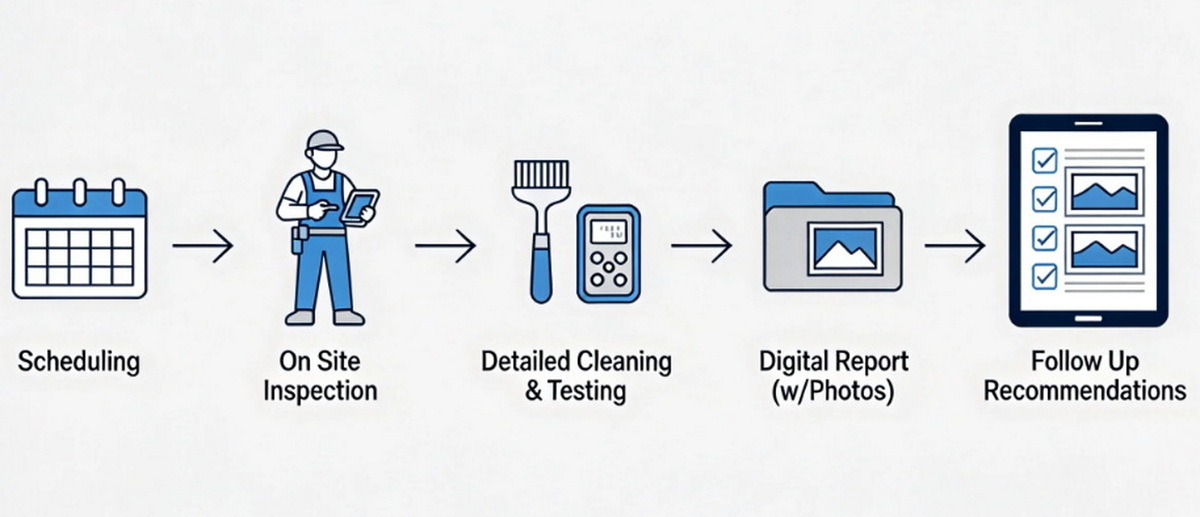
Instead of signing a large multi‑year engagement immediately, run a pilot phase on a subset of properties. Use this stage to measure: response times, communication quality, thoroughness of reports, and impact on comfort and energy usage. [vernonheating]
A flexible partner like Mega Services can often tailor the pilot scope and reporting cadence, which is valuable for procurement teams building an internal business case for a longer contract. [megaservices]
Define in writing:
- Frequency of maintenance visits by equipment type and age
- Exact tasks per visit (checklist that includes cleaning, testing, and calibration)
- Reporting requirements and escalation paths for high‑risk findings
Align these tasks with OEM recommendations and ASHRAE guidance for efficiency and IAQ to avoid warranty issues and compliance gaps. [cadencenow]
Plan maintenance windows outside of extreme summer peaks where possible, so technicians have time to perform thorough work instead of compressed visits. Clarify cut‑off dates for scheduling, priority rules during heat waves, and any premium charges for off‑hours work. [sucoy-hvac]
For portfolios spread across D.C., Maryland, and Virginia, confirm the provider's coverage map and travel charges to avoid hidden cost accumulation. [vernonheating]
When benchmarking pricing and service levels, reference external sources such as:
- DOE and EnergyStar updates on HVAC efficiency trends and typical cost impacts. [wheatandsons]
- Industry articles summarizing compliance frameworks like ASHRAE 90.1/62.1. [cadencenow]
- HVAC market analyses from platforms similar to HomeAdvisor that show typical service pricing bands in your area. [homeadvisor]
Industry research platforms and statistics providers (for example, Statista) publish HVAC market size and growth data that help justify proactive maintenance investments instead of purely reactive repairs. [wheatandsons]
Selecting a top air‑conditioning maintenance partner in Washington, D.C. is less about marketing labels and more about verifiable compliance, technical depth, and process transparency. By applying the selection criteria in this guide and insisting on detailed checklists, time‑stamped reporting, and clear SLAs, you significantly reduce the risk of hidden shortcuts, unexpected costs, and compliance gaps. [wheatandsons]
If you are building or refreshing your maintenance program in the D.C. area and need a flexible, communication‑driven partner for residential or light‑commercial portfolios, Mega Services Heating & Cooling is a strong candidate to include in your shortlist, especially for cost‑effective, customized preventive plans. Consider starting with a pilot engagement, then scaling into a multi‑year agreement once performance metrics confirm long‑term value. [megaservices]
Ask for a copy of the certificate, note the issuing body and certificate number, then verify it directly on the certification body's online directory (most have searchable databases). Cross‑check expiration dates and scope to ensure HVAC maintenance is included. [cadencenow]
Negotiate minimum visit durations, task‑level checklists, and require digital job reports with time stamps and photographic evidence for key tasks. Randomly audit a percentage of visits and tie a portion of compensation to compliant execution rather than just visit counts. [megaservices]
Request three‑year TCO models from each provider, including labor, parts, emergency call premiums, and expected energy‑efficiency gains or losses. Combine this with your own data on previous years' repair frequency and energy usage to derive a more realistic per‑unit annual cost. [wheatandsons]
Confirm technicians' EPA Section 608 certifications and request a description of their recovery, leak‑testing, and record‑keeping procedures. Providers should be able to show sample logs for refrigerant usage and leak repairs, aligning with EPA and local environmental expectations. [cadencenow]
Choose a partner comfortable with ASHRAE 62.1 IAQ standards and capable of providing periodic IAQ‑related data (filters, ventilation rates, CO2 levels where applicable). Structure KPIs around energy consumption per square foot, comfort complaints, and IAQ incident rates, and review them quarterly with your contractor. [cadencenow]


