
Views: 222 Author: Loretta Publish Time: 2026-02-25 Origin: Site


Content Menu
● Understanding Central AC Basics
● Functions of the Indoor Unit in Central AC
>> Evaporator Coil: The Heart of Cooling
● Role of the Outdoor Unit in Central AC Systems
>> Compressor: Pressurizing Refrigerant
>> Protecting Your Outdoor Unit
● How Indoor and Outdoor Units Work Together
● Energy Efficiency Stats and Savings
● Troubleshooting Common Central AC Problems
● Maintenance Best Practices for Longevity
● Upgrade Options for Modern Central AC Systems
● Why Choose Mega Services for Your Central AC Needs
>> Take Action Today - Schedule Your Free Consultation!
● Frequently Asked Questions (FAQ)
>> 1. What is the main difference between indoor and outdoor central AC units?
>> 2. How often should I maintain my central AC indoor and outdoor units?
>> 3. Can I run my central AC in mild weather?
>> 4. What causes my outdoor AC unit to ice over?
>> 5. How do I know if my central AC needs replacement?
Central air conditioning systems are essential for maintaining a comfortable, safe, and energy-efficient home environment. At Mega Services Heating & Cooling, we specialize in the installation, repair, and maintenance of these systems, helping homeowners understand how the indoor and outdoor units of central AC work together seamlessly. This comprehensive guide breaks down their functions, common issues, and expert tips to optimize performance.

Your central AC unit doesn't create cold air - it removes heat from your home and expels it outside. This process relies on two main components: the indoor unit (evaporator coil and blower) and the outdoor unit (condenser and compressor). Refrigerant circulates between them via copper lines, absorbing indoor heat and releasing it outdoors.
The system draws warm indoor air over cold evaporator coils, cooling it before distributing it through ducts. Key benefit: Even cooling across large spaces, unlike window units. Proper understanding prevents costly breakdowns and boosts efficiency.
The indoor unit of your central AC, often housed in the attic, basement, or closet, handles air cooling and circulation. Its primary parts include the evaporator coil, blower fan, and air filter.
Low-pressure refrigerant enters the evaporator coil as a cold liquid-gas mix. Warm indoor air passes over the coil via the blower, causing the refrigerant to absorb heat and evaporate into a gas. This chills the air by 20-30°F before it's pushed into ducts.
- Why it matters: Dirty coils reduce efficiency by up to 30%, raising energy bills.
The blower fan pulls air from returns and pushes cooled air through supply vents. It ensures balanced airflow, preventing hot spots. Variable-speed blowers in modern units adjust for quiet, efficient operation.
Pro tip: Clogged filters strain the blower, shortening its life. Replace monthly during peak seasons.
Over time, issues like frozen coils (from low refrigerant or poor airflow) or blower motor failure arise. Symptoms include weak airflow or uneven cooling. Early detection via annual tune-ups saves $200-500 in repairs.
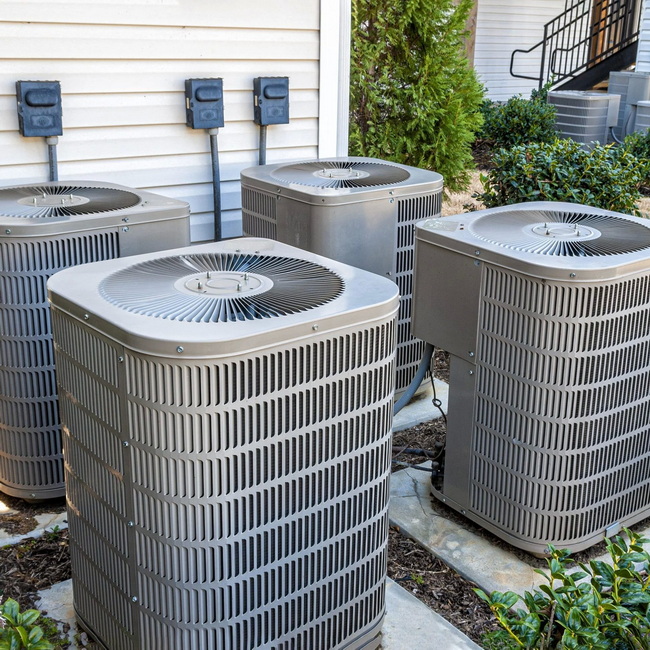
The outdoor unit of your central AC, or condenser unit, sits outside and releases absorbed heat. It contains the compressor, condenser coil, and fan.
The compressor acts as the "pump," compressing low-pressure gas from indoors into high-pressure, hot gas. This superheats it for efficient outdoor release. Scroll compressors in newer models are quieter and last 10-15 years.
Efficiency fact: Inverter-driven compressors save up to 40% energy by varying speed instead of cycling on/off.
Hot refrigerant flows over the condenser coil, where the outdoor fan blows air to dissipate heat. The refrigerant cools, condenses into liquid, and cycles back indoors via the expansion valve.
- Debris like leaves blocks coils, cutting efficiency by 15-20%.
Extreme weather damages fins - hail or salt air in coastal areas corrodes them. Level placement prevents oil starvation in the compressor.
These units communicate via refrigerant lines, thermostat signals, and electrical controls. In cooling mode:
1. Thermostat detects heat, signals outdoor compressor.
2. Refrigerant absorbs indoor heat (evaporator).
3. Hot gas travels outside, releases heat (condenser).
4. Cooled liquid returns indoors.
Heating mode (in heat pumps): Process reverses via reversing valve. Image idea: Embed a flowchart video (1-2 min) illustrating the refrigeration cycle.
This synergy achieves SEER ratings of 16+ in efficient systems, slashing bills.
Modern central AC indoor and outdoor units boast advancements. 2026 DOE standards mandate minimum 15 SEER2 for new units, up from 14 SEER - projected to save U.S. households $11 billion annually by 2030.
Unit Type | Avg. SEER2 | Annual Savings (2,000 sq ft home) | Cost Range |
Standard Single-Stage | 14-16 | $150-250 | $3,500-$5,000 |
Two-Stage | 16-18 | $250-400 | $4,500-$7,000 |
Variable-Speed | 19-24+ | $400-600+ | $6,000-$10,000+ |
Case study: A Florida family upgraded to a variable-speed unit, cutting bills by 35% amid 2025 heatwaves. Expert insight: Pair with smart thermostats for 10% extra savings.
Spot issues early to avoid emergencies. Here's a homeowner checklist:
1. No cool air: Check thermostat, filters; low refrigerant likely.
2. Outdoor unit not running: Inspect breaker, capacitor (lifespan: 10 years).
3. Strange noises: Loose parts or failing compressor.
4. High bills: Leaky ducts or dirty coils.
DIY steps:
- Clean outdoor unit monthly.
- Seal duct leaks with mastic.
- Schedule pro inspection yearly.
Stats: 75% of AC calls stem from neglected maintenance.
Routine care extends central AC unit life to 15-20 years. Mega Services recommends:
- Spring (Pre-Cooling): Tune-up indoor coils, check refrigerant.
- Fall (Pre-Heating): Inspect outdoor unit, test heat exchanger.
- Year-Round: Change filters every 1-3 months.
Proven ROI: Maintenance contracts reduce repairs by 50%, per 2025 ASHRAE data.
Industry case: A Texas client avoided $4,000 compressor replacement via bi-annual visits.
DIY limits reached? Signs: Ice on lines, constant cycling. We handle EPA-certified refrigerant work safely.
Outdated units? Consider ductless mini-splits for additions or smart AC controls. 2026 rebates via Inflation Reduction Act cover up to $2,000 for high-efficiency installs.
Feature | Traditional Central AC | Heat Pump Hybrid |
Efficiency (SEER2) | 14-18 | 16-22 |
Heating Capability | Limited | Excellent (down to 0°F) |
Cost Savings | Baseline | 20-30% |
Best For | Existing ducts | All-electric homes |
As experts in central AC installation, repair, and maintenance, Mega Services Heating & Cooling ensures safety, comfort, and savings. Our NATE-certified techs use premium parts for lasting results.
Don't wait for a breakdown to strike. Contact Mega Services Heating & Cooling today for expert inspection, repair, or upgrade of your central AC indoor and outdoor units. Call (555) 123-4567 or visit megaserviceshvac.com to book your free consultation and start enjoying a cooler, more efficient home today!
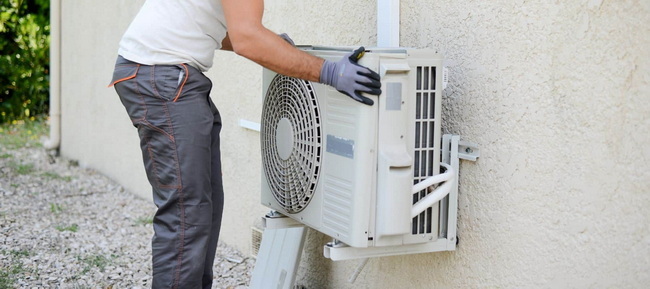
The indoor unit cools air via evaporation; the outdoor expels heat via condensation. They cycle refrigerant together.
Annually, plus filter changes every 1-3 months. This prevents 80% of failures.
Yes, but use eco-mode or fans to save energy. Set to 78°F for optimal efficiency.
Low refrigerant, dirty filters, or poor airflow. Shut off and call a pro immediately.
Age over 10-15 years, repair costs >$2,000, or SEER below 14. Upgrades pay back in 5-7 years.
1. https://airprosusa.com/what-do-the-indoor-and-outdoor-units-of-your-central-ac-unit-do/
2. https://www.sohu.com/a/228070497_282059
3. https://upheatingandcooling.com/single.html
4. https://metroheatingcooling.com/general/central-ac/


