
Views: 215 Author: Mega Services Publish Time: 2026-09-02 Origin: Site


Content Menu
● Why Choosing the Right Air Conditioner Matters
● What Makes a Central Air Conditioner the Best Choice?
>> Correct Air Conditioner Size
>> Properly Matched Indoor and Outdoor Equipment
>> Quality Installation Makes the Difference
>> Comfort Features That Match Your Home
● Understanding Air Conditioner Efficiency Ratings
>> SEER2: Seasonal Cooling Efficiency
>> EER2: Efficiency During High Outdoor Temperatures
>> HSPF2: Heating Efficiency for Heat Pumps
● Comparing Central Air Conditioning System Types
● When a Two-Stage or Variable-Speed Air Conditioner Is Worth It
>> Consider a Two-Stage Air Conditioner If You Experience These Issues
>> Consider a Variable-Speed Air Conditioner If Comfort Is Your Priority
● Should You Replace Your Furnace and Air Conditioner Together?
● Why a Home Load Calculation Is Essential
● How Ductwork Affects Air Conditioner Performance
● How to Choose the Best Air Conditioner for Your Home
>> Step 1: Identify Your Main Comfort Problem
>> Step 2: Schedule a Whole-Home Assessment
>> Step 3: Compare Complete System Options
>> Step 4: Consider Long-Term Value
>> Step 5: Confirm Final Testing
● Maintain Your New Heating and Cooling System
● Create a More Comfortable Home With the Right HVAC System
>> 1. What size air conditioner do I need for my home?
>> 2. Is a higher SEER2 rating always better?
>> 3. Should I replace my furnace and air conditioner at the same time?
>> 4. Why does my house feel humid when the air conditioner is running?
>> 5. Are variable-speed air conditioners quieter?
>> 6. Can ductwork affect a new air conditioner?
>> 7. How often should I schedule air conditioner maintenance?
Choosing the best central air conditioning unit is about much more than purchasing the highest efficiency rating or the largest system available. The right HVAC system should keep your home consistently cool, manage indoor humidity, operate quietly, and work efficiently throughout the season.
At Mega Services Heating & Cooling, we help homeowners make informed decisions about air conditioning installation, heating replacement, repairs, and preventive maintenance. From our experience in real homes, the best system is not necessarily the most expensive model. It is the system that is correctly sized, properly paired with your indoor equipment, professionally installed, and designed around the way your home actually performs.
A well-matched heating and cooling system supports a safer, more comfortable, and more energy-conscious home. It can reduce uneven temperatures, improve airflow, help control moisture, and provide dependable performance when your family needs it most.
> Professional insight: The best air conditioner is not a one-size-fits-all product. It is a complete comfort solution designed for your home, your climate, your existing ductwork, and your household's needs.
A central air conditioning system does more than reduce the temperature on a thermostat. It circulates conditioned air through your home, removes moisture from the air, supports filtration, and works with your heating equipment to create a more stable indoor environment.
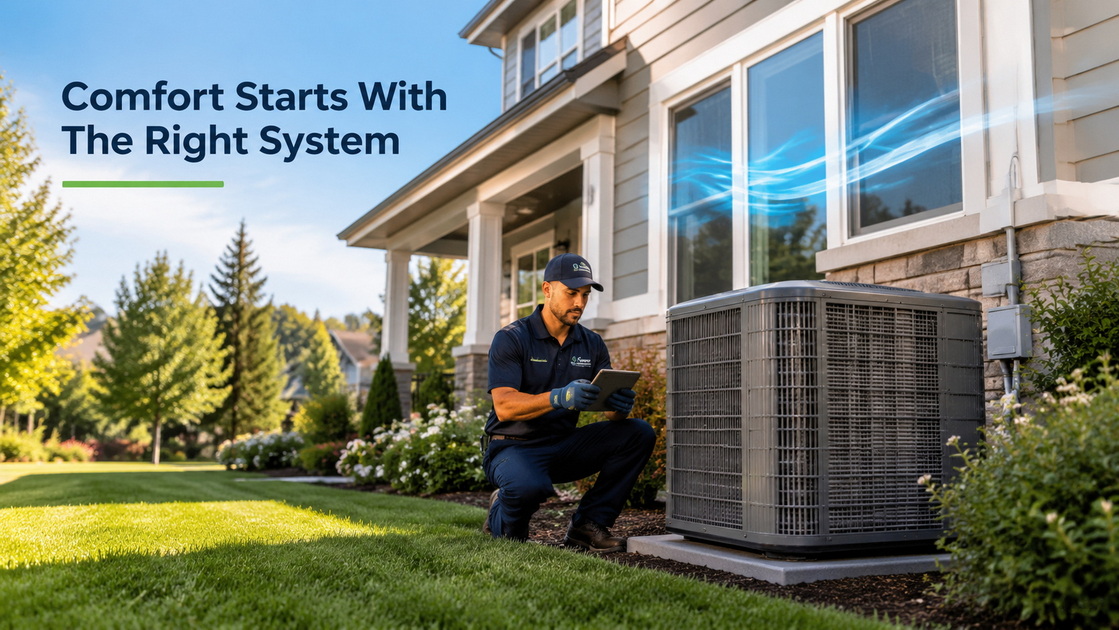
When an air conditioner is poorly selected or incorrectly installed, homeowners may experience issues such as:
- Rooms that are too warm or too cold
- High humidity even when the AC is running
- Weak airflow from vents
- Rising summer energy bills
- A system that turns on and off too often
- Loud operation indoors or outdoors
- Uneven temperatures between floors
- More frequent repairs and a shorter equipment lifespan
The right system should run in controlled cycles, deliver balanced airflow, and maintain comfortable conditions without unnecessary energy waste.
For many households, heating and cooling represent a major part of annual energy use. Selecting efficient equipment and ensuring the installation is done correctly can make a meaningful difference in both comfort and long-term operating costs.
The best air conditioning unit is not identified by one number, one brand, or one feature. It should be evaluated as part of the entire home comfort system.
During an HVAC replacement consultation, it is important to look beyond the outdoor AC unit. The indoor coil, furnace or air handler, thermostat, ductwork, electrical system, insulation, windows, and room-by-room comfort concerns can all influence the final result.
One of the most common misconceptions is that a larger air conditioner will provide better cooling. In reality, an oversized unit can create comfort problems.
A system that is too large may cool the thermostat area very quickly and shut off before it has enough time to remove moisture from the air. This process is often called short cycling.
An oversized air conditioner can lead to:
- Clammy or humid indoor air
- More noticeable temperature swings
- Frequent starts and stops
- Reduced efficiency
- Added stress on mechanical components
- Less consistent comfort throughout the home
An undersized system can also create problems. It may run for long periods during hot weather without reaching the desired indoor temperature.
The correct equipment size should be based on a full evaluation of the home, not simply on square footage or the capacity of the old unit.
Your outdoor air conditioner or heat pump must work properly with the indoor coil, furnace, or air handler. These components are designed as part of a connected system.
For example, installing a new high-efficiency outdoor unit while keeping an incompatible indoor coil may limit performance. The system may not achieve its intended efficiency, airflow can suffer, and humidity control may be weaker than expected.
This is one reason why replacing both the heating and cooling equipment at the same time can be a smart long-term decision for some homeowners.
Even high-quality equipment can underperform when the installation is rushed or incomplete. Proper installation affects airflow, refrigerant levels, electrical connections, drainage, duct performance, safety, and equipment longevity.
A complete installation should account for the actual home rather than relying on simple rules of thumb. It should include careful system design, correct equipment matching, airflow evaluation, and final performance testing.
Not every household needs the same HVAC technology.
A single-stage system may be suitable for a straightforward replacement with a lower initial investment. A two-stage or variable-speed system may be a stronger option for homeowners who experience humidity problems, temperature swings, hot upstairs bedrooms, or excessive equipment noise.
The right choice depends on the comfort challenge you are trying to solve.
When comparing central air conditioning systems, you will often see ratings such as SEER2, EER2, and HSPF2.
These numbers can be useful, but they should be considered alongside proper sizing, installation quality, ductwork condition, and everyday comfort expectations.
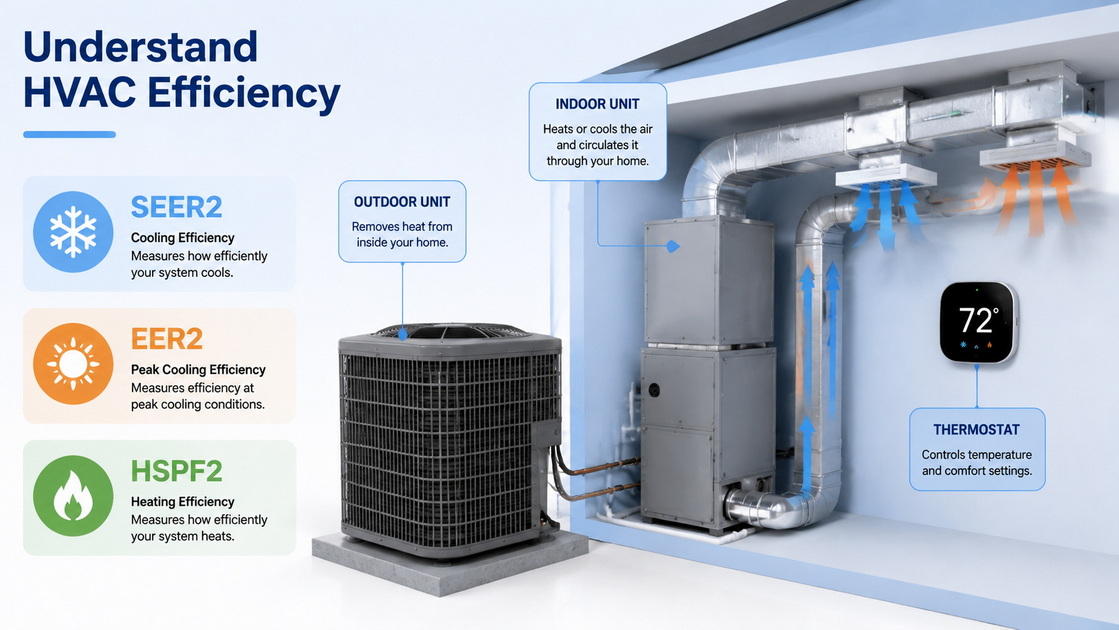
SEER2 stands for Seasonal Energy Efficiency Ratio 2. It measures how efficiently an air conditioner or heat pump performs throughout a typical cooling season.
In general, a higher SEER2 rating indicates the potential for improved seasonal cooling efficiency. However, a high-efficiency unit will not automatically deliver lower operating costs if it is oversized, incorrectly installed, or connected to poorly performing ducts.
A properly designed mid-efficiency system can often provide better real-world results than a premium unit installed without attention to airflow, sizing, and system compatibility.
EER2 measures cooling efficiency under a specific high-temperature condition. It can be especially useful in areas with extended periods of intense summer heat.
While SEER2 provides a seasonal overview, EER2 offers another perspective on how efficiently a system may operate when outdoor temperatures are at their highest.
Homeowners considering an all-electric heat pump may also see the HSPF2 rating. HSPF2 measures heating efficiency over a typical season.
A heat pump provides both heating and cooling from one outdoor system. It can be an excellent option for homeowners interested in year-round electric comfort, depending on the local climate, available fuel sources, insulation, electrical capacity, and household needs.
The best type of system depends on your home's design, existing equipment, comfort priorities, budget, and energy goals.
| System Type | Best For | Main Benefits | Important Considerations |
|---|---|---|---|
| Single-stage central AC | Straightforward replacements and budget-focused projects | Simple operation and lower initial equipment cost | May produce more noticeable temperature changes between cycles |
| Two-stage central AC | Homes with uneven temperatures or moderate humidity concerns | Longer run times, steadier comfort, and improved moisture removal | Requires proper equipment matching and airflow setup |
| Variable-speed central AC | Homeowners who prioritize quiet operation, comfort consistency, and humidity control | More precise cooling output, lower-speed operation, and strong comfort performance | Higher initial investment and greater need for careful installation |
| Dual-fuel HVAC system | Homes with a furnace where a heat pump can handle milder temperatures | Combines electric heat pump operation with furnace backup heat | Requires proper setup based on climate and utility costs |
| Air-source heat pump | Homes seeking one system for cooling and heating | Delivers both heating and air conditioning from one system | Requires proper sizing, electrical review, and equipment selection |
| Ductless mini-split system | Additions, garages, converted spaces, or homes without usable ducts | Zoned comfort and no need for central ductwork | Indoor unit placement and layout should be planned carefully |
Many homeowners ask whether advanced AC equipment is worth the additional investment. The answer depends on the comfort improvements you want to achieve.
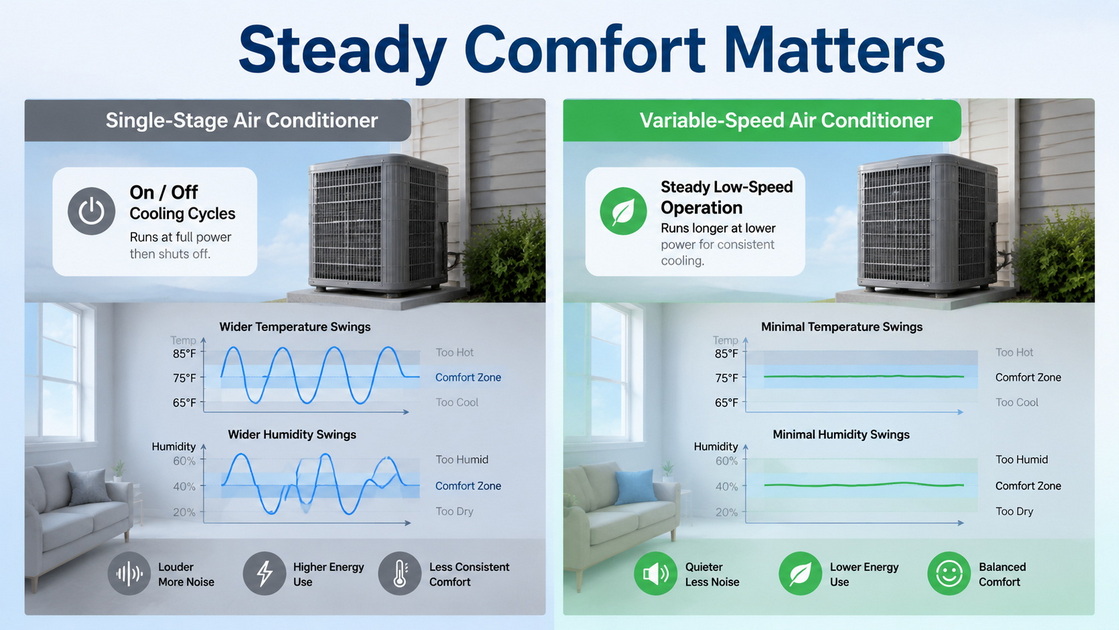
A two-stage system can operate at a lower capacity during milder weather and shift to higher output when temperatures rise. This approach can create more consistent comfort than a conventional single-stage unit.
A two-stage air conditioner may be a good fit if you experience:
- Temperature swings between cooling cycles
- Warm upstairs bedrooms
- Moderate indoor humidity
- A home that feels cool near the thermostat but uncomfortable in other rooms
- A desire for improved comfort without choosing the highest equipment tier
Because the system can run at lower capacity for longer periods, it may have more time to circulate air and remove moisture.
Variable-speed systems can adjust their output more precisely based on changing conditions inside and outside the home.
Instead of repeatedly operating at full capacity and shutting off, the system can run at lower levels for longer periods when the home needs less cooling.
A variable-speed air conditioner may be worth considering if you want:
- Better humidity control
- Quieter system operation
- More even temperatures
- Longer, gentler cooling cycles
- Better comfort during mild but humid weather
- Advanced thermostat features and system monitoring
A common homeowner concern is, "My air conditioner cools the home, but the house still feels damp." In many cases, the solution is not a larger AC unit. The issue may involve oversized equipment, incorrect airflow, duct leakage, thermostat setup, or poor moisture removal.
For a comfortable indoor environment, relative humidity is generally best kept between 30% and 50% whenever practical.
In many homes, the air conditioner and furnace operate as connected components of one HVAC system.
The furnace cabinet usually contains the blower motor that circulates cooled air during summer. The evaporator coil is commonly installed above or near the furnace. Because of this relationship, replacing only the outdoor air conditioner may not always be the best solution.
Replacing the furnace and air conditioner together may be worth considering when:
- Both systems are older and approaching the end of their expected service life
- The existing furnace blower cannot provide the airflow required by new equipment
- The indoor coil needs replacement for compatibility
- You are upgrading to two-stage or variable-speed equipment
- Your system has a history of recurring repairs
- You want one coordinated installation and warranty process
- You are seeking meaningful improvements in comfort and efficiency
This does not mean every homeowner must replace both systems at once. In some situations, replacing one component can be practical. The key is confirming that the remaining equipment can properly support the new system.
The capacity of your existing air conditioner should not automatically determine the size of your new system.
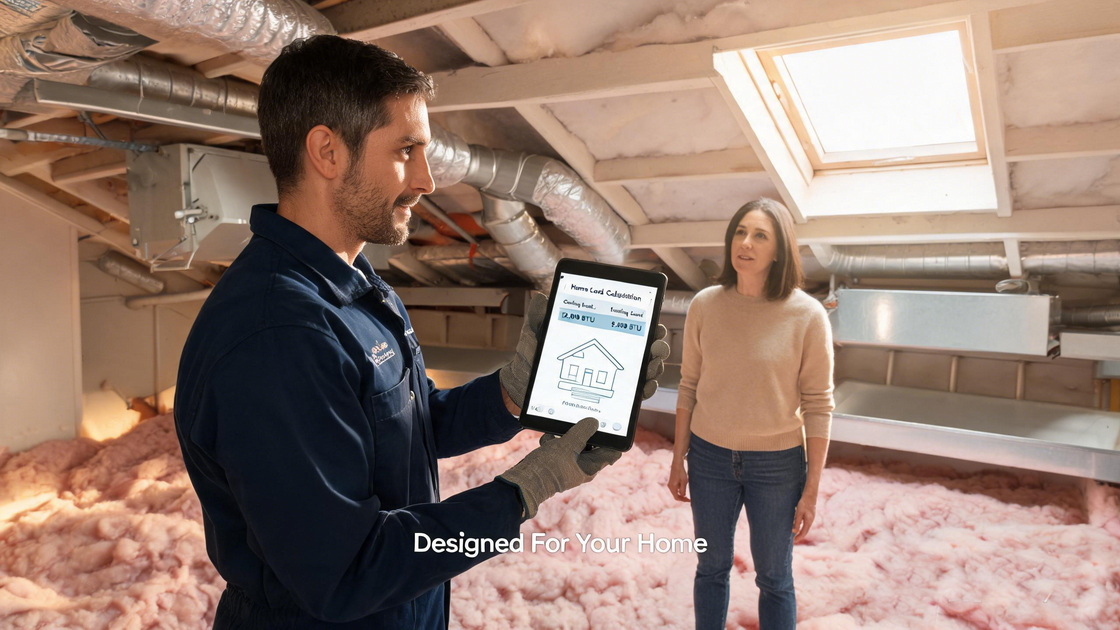
Older equipment may have been oversized from the beginning. Your home may also have changed since the system was originally installed. New windows, attic insulation, air sealing, remodeled rooms, additions, landscaping, occupancy changes, and sun exposure can all affect heating and cooling needs.
A detailed home evaluation should consider:
1. Home size and layout, including ceiling height and the location of bedrooms, additions, and open living areas
2. Local weather conditions, including summer heat, winter temperatures, and humidity
3. Insulation and air leakage, especially in attics, crawlspaces, exterior walls, and around windows
4. Window area and sun exposure, including rooms that receive strong afternoon sunlight
5. Ductwork condition, supply and return airflow, duct leakage, and insulation
6. Room-by-room comfort concerns, such as hot upstairs areas or rooms with weak airflow
7. Household activity, appliances, lighting, and the number of people regularly using the home
This process helps avoid costly guesswork. It also allows the contractor to recommend equipment that supports better comfort rather than simply duplicating the old system.
> A properly sized system should run long enough to cool the home and manage humidity, without running excessively or shutting off too quickly.
A new AC system cannot fully solve comfort problems caused by damaged, undersized, poorly designed, or leaking ductwork.
Ducts carry cooled and heated air to each room. If they are leaking in an attic, crawlspace, garage, or other unconditioned area, a portion of the air you paid to cool may never reach the living spaces.
Common ductwork issues include:
- Leaking connections
- Disconnected or damaged duct sections
- Insufficient return-air capacity
- Ducts that are too small for the new system
- Poor insulation around ducts in unconditioned spaces
- Restricted airflow from crushed flexible ducts
- Dirty or undersized filters
- Blocked supply vents or return grilles
During an HVAC assessment, ductwork should be reviewed along with the equipment itself. The contractor may check airflow, static pressure, duct leakage, return-air pathways, filter condition, and comfort differences between rooms.
The outdoor condenser may be the most visible part of an HVAC system, but the duct system is the pathway that delivers comfort throughout your home.
Use the following process to make a confident and informed decision.
Before choosing equipment, describe what your current system is not doing well.
Examples include:
- "The upstairs is always warmer than the main floor."
- "The house feels humid even when the AC is running."
- "The outdoor unit is too loud."
- "My electricity bill is higher every summer."
- "Some rooms receive very little airflow."
- "The system breaks down repeatedly."
- "The temperature changes too much between cycles."
Your main concern can help determine whether the solution involves new equipment, duct improvements, zoning, insulation upgrades, airflow adjustments, thermostat changes, or a combination of improvements.
A professional should inspect your home before recommending a system. Avoid decisions based only on the old system's size, a quick square-footage estimate, or a general rule of thumb.
The assessment should include your comfort concerns, equipment condition, ductwork, home layout, insulation, windows, electrical requirements, and system compatibility.
Ask for options at different performance levels. A clear proposal should explain:
- Equipment type and capacity
- Efficiency ratings
- Single-stage, two-stage, or variable-speed operation
- Indoor coil, furnace, or air-handler compatibility
- Thermostat options
- Ductwork recommendations
- Warranty coverage
- Installation scope
- Maintenance expectations
The lowest initial price is not always the best long-term value.
Compare the full picture, including equipment quality, comfort level, expected energy use, maintenance needs, warranty coverage, repair history, and the quality of the installation process.
The work should not end once the system starts running.
A careful installation includes final checks for airflow, refrigerant charge, drainage, electrical connections, thermostat settings, temperature performance, and safe operation.
Even the best central air conditioning system requires regular maintenance.
Seasonal service can help identify airflow restrictions, electrical wear, drainage problems, refrigerant concerns, dirty components, and early signs of declining performance before they become more expensive repairs.
Homeowners can also help protect system performance by:
- Replacing or cleaning filters as recommended
- Keeping the outdoor unit clear of leaves, grass, branches, and debris
- Keeping supply vents and return grilles open and unobstructed
- Monitoring unusual sounds, odors, or frequent system cycling
- Checking indoor humidity during the cooling season
- Scheduling professional maintenance before peak cooling and heating seasons
Maintenance is not only about preventing breakdowns. It supports efficiency, comfort, indoor air quality, safety, and equipment longevity.
The best central air conditioning unit is one that is correctly sized, properly matched, carefully installed, and supported by balanced airflow and dependable ductwork.
Efficiency ratings matter, but they are only part of the decision. True comfort comes from looking at the entire home: the equipment, the ducts, the insulation, the thermostat, the indoor humidity, and the unique needs of the people living there.
Mega Services Heating & Cooling is committed to helping families create safer, more comfortable, and more energy-efficient homes. Whether you need a new air conditioner, furnace replacement, heat pump installation, HVAC repair, or routine maintenance, our team focuses on practical solutions designed around your home.
Contact Mega Services Heating & Cooling today to schedule a professional heating and cooling evaluation and receive recommendations tailored to your home, comfort needs, and budget.
[Suggested video placement: Add a 60–90 second educational video above this section explaining how system sizing, ductwork, and equipment type affect home comfort.]
The correct air conditioner size depends on more than square footage. Climate, insulation, window area, ceiling height, household occupancy, ductwork, sun exposure, and air leakage all affect cooling needs. A detailed home evaluation is the best way to determine the appropriate system size.
A higher SEER2 rating may provide greater seasonal cooling efficiency, but it is not automatically the best choice for every home. Proper sizing, compatible indoor equipment, ductwork condition, installation quality, and maintenance all influence actual system performance.
Replacing both systems together can be beneficial when the equipment is older, the indoor coil needs replacement, the furnace blower cannot support the new air conditioner, or you are upgrading to a more advanced system. However, the best decision depends on the condition and compatibility of the existing equipment.
High indoor humidity may result from an oversized system, frequent short cycling, restricted airflow, duct leakage, incorrect blower settings, poor drainage, or moisture entering the home. A professional HVAC evaluation can identify the cause and recommend the right solution.
Variable-speed systems are often quieter because they can operate at lower capacities for longer periods instead of frequently starting at full power. Actual sound levels depend on the equipment model, installation quality, placement, ductwork, and maintenance condition.
Yes. Leaky, damaged, undersized, poorly insulated, or poorly designed ducts can reduce airflow and waste conditioned air. Ductwork should be evaluated whenever a new central air conditioning system is installed.
Most homes benefit from professional air conditioning maintenance once each year, ideally before the main cooling season. Homes with older equipment, heavy system use, air-quality concerns, or ongoing comfort problems may need more frequent attention.
1. Logan Services.
2. U.S. Environmental Protection Agency.
3. U.S. Environmental Protection Agency.
4. ENERGY STAR.
5. ENERGY STAR.
6. ENERGY STAR.
7. Air Conditioning Contractors of America.
8. Air Conditioning Contractors of America.
9. Trane Residential.


