
Views: 215 Author: Mega Services Publish Time: 2026-08-04 Origin: Site


Content Menu
>> 3. Let the ice melt naturally
>> 4. Protect the area from water
● How To Troubleshoot the Cause
>> Check for coil dirt or blockage
>> Watch for repeated freezing
● When the Problem Is More Serious
>> Signs you should call for service
● How To Prevent It From Happening Again
● Expert Advice From Mega Services Heating & Cooling
● FAQ
>> 1. How long does it take an AC to thaw?
>> 2. Can I keep using the AC if it is frozen?
>> 3. Why does my AC freeze even in hot weather?
>> 4. Is a frozen AC always caused by low refrigerant?
>> 5. Can I fix a frozen AC myself?
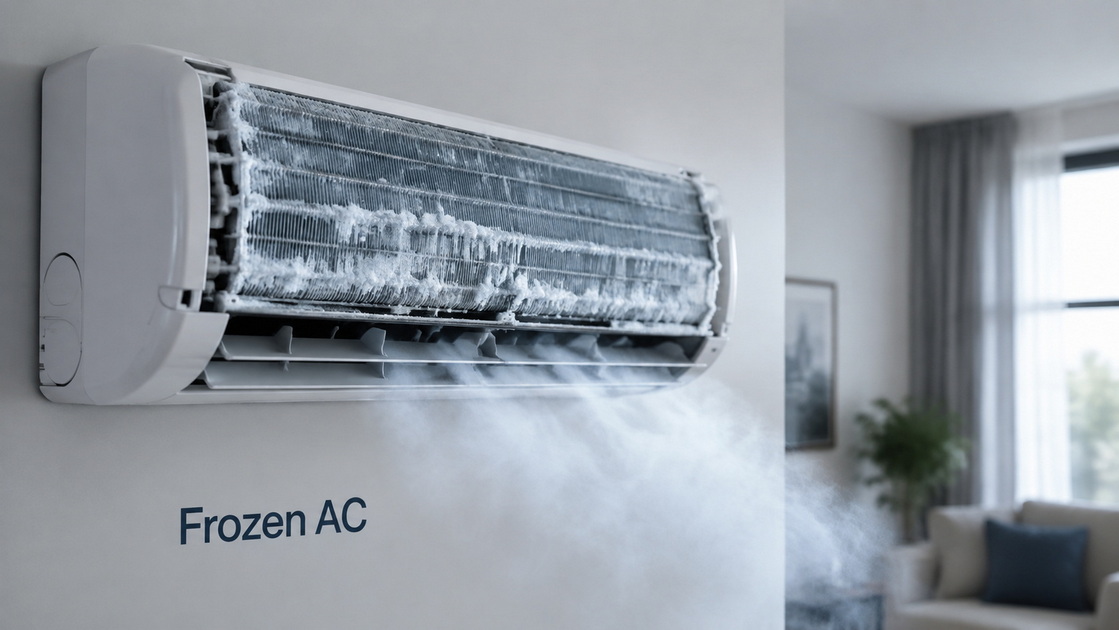
If your air conditioner freezes up, it is a warning sign that the system is not moving air or refrigerant the way it should. The most common causes are restricted airflow, a dirty evaporator coil, a faulty blower fan, or low refrigerant. When ice forms on the coil, the system loses cooling performance and can suffer damage if it keeps running.
An AC system freezes when the evaporator coil gets too cold and moisture in the air turns into ice. This usually happens because warm air is not flowing across the coil as intended, or because the refrigerant conditions inside the system are no longer balanced.
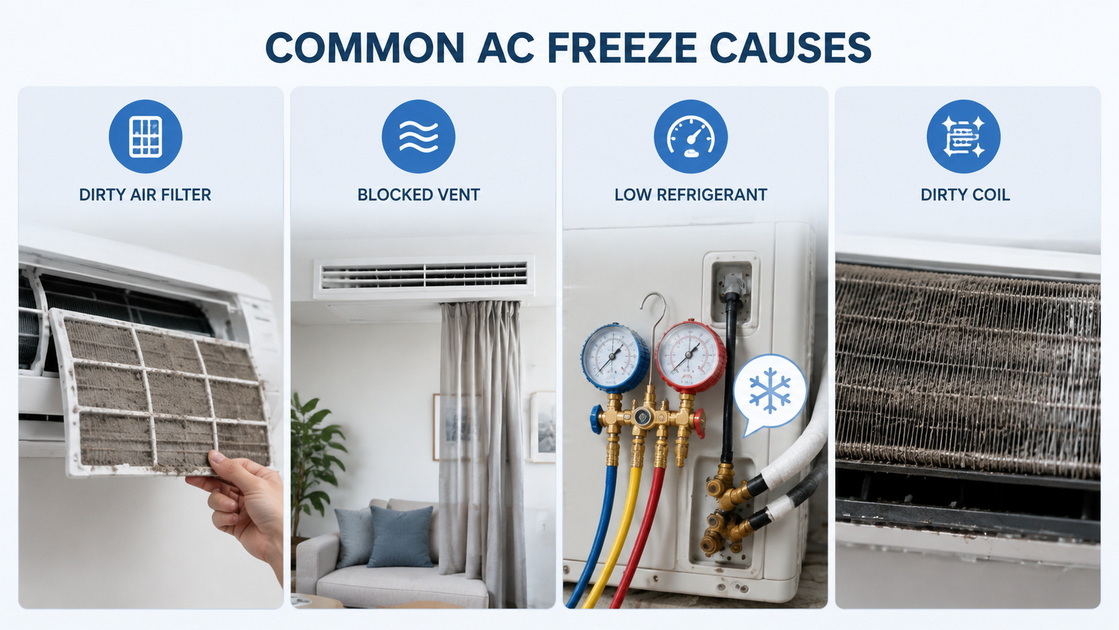
- Dirty air filter. A clogged filter blocks airflow and makes the coil colder than normal.
- Blocked return or supply vents. Furniture, rugs, curtains, or closed registers can reduce circulation.
- Dirty evaporator coil. Dirt on the coil acts like insulation and limits heat exchange.
- Blower fan problems. If the blower is weak or failing, not enough air passes over the coil.
- Low refrigerant. A leak or low charge can drop system pressure and cause ice to form.
- Drain issues. A clogged condensate drain can worsen moisture problems around the indoor unit.
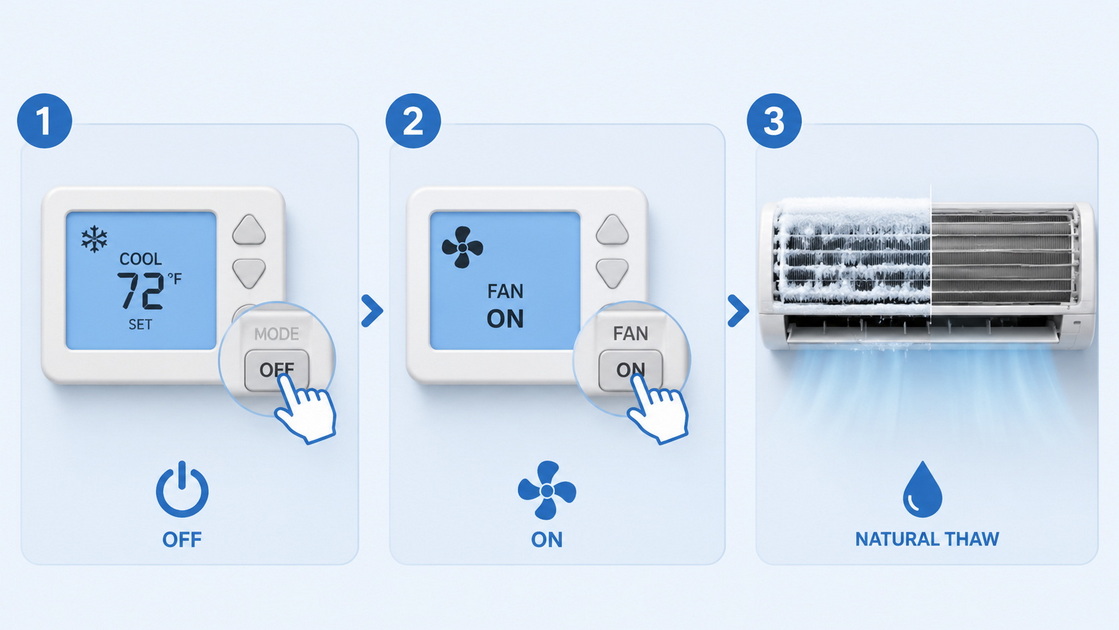
The first thing to do is shut off cooling immediately. Do not keep the system running while ice is present, because that can put unnecessary stress on the compressor and other components.
Set the thermostat fan to ON instead of AUTO if your system allows it. This helps move room-temperature air across the coil and speeds up thawing.
Do not try to break the ice off by hand. Let the unit thaw completely on its own so the coil and refrigerant lines are not damaged.
As the ice melts, water may collect in the drain pan or around the indoor unit. Place towels nearby if needed and check for overflow.
Once the system is fully thawed, you can start checking the most likely causes of the freeze-up.
A dirty filter is one of the easiest problems to fix. Replace it if it looks clogged, dusty, or discolored. In many homes, this alone restores normal airflow.
Make sure supply and return vents are open and clear. Air needs a full path through the home to move across the evaporator coil properly.
If airflow still feels weak after replacing the filter, the blower motor may not be working correctly. Weak airflow is a strong sign that a technician should inspect the indoor unit.
If the coil is dirty, airflow and heat transfer both suffer. A heavily soiled coil often needs professional cleaning.
If the AC freezes again after basic airflow issues are corrected, the cause may be low refrigerant. That usually requires professional diagnosis and repair.
A one-time freeze-up can sometimes be traced to a simple maintenance issue. Repeated freeze-ups are different.
- The unit freezes again soon after thawing.
- Airflow remains weak after a filter change.
- The system runs but does not cool well.
- You hear unusual fan or motor noises.
- Water is leaking around the indoor unit.
- Ice appears on the refrigerant line or coil again.
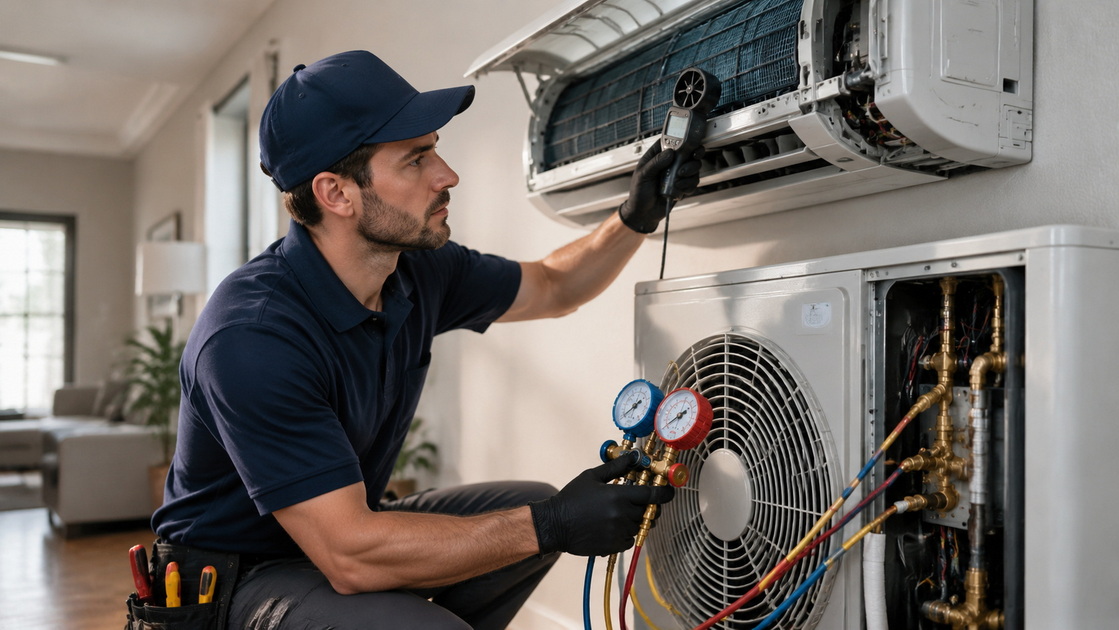
If any of these happen, the system likely has a deeper issue that needs a trained HVAC technician.
Regular maintenance is the best way to reduce the chance of another freeze-up.
- Replace the air filter on schedule.
- Keep vents and returns unblocked.
- Keep the indoor coil clean.
- Make sure the condensate drain line stays clear.
- Have the system inspected before the cooling season begins.
A frozen AC often starts with a small airflow problem that gets worse over time. Catching a dirty filter, weak blower, or refrigerant issue early can prevent larger repairs later.
At Mega Services Heating & Cooling, we treat a frozen AC as a system warning, not a random inconvenience. Most homeowners can safely shut the unit down and let it thaw, but repeated icing should always be checked by a professional.
If your system has frozen more than once, the best next step is a full inspection of airflow, coil condition, drain performance, and refrigerant status. That gives you the clearest path to restoring comfort and keeping the system running safely.
If your AC unit freezes up, turn it off, let it thaw, and check the airflow basics first. If the problem comes back, schedule professional service before the issue turns into a bigger repair.
It usually takes several hours, and sometimes longer depending on how much ice has built up. Running the fan only can help speed up the process.
No. The system should be turned off right away to avoid damage.
Hot weather does not prevent freeze-up if airflow is restricted or refrigerant is low.
No. Dirty filters, blocked vents, blower issues, and dirty coils are all common causes.
You can safely turn it off, let it thaw, replace the filter, and clear blocked vents. If it freezes again, call a technician.
- One Hour Heating & Air Conditioning, "What to Do When Your AC Unit Freezes Up"
- Search result: frozen AC causes and thawing guidance
[](https://www.onehourheatandair.com/expert-tips/air-conditioners/what-to-do-when-your-ac-unit-freezes-up/)
- Search result: AC coil freeze troubleshooting
[](https://www.onehourheatandair.com/expert-tips/air-conditioners/what-to-do-when-your-ac-unit-freezes-up/)
- Search result: airflow, low refrigerant, dirty coil, blower fan causes
[](https://www.onehourheatandair.com/expert-tips/air-conditioners/what-to-do-when-your-ac-unit-freezes-up/)


