
Views: 217 Author: Mega Services Publish Time: 2026-09-14 Origin: Site


Content Menu
● Can Air Conditioning Really Cause a Sore Throat?
● Why Does Air Conditioning Make My Throat Hurt?
>> Low Indoor Humidity Can Dry Your Throat
>> Cold Air Blowing Directly on Your Face or Neck
>> Dirty HVAC Filters May Affect Comfort
>> Dust, Pollen, Pet Dander, and Other Irritants
>> Moisture Problems and Musty Odors Need Attention
● How to Prevent a Sore Throat From Air Conditioning
>> 1. Measure Humidity Before Adding Moisture
>> 2. Redirect Airflow Away From Sleeping Areas
>> 3. Avoid Extreme Thermostat Settings
>> 4. Inspect and Replace Your Air Filter
>> 5. Keep Registers and Return Vents Clear
>> 6. Schedule Routine Heating and Cooling Maintenance
● Is a Humidifier a Good Solution for AC-Related Dry Throat?
● When Throat Symptoms May Not Be Caused by Your AC
● When to Schedule HVAC Service
● Create a More Comfortable Home With Mega Services Heating & Cooling
>> 1. Can sleeping with air conditioning on cause a sore throat?
>> 2. Why do I wake up with a dry throat when the AC is running?
>> 3. What indoor humidity level is comfortable when using AC?
>> 4. Can a dirty air filter make my throat hurt?
>> 5. Should I use a humidifier with my air conditioner?
>> 6. Can allergies feel worse when the AC is on?
>> 7. When should I see a doctor for a sore throat?
Can air conditioning give you a sore throat? It can contribute to a dry, scratchy, or irritated throat, especially when cool air runs for long periods, blows directly on your face, or makes the indoor air too dry.
An air conditioner does not directly cause an infection. However, it can change the conditions inside your home. Low humidity, unbalanced airflow, dirty filters, dust, pet dander, and other indoor irritants can all make your throat feel uncomfortable.
At Mega Services Heating & Cooling, we believe a properly maintained heating and cooling system should support a home that feels safe, comfortable, and energy efficient. If you regularly wake up with a dry throat, cough more when the AC is on, or notice that one room feels overly cold and uncomfortable, your home's airflow and air quality may need attention.
> Important: A sore throat may have many causes, including colds, allergies, infections, acid reflux, or other health conditions. This article provides general home-comfort information and is not medical advice.

Air conditioning does not create viruses, bacteria, or throat infections. Still, many homeowners notice throat irritation during the cooling season because air conditioning can remove moisture from indoor air.
Your nose and throat have delicate moisture-lined tissues. When the air in your home becomes too dry, these tissues can feel irritated. You may notice a dry throat in the morning, frequent throat-clearing, mild coughing, dry nasal passages, or a hoarse voice after spending time in an air-conditioned room.
For some people, the problem is not the temperature itself. It is the combination of dry air and direct airflow. Sleeping for several hours under a ceiling vent, in front of a window air conditioner, or directly beneath a ductless mini-split can leave your throat feeling dry by morning.
In other homes, throat discomfort may be related to indoor particles such as dust, pollen, pet dander, or other allergens. In these cases, the air conditioner may not be the original source of the particles, but the system can circulate air throughout the home.
The goal is not to avoid air conditioning. The goal is to create balanced cooling, healthy humidity, clean airflow, and a more comfortable indoor environment.
Several indoor comfort issues can contribute to a sore throat when the AC is running. Understanding the likely cause can help you make the right adjustment.
Air conditioners cool a home by removing heat from indoor air. During this process, they also remove moisture. This is helpful on hot and humid days, but air can become uncomfortable when it is excessively dry.
When indoor humidity is too low, moisture can evaporate from your throat and nasal passages more quickly. The result may be a scratchy sensation, dry cough, hoarseness, or discomfort when swallowing.
Common signs of overly dry indoor air include:
- Dry or irritated throat
- Dry nose or occasional nosebleeds
- Chapped lips
- Dry, itchy skin
- Static electricity
- Dry cough, especially overnight
- Waking up thirsty
- Throat discomfort that improves outside the home
A small digital hygrometer can help you understand what is happening in your home. For most households, maintaining indoor humidity around 30% to 50% is a practical target. Humidity that is too low may feel drying, while humidity that is too high can create a different set of comfort and moisture concerns.
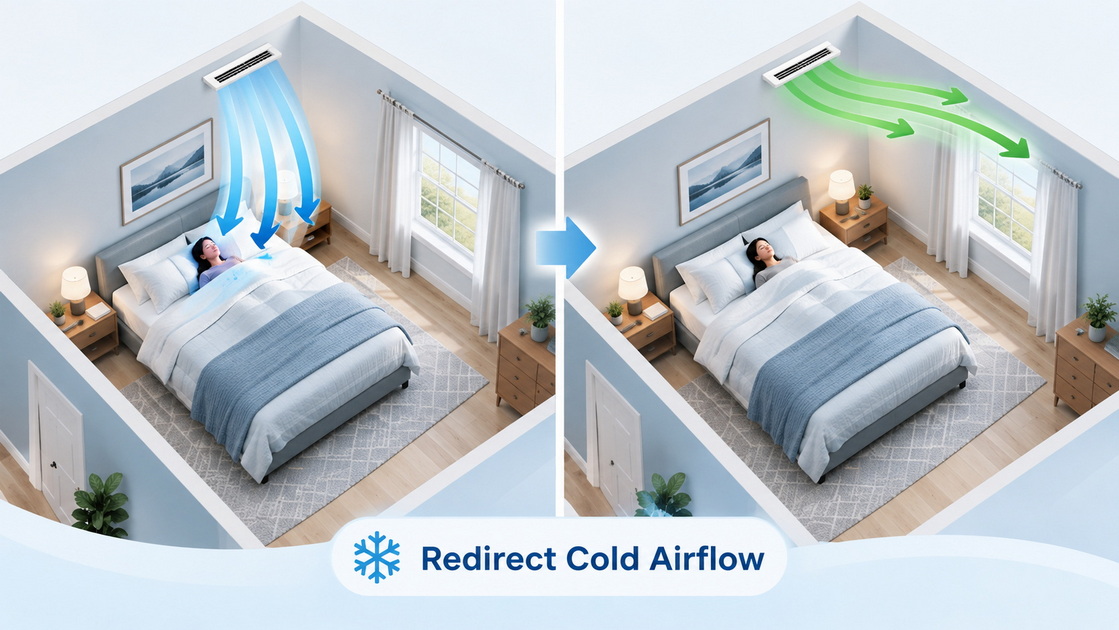
A cool bedroom can be comfortable. Constant cold airflow directed toward your body is often not.
When a supply vent blows directly at your pillow, face, or neck for several hours, it can dry your throat and nasal passages. This is especially noticeable at night because many people breathe through their mouths while sleeping.
Direct airflow can happen with:
- Ceiling vents positioned above a bed
- Floor registers located beside the bed
- Window AC units aimed toward a sleeping area
- Portable air conditioners pointed at a chair or sofa
- Ductless mini-split systems set to a strong fan speed
- Fans used at the same time as the AC
If you feel chilled at night but wake up with a dry throat, the airflow direction may be more important than the thermostat setting.
Try adjusting vent louvers away from the bed. If possible, move the bed out of the direct path of conditioned air. A lower fan setting can also reduce the sensation of cold air blowing continuously across your face.
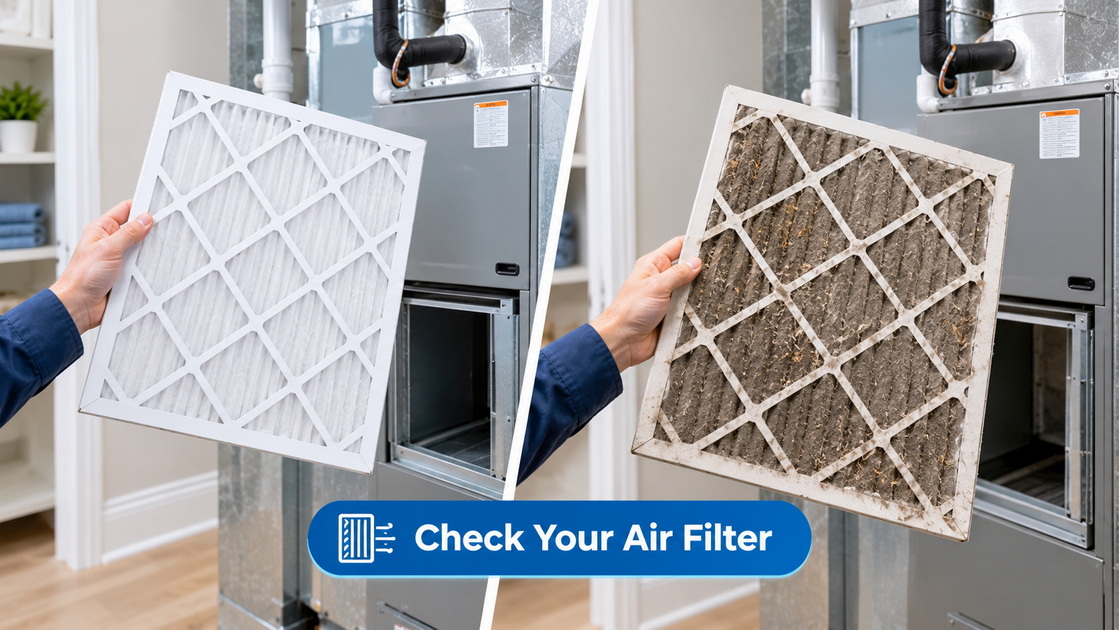
Your HVAC filter plays an important role in keeping dust and airborne particles out of the heating and cooling system. Over time, the filter can collect lint, dust, pet hair, dander, pollen, and debris.
A dirty filter can restrict airflow and may contribute to uneven comfort throughout your home. It can also allow more dust to accumulate around registers and inside the system when filtration is not adequate for the household.
It may be time to inspect your filter if you notice:
- Visible dust or dark buildup on the filter
- Weak airflow from supply vents
- More dust around registers
- Unusual odors when the system starts
- Increased sneezing or throat irritation indoors
- Rooms that cool unevenly
- Higher energy bills during the cooling season
Check the filter regularly during periods of heavy AC use. Replacement intervals vary based on the filter type, whether you have pets, household dust levels, outdoor air quality, and how often the system runs.
It is also important to choose a filter that matches your HVAC equipment. A filter that is too restrictive for the system may reduce airflow. A heating and cooling professional can help identify an appropriate filtration option for your home and household needs.
If your sore throat comes with sneezing, itchy eyes, congestion, or frequent coughing, airborne irritants may be part of the issue.
Air conditioning moves air through return vents, filters, ducts, and supply registers. If dust, pet dander, pollen, or other particles are present in the home, they may continue to circulate as the system operates.
Potential indoor triggers include:
- Dust and dust-mite allergens
- Pet dander
- Outdoor pollen
- Smoke particles
- Household cleaning-product fumes
- Fragrances and air fresheners
- New paint, carpet, furniture, or building materials
- Moisture-related odors or particles
A clean home, properly maintained HVAC system, appropriate filter, and balanced airflow can make a meaningful difference. If symptoms mainly occur in one room, the issue may be localized to that room's airflow, vent placement, furnishings, dust accumulation, or moisture conditions.
Dry air can irritate your throat, but too much moisture can also create indoor comfort problems. Moisture can contribute to musty odors, condensation, and conditions that support mold growth.
Pay attention to signs such as:
- A persistent musty smell when the system turns on
- Water around the indoor unit or drain line
- Condensation on windows or walls
- Visible staining near vents, ceilings, or air handlers
- A damp feeling in certain rooms
- Humidity that remains high even when the AC runs
Do not try to solve a moisture problem by simply adding fragrance, covering vents, or ignoring unusual odors. A heating and cooling professional can inspect the system's drainage, cooling performance, airflow, and moisture-control conditions.
You do not need to choose between staying cool and feeling comfortable. A few practical changes can improve your sleeping environment, indoor air, and daily comfort.
Do not guess whether your home is dry. Use a hygrometer in the room where symptoms are most noticeable, such as the bedroom or home office.
If humidity is consistently below 30%, the air may feel dry enough to irritate the throat and nasal passages. A properly maintained humidifier may help in some situations.
However, adding moisture when indoor humidity is already high can create condensation and moisture-related concerns. Measure first, then make adjustments based on the actual conditions in your home.
Inspect the path of the air coming from your vents or cooling equipment.
Use these simple adjustments:
1. Turn vent louvers away from the bed or seating area.
2. Avoid sleeping directly beneath a ceiling supply vent.
3. Set a mini-split or window unit to direct air upward or across the room rather than toward your face.
4. Use a lower fan setting at night when possible.
5. Move furniture that blocks return vents or supply registers.
6. Consider changing the bed position if airflow cannot be redirected.
The best bedroom airflow is gentle, evenly distributed, and not focused on one person for hours at a time.
Setting the thermostat very low may make a room feel uncomfortably cold, particularly at night. It can also increase runtime and remove more moisture from indoor air.
Instead of creating a dramatic temperature difference between indoors and outdoors, choose a moderate setting that keeps the household comfortable. Consistent temperatures often feel better than frequent large adjustments.
A programmable thermostat can help maintain a more stable overnight environment. You may prefer a slightly warmer sleeping temperature if your bedroom tends to feel dry or if the supply vent is close to the bed.
A clean HVAC filter supports better airflow and helps manage the particles that move through your system.
When replacing the filter, confirm:
- The correct filter size
- The airflow arrow direction
- The recommended replacement schedule
- Whether the filter fits securely
- Whether the filter type is suitable for your equipment
If you have pets, allergies, frequent dust, or a home with high HVAC runtime, you may need to inspect the filter more often.
Your HVAC system needs open pathways for air to move properly. Furniture, curtains, rugs, storage boxes, and wall décor can interfere with airflow when placed over or directly in front of vents.
Keep supply registers open unless a professional has recommended a specific adjustment. Avoid closing multiple vents in an attempt to force more air into another room. This can create pressure problems, reduce system efficiency, and make comfort issues worse.
Vacuum visible dust around registers and return grilles as part of your regular cleaning routine.
A system can still cool your home while operating below its best level. Regular maintenance helps identify concerns before they develop into larger comfort, reliability, or efficiency problems.
A professional maintenance visit may include an inspection of:
- Airflow and blower operation
- Filter condition
- Cooling performance
- Drainage and condensate components
- Electrical connections
- Thermostat operation
- Indoor and outdoor equipment condition
- Unusual noises, odors, or signs of wear
Routine service is especially valuable before heavy summer use. It can help you identify why one room is too cold, why humidity feels inconsistent, or why the system seems to run longer than expected.
A humidifier can be useful if your home's air is genuinely too dry. It is not always the right first answer.
Before using one every night, check humidity in the room. If the reading is low, a humidifier may improve comfort by adding a controlled amount of moisture to the air.
Use humidifiers carefully:
- Clean the unit according to its manufacturer instructions.
- Empty and refill the water reservoir regularly.
- Use clean water.
- Monitor humidity with a hygrometer.
- Watch for condensation on windows and walls.
- Reduce or stop humidifier use if humidity rises too high.
A humidifier should help maintain balance. It should not hide an unresolved airflow, drainage, ductwork, insulation, or HVAC performance issue.
It is easy to associate a sore throat with air conditioning when symptoms appear during hot weather. But many health conditions can cause similar symptoms.

A sore throat may be related to:
- A cold or other respiratory illness
- Seasonal allergies
- Strep throat
- Sinus drainage
- Acid reflux
- Mouth breathing during sleep
- Dehydration
- Smoking or secondhand smoke
- Certain medications
- Exposure to strong odors or chemicals
Consider how your symptoms behave. If your throat feels dry only after sleeping in a strongly cooled room and improves after changing the airflow, indoor conditions may be contributing. If symptoms include fever, body aches, swollen glands, severe pain, or persistent coughing, the cause may not be related to your HVAC system.
Seek medical attention for concerning symptoms, including difficulty breathing, difficulty swallowing, dehydration, blood in saliva or phlegm, severe symptoms, or symptoms that do not improve.
It may be time to have your heating and cooling system checked when throat irritation happens repeatedly while the AC is running, particularly when it is combined with other comfort concerns.
Consider professional service if you notice:
- A bedroom that is much colder than the rest of the house
- Air blowing directly onto the bed or sofa
- Very dry indoor air
- Humidity that changes dramatically from room to room
- Weak or inconsistent airflow
- Excessive dust near vents
- Musty odors when the system starts
- Water around indoor HVAC equipment
- Filters that become dirty unusually fast
- Frequent cycling, constant operation, or unusual noises
- Cooling costs that rise without a clear reason
A trained technician can assess your system as a complete home-comfort system. That may include airflow, filter selection, thermostat settings, cooling performance, drainage, ductwork, and indoor humidity.
Your cooling system should make your home feel refreshing, not leave you waking up with a dry throat, cold drafts, and uneven temperatures.
If air conditioning appears to be contributing to dry air, throat irritation, poor airflow, or inconsistent comfort, Mega Services Heating & Cooling can help identify what is happening inside your home. Our experienced team provides heating and cooling installation, repair, maintenance, and home-comfort support designed around safe, comfortable, and energy-efficient living.
A professional assessment can help you improve airflow, manage humidity, support cleaner indoor air, and keep your system operating reliably through the cooling season.
Sleeping with air conditioning on can contribute to a dry or irritated throat when cold air blows directly on your face or neck, the bedroom air is too dry, or you breathe through your mouth while sleeping. Redirecting airflow and monitoring humidity can improve comfort.
The most common causes include low humidity, direct airflow near the bed, mouth breathing during sleep, dusty filters, or airborne irritants. Start by checking bedroom humidity, adjusting vent direction, and inspecting the HVAC filter.
For many homes, an indoor relative humidity range of approximately 30% to 50% provides a good balance between comfort and moisture control. A hygrometer can help you monitor the actual conditions in your home.
A dirty air filter may contribute to weak airflow and increased dust or particles around the HVAC system. While it may not be the only cause of throat discomfort, regular filter inspection and replacement can support cleaner airflow and better system performance.
A humidifier can help if your indoor air is too dry. Check humidity before using one and monitor the room carefully. Too much moisture can cause condensation and may create other indoor comfort concerns.
Yes. If dust, pet dander, pollen, or other particles are present indoors, air circulation can make allergy-related symptoms more noticeable. Proper filtration, cleaning, airflow management, and routine system maintenance can help improve indoor conditions.
Seek medical care if you have difficulty breathing, trouble swallowing, dehydration, blood in saliva or phlegm, severe pain, high fever, or symptoms that do not improve. A sore throat can be caused by many health conditions and should not automatically be attributed to air conditioning.
1. Logan A/C & Heat.
2. United States Environmental Protection Agency.
3. United States Environmental Protection Agency.
4. Centers for Disease Control and Prevention.
5. Centers for Disease Control and Prevention.


