
Views: 213 Author: Mega Services Publish Time: 2026-10-08 Origin: Site


Content Menu
● When Does Homeowners Insurance Cover Air Conditioner Damage?
>> A Breakdown After a Storm Is Not Automatically Storm Damage
● Central AC vs. Window AC: Which Insurance Coverage Applies?
>> Central Air Conditioning and Dwelling Coverage
>> Window and Portable Air Conditioners
● When Homeowners Insurance Usually Does Not Cover AC Repairs
>> Does Homeowners Insurance Cover AC Power Surge Damage?
● Does Homeowners Insurance Cover Water Damage From an AC Leak?
>> An Illustrative Condensate Leak Scenario
● How to Document AC Damage Before Filing a Claim
>> 1. Address Immediate Safety Concerns
>> 2. Photograph the Equipment and Surroundings
>> 3. Request a Written Diagnostic Report
>> 4. Contact Your Insurer Promptly
>> 5. Maintain One Organized Claim File
● Will Insurance Pay for AC Replacement or Only Repairs?
>> Replacement Cost vs. Actual Cash Value
>> How Your Deductible Affects Payment
● Equipment Breakdown Coverage vs. Home Warranties
● How AC Maintenance Helps Protect Comfort
● Get a Clear Diagnosis Before Making an Expensive Decision
>> 1. Does Homeowners Insurance Cover an AC Compressor?
>> 2. Does Homeowners Insurance Cover AC Replacement After Hail?
>> 3. Is an Old Air Conditioner Automatically Excluded?
>> 4. Can I Repair My AC Before the Adjuster Visits?
>> 5. Will a New, Efficient AC Reduce My Insurance Premium?
>> 6. What Should I Do if My AC Claim Is Denied?
Does homeowners insurance cover AC units? Often, yes—but coverage usually depends on what caused the damage. Fire, lightning, theft, and certain storm-related events may qualify. An air conditioner that fails because of age, ordinary wear, or a routine mechanical problem usually does not qualify under standard homeowners coverage.
For homeowners facing a hot house and an unexpected repair bill, this distinction matters. Two air conditioners can develop similar symptoms but receive different insurance decisions because the underlying causes differ.
At Mega Services Heating & Cooling, we help families maintain safe, comfortable, energy-conscious homes through air-conditioning and heating installation, repair, and maintenance. Our advice is to separate the technical problem from the payment question: first establish what happened, then review which coverage may apply.
The most important factor is cause, not simply whether your air conditioner needs repair or replacement.
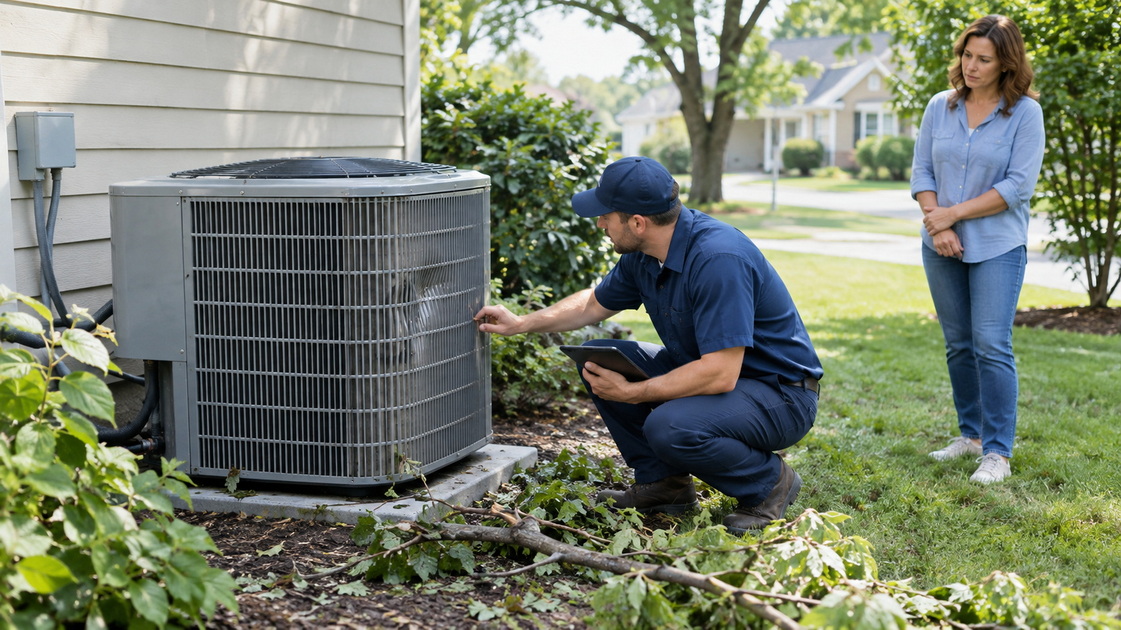
Homeowners insurance may help pay to repair or replace an air conditioner damaged by a covered event. However, coverage remains subject to your policy's exclusions, deductibles, limits, and claim settlement terms.
The following table provides a starting point, not a guarantee of payment.
| Cause of AC Damage | General Coverage Position | What to Verify |
|---|---|---|
| Fire | May be covered | Cause of loss and applicable exclusions |
| Lightning | May be covered | Evidence connecting the event to equipment damage |
| Hail | May be covered | Functional damage and any storm deductible |
| Falling tree or branch | May be covered | Circumstances and applicable policy terms |
| Theft or vandalism | May be covered | Covered perils and supporting documentation |
| Ordinary compressor failure | Usually excluded | Warranty or equipment breakdown protection |
| Age-related deterioration | Usually excluded | Whether another contract applies |
| External flooding | Generally excluded from standard homeowners insurance | Separate flood insurance coverage |
The equipment type also matters. A central air-conditioning system and a removable window unit may fall under different sections of the same policy.
An air conditioner that stops working immediately after a thunderstorm deserves investigation. However, timing alone does not establish that lightning, wind, or another covered event caused the failure.
A technician's report should distinguish observed findings from assumptions. Impact damage, burned components, electrical testing, and equipment condition may help explain what happened.
Ask for an accurate diagnosis rather than a report written to support a predetermined claim. Clear evidence helps everyone involved understand the loss.
Understanding how your equipment is classified can help you ask better questions when reporting a claim.
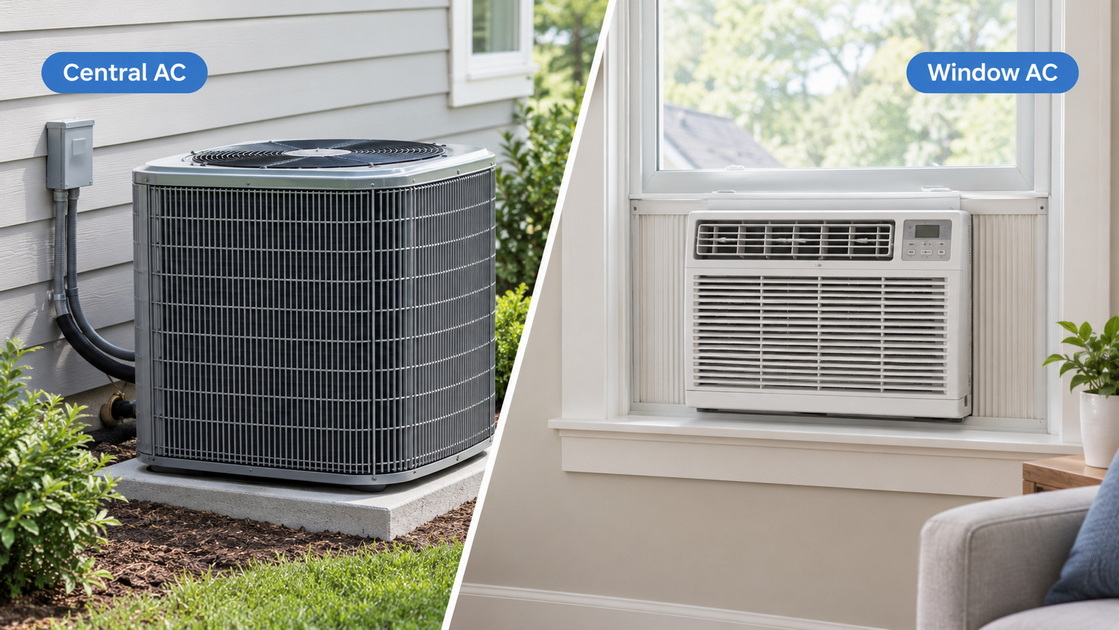
A permanently installed central air-conditioning system is generally considered part of the home. Damage from a covered event may therefore fall under dwelling coverage.
Equipment installed as part of a detached garage or another separate building may involve other structures coverage instead.
Ask your insurer to confirm the correct classification. Coverage limits and settlement terms can differ between policy sections.
Removable window air conditioners generally fall under personal property coverage rather than dwelling coverage. Portable units may also be treated as household belongings, depending on the policy.
Personal property coverage can have different covered perils and settlement terms from dwelling coverage.
Do not assume that protection for the building automatically provides identical protection for every appliance inside it.
Standard homeowners insurance is not designed to pay for every equipment failure.
An aging compressor, worn fan motor, or routine mechanical breakdown ordinarily remains the homeowner's responsibility unless an endorsement, warranty, or separate service contract applies.
Common issues that require separate review include:
- Ordinary wear and tear.
- Gradual deterioration.
- Lack of maintenance.
- Existing installation problems.
- Damage associated with ongoing leakage or neglect.
The symptom alone does not establish coverage. "The air conditioner is not cooling" describes what you experience, but it does not explain why the system failed.
Lightning-related damage may qualify, but not every electrical failure receives the same treatment.
Ask your insurer whether the circumstances fall under standard coverage or an equipment breakdown endorsement. Certain endorsements address electrical and mechanical failures, but their definitions, exclusions, and deductibles still apply.
Likewise, do not assume additional coverage automatically includes faulty installation or preexisting problems. Review the actual contract.
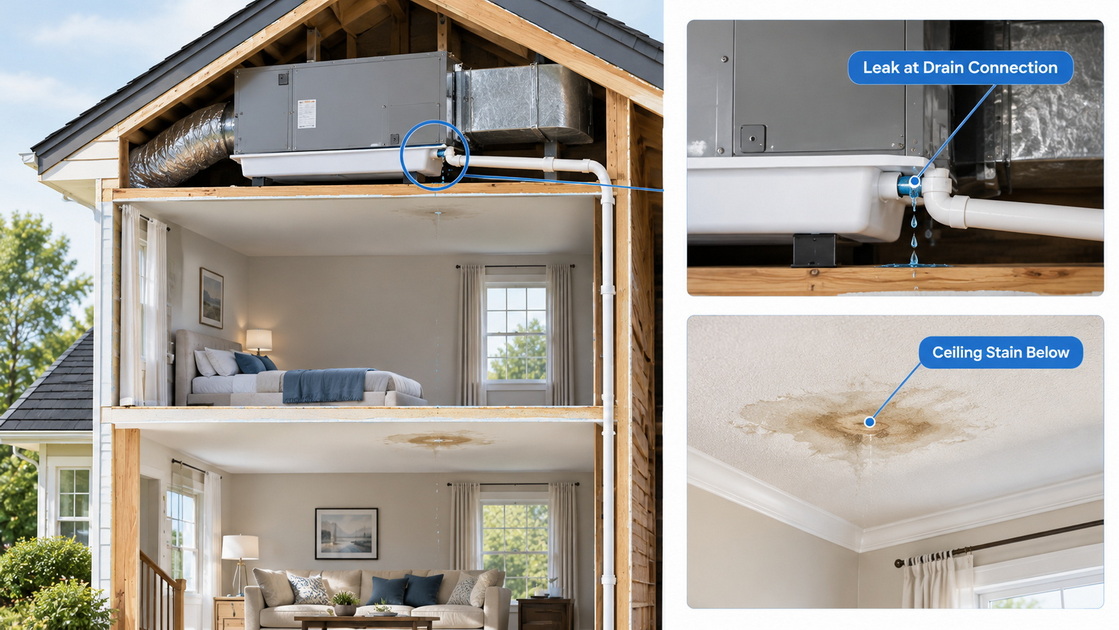
An air-conditioning leak can create two separate expenses:
1. Repairing the equipment or drainage problem.
2. Repairing damaged ceilings, walls, flooring, or belongings.
These expenses may receive different coverage decisions.
Sudden, accidental water damage may qualify under homeowners insurance. Ongoing leakage, neglected maintenance, and gradual damage are commonly excluded, although the specific circumstances and policy language control.
An insurer might cover resulting damage to the home without paying to replace the worn component that caused the leak. Approval or denial of one expense does not necessarily determine every other expense.
Imagine a homeowner notices water beneath an upstairs air handler and a new stain on the ceiling below. This is an illustrative example, not a documented Mega Services customer case.
The homeowner should photograph the affected areas and arrange an inspection. Useful questions include:
- When was the water first noticed?
- What caused the leak?
- Is there evidence of prolonged moisture exposure?
- What work is necessary to prevent additional damage?
An indoor condensate leak is also different from external flooding. Standard homeowners insurance generally excludes flood damage, so separate flood coverage may need to be reviewed.

Good documentation connects the reported event, equipment condition, and proposed repair. It cannot make an excluded loss covered, but it can reduce uncertainty.
Do not operate equipment that appears flooded, burned, or electrically damaged. Avoid touching wet electrical components or opening equipment panels yourself.
If there is an immediate hazard, prioritize emergency assistance. Otherwise, arrange a qualified inspection before restarting the system.
When safe, take photographs of:
- The entire unit and its location.
- Visible impact, fire, or water damage.
- The model and serial-number label.
- Nearby branches, debris, or water marks.
- Damage inside the home.
Record when you discovered the problem. Photograph conditions before cleanup or repairs change the scene.
A useful report identifies the damaged components, testing performed, likely cause, and recommended work.
It should also acknowledge uncertainty. If replacement is recommended, ask why repair is impractical and which components need replacement.
The contractor evaluates the equipment. The insurer determines whether the policy covers the loss.
Ask about reporting deadlines, inspections, and emergency repair authorization. Explain any immediate work needed to prevent further damage.
Before discarding damaged components, ask whether they must be retained for inspection. Keep receipts for temporary measures and authorized repairs.
Store your policy, claim number, photographs, diagnostic report, estimates, maintenance records, and correspondence together.
Create a short timeline showing when the event occurred, when damage was discovered, whom you contacted, and what work was completed.
Damage does not automatically justify replacing the entire HVAC system.
Depending on the policy and loss, an insurer may accept a repair, replacement of a damaged component, or a broader replacement scope.
If additional components must be replaced, request a written explanation. Equipment compatibility and repair feasibility should be documented, not assumed.
Replacement cost coverage generally concerns replacing damaged property with equipment of similar kind and quality without deducting depreciation from the covered replacement amount.
Actual cash value generally accounts for depreciation based on factors such as age and condition.
Your policy may also impose conditions on receiving full replacement-cost benefits. Ask whether payments occur in stages and what proof of completed work is required.
A covered replacement does not necessarily fund a premium efficiency upgrade. Separate necessary replacement costs from optional improvements.
Consider an illustrative example:
- Accepted covered repair amount: $5,000.
- Applicable deductible: $1,000.
- Potential payment before other adjustments: $4,000.
This is not a repair estimate or coverage promise. Depreciation, limits, exclusions, and other adjustments can change the payment.
For a smaller repair, review the deductible before assuming a claim will provide meaningful reimbursement.
Homeowners insurance, equipment breakdown protection, and warranties address different risks.
| Type of Protection | Main Purpose | Important Limitation |
|---|---|---|
| Homeowners insurance | Damage from covered events | Usually excludes ordinary wear |
| Equipment breakdown endorsement | Certain mechanical or electrical failures | Endorsement definitions and exclusions apply |
| Home warranty | Contract-defined repairs to covered systems | Limits, fees, and service requirements apply |
| Manufacturer warranty | Eligible product defects | Parts, labor, and registration terms vary |
| Maintenance service | Inspection and preventive care | Does not guarantee insurance coverage |
Before purchasing additional protection, ask:
- Which HVAC components are included?
- Is there a waiting period?
- What deductible or service fee applies?
- Are preexisting problems excluded?
- Who selects the repair contractor?
- What are the repair and replacement limits?
- Which expenses remain the homeowner's responsibility?
The label on a plan matters less than its actual terms. Read the contract before relying on it.
Maintenance cannot guarantee that equipment will never fail or that an insurer will approve a claim. Its practical value is supporting reliable operation and identifying developing problems.
Professional inspections commonly address electrical connections, controls, condensate drainage, coils, and airflow.
Homeowners can also follow a manageable routine:
- Inspect filters according to equipment instructions and household conditions.
- Keep leaves and debris away from the outdoor unit.
- Watch for water around indoor equipment.
- Report unusual noises or performance changes.
- Keep maintenance invoices and repair records.
Records help establish the system's service history. However, they do not override policy exclusions or prove that a particular event caused damage.
When an air conditioner fails, separate three questions: What happened? What work is necessary? Who is responsible for paying?
A technical inspection addresses the first two. Your insurer, warranty administrator, and applicable contracts determine the third.
Homeowners insurance may cover AC damage from a qualifying event, but ordinary breakdowns typically require another payment route. Careful documentation and a clear repair scope help you make decisions with fewer surprises.
Contact Mega Services Heating & Cooling to arrange an AC inspection and discuss repair or replacement options. Request a written scope of work, then confirm coverage with your insurer before authorizing non-emergency work you expect insurance to fund.
Possibly, if a covered event damages it. A compressor that fails because of age or ordinary wear usually is not covered by standard homeowners insurance. An equipment breakdown endorsement or warranty may require separate review.
It may cover repair or replacement when a covered hail event causes functional damage. The insurer will evaluate the loss and appropriate repair scope. Cosmetic marks alone should not be assumed to justify replacing the entire system.
Not necessarily. The cause of damage remains important. Older equipment damaged by a covered event may qualify, although depreciation can reduce payment under actual cash value settlement terms.
Ask your insurer first when practical. Explain urgent safety concerns or work needed to prevent further damage. Photograph conditions, retain receipts, and ask whether damaged parts must be preserved.
Do not assume it will. Ask your insurer whether a specific discount applies. Evaluate replacement around comfort, reliability, operating costs, and installation quality rather than an unconfirmed insurance saving.
Request the written reason and relevant policy language. Compare the explanation with your diagnostic report and photographs. If important facts were overlooked, ask about reconsideration and provide additional evidence. A contractor cannot guarantee reversal of a denial.
1. Logan Services A/C, Heat & Plumbing — "Does Homeowner Insurance Cover AC Units?" Original article used as the starting point for the restructuring and expansion.
2. Allstate — "Does Homeowners Insurance Cover Broken HVAC?" Supports the discussion of covered events, ordinary wear, central and window AC classifications, and hail-related damage.
3. Allstate — "What Does Homeowners Insurance Cover?" Provides background on common covered perils, including fire, lightning, theft, and certain storm events.
4. Travelers — "Does Homeowners Insurance Cover Appliances?" Supports distinctions between built-in equipment, household belongings, and ordinary mechanical breakdowns.
5. Allstate — "Does Homeowners Insurance Cover Water Damage?" Supports the distinction between sudden accidental water damage and gradual leakage or maintenance-related damage.
6. Insurance Information Institute — "Settling Insurance Claims After a Disaster." Supports claim documentation, flood exclusions, depreciation, replacement-cost settlement, and payment conditions.
7. Insurance Information Institute — "Insurance for Your House and Personal Possessions." Provides additional explanation of replacement cost, actual cash value, and property coverage.
8. Travelers — "Equipment Breakdown Coverage for Homeowners." Supports the discussion of optional protection for certain mechanical, electrical, and pressure failures.
9. Federal Trade Commission — "Extended Warranties and Service Contracts." Supports reviewing contract limitations, exclusions, maintenance requirements, and provider responsibilities.
10. Investopedia — "Home Warranty Explained: Coverage, Costs, and Exclusions." Provides background on home warranty contracts and their differences from homeowners insurance.
11. ENERGY STAR — "Maintenance Checklist." Supports the maintenance discussion covering filters, coils, drainage, electrical connections, controls, and airflow.


