
Views: 211 Author: Mega Services Publish Time: 2026-10-10 Origin: Site


Content Menu
● Can You Run Your Air Conditioner in the Rain?
● Can Heavy Rain Damage an Outdoor AC Unit?
>> Ordinary Rain Versus Floodwater
>> Damaged or Missing Protective Panels
>> Saltwater and Coastal Exposure
● Should You Cover Your Air Conditioner When It Rains?
>> Avoid Improvised Storm Protection
>> Check Whether the Outdoor Unit Is a Heat Pump
● Rain, Storms, and Flooding: A Quick Decision Guide
● AC Not Working After Rain: What Should You Do?
>> Observe Symptoms Without Opening the Unit
>> Do Not Repeatedly Reset a Tripping Breaker
>> Dry Equipment Is Not Automatically Safe Equipment
● A Five-Step Air Conditioner Checklist After a Storm
>> 1. Wait Until the Area Is Safe
>> 2. Determine Whether Flooding Occurred
>> 3. Check the Enclosure Externally
>> 4. Note Debris Around the Unit
>> 5. Arrange an Inspection When Warning Signs Remain
● Why Is Your Air Conditioner Leaking Water Inside After Rain?
>> Record Where the Water Appears
>> Have the Drainage System Checked
● Does Rain Clean AC Coils or Improve Efficiency?
>> Focus on Maintenance, Not the Weather
● Should You Repair or Replace a Flood-Damaged Air Conditioner?
● Protect Your Home with Clear Information and Professional Care
>> 1. Can I Leave My Air Conditioner Running During Normal Rain?
>> 2. Should I Cover My AC During a Heavy Downpour?
>> 3. Can I Restart My AC After Floodwater Recedes?
>> 4. Why Does My Indoor AC Leak When It Rains?
>> 5. Does Rain Eliminate the Need for Coil Cleaning?
>> 6. Does a Flooded Air Conditioner Always Need Complete Replacement?
Does rain affect your air conditioner? Usually, ordinary rainfall will not damage a properly installed, well-maintained outdoor AC unit. You can generally continue cooling your home during normal rain. However, flooding, damaged protective panels, and storm-related electrical problems require a different response.
At Mega Services Heating & Cooling, we believe homeowners deserve clear answers without unnecessary alarm. Knowing the difference between normal weather exposure and a genuine equipment hazard helps you protect your family, avoid preventable damage, and make informed repair decisions.
This guide explains when running your AC in the rain is reasonable, what to check after a storm, and when professional attention is necessary.
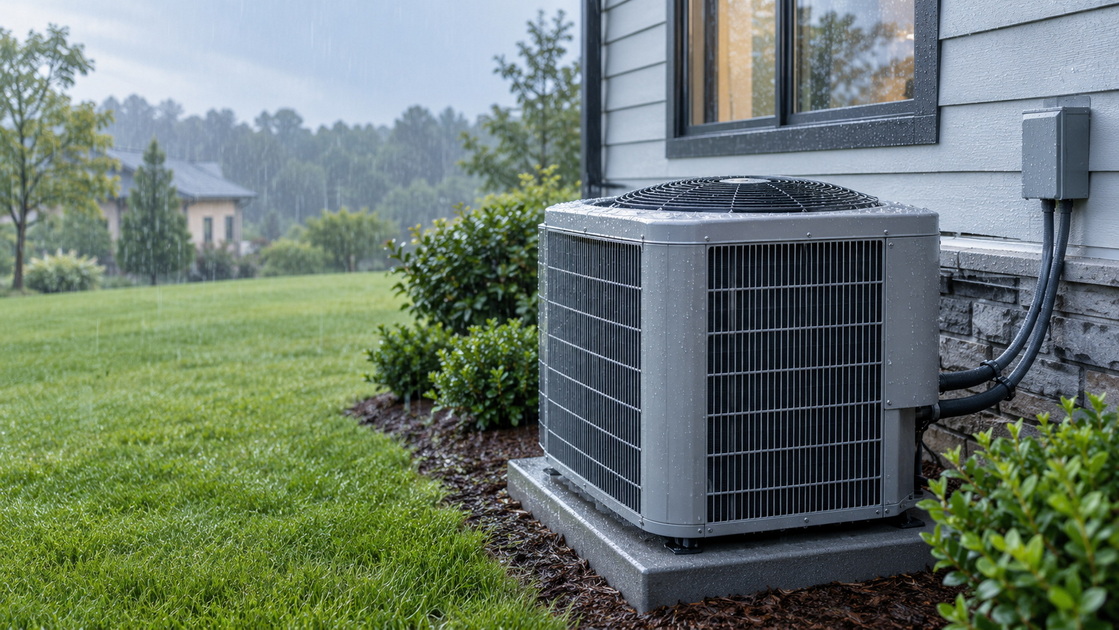
Yes. A central air conditioner's outdoor unit is designed to operate outside, where exposure to rain is expected. Its enclosure helps protect electrical components while allowing airflow through the condenser coil.
The important distinction is rain-resistant, not floodproof.
Rain falling onto an intact outdoor unit is different from floodwater surrounding its base or entering electrical compartments. Protective panels also need to remain properly installed. A missing or damaged cover can expose components that normally stay protected.
If your system cools normally, its enclosure is intact, and no flooding has occurred, ordinary rainfall is generally not a reason to switch it off.
However, do not assume that every shutdown during wet weather is harmless. Repeated breaker trips, visible damage, or water exposure inside electrical compartments deserve professional evaluation.
Heavy rain alone does not automatically damage an air conditioner. The more useful questions are where the water accumulated, whether the enclosure remained intact, and whether storm conditions introduced additional hazards.
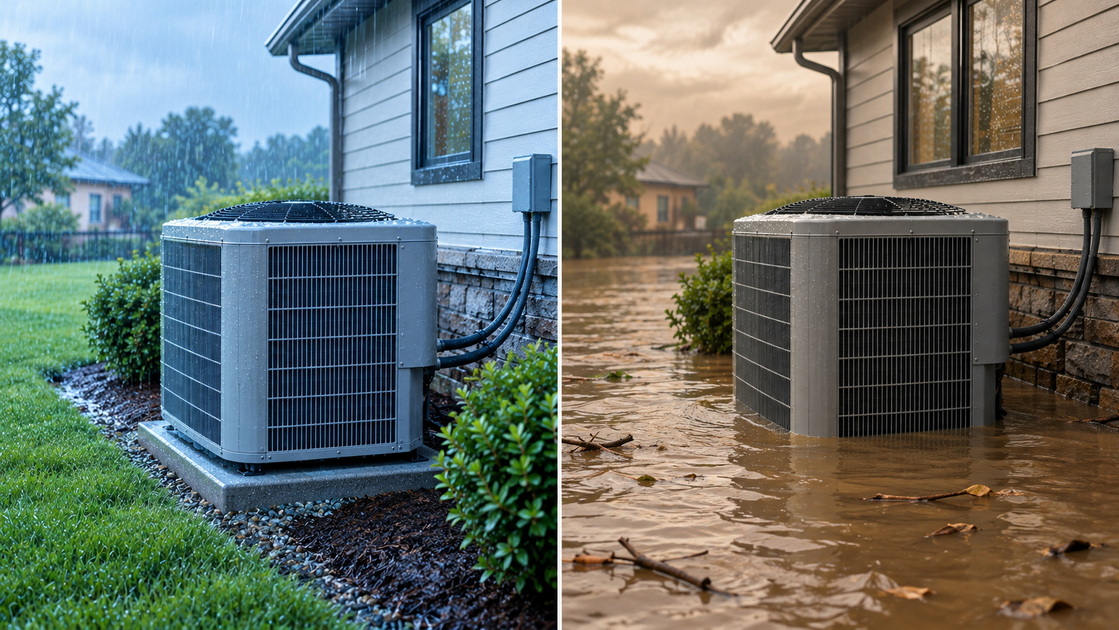
Outdoor equipment can tolerate normal rain exposure. Flooding creates a different problem because water may reach components that were not designed for immersion.
Floodwater can also carry mud, sewage, chemicals, oil, and other contaminants. These substances may damage electrical insulation, leave conductive residue, or contribute to corrosion.
There is no universal safe flood depth for every air conditioner. Component placement, equipment design, and exposure duration vary. A generic rule such as "the water stayed below the fan" cannot establish that a unit is safe.
Protective panels are part of the equipment's weather protection.
After a storm, look from a safe position for panels that appear displaced, bent, or missing. Do not remove them to check for moisture. Opening an electrical compartment turns a simple visual observation into a task requiring appropriate training.
If a panel is damaged, keep the equipment out of service until a qualified professional determines whether operation is safe.
Saltwater introduces additional concerns because salt residue is corrosive and conductive.
Coastal homeowners should distinguish normal rainfall from storm surge or saltwater flooding. Equipment exposed to saltwater needs professional assessment rather than a rinse-and-restart approach.
Even without flooding, airborne coastal salt can increase corrosion concerns. Maintenance recommendations should reflect the equipment model and its installation environment.
An outdoor air conditioner generally does not need a cover during ordinary rain.
Wrapping a unit in a tarp can trap moisture. More importantly, an operating condenser needs unobstructed airflow to release heat. A full cover should never remain over equipment while it runs.
Boards, bricks, plastic sheets, and homemade shelters are not universal solutions. An arrangement that seems protective may interfere with airflow or fail to meet the manufacturer's requirements.
Before installing any accessory, consult the instructions for your specific equipment.
Focus on maintaining the unit's original protective enclosure and keeping its surroundings clear rather than adding an improvised rain barrier.
An AC-only condenser may remain inactive during the heating season. A heat pump, however, may need to operate throughout winter.
Do not copy a neighbor's seasonal covering routine without identifying your system type. Ask your heating and cooling provider whether any off-season protection is appropriate for your equipment.
Use the following table to distinguish ordinary operation from conditions requiring attention.
| Situation | Recommended response |
|---|---|
| Normal rain, intact enclosure, and normal cooling | Continue normal operation. |
| Heavy rain without flooding or equipment damage | Observe conditions; rainfall alone does not establish a problem. |
| Missing or visibly damaged protective panel | Stop operation and arrange an inspection. |
| Floodwater contacted the equipment | Keep it off until qualified professionals evaluate it. |
| Repeated breaker trips after a storm | Stop repeated restart attempts and request professional assistance. |
| Water leaking around indoor equipment | Arrange an inspection to identify the actual source. |
The table is a screening guide, not a substitute for manufacturer instructions or an on-site assessment.
A system that stops after a storm needs diagnosis, but timing alone does not prove that rain caused the failure.
The problem could involve electrical supply, storm damage, protective controls, or an unrelated equipment issue. Avoid jumping directly to an expensive repair conclusion.
Before contacting your service provider, record:
- Whether the thermostat has power.
- Whether the indoor blower runs.
- Whether the outdoor unit appears to start.
- Whether a breaker has tripped.
- Whether floodwater reached the equipment.
- Whether you see damaged panels or indoor water leakage.
These details help explain the situation without requiring contact with wiring or electrical components.
A breaker that trips repeatedly is a warning, not an invitation to keep trying.
Repeated resets do not resolve the underlying problem. Leave the equipment off and arrange qualified assistance, particularly if the shutdown followed water exposure.
A flooded air conditioner may look normal once water recedes. That does not establish that its electrical components are safe.
Contamination and hidden damage can remain after drying. A qualified professional must determine whether affected components require replacement or are eligible for manufacturer-approved reconditioning.
The safest homeowner checklist emphasizes observation, documentation, and appropriate escalation—not electrical repair.
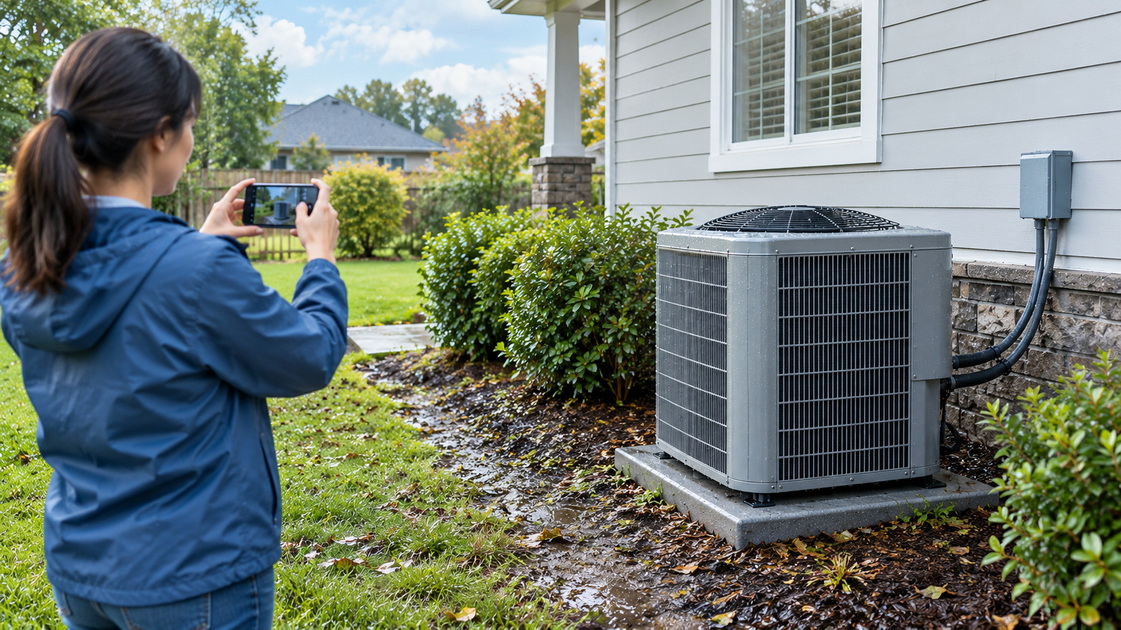
Do not approach equipment surrounded by floodwater to inspect wiring or operate a nearby disconnect.
If you cannot safely reach controls, stay away. Contact qualified assistance rather than entering a potentially hazardous area.
From a safe location, look for standing water, mud deposits, or a visible waterline on the equipment.
Take photographs if conditions permit. Tell your technician whether the unit experienced ordinary rainfall, temporary pooling nearby, or direct floodwater contact.
These distinctions help guide the inspection.
Look for displaced panels, obvious impact damage, or anything that appears different from the unit's normal condition.
Keep the inspection external. Do not open panels or reach through the fan grille.
Once conditions are safe, check for leaves, grass clippings, and other debris around the condenser.
Keeping the surrounding area clear supports proper airflow. However, debris removal is not flood remediation. Clearing leaves does not make water-damaged electrical equipment safe to restart.
Professional attention is appropriate after flooding, recurring shutdowns, damaged protective panels, or suspected electrical problems.
Share photographs and symptom notes when scheduling. Accurate information helps your provider prepare for the visit.
Indoor water near your HVAC equipment does not necessarily mean rain entered through the outdoor condenser.
Air conditioning produces condensate during cooling. Common causes of indoor AC leakage include a clogged condensate drain, a damaged drain pan, or a frozen evaporator coil associated with restricted airflow.
Rainfall and indoor leakage may occur together without sharing the same cause.
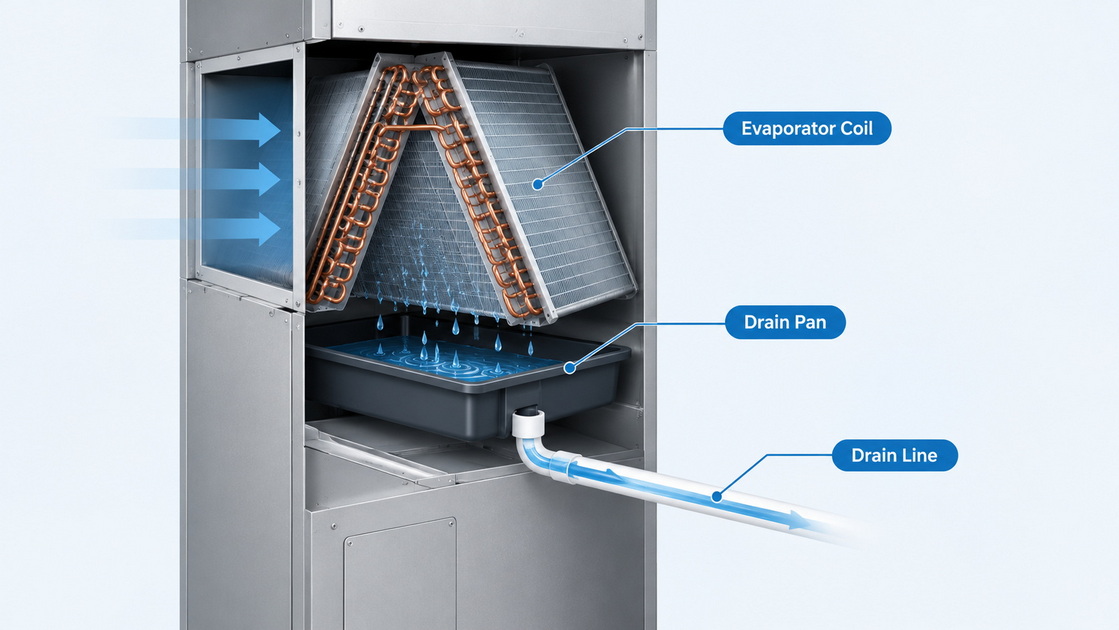
Note whether the water is:
- Beneath the indoor air handler.
- Around a drain connection.
- On a ceiling below HVAC equipment.
- Near a wall or building opening.
Also record whether leakage occurs only while cooling or continues when the system is off.
These observations help distinguish an HVAC drainage problem from water entering the building elsewhere.
Do not dismiss indoor leakage as normal rainy-weather behavior.
A clogged condensate drain can cause water damage and affect indoor humidity. A maintenance inspection should include the drain, pan, and related cooling components.
Identifying the source promptly is more useful than assuming the outdoor unit needs replacement.
Rain does not replace routine air conditioner maintenance.
An outdoor coil may look cleaner after a shower, but appearance alone does not establish that airflow and heat transfer are satisfactory.
Dirty evaporator and condenser coils can reduce cooling performance, increase operating time, and raise energy costs. Recommended maintenance still includes coil inspection, cleaning when necessary, and keeping debris away from outdoor equipment.
Useful maintenance priorities include:
1. Following the equipment's air-filter instructions.
2. Keeping vegetation and debris away from the outdoor unit.
3. Having coils inspected and cleaned as needed.
4. Checking condensate drainage.
5. Addressing damaged protective panels.
The goal is consistent equipment condition—not relying on occasional rain to perform cleaning.
Flood exposure does not automatically mean the entire system must be replaced. It does mean that restarting the equipment should not be the first diagnostic step.
Evaluation should establish which components were exposed, whether contamination occurred, and what the manufacturer permits.
Some components may require replacement. Others may be eligible for professional reconditioning under specific guidance.
Ask your provider to explain:
- Which components were affected.
- Which parts require replacement.
- Whether approved reconditioning is available.
- What testing is necessary before restoring operation.
- What uncertainty remains after inspection.
A documented explanation is more valuable than a general assurance that the unit "looks fine."
Ordinary rain is usually not a threat to an intact outdoor air conditioner. Flooding, damaged enclosures, and electrical warning signs are different matters.
The most practical approach is to keep the unit unobstructed, maintain its protective panels, observe conditions safely, and avoid restarting equipment that may have suffered water damage.
If your air conditioner experienced flooding, stopped working after a storm, or began leaking indoors, contact Mega Services Heating & Cooling to request an inspection. Share what happened, describe the symptoms, and provide photographs taken from a safe location.
Our residential installation, repair, and maintenance services support a straightforward goal: helping families maintain safe, comfortable, energy-conscious homes.
Generally, yes. An intact outdoor AC unit is designed for normal weather exposure. Flooding, damaged panels, or abnormal electrical behavior require a different response.
Ordinary rainfall generally does not require a cover. Never cover an operating condenser, and follow manufacturer instructions before using seasonal protection.
Not before qualified evaluation. Equipment can remain hazardous after drying because contamination or hidden electrical damage may persist.
The timing does not establish the cause. Possible HVAC problems include clogged condensate drains, frozen evaporator coils, and damaged drain pans. Building leaks may also require investigation.
No. Coil inspection, cleaning when necessary, and debris removal remain important maintenance tasks. Rain is not a substitute for a proper assessment.
Not necessarily. The decision depends on affected components, contamination, and manufacturer guidance. Some components require replacement, while others may qualify for professional reconditioning.
1. Original article used for the discussion of normal rain exposure, protective electrical panels, and moisture concerns associated with covering an outdoor unit.
2. Supports the warnings about energizing flood-exposed equipment, contamination, saltwater exposure, and hazards that can remain after drying.
3. Provides guidance on qualified evaluation, manufacturer consultation, replacement, and professional reconditioning of water-exposed electrical equipment.
4. Supports the discussion of condensate-drain inspection, coil maintenance, cooling performance, and operating costs.
5. Supports the maintenance recommendations concerning evaporator-coil inspection and clearing debris from outdoor split-system equipment.
6. Supports the discussion of clogged condensate drains, frozen evaporator coils, dirty filters, and damaged drain pans.
7. Supports the distinction between ordinary rainfall and coastal salt exposure, including corrosion concerns.


