
Views: 211 Author: Mega Services Publish Time: 2026-09-18 Origin: Site


Content Menu
● Why Severe Weather Creates HVAC Safety Risks
● Weather Awareness Before an HVAC Service Visit
>> What Should Be Checked Before Dispatching a Technician
● Thunderstorms, Lightning, and Electrical HVAC Hazards
>> When Outdoor HVAC Work Should Pause
>> What Homeowners Should Do During a Thunderstorm
● Extreme Heat and Air-Conditioning Safety
>> Heat Safety for HVAC Technicians
>> How Homeowners Can Reduce Summer Cooling Problems
>> Safe Steps When Your Furnace or Heat Pump Stops Heating
>> Snow and Ice Around Outdoor Heat Pumps
● High Winds, Flooding, and Storm Damage
>> Do Not Restart Flood-Affected HVAC Equipment
>> What a Post-Storm HVAC Inspection May Include
● A Practical HVAC Severe-Weather Preparedness Plan
>> Homeowner Preparedness Checklist
>> Professional Field-Service Preparedness
● When to Contact Mega Services Heating & Cooling
● Safe Comfort Starts With Preparation
>> 1. Is it safe to run my air conditioner during a thunderstorm?
>> 2. Should I cover my outdoor AC unit before a storm?
>> 3. What should I do if my heat pump is covered in snow or ice?
>> 4. Can an HVAC technician work in an attic during extreme heat?
>> 5. Should I restart my HVAC system after a flood?
>> 6. Why might an HVAC appointment be postponed during severe weather?
Severe weather can disrupt more than a household routine. It can affect indoor comfort, damage heating and cooling equipment, create electrical hazards, and make it unsafe for technicians to travel or work outdoors. A failed furnace during freezing weather, an air-conditioning outage during extreme heat, or a storm-damaged outdoor unit can quickly become a serious concern for a family.
At Mega Services Heating & Cooling, we believe safe service is part of dependable service. Our work is not only about repairing furnaces, air conditioners, heat pumps, and ventilation systems. It is about helping homeowners maintain a safe, comfortable, and energy-efficient indoor environment while protecting the technicians who respond when conditions are difficult.
This guide explains how inclement weather can affect HVAC systems, what homeowners can safely do while waiting for service, and how professional technicians manage risks during heat waves, thunderstorms, winter storms, flooding, and high winds.
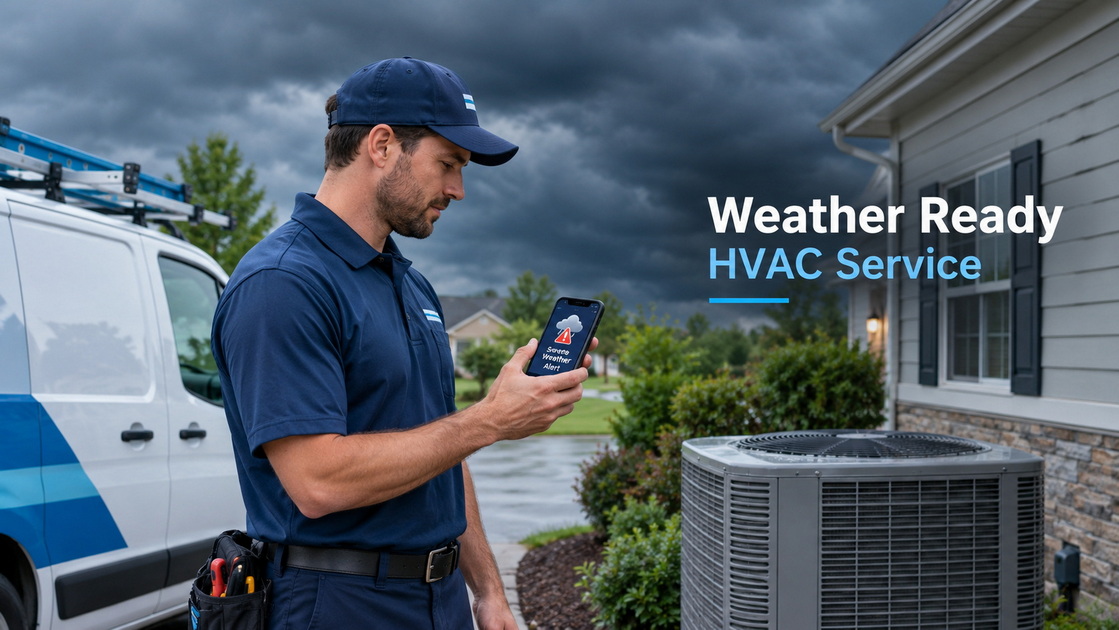
Inclement weather can include thunderstorms, heavy rain, high winds, hurricanes, tornadoes, extreme heat, snow, ice, freezing rain, flooding, wildfire smoke, and power outages. Each condition can affect a heating and cooling system in different ways.
For HVAC professionals, the risk often begins before arriving at the home. Wet roads, ice, poor visibility, floodwater, fallen branches, and downed power lines can make travel unsafe. Once on site, technicians may need to inspect outdoor condensers, heat pumps, furnaces, electrical disconnects, rooftop units, attic equipment, crawlspaces, or ductwork.
A normal repair can become hazardous when weather affects access, visibility, electrical safety, or structural stability.
Common weather-related HVAC risks include:
- Water entering electrical components.
- Lightning exposure near metal equipment and outdoor units.
- Slippery ladders, roofs, steps, and walkways.
- Extreme attic, rooftop, or outdoor temperatures.
- Snow and ice restricting access to heat pumps or vent pipes.
- Wind-blown debris damaging condensers and refrigerant lines.
- Floodwater affecting furnaces, air handlers, ductwork, and wiring.
- Power surges damaging thermostats, capacitors, circuit boards, or compressors.
- Unsafe road conditions delaying a service visit.
Weather emergencies often create pressure to restore heating or cooling immediately. However, safety must always come first. A professional technician should never be expected to work through active lightning, flooded electrical conditions, dangerous wind, unstable structures, or unsafe travel conditions.
The best response to severe weather starts before a service vehicle leaves the shop. A technician should understand the forecast, road conditions, expected hazards, and type of HVAC work required before arriving at a customer's home.
Mega Services Heating & Cooling approaches weather-sensitive appointments with a careful pre-dispatch process. This helps protect the homeowner, the property, and the technician while reducing avoidable delays.
Before a visit is scheduled or dispatched during inclement weather, several factors should be reviewed:
1. Current weather conditions
Rain, lightning, high winds, ice, poor air quality, extreme heat, and severe-weather alerts can affect whether a technician can travel and work safely.
2. Road and travel safety
Flooded roads, black ice, debris, poor visibility, wildfire conditions, and downed utility lines may delay or prevent safe travel.
3. Equipment location and access
Outdoor condensers, rooftop systems, attic air handlers, crawlspaces, furnaces in flooded basements, and equipment behind damaged fencing may require special precautions.
4. Electrical and water exposure
Water near a disconnect box, condenser, furnace, electrical panel, or damaged wiring can turn a standard repair into a serious shock or fire hazard.
5. Household comfort needs
Homes with infants, older adults, individuals with medical conditions, or residents who are highly sensitive to heat or cold may need priority assessment when conditions permit.
6. Technician readiness
Service teams should have reliable communication devices, emergency supplies, proper footwear, protective equipment, lighting, water, and weather-appropriate clothing.
Clear communication is equally important. If weather conditions make it unsafe to travel, climb a ladder, access a roof, or work on an outdoor electrical component, customers should receive an honest update as early as possible.
A postponed appointment is not a lack of service. In many cases, it is the safest and most responsible decision for everyone involved.
Thunderstorms create unique risks for heating and cooling service because HVAC equipment combines electricity, metal components, outdoor exposure, and water.
Air conditioners, heat pumps, outdoor disconnects, rooftop units, electrical panels, ladders, refrigerant lines, and metal tools can all become more dangerous during a lightning event. Heavy rain also increases the possibility of slippery surfaces, water intrusion, damaged wiring, and unstable ground conditions.
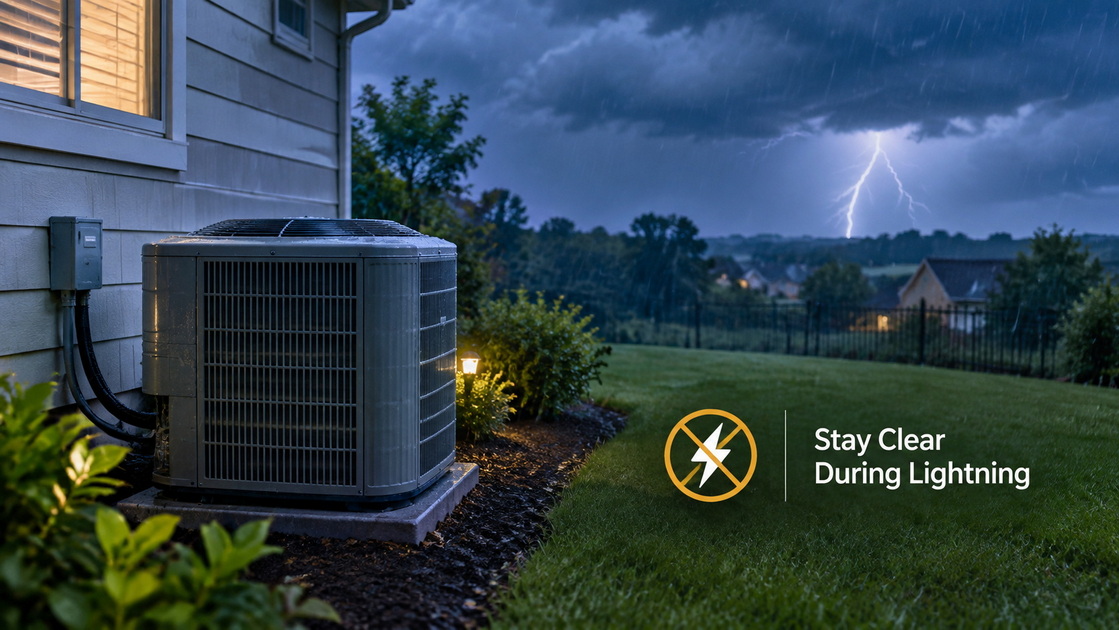
Outdoor work should be stopped or delayed when any of the following conditions are present:
- Thunder is audible or lightning is visible.
- A severe thunderstorm warning is active nearby.
- Heavy rain limits visibility or makes work surfaces slippery.
- High winds make ladder work, roof access, or panel removal unsafe.
- Water is pooling around HVAC equipment or electrical components.
- Power lines are down, damaged, or unusually close to the work area.
- The outdoor unit has visible storm damage.
- The home has experienced electrical surges, burning odors, sparking, or breaker problems.
Technicians should not service energized outdoor HVAC equipment while standing in water, during active lightning, or when electrical components show signs of water damage.
If your heating or cooling system stops working during a storm, avoid attempting repairs on your own.
Use these safety steps instead:
- Check whether the home or neighborhood has lost power.
- Do not touch the outdoor unit if lightning is active.
- Stay away from exposed wires, damaged electrical boxes, or standing water.
- Do not remove furnace, air-handler, heat-pump, or condenser access panels.
- Avoid repeatedly turning the thermostat on and off.
- Do not reset breakers if there is water near the electrical panel, a burning smell, smoke, or visible damage.
- Keep children and pets away from outdoor equipment and damaged areas.
If you smell burning plastic, see smoke, notice sparking, or hear loud buzzing from electrical equipment, move away from the area and contact emergency services if there is an immediate fire risk.
Once the storm has passed and conditions are safe, a qualified technician can inspect the system for water intrusion, surge damage, damaged capacitors, wiring issues, debris, bent coils, or refrigerant-line damage.
Extreme heat can turn an air-conditioning issue into a comfort and health concern, especially for infants, older adults, people with chronic health conditions, and households without another cool place to stay.
High temperatures also make HVAC service more demanding. Technicians may need to work outdoors near hot equipment, in direct sunlight, on rooftops, or in attics that can become far hotter than the temperature outside.
Heat-related illness can develop quickly when workers perform strenuous tasks without adequate water, rest, shade, airflow, or time to adjust to hot conditions.
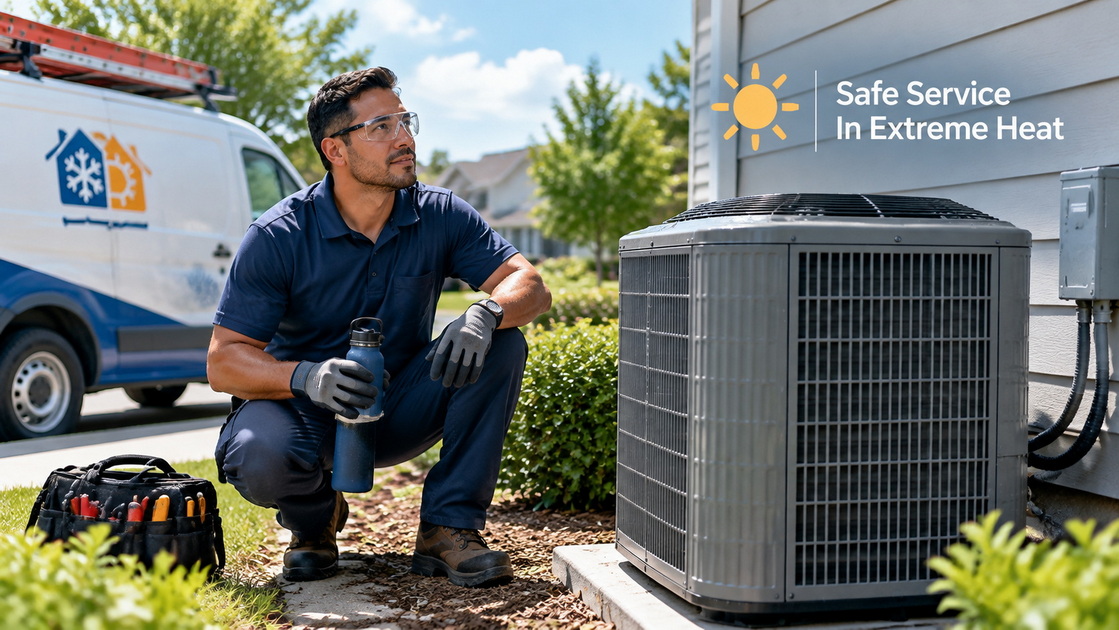
A safe field-service process should include practical measures that reduce heat exposure and help technicians recognize warning signs early.
Important heat-safety practices include:
- Starting physically demanding work earlier in the day when possible.
- Scheduling attic and rooftop tasks outside the hottest hours.
- Drinking water regularly throughout the day.
- Taking planned cooling breaks in an air-conditioned vehicle, shaded space, or cooled indoor area.
- Using lightweight, breathable work clothing when appropriate.
- Checking in with team members during high-heat service days.
- Allowing new and returning employees time to build tolerance to hot working conditions.
- Pausing work immediately if heat illness symptoms appear.
Common symptoms of heat illness may include:
- Headache.
- Dizziness.
- Nausea.
- Unusual fatigue.
- Muscle cramps.
- Heavy sweating.
- Weakness.
- Confusion.
- Fainting.
- Hot or dry skin.
A technician experiencing these symptoms should stop working, move to a cooler place, drink water if alert and able to swallow, and seek medical attention when needed.
Preventive maintenance and simple household habits can reduce unnecessary cooling-system strain during hot weather.
Homeowners can help protect their air conditioner or heat pump by:
- Replacing or checking the air filter regularly.
- Keeping grass, leaves, mulch, and stored items away from the outdoor unit.
- Maintaining clear airflow around the condenser.
- Keeping windows and exterior doors closed while cooling is running.
- Using curtains, blinds, or shades during the sunniest hours.
- Avoiding unnecessary oven use, laundry, and other heat-producing activities during peak afternoon heat.
- Keeping thermostat settings steady instead of making frequent, dramatic changes.
- Booking seasonal maintenance before high-demand summer conditions arrive.
A clean, well-maintained system can operate more reliably, maintain steadier indoor temperatures, and reduce the likelihood of an unexpected breakdown during the hottest days of the year.
Winter storms can bring freezing temperatures, snow, sleet, ice, high winds, and power outages. These conditions can affect furnaces, heat pumps, boilers, ductless systems, vents, electrical systems, and access to outdoor equipment.
A heating failure during a cold-weather event can feel urgent. However, homeowners should avoid risky do-it-yourself repairs, especially when ice, snow, water, combustion equipment, electrical panels, or exterior equipment are involved.
If your home is not heating properly, take the following steps while waiting for professional service:
1. Confirm that the thermostat is set to "Heat" and the temperature setting is above the current room temperature.
2. Replace thermostat batteries if the display is blank or unresponsive.
3. Check whether the home has lost power.
4. Check the electrical panel for a tripped breaker only if the area is dry and there are no signs of smoke, water damage, or electrical burning.
5. Make sure supply vents and return grilles inside the home are not blocked by furniture, rugs, or stored items.
6. Close curtains, blinds, exterior doors, and unused rooms to help retain indoor heat.
7. Dress in layers and use blankets to stay warm.
8. Protect exposed pipes where safe and practical to reduce the chance of freezing.
9. Check visible exterior furnace intake and exhaust vents from ground level for snow or debris blockage. Do not climb onto a roof or enter an unsafe area to clear vents.
Never use a gas oven, charcoal grill, propane heater not rated for indoor use, or generator to heat a home indoors. These actions can create severe carbon monoxide and fire hazards.
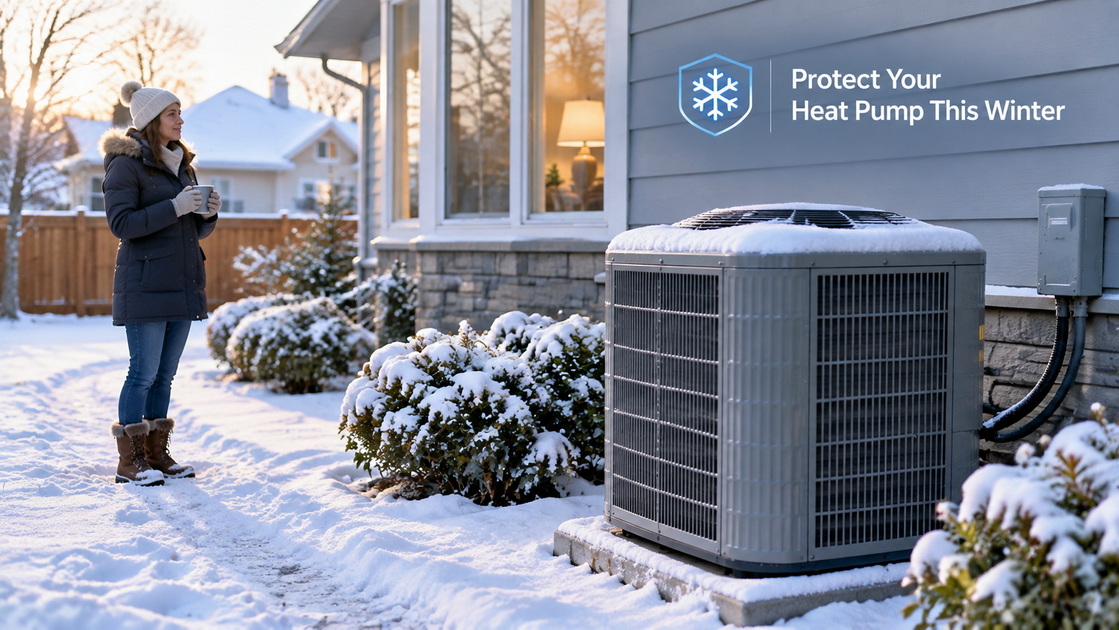
Heat pumps are designed to operate in cold weather, and a normal defrost cycle can create temporary frost or steam. However, heavy snow accumulation, persistent ice buildup, blocked airflow, or damage from falling ice can affect performance.
Do not use sharp tools to chip ice off a heat pump. Do not pour boiling water on the unit. Do not use an open flame, portable heater, or other heat source to melt ice. These methods can damage coils, wiring, plastic components, and fan blades.
If it is safe to do so from ground level, gently remove loose snow around the unit to maintain airflow. If the system is frozen solid, making unusual noises, or not heating properly, professional inspection is the safest solution.
High winds can cause more than visible exterior damage. Flying debris can bend condenser fins, damage fan guards, cut refrigerant lines, loosen electrical connections, shift an outdoor unit, or damage the pad beneath it.
Floodwater creates additional concerns. Water can affect electrical components, motors, insulation, control boards, gas valves, ignition systems, ductwork, and safety switches. Even after visible water recedes, corrosion and hidden contamination may remain.
If floodwater reached any part of your heating or cooling system, do not restart it until it has been inspected by a qualified professional.
This includes:
- Outdoor condensers.
- Heat pumps.
- Furnaces.
- Air handlers.
- Boilers.
- Electrical disconnect boxes.
- Thermostats and low-voltage controls.
- Ductwork.
- Indoor coils.
- Drainage systems.
- Electrical panels connected to HVAC equipment.
Floodwater can create hidden safety problems even when the equipment appears dry from the outside. Restarting a damaged system may cause electrical failure, fire risk, component damage, poor air quality, or additional repair costs.
| Inspection Area | What Is Checked | Why It Matters |
|---|---|---|
| Outdoor unit | Debris, bent coils, damaged fan blades, shifted equipment pad | Helps identify mechanical damage and airflow problems |
| Electrical disconnect | Moisture, corrosion, loose wires, damaged enclosure | Helps reduce electrical shock and fire risk |
| Refrigerant lines | Kinks, punctures, loose supports, insulation damage | Helps prevent refrigerant leaks and reduced efficiency |
| Furnace or air handler | Water exposure, damaged controls, blower issues, corrosion | Supports safe heating and airflow performance |
| Ductwork and insulation | Wet insulation, contamination, moisture damage | Helps protect indoor air quality and system reliability |
| Condensate drainage | Blockages, cracks, standing water, overflow damage | Helps prevent leaks and moisture-related damage |
After a storm, homeowners should photograph visible equipment damage from a safe location. Avoid touching the equipment if water, exposed wiring, structural damage, or downed power lines are nearby.
Weather-related HVAC emergencies are easier to manage when homeowners prepare before the next storm, heat wave, or freeze.
A simple preparedness plan can reduce stress, help prevent damage, and support a faster response when service is needed.
- Schedule seasonal heating and cooling maintenance before peak weather seasons.
- Save Mega Services Heating & Cooling's contact information in your phone.
- Learn where your HVAC breakers and thermostat controls are located.
- Keep flashlights, batteries, bottled water, blankets, and phone chargers available.
- Keep outdoor equipment clear of leaves, branches, furniture, and loose debris.
- Trim vegetation around the outdoor unit during safe weather conditions.
- Know which family members may be especially sensitive to heat or cold.
- Identify a safe temporary location with heating or air conditioning if your home becomes uncomfortable.
- Ask about surge protection and other equipment safeguards for sensitive HVAC components.
- Review generator safety before an outage occurs.
Reliable heating and cooling service depends on preparation behind the scenes. A professional company should have weather-related procedures that support safe travel, timely communication, technician protection, and responsible jobsite decisions.
This includes:
- Monitoring forecasts and local alerts throughout the workday.
- Giving technicians clear authority to stop unsafe work.
- Reviewing road conditions before dispatching vehicles.
- Prioritizing urgent heating and cooling concerns when conditions allow.
- Maintaining service vehicles with emergency supplies and communication equipment.
- Training team members on heat exposure, lightning hazards, winter driving, electrical risks, and post-storm equipment inspection.
- Communicating schedule changes quickly and clearly.
- Documenting unsafe jobsite conditions when a repair must be postponed.
Safe service is not simply about completing the repair. It is about completing the repair under conditions that protect the technician, homeowner, equipment, and home.
Contact Mega Services Heating & Cooling if you experience any of the following concerns:
- No heating during freezing or near-freezing weather.
- No cooling during extreme heat.
- Repeated breaker trips connected to HVAC equipment.
- A burning odor, electrical buzzing, smoke, or visible sparking.
- A damaged outdoor unit after high winds or falling debris.
- Water around a furnace, air handler, condenser, heat pump, or electrical disconnect.
- HVAC equipment exposed to floodwater.
- A system that will not restart after a power outage.
- A furnace vent blocked by snow, ice, or debris.
- Unusual noises, weak airflow, leaking water, or poor indoor comfort after a storm.
If there is an immediate danger involving fire, smoke, gas odor, carbon monoxide symptoms, downed power lines, or a medical emergency, contact emergency services first.
Severe weather can be unpredictable, but preparation can make a meaningful difference. Regular HVAC maintenance, clear communication, proper safety decisions, and timely professional inspections can help protect your home and reduce the risk of a small problem becoming a major disruption.
Mega Services Heating & Cooling is committed to helping families maintain safe, dependable, energy-efficient indoor comfort through every season. When weather affects your heating or cooling system, our team is ready to provide practical guidance, careful assessment, and professional service as soon as conditions are safe.
For dependable heating, cooling, maintenance, and weather-related HVAC inspections, Mega Services Heating & Cooling is here to help protect your comfort when it matters most.
If your system is operating normally and there is no flooding, electrical damage, or power instability, it may continue operating. However, do not touch or attempt to repair outdoor equipment during active lightning or heavy rain. If the system stops, trips a breaker, emits a burning odor, or has visible damage, do not continue restarting it. Arrange a professional inspection after conditions are safe.
Permanent covers are generally not recommended because outdoor condensers need airflow and trapped moisture can contribute to corrosion. Before a high-wind event, remove loose patio items, lawn furniture, branches, and other objects that could strike the unit. After the storm, inspect the area from a safe distance before operating the system.
Do not use sharp tools, boiling water, open flames, or portable heaters to remove ice. If conditions are safe, remove loose snow around the unit from ground level to maintain airflow. If there is heavy ice buildup, reduced heating performance, loud noises, or visible damage, schedule a professional inspection.
Technicians can work in attics only when conditions can be managed safely. High attic temperatures may require shorter work periods, additional hydration, cooling breaks, planned scheduling, and close monitoring for heat illness symptoms. If conditions are unsafe, the work may need to be paused and completed at a safer time.
No. If floodwater reached the furnace, air handler, condenser, heat pump, ductwork, electrical disconnect, or other HVAC components, do not restart the system until a qualified technician has inspected it. Water can cause hidden electrical damage, corrosion, contamination, and safety-control failures.
An appointment may need to be delayed if roads are unsafe, lightning is active, floodwater surrounds equipment, high winds make ladder work dangerous, outdoor electrical components are wet, or the property cannot be safely accessed. The safest option is to wait until conditions allow the technician to assess and repair the system without unnecessary risk.
1. Air Conditioning Contractors of America.
2. National Weather Service.
3. Occupational Safety and Health Administration.
4. Centers for Disease Control and Prevention.
5. U.S. Environmental Protection Agency.
6. National Weather Service.


