
Views: 221 Author: Mega Services Publish Time: 2026-09-20 Origin: Site


Content Menu
● What Does Black Mold Look Like?
>> People Who May Be More Sensitive
● What Causes Black Mold in Homes?
● How Humidity Contributes to Mold Growth
>> Signs Your Home May Have High Humidity
● How Heating and Cooling Systems Affect Mold Risk
>> HVAC Issues That May Contribute to Moisture Problems
>> Why Comfort Is More Than Temperature
● What to Do If You Find Black Mold
>> Step 1: Identify the Moisture Source
>> Step 2: Check Indoor Humidity
>> Step 3: Decide Whether Professional Help Is Needed
>> Step 4: Clean Small Areas Safely
● How to Prevent Mold From Returning
>> Homeowner Mold-Prevention Checklist
● When Heating and Cooling Service Can Help
● Summary
>> 1. Is every black spot in my home black mold?
>> 2. Can black mold grow in air ducts?
>> 3. Can my air conditioner make mold worse?
>> 4. What humidity level should I maintain to prevent mold?
>> 5. Can I remove mold with bleach?
>> 6. How quickly should I dry a wet area after a leak?
>> 7. Will changing my HVAC filter eliminate mold?
>> 8. When should I contact a mold-remediation professional?
Black mold is a common term homeowners use to describe dark mold growth inside a house. While the appearance can be alarming, the most important concern is not the color of the mold. It is the moisture problem that allowed it to grow.
Mold can develop when water, high humidity, condensation, or poor ventilation keeps building materials damp. It may appear in bathrooms, basements, kitchens, attics, laundry rooms, closets, crawl spaces, around windows, or near heating and cooling equipment.
For homeowners, the best response is simple: identify the moisture source, address visible mold safely, dry affected materials quickly, and prevent the conditions that allow mold to return.
Mega Services Heating & Cooling helps homeowners create safer, more comfortable, and more energy-efficient indoor environments. While an HVAC system cannot remove mold from damaged walls, carpets, or insulation, proper heating, cooling, airflow, ventilation, and humidity control can reduce the moisture conditions that contribute to recurring mold problems.
> Important note: This article provides general homeowner education. It is not medical advice or a substitute for professional mold remediation. If someone in your household has serious respiratory symptoms, severe allergies, asthma, a weakened immune system, or a chronic lung condition, seek guidance from a qualified healthcare professional.
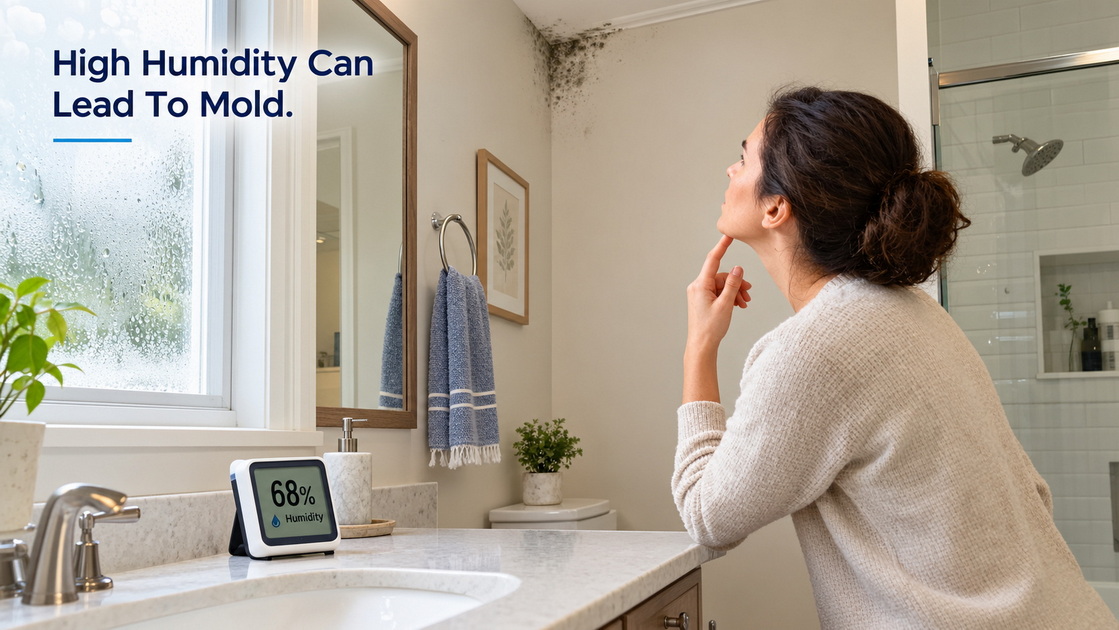
"Black mold" often refers to *Stachybotrys chartarum*, a type of mold that may appear dark greenish-black. It can grow on wet, cellulose-rich materials such as drywall, paper-backed insulation, ceiling tiles, cardboard, wood, and some fabrics.
However, many types of indoor mold can look black, gray, green, brown, or even white. Color alone cannot tell you the exact species, how long it has been present, or whether it is more harmful than another type of mold.
The practical rule for homeowners is this: any visible indoor mold should be taken seriously. Whether it is black, gray, green, or white, mold signals that moisture is present or was present long enough for fungal growth to develop.
Instead of focusing only on the label "black mold," focus on the conditions behind it:
- Where is the moisture coming from?
- How long has the area been damp?
- Is the mold isolated or spreading?
- Is there a musty odor even when no mold is visible?
- Is the affected material porous, damaged, or difficult to dry?
- Is anyone in the home experiencing breathing discomfort or allergy-like symptoms?
The answers to these questions will help determine whether the issue can be managed with careful cleanup and repairs or whether it requires professional remediation.
Mold does not always look the same. It may develop in small spots, larger patches, streaks, fuzzy clusters, slimy areas, or powdery growth. Mold can also hide behind walls, beneath flooring, inside insulation, under sinks, or around HVAC components.
Possible signs of indoor mold include:
- Dark green, black, brown, gray, or white spots on walls or ceilings
- Fuzzy, powdery, slimy, or velvety surface growth
- Water stains or discoloration on drywall
- Peeling paint, bubbling paint, or warped wall surfaces
- Soft or crumbling drywall
- A musty, earthy, damp, or stale odor
- Condensation on windows, ducts, pipes, or cold surfaces
- Recurring mildew around shower areas, windows, or bathroom ceilings
- Rust, standing water, or staining near an indoor HVAC unit
Many homeowners use the terms mold and mildew interchangeably, but they are often used to describe different types of fungal growth.
Mildew is commonly a lighter-colored surface growth. It may appear white, pale gray, or yellowish and often develops in high-moisture areas such as shower grout, bathroom ceilings, window tracks, and damp fabrics.
Mold is a broader term. It may appear darker, thicker, more textured, or more deeply embedded in a material. Mold can also grow behind surfaces where moisture is trapped, making it harder to detect.
Whether you call it mold or mildew, the main goal remains the same: remove the growth, dry the surface, improve moisture control, and prevent recurrence.
Mold affects people differently. Some individuals may notice no symptoms at all, while others may be more sensitive to mold spores, damp indoor conditions, dust, or other airborne particles.
Possible symptoms associated with mold exposure include:
- Sneezing
- Runny or stuffy nose
- Coughing
- Throat irritation
- Wheezing
- Watery, itchy, or burning eyes
- Skin irritation
- Worsened asthma symptoms
- Increased discomfort for people with mold allergies
These symptoms can also be caused by many other indoor and outdoor triggers, including dust mites, pollen, pet dander, smoke, fragrances, cleaning chemicals, viruses, or poor ventilation. That is why homeowners should avoid assuming that mold is the only cause of a health concern.
Certain household members may be more affected by damp or moldy indoor conditions, including:
- Infants and young children
- Older adults
- People with asthma
- People with allergies
- People with chronic respiratory conditions
- People with weakened immune systems
If someone experiences persistent coughing, wheezing, breathing difficulty, recurring asthma flare-ups, or other serious symptoms, contact a healthcare professional. At the same time, address any visible mold and moisture problems in the home as soon as possible.
Mold needs moisture to grow. In many cases, it is not caused by a single dramatic event. A slow leak, recurring condensation problem, blocked drain line, poorly ventilated bathroom, or consistently humid room can create the right environment for mold over time.
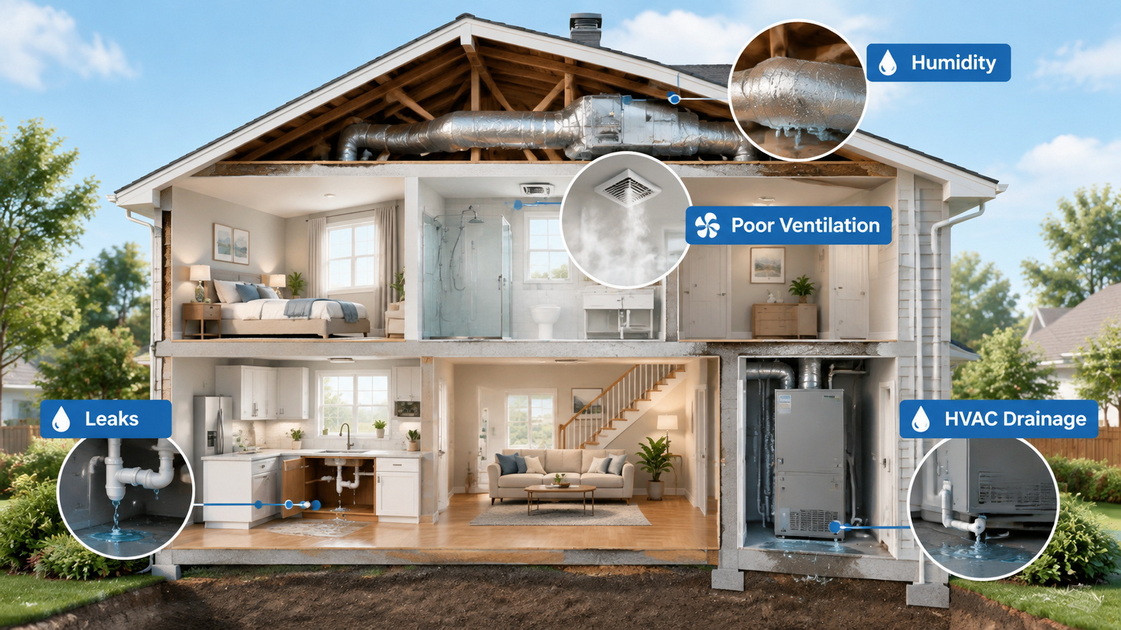
Common indoor moisture sources include:
| Moisture Source | Common Location | Potential Result |
|---|---|---|
| Plumbing leaks | Under sinks, behind walls, near toilets, water heaters, or appliances | Wet drywall, cabinet damage, hidden mold growth |
| Roof leaks | Attics, ceilings, upper-floor walls | Water stains, wet insulation, ceiling mold |
| Window leaks | Window frames, sills, exterior walls | Damp trim, peeling paint, wall damage |
| High indoor humidity | Bathrooms, closets, basements, bedrooms | Condensation and recurring surface mold |
| Poor bathroom ventilation | Bathrooms and nearby hallways | Damp ceilings, mildew, peeling paint |
| HVAC condensate issues | Near air handlers, drain pans, drain lines | Standing water, musty odors, equipment-area moisture |
| Duct condensation | Attics, crawl spaces, utility areas | Wet insulation, dripping ducts, mold-friendly surfaces |
| Flooding or water intrusion | Floors, carpets, walls, basements | Large-scale water damage and hidden mold |
| Appliance leaks | Washing machines, refrigerators, dishwashers | Wet flooring, wall damage, trapped moisture |
A small moisture problem can become a larger issue when it remains unnoticed. For example, a slow leak behind a refrigerator water line may gradually dampen drywall and flooring over weeks or months. By the time a musty smell appears, mold may already be developing behind the wall.
Humidity is the amount of water vapor in the air. When indoor humidity stays too high, moisture can collect on cool surfaces such as windows, pipes, ducts, exterior walls, and air conditioning components.
High humidity often makes a home feel sticky or uncomfortable. It can also increase the likelihood of condensation, especially during warm and humid weather.
A healthy indoor humidity range is generally around 30% to 50%. When humidity regularly rises above 60%, the risk of dampness, condensation, dust mites, and mold-friendly conditions increases.
You may have an indoor humidity issue if you notice:
- Condensation on windows
- Damp or clammy indoor air
- Musty odors
- Persistent bathroom mildew
- Rust around vents, appliances, or HVAC equipment
- Peeling paint or wallpaper
- Warped wood flooring or swollen doors
- Moisture on cold pipes or ductwork
- A home that feels uncomfortable even when the thermostat is set correctly
A small digital hygrometer can help you monitor humidity levels in bedrooms, basements, bathrooms, and other problem areas. Measuring humidity is especially useful because high moisture is not always visible.
Your heating and cooling system plays an important role in indoor comfort. During cooling operation, an air conditioner removes heat from indoor air and also removes some moisture. This moisture collects on the evaporator coil and should drain safely through the condensate system.
When the system is working correctly, it can help support more balanced indoor humidity. However, heating and cooling equipment can contribute to moisture concerns if it is not maintained, properly sized, or operating efficiently.
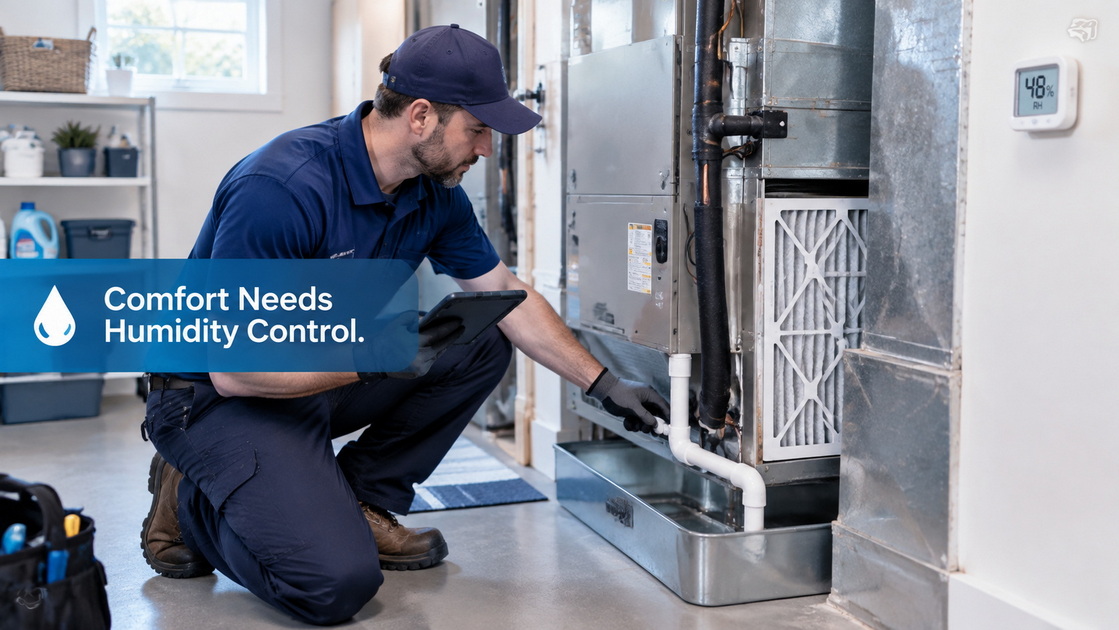
Several HVAC-related issues may create or worsen damp indoor conditions:
- A clogged condensate drain line
- A damaged or overflowing drain pan
- Dirty evaporator coils
- Restricted airflow from a dirty filter
- Duct leaks in a humid attic or crawl space
- Condensation forming on uninsulated ducts
- An oversized air conditioner that cools too quickly
- A system that does not run long enough to remove enough moisture
- Poor return-air duct sealing
- Inadequate ventilation in bathrooms, kitchens, or laundry areas
- Aging equipment that cannot maintain stable comfort and humidity levels
An oversized air conditioner is a common issue that many homeowners do not expect. A system that is too large may cool the air quickly and shut off before it completes enough of a dehumidification cycle. The room may reach the set temperature, but the air can still feel muggy.
A comfortable home is not defined by temperature alone. Two homes may both be set to 72°F, but one may feel dry and comfortable while the other feels damp, sticky, or stale.
Indoor comfort depends on several connected factors:
- Temperature
- Relative humidity
- Air circulation
- Ventilation
- Air filtration
- System airflow
- Duct condition
- Condensate drainage
- Building insulation and sealing
- Moisture control in bathrooms, kitchens, attics, and crawl spaces
A well-maintained HVAC system can support healthier moisture management, but it cannot solve every mold problem on its own. Plumbing leaks, roof leaks, poor drainage, foundation moisture, and water intrusion must also be corrected.
If you find visible mold, do not panic. Start by assessing the size of the affected area, the condition of the material, and the source of moisture.
Do not simply paint over the stain, spray air freshener, or cover the area with furniture. Those actions may hide the problem temporarily while moisture and mold continue to spread behind the surface.
Look for obvious signs of water or condensation:
- Leaking plumbing fixtures
- Dripping pipes
- Wet cabinet interiors
- Water around an air handler
- A clogged HVAC drain line
- A leaking roof or window
- Damp carpeting
- Condensation on ducts
- A bathroom fan that does not work properly
- Water damage near a washing machine, dishwasher, or refrigerator
If the source is not clear, professional inspection may be necessary. The right professional depends on the suspected cause. It may involve a heating and cooling technician, plumber, roofer, electrician, water-damage contractor, or mold-remediation specialist.
Use a hygrometer to check the humidity level in the affected room and throughout the home. If humidity is consistently high, you may need to improve ventilation, repair moisture entry points, adjust HVAC operation, use a dehumidifier, or have your heating and cooling system inspected.
Pay special attention to:
- Bathrooms
- Basements
- Laundry rooms
- Bedrooms with closed doors
- Closets on exterior walls
- Crawl spaces
- Rooms above garages
- Areas near HVAC equipment
Small, isolated mold areas on hard, non-porous surfaces may sometimes be cleaned carefully by a homeowner. However, larger or recurring mold problems often require professional assessment.
Professional mold remediation is generally the better choice when:
- Mold covers a large area
- Mold repeatedly returns after cleaning
- The home has experienced flooding
- The mold is inside walls, ceilings, insulation, carpet, or ductwork
- Sewage or contaminated water was involved
- The affected material is soft, crumbling, warped, or extensively damaged
- There is a strong musty odor with no visible source
- Someone in the household is medically vulnerable
- You cannot locate or fix the moisture source
For small areas on non-porous surfaces, careful cleaning may be appropriate. Wear gloves and eye protection, provide ventilation, and avoid creating airborne dust.
Do not dry-scrape moldy materials. Avoid mixing cleaning products. In particular, never mix bleach with ammonia or other cleaners, as this can create dangerous fumes.
Porous materials such as drywall, insulation, carpet padding, ceiling tiles, and some fabrics may need to be removed if they have been heavily contaminated or cannot be fully dried.
The most important part of cleanup is not the cleaning product. It is making sure the material is dry and the moisture problem has been corrected.
Mold prevention begins with moisture prevention. Routine maintenance can reduce the chance that a small leak, humidity issue, or drainage problem becomes a larger indoor-air-quality concern.
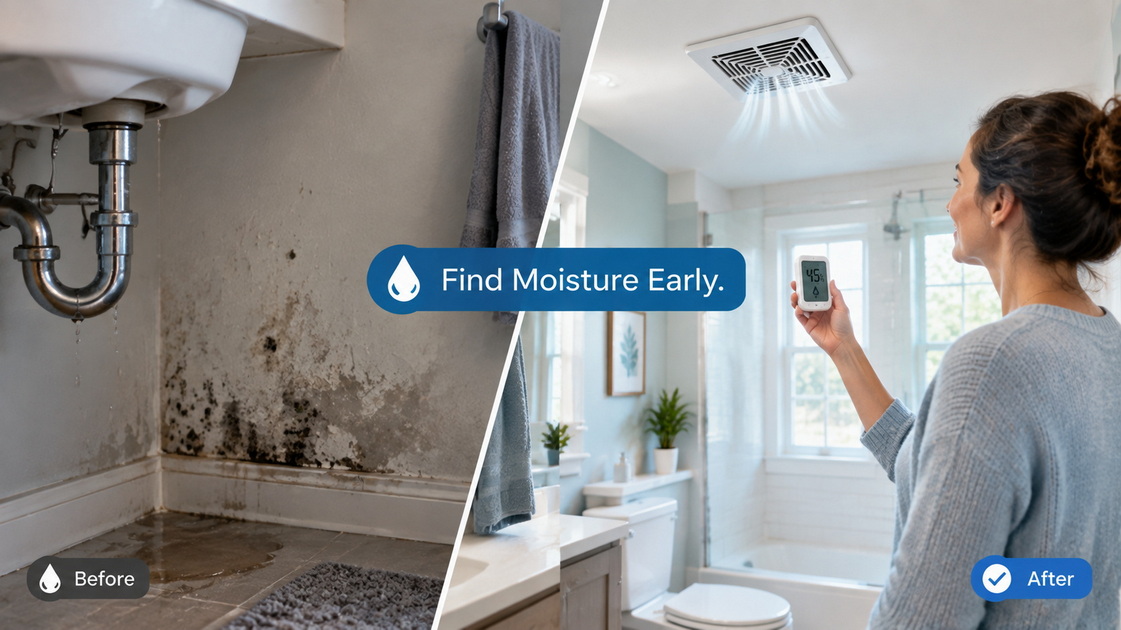
- Keep indoor humidity near 30% to 50% when practical.
- Repair roof, plumbing, window, and appliance leaks quickly.
- Run bathroom exhaust fans during showers and after bathing.
- Use kitchen ventilation while cooking or boiling water.
- Make sure dryer vents discharge outdoors.
- Keep supply and return vents clear of furniture and rugs.
- Replace HVAC filters based on your system's needs and filter type.
- Inspect around indoor HVAC equipment for water, rust, stains, or musty odors.
- Check condensate drains and drain pans during routine system maintenance.
- Use a dehumidifier in damp basements, crawl spaces, or other high-humidity rooms.
- Dry water-damaged materials as quickly as possible.
- Keep gutters, downspouts, and exterior drainage systems in good condition.
- Monitor humid rooms with a hygrometer.
- Schedule regular heating and cooling maintenance.
A homeowner notices a musty smell near an upstairs hallway vent every summer. The filter is replaced, and the smell seems to improve briefly. A few weeks later, the odor returns.
The actual issue may not be the filter. It could be a partially blocked condensate drain, duct condensation in the attic, a leaking roof near the ductwork, an oversized cooling system, insufficient ventilation, or excess humidity inside the home.
The better solution is to investigate the full moisture picture: system drainage, airflow, attic conditions, duct insulation, humidity levels, roof integrity, and bathroom ventilation. Treating the underlying cause is more effective than masking the odor.
Heating and cooling service may be helpful when a home has persistent humidity, uneven temperatures, musty odors around vents or equipment, condensation, poor airflow, or visible water near the indoor unit.
A professional inspection can evaluate system-related issues such as:
- Condensate drainage
- Drain pan condition
- Airflow restrictions
- Dirty coils
- Duct leaks
- Duct insulation
- System sizing concerns
- High indoor humidity
- Return-air leakage
- Filtration and airflow balance
- Ventilation concerns
Heating and cooling service does not replace professional mold remediation when mold-damaged materials need to be removed. However, correcting HVAC-related moisture conditions can be an important part of preventing mold from returning after cleanup.
Mega Services Heating & Cooling is committed to helping homeowners maintain safe, comfortable, and energy-efficient indoor environments. If your home feels humid, has recurring condensation, develops musty odors, or has heating and cooling equipment with visible water or drainage concerns, a professional system assessment can help identify potential contributors.
Black mold is a warning sign that moisture has entered or remained inside the home. The color of mold is less important than the cause behind it. A small damp area can become a larger indoor comfort and property-damage concern when leaks, condensation, poor ventilation, or high humidity are left unresolved.
The most effective approach is to identify the moisture source, remove or professionally remediate mold when necessary, dry affected materials thoroughly, and improve humidity control. Maintaining your heating and cooling system, monitoring indoor humidity, repairing leaks promptly, and improving ventilation can help create a more comfortable living environment for your family.
For concerns involving humidity, airflow, condensate drainage, ductwork, or heating and cooling performance, Mega Services Heating & Cooling can help evaluate the system conditions that may be contributing to indoor moisture problems.
No. Many substances can look dark, including dirt, soot, mildew, staining, and different types of mold. Color alone cannot identify mold species or health risk. However, any suspicious growth or persistent moisture stain should be investigated and addressed.
Mold may grow on dust, insulation, debris, or moisture-prone materials associated with an HVAC system if sufficient moisture is present. However, a musty smell from a vent does not automatically mean mold is inside the ducts. The source may be an air handler, drain line, damp insulation, attic moisture, a nearby leak, or another building-related issue.
An air conditioner can contribute to moisture problems if it has a clogged drain line, overflowing drain pan, dirty coil, duct condensation, poor airflow, or sizing issue. A properly operating system can help remove moisture during cooling cycles, while a poorly maintained system may create conditions that allow moisture to collect.
A practical indoor target is around 30% to 50% relative humidity. Humidity that regularly rises above 60% can increase the risk of condensation and mold-friendly conditions.
Bleach may be used on certain hard, non-porous surfaces when handled carefully and according to safety instructions. However, bleach is not a complete solution for porous materials such as drywall, insulation, carpet, or ceiling tiles. The moisture source must also be corrected, or mold is likely to return.
Water-damaged materials should be dried as quickly as possible. Fast drying reduces the chance that moisture remains trapped in drywall, flooring, insulation, carpeting, or other materials where mold can develop.
Changing the filter can support airflow and help reduce airborne particles, but it will not remove mold growing on wet building materials. Mold must be cleaned or remediated, and the underlying moisture issue must be fixed.
Contact a qualified remediation professional if the mold area is large, returns after cleaning, follows flooding or extensive water damage, is inside walls or insulation, involves contaminated water, or affects a medically vulnerable household member.
1. U.S. Environmental Protection Agency.
2. U.S. Environmental Protection Agency.
3. U.S. Environmental Protection Agency.
4. Centers for Disease Control and Prevention.
5. Centers for Disease Control and Prevention.
6. Centers for Disease Control and Prevention, National Institute for Occupational Safety and Health.
7. One Hour Heating & Air Conditioning.


