
Language
Views: 220 Author: Mega Services Publish Time: 2026-09-06 Origin: Site


Content Menu
● Why Good Air Circulation Matters in a Home
● Common Signs of Poor Air Circulation
>> Signs Your Home May Have an Airflow Problem
● How to Improve Air Circulation in Your House
>> Keep Supply and Return Vents Clear
>> Replace HVAC Filters Regularly
>> Set Ceiling Fans for Each Season
>> Improve Airflow Between Rooms
>> Use Bathroom and Kitchen Exhaust Fans
>> Use Windows for Natural Ventilation When Conditions Allow
>> Choose the Right Thermostat Fan Setting
>> Clean and Maintain HVAC Components
● When to Schedule a Professional Airflow Inspection
● A Simple Home Air Circulation Checklist
● Create a More Comfortable Home With Mega Services Heating & Cooling
● Summary
>> 1. How can I improve air circulation in my house naturally?
>> 2. Why is one room in my house always hotter or colder?
>> 3. Should I close vents in unused rooms?
>> 4. How often should I change my HVAC air filter?
>> 5. Does running the HVAC fan continuously improve air circulation?
>> 6. How long should I run a bathroom exhaust fan after a shower?
>> 7. Do ceiling fans make a room cooler?
>> 8. Can a dirty air filter cause weak airflow?
Poor air circulation can make a home feel uncomfortable even when the heating or air conditioning system is running. One room may feel warm and stuffy, while another stays chilly. Upstairs bedrooms may become difficult to cool in summer, bathrooms may remain humid after showers, and cooking odors may linger longer than they should.
At Mega Services Heating & Cooling, we often find that comfort problems are not caused by one issue alone. A home's comfort depends on the way conditioned air moves through the rooms, how moisture is controlled, whether vents and ductwork are working properly, and how well the HVAC system matches the home's needs.
Improving air circulation can help create a safer, more comfortable, and more energy-conscious living environment. Small changes such as replacing an air filter, adjusting ceiling fans, clearing vents, and using exhaust fans correctly can make a noticeable difference. When those steps are not enough, a professional HVAC inspection can identify the hidden issues affecting airflow and indoor comfort.
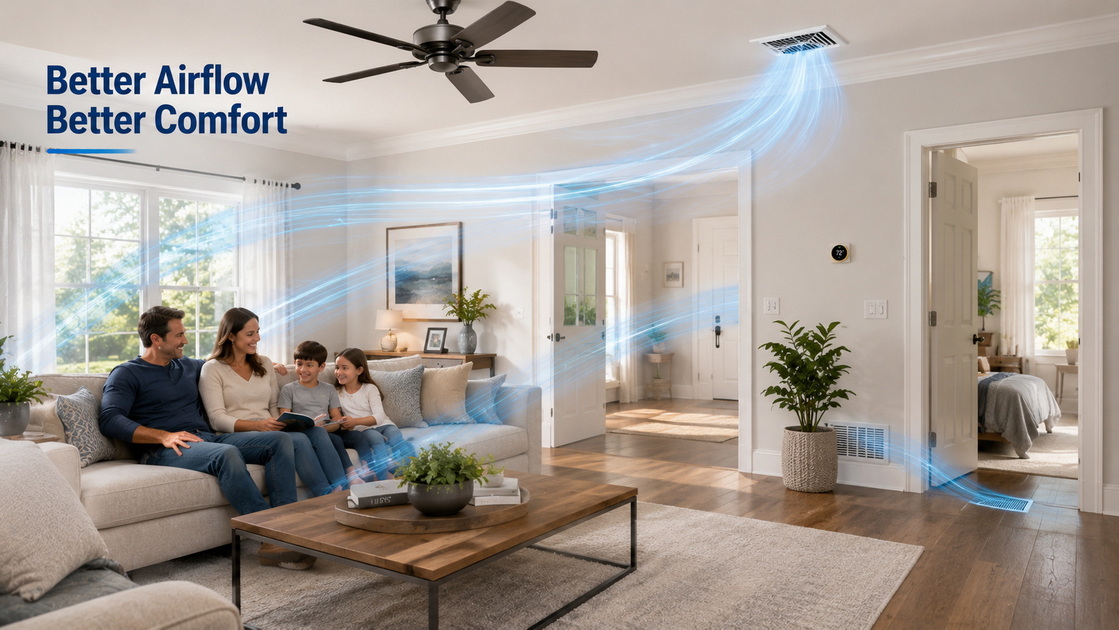
Home air circulation is the movement of air throughout the living space. It includes the airflow created by the heating and cooling system, supply vents, return vents, ceiling fans, bathroom fans, kitchen range hoods, and outdoor air entering through windows when conditions are appropriate.
Healthy air movement helps distribute heated and cooled air more evenly. It can also reduce stale air, manage moisture, support filtration, and make rooms feel more balanced throughout the day.
When circulation is poor, homeowners may experience uncomfortable temperature differences, lingering odors, excess humidity, dust buildup, and rooms that never seem to reach the desired temperature.
Better circulation can help:
- Distribute warm and cool air more evenly
- Reduce hot and cold spots between rooms
- Make upstairs rooms more comfortable
- Improve airflow in bedrooms and living areas
- Reduce stuffiness in closed rooms
- Help remove bathroom moisture and kitchen odors
- Support HVAC filtration and cleaner indoor air
- Reduce unnecessary strain on heating and cooling equipment
- Improve everyday comfort in every season
It is important to understand that air movement and fresh-air exchange are not exactly the same thing. A ceiling fan can move air around a room, but it does not filter contaminants or replace stale indoor air with fresh outdoor air. The most effective approach combines proper HVAC airflow, filtration, exhaust ventilation, humidity management, and professional maintenance.
Airflow issues are often easier to identify than homeowners expect. You may not see a problem inside the ductwork, but the symptoms usually appear in the way the home feels.
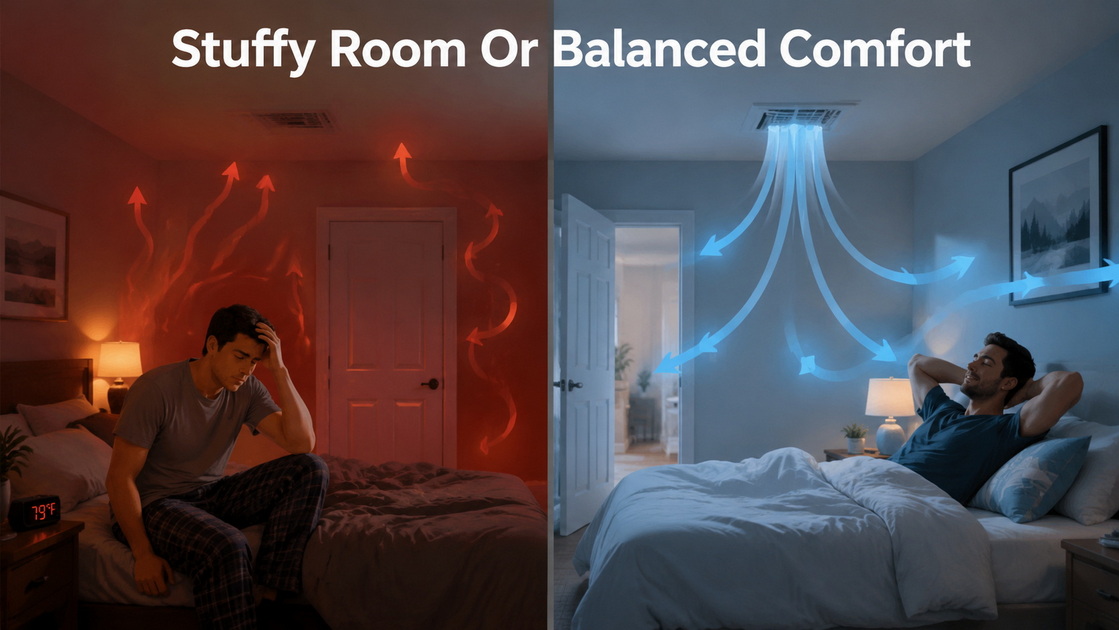
- One room is always hotter or colder than the rest of the house
- Upstairs bedrooms feel stuffy during warm weather
- Certain vents have weak or barely noticeable airflow
- The HVAC system runs for a long time without improving comfort
- Bathroom mirrors remain foggy long after a shower
- Cooking smells stay in the home for hours
- Rooms feel uncomfortable when interior doors are closed
- Dust seems to collect quickly around vents or furniture
- Humidity feels high indoors during summer
- There are musty odors in a basement, bathroom, or bedroom
- Your energy bills increase without a clear explanation
- You frequently adjust the thermostat but still feel uncomfortable
These warning signs can have many causes. A dirty air filter may be part of the problem, but weak circulation can also come from leaking ducts, blocked return vents, poor insulation, duct restrictions, a malfunctioning blower motor, improper system sizing, thermostat placement, or inadequate ventilation.
The best solution depends on the home's layout, HVAC system, insulation, ductwork, local climate, and humidity level. Start with the practical steps below. If uneven temperatures or weak airflow continue, a professional evaluation can help identify the underlying issue.
Your HVAC system needs a complete path for air to move through the home. Supply vents deliver heated or cooled air into each room. Return vents pull indoor air back to the HVAC system, where it can be filtered, reheated, or cooled again.
When supply or return vents are blocked, the system cannot circulate air as effectively. Furniture, rugs, curtains, storage containers, and decorative covers can all restrict airflow.
Use these simple habits to improve circulation:
- Keep supply vents open in most rooms
- Avoid covering vents with rugs, furniture, curtains, or boxes
- Leave enough open space around return-air grilles
- Vacuum visible dust from registers and vent covers
- Check for furniture placed directly in front of return vents
- Avoid closing multiple vents in unused rooms
Closing vents in empty rooms may seem like a smart way to save energy, but it can create pressure problems and reduce airflow in other parts of the home. In some cases, it can also increase strain on the HVAC blower.
If certain vents have consistently weak airflow, the issue may be deeper inside the system. Duct leaks, crushed ducts, disconnected sections, undersized ductwork, or blower problems may require professional attention.
A clean air filter is one of the easiest and most important parts of home comfort. Filters trap dust, pet dander, pollen, and airborne particles before they move through the HVAC system.
When a filter becomes clogged, it can restrict airflow. The furnace or air conditioner may have to work harder, rooms may become less comfortable, and the system may use more energy.
A good filter routine can include:
| Household Condition | Suggested Filter Check Schedule |
|---|---|
| Typical household | Every 30 to 90 days |
| Home with pets | Every 30 to 60 days |
| Family members with allergies | Every 30 to 60 days |
| High-dust environment | Monthly |
| During renovation projects | Monthly or more often |
| Seasonal vacation property | At the beginning and end of each season |
Always use the correct filter size. A filter that does not fit properly may allow unfiltered air to bypass the filter frame.
Higher-rated filters can capture smaller particles, but not every HVAC system is designed to handle the same filter resistance. A filter that is too restrictive may reduce airflow if the system is not designed for it. A qualified technician can help determine the most appropriate filter type for your equipment and household needs.
Ceiling fans are useful comfort tools because they move air across the skin. They do not lower the temperature of the room itself, but they can make people feel cooler in warm weather and help distribute warm air in winter.
The direction of the fan blades matters.
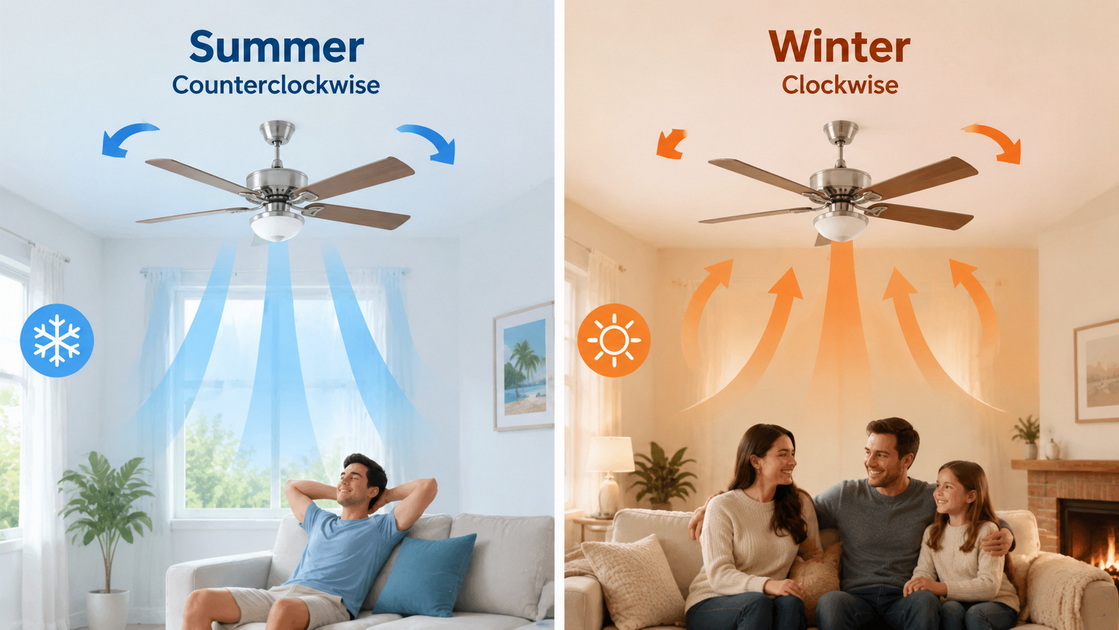
| Season | Recommended Direction | Recommended Speed | Main Benefit |
|---|---|---|---|
| Summer | Counterclockwise | Medium to high | Creates a cooling downward breeze |
| Winter | Clockwise | Low | Moves warm air down from the ceiling |
During summer, a ceiling fan should usually rotate counterclockwise. This creates a downward breeze that can make the room feel cooler.
During winter, switch the fan to clockwise at a low speed. This creates a gentle upward airflow that helps move warm air collected near the ceiling back into the living space.
Turn ceiling fans off when rooms are empty. Fans help people feel more comfortable, but they do not provide a benefit in an unoccupied room.
Air needs a way to travel through the house. In some homes, air is delivered into bedrooms through supply vents but has difficulty returning to the HVAC system when doors are closed.
This can create pressure differences between rooms. A bedroom may receive conditioned air, but without a clear return-air path, that room can still feel uncomfortable.
Try the following improvements:
1. Keep interior doors open when possible.
2. Leave bedroom doors slightly open when rooms are not in use.
3. Avoid placing large furniture directly in doorways or airflow paths.
4. Keep return vents clear and accessible.
5. Watch for doors that slam, whistle, or become difficult to close when the HVAC system starts.
6. Note whether rooms become warmer or colder when doors are closed.
If a room becomes uncomfortable whenever the door is shut, it may need a better return-air path. Depending on the home, possible solutions may include a transfer grille, jump duct, additional return vent, or professional duct balancing.
Permanent airflow changes should be evaluated by a qualified HVAC technician. Improper modifications can create noise, pressure problems, comfort issues, or unwanted air movement from garages, attics, crawlspaces, or other areas.
Exhaust fans remove moisture, odors, and pollutants directly from the source. They are especially important in bathrooms and kitchens, where steam, humidity, smoke, grease, and odors can build up quickly.
Bathroom fans should run during showers and remain on long enough to remove lingering moisture. Kitchen range hoods should be used whenever cooking creates steam, smoke, grease, or strong odors.
For better indoor comfort:
- Turn on the bathroom exhaust fan before or at the beginning of a shower
- Keep the fan running during the shower
- Run the bathroom fan for approximately 20 minutes after showering
- Use the range hood while boiling, frying, sautéing, or grilling indoors
- Clean fan grilles to prevent dust buildup
- Confirm that exhaust fans vent outdoors instead of into an attic or crawlspace
- Repair loud, weak, or non-functioning exhaust fans promptly
Excess moisture can create more than a comfort problem. It may contribute to condensation, musty odors, peeling paint, damage to building materials, and conditions that support mold growth.
Opening windows can help refresh indoor air and create a natural breeze. Cross-ventilation works best when windows or doors are opened on opposite sides of the home, allowing outdoor air to move through the space.
Natural ventilation is most useful when outdoor temperatures are comfortable and outdoor air quality is good.
Consider opening windows when:
- The weather is mild
- Outdoor humidity is manageable
- Air quality conditions are favorable
- Pollen is not causing household allergy symptoms
- There is no wildfire smoke nearby
- The home can be ventilated safely
- You want to clear mild odors after cooking or cleaning
There are also times when windows should remain closed. High outdoor humidity can make indoor comfort worse. Outdoor pollution, wildfire smoke, dust, extreme temperatures, heavy pollen, and security concerns can make open windows unsuitable.
In these situations, rely on properly maintained HVAC equipment, effective filtration, exhaust ventilation, and humidity control.
Most thermostats have two common fan settings: Auto and On.
When the thermostat is set to Auto, the HVAC blower runs only while the heating or cooling system is actively operating.
When it is set to On, the blower runs continuously. This can help mix air between rooms, reduce temperature differences, and move air through the filter more consistently.
| Thermostat Setting | How It Works | Best For |
|---|---|---|
| Auto | Fan runs only during heating or cooling cycles | Lower energy use and normal daily operation |
| On | Fan runs continuously | Better air mixing and more consistent room temperatures |
Continuous fan operation may help homes with uneven temperatures or stuffy rooms. However, it also uses more electricity. In humid climates, it may sometimes increase indoor humidity because moisture on the cooling coil can be carried back into the home after the cooling cycle ends.
A good approach is to test the "On" setting for several days and observe whether comfort improves. Pay attention to temperature differences, humidity, energy use, and whether rooms feel less stuffy.
Humidity affects comfort as much as temperature. A home can feel warm and sticky even when the thermostat is set to a reasonable temperature if indoor humidity is too high.
For many homes, a relative humidity range between 30% and 50% is a practical comfort target. The ideal level may vary based on weather, climate, home construction, and the needs of the household.
High humidity can make a home feel warmer, while very low humidity can lead to dry skin, static electricity, throat irritation, and discomfort.
To improve humidity control:
- Use bathroom and kitchen exhaust fans consistently
- Repair plumbing leaks and roof leaks
- Empty and maintain dehumidifiers as needed
- Check for water intrusion in basements and crawlspaces
- Keep gutters and drainage systems working properly
- Maintain the air conditioner before peak cooling season
- Avoid oversized air conditioning equipment
- Inspect ductwork for leaks in attics, garages, or crawlspaces
An oversized air conditioner may cool a home quickly but fail to run long enough to remove adequate moisture. This can leave the home feeling clammy even when the thermostat says the temperature is correct.
Air circulation can decline over time when HVAC components become dirty, worn, or poorly maintained. Dust on blower components, restricted filters, dirty coils, blocked condensate drains, and damaged ductwork can all affect performance.
Routine maintenance helps technicians identify small problems before they become major repairs.
A professional maintenance visit may include:
- Inspecting and replacing filters when needed
- Checking blower performance
- Inspecting electrical connections
- Examining evaporator and condenser coils
- Checking refrigerant-related cooling performance
- Inspecting accessible ductwork
- Testing thermostat operation
- Checking condensate drainage
- Evaluating airflow and temperature differences
- Looking for signs of unusual wear or system stress
Regular maintenance supports reliable heating and cooling performance while helping protect system efficiency and comfort.
Simple improvements can solve minor circulation problems. However, some issues require more than a new filter or ceiling fan adjustment.
A professional inspection is recommended when:
- One or more rooms remain uncomfortable after basic changes
- Airflow is weak at multiple vents
- The HVAC system runs constantly
- Energy costs rise unexpectedly
- Humidity remains high indoors
- You hear unusual whistling, banging, or rattling from ducts
- There are musty odors near vents or in certain rooms
- The home has recently been remodeled or expanded
- You have added insulation, replaced windows, or changed the home layout
- You suspect duct leaks, airflow restrictions, or equipment problems
At Mega Services Heating & Cooling, we look at the complete comfort system rather than treating every problem as an equipment replacement issue. We assess how the heating and cooling equipment, ductwork, ventilation, thermostat, insulation, filters, airflow paths, and humidity levels work together.
A detailed evaluation may include airflow measurements, duct inspections, return-air analysis, blower checks, system controls, and comfort recommendations tailored to the home.
Use this checklist to identify easy improvements before scheduling service:
- Check the HVAC filter
- Open supply vents throughout the home
- Clear furniture and rugs away from vents
- Keep return-air grilles unobstructed
- Adjust ceiling fan direction for the season
- Use bathroom fans during and after showers
- Use the kitchen range hood while cooking
- Keep interior doors open when practical
- Check whether exhaust fans vent outdoors
- Open windows only when outdoor conditions are suitable
- Test the thermostat fan setting
- Monitor humidity levels
- Write down which rooms feel uncomfortable and when
- Schedule professional service if problems continue
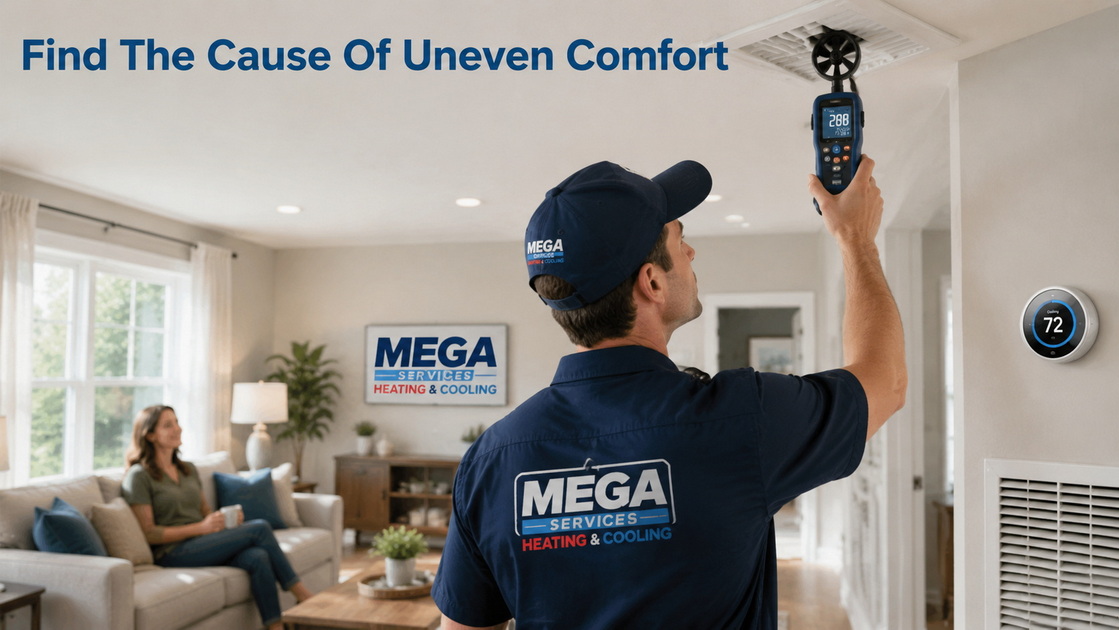
Every home should feel comfortable, balanced, and dependable throughout the year. If you are dealing with uneven temperatures, weak airflow, stuffy rooms, high humidity, or an HVAC system that never seems to keep up, the issue may be more than a thermostat setting.
Mega Services Heating & Cooling provides heating installation, air conditioning installation, HVAC repair, seasonal maintenance, airflow diagnostics, and indoor comfort solutions for homeowners who want lasting results.
Our goal is to help families enjoy safer, more comfortable, and more energy-conscious homes through careful inspection, practical recommendations, and reliable service.
A more comfortable home begins with better airflow, proper system care, and solutions designed for the way you live.
Improving home air circulation involves more than adjusting a thermostat. Clear supply and return vents, clean filters, proper ceiling fan settings, effective exhaust ventilation, balanced humidity, and regular HVAC maintenance all work together to create a more comfortable indoor environment.
Small changes can make a meaningful difference, but ongoing temperature imbalances, weak airflow, high humidity, or persistent stuffiness may point to a larger HVAC or ductwork issue. A professional evaluation can help uncover the cause and provide a practical path toward more consistent comfort.
You can improve natural circulation by opening windows on opposite sides of the home when weather and outdoor air conditions are suitable. This creates cross-ventilation. Ceiling fans, open interior doors, and clear airflow paths can also help move air more effectively through the home.
A room may have poor airflow, blocked vents, duct leaks, insufficient return air, poor insulation, direct sun exposure, thermostat placement problems, or an unbalanced HVAC system. A professional inspection can determine the specific cause.
In most homes, closing multiple vents is not recommended. It can restrict airflow, create pressure imbalances, and reduce comfort in other rooms. Keep vents open unless a qualified HVAC professional recommends a specific adjustment.
Most homes should check the filter every 30 to 90 days. Homes with pets, allergy concerns, high dust levels, or active renovation projects may need more frequent replacement.
It can. Setting the thermostat fan to "On" allows the blower to run continuously, which may improve air mixing and help reduce temperature differences between rooms. However, it also uses more electricity and may increase humidity in certain climates.
Run the fan during the shower and for approximately 20 minutes afterward. This helps remove moisture and reduces the risk of condensation, lingering humidity, and musty odors.
Ceiling fans do not reduce the actual air temperature. However, they create a breeze that helps people feel cooler in summer. In winter, reversing the fan direction can help circulate warm air near the ceiling.
Yes. A dirty or clogged filter can reduce the amount of air moving through the HVAC system. It can also make the system work harder, reduce comfort, and contribute to higher operating costs.
1. U.S. Environmental Protection Agency. "Indoor Air Quality (IAQ)." Information on indoor air quality, source control, ventilation, and filtration.
2. U.S. Environmental Protection Agency. "Ventilation and Respiratory Viruses." Guidance on ventilation, outdoor air, and exhaust fan use.
3. U.S. Environmental Protection Agency. "Remodeling Your Home and Indoor Air Quality." Information on home ventilation and bathroom exhaust requirements.
4. Centers for Disease Control and Prevention. "Taking Steps for Cleaner Air for Respiratory Virus Prevention." Information on fresh air, exhaust fans, HVAC filters, and central fan settings.
5. Save on Energy. "How to Set Your Ceiling Fan Direction for Each Season." Information on ceiling fan rotation directions for summer and winter comfort.
6. One Hour Heating & Air Conditioning. "How to Improve Air Circulation in Your House." General home circulation guidance used as an industry reference.


