
Views: 222 Author: Loretta Publish Time: 2026-02-15 Origin: Site


Content Menu
● What Dust and Dirt Really Do to Your Central AC
● How Often Should You Clean and Inspect Your Central AC?
● Step 1: Change or Clean Your Central AC Filter
>> 1.1 How Often to Replace Your AC Filter
>> 1.2 How to Replace a Disposable Filter Safely
>> 1.3 How to Clean a Reusable Filter
● Step 2: Clean Parts You Can Safely Access
>> 2.1 Indoor Unit: Panels, Grilles, and Fan Area
>> 2.2 Outdoor Condenser: Clearing Debris and Surface Dirt
● Step 3: Watch for Signs Your Ducts Need Cleaning
● Step 4: When to Call a Professional for Deep Cleaning
● Expert Tips to Reduce Dust Before It Reaches Your AC
● Safety Checklist Before You Clean Your Central AC
● Sample Seasonal Maintenance Plan to Keep Dust Under Control
● Call Mega Services Heating & Cooling for Professional AC Cleaning and Care
● FAQs: Dust, Dirt, and Your Central AC
>> 1. How often should I change my central AC filter to control dust?
>> 2. Is it safe to clean my indoor AC coils myself?
>> 3. Will duct cleaning completely eliminate dust in my home?
>> 4. Why is my AC still dusty even with a clean filter?
>> 5. How can I tell if my outdoor unit is too dirty?
Keeping your central AC clean is one of the most effective ways to improve comfort, protect your system, and keep energy bills under control. In this guide, you will learn safe, practical steps to remove dust and dirt from your central AC so your home stays cleaner and your equipment lasts longer.

Dust does more than make your vents look dirty; it can quietly rob your system of performance and shorten its lifespan.
- Reduced efficiency: Dusty filters and coils restrict airflow, forcing your AC to work harder and use more electricity.
- More repairs: Extra strain on motors, fans, and compressors often leads to premature breakdowns and costly service calls.
- Poor indoor air quality: Dust, pollen, and pet dander circulate back into your living spaces, triggering allergies and respiratory irritation.
- Comfort issues: Clogged components make it harder to maintain stable temperatures and humidity throughout the home.
For most homes, combining regular filter changes, safe DIY cleaning, and periodic professional maintenance is the best way to keep dust under control.
Before diving into the steps, it helps to understand a reasonable schedule for cleaning and dust control.
- Air filter checks: Inspect monthly; replace or clean every 1–3 months during heavy use, or more often with pets or allergies.
- Indoor unit dusting: Light wiping or vacuuming of accessible panels and grilles every 1–2 months.
- Professional coil and duct inspection: At least once a year, ideally before peak cooling season.
- Duct cleaning: Every few years or when there are visible dust deposits around registers, musty odors, or airflow problems.
This schedule balances what homeowners can safely do versus what should be left to trained HVAC technicians.
Your AC filter is the first and most important line of defense against dust and dirt in your HVAC system. A clean filter protects your equipment and keeps dust from circulating through your home.
Filter replacement frequency depends on the type of filter and your household conditions.
- Standard fiberglass filters: Usually every 1–3 months during cooling season.
- Pleated filters: Typically every 3–6 months if the home is relatively clean and low in dust.
- High-efficiency or HEPA filters: Often rated for 6–12 months but should still be checked regularly.
- Homes with pets, smokers, or allergies: Plan for more frequent changes, often closer to every 30–60 days.
If you pull the filter out and it looks heavily coated with dust or gray buildup, it is time to replace or wash it, even if the schedule says it is early.
If your system uses disposable filters, replacing them is quick and highly effective at reducing dust.
1. Turn off your system at the thermostat or breaker for safety.
2. Locate the filter slot at the return grille, air handler, or in a filter rack next to the furnace or indoor unit.
3. Slide out the old filter carefully to avoid shaking dust into the air.
4. Place the used filter in a plastic bag, seal it, and dispose of it to prevent spreading debris and dust.
5. Check the airflow arrow on the new filter and insert it in the same direction as the old one.
6. Turn your system back on and make a note of the replacement date for future reminders.
Reusable filters should be cleaned according to the manufacturer's instructions to avoid damage.
- Confirm power is off and the system is not running.
- Remove the filter and use a vacuum with a soft brush to gently remove loose dust and debris.
- Rinse the filter with lukewarm water from the clean side outward to push dirt off rather than further into the media.
- If recommended, wash with mild detergent and water, then rinse thoroughly.
- To sanitize, use a compatible diluted water and vinegar solution if approved for your filter type.
- Allow the filter to fully dry before reinstalling to avoid mold or odor issues.
Never run your central AC without a filter installed, because even short periods can allow dust to coat sensitive internal components.
There are a few areas on your indoor and outdoor units where homeowners can safely remove dust and dirt without taking apart the system.
Your indoor air handler pulls air through the filter and pushes conditioned air through your ducts, so light dust often accumulates around the cabinet and fan area.
- Turn off power at the breaker and confirm the system is not running.
- Wipe down accessible metal panels, return air grilles, and the cabinet exterior with a slightly damp cloth or microfiber to remove settled dust.
- If the blower fan is accessible without removing sealed panels, gently vacuum dust on fan blades using a soft brush attachment.
- Avoid spraying water or cleaner directly into the blower compartment or onto electrical components.
Anything that requires removing sealed access panels, cutting tape, or exposing coils should usually be left to a licensed technician.
Your outdoor condenser unit is exposed to weather, vegetation, and airborne dust, so keeping it clear is vital for airflow and efficiency.
- Turn off power at the outdoor disconnect or breaker.
- Remove leaves, twigs, and trash from the top and around the base of the unit by hand or with a shop vacuum.
- Trim shrubs and plants back at least 2 feet from all sides to allow proper airflow.
- Gently rinse the outer cabinet fins with a low-pressure garden hose from the inside out, if your manufacturer permits this.
Do not bend the delicate aluminum fins or use high-pressure spray; damaged fins restrict airflow and can significantly affect performance.
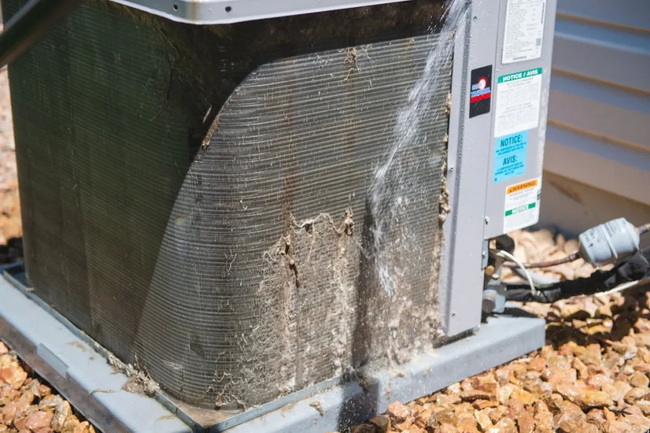
Dusty ducts can continually reintroduce dirt into your central AC system and your home, even if your filter is clean.
Common signs that duct cleaning may be needed include:
- Dust or dirt visibly accumulating around or just inside supply registers.
- Unusually dusty ceiling fan blades and surfaces despite regular cleaning.
- Noticeable dust or dirt on the air conditioner condenser panel or around indoor grilles.
- Musty or stale odors when the AC starts up, suggesting possible moisture or buildup in the ductwork.
Professional duct cleaning, performed with proper equipment and containment methods, can improve airflow and indoor air quality when ducts are heavily contaminated.
While homeowners can safely manage basic dust control, several tasks should be left to trained HVAC professionals for safety and effectiveness.
You should schedule professional service if you notice:
- Weak airflow from multiple vents even after changing the filter.
- Ice buildup, unusual noises, or short cycling with frequent on/off cycles.
- Heavy dirt or oil-like residue on indoor or outdoor coils.
- Water leaks around the indoor unit or signs of a clogged condensate drain.
A professional technician can:
- Safely clean evaporator and condenser coils using approved cleaners and methods.
- Inspect and clear condensate pans and drain lines to prevent clogs and water damage.
- Check refrigerant levels, electrical connections, and system performance to catch issues early.
Annual or seasonal professional maintenance helps keep dust from building up in hidden areas and reduces the likelihood of major repairs.
Preventing dust from entering your HVAC system in the first place is one of the most powerful ways to keep your central AC cleaner for longer.
Practical strategies include:
- Upgrade your filter: Use a higher-MERV pleated filter approved by your HVAC professional to capture finer particles without restricting airflow.
- Seal air leaks: Gaps around doors, windows, and duct joints allow unfiltered outdoor dust to enter; sealing reduces both dust and energy waste.
- Use proper ventilation: Kitchen and bathroom exhaust fans help control humidity and contaminants that can settle as dust.
- Control sources: Regular vacuuming with a HEPA vacuum, washing bedding, and grooming pets can significantly reduce the dust load indoors.
Combining these habits with regular filter maintenance gives your AC the best chance to operate cleanly and efficiently season after season.
Every cleaning session should start with a clear safety routine to protect both you and your system.
Use this quick checklist before working on your AC:
- Turn off power at the thermostat and, for deeper work, at the breaker or dedicated disconnect.
- Confirm moving parts such as fans have stopped completely before reaching into any openings.
- Wear gloves and eye protection when handling dusty filters or working near coils and cleaners.
- Never remove sealed panels or disturb refrigerant lines; this should only be done by licensed professionals.
- Avoid using harsh chemicals or high-pressure water on indoor components, which can damage parts or create moisture problems.
If you are ever unsure about a step, stop and contact a qualified HVAC technician rather than risking injury or equipment damage.
A simple, repeatable maintenance plan will help you stay ahead of dust and dirt all year long.
Season | Homeowner Tasks | Recommended Professional Tasks |
Early Spring | Change filter, clear debris from outdoor unit, dust indoor grilles. | Full system inspection, coil and drain check, performance testing. |
Mid-Summer | Inspect filter, vacuum around indoor unit, confirm strong airflow at vents. | Address any airflow or cooling complaints, check refrigerant if needed. |
Fall | Replace or clean filter, cover or protect outdoor unit if recommended for your climate. | Optional duct inspection if dust buildup or indoor air quality concerns are present. |
Winter (if central HVAC shares ductwork) | Continue regular filter changes, keep registers and returns clear of furniture and dust. | Check blower, electrical, and safety controls as part of furnace or heat pump service. |
This structured approach aligns homeowner-friendly tasks with professional maintenance for optimal dust control and system reliability.
DIY dust removal is valuable, but a trusted HVAC partner ensures your central AC is truly clean, safe, and operating at peak efficiency. At Mega Services Heating & Cooling, you can get professional inspection, cleaning, and maintenance services designed to keep your home comfortable, healthy, and energy efficient all year.
If you notice persistent dust, weak airflow, unusual noises, or rising energy bills, it may be time for a thorough system evaluation. The Mega Services Heating & Cooling team can help you identify and correct dust-related issues before they turn into breakdowns, clean critical components such as coils, blower assemblies, and drain lines, and recommend the right filters and schedules for your home and lifestyle.
Contact Mega Services Heating & Cooling today to schedule your central AC maintenance or dust removal service and enjoy a cleaner, more comfortable home with confidence.
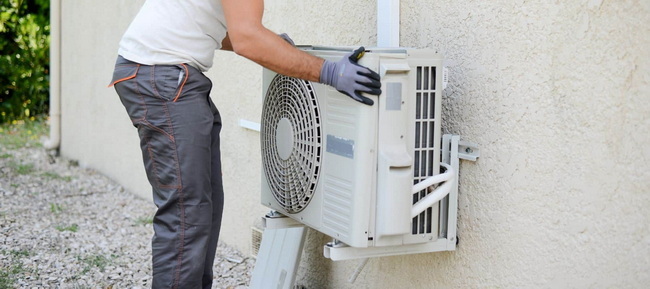
Most homeowners should check filters monthly and replace or clean them every 1–3 months during heavy use, with more frequent changes in homes with pets, smokers, or allergies.
Accessing and cleaning indoor evaporator coils typically requires removing sealed panels and should be handled by a licensed HVAC professional to avoid damaging the coil or exposing yourself to refrigerant.
Duct cleaning can reduce dust circulation when ducts are heavily contaminated, but it must be paired with regular filter maintenance and good housekeeping to significantly lower overall dust levels.
Persistent dust may be caused by air leaks, unsealed ductwork, poor filtration, or high dust loads in the home; an HVAC professional can help identify and correct these underlying issues.
If the condenser fins are visibly clogged with dirt, leaves, or grass clippings, or if you notice rising energy bills and reduced cooling performance, your outdoor unit likely needs cleaning and inspection.
1. https://airprosusa.com/how-to-remove-dust-and-dirt-from-your-central-ac/
2. https://www.energy.gov/energysaver/air-conditioner-maintenance
3. https://www.lowes.com/n/how-to/clean-an-air-conditioner
4. https://www.bryant.com/en/us/products/air-conditioners/how-to-clean/
5. https://www.quitcarbon.com/blog/guide-cleaning-ac-coils
6. https://www.airflowdesigns.com/blog/how-often-change-ac-filter/
7. https://changetheairfoundation.org/understanding-hvac-maintenance-what-every-homeowner-and-renter-should-know/
8. https://www.carlscoolingllc.com/blog/ac-unit-cleaning/


