
Views: 222 Author: Mega Services Publish Time: 2026-07-13 Origin: Site


Content Menu
● Understanding HVAC Fan Settings
● Auto vs On: What Each Setting Really Does
● How Fan Settings Affect Indoor Air Quality
● Auto Fan Setting: Pros, Cons, and Best Uses
● On Fan Setting: Pros, Cons, and Best Uses
● How Fan Settings Affect Utility Bills and System Life
● A Smart Compromise: Variable Speed Fans and Scheduling
● Step‑by‑Step: How to Choose the Best Fan Setting for Your Home
● Expert Insight: Fan Settings in Different Climates
● Maintenance Essentials for Any Fan Strategy
● When to Call a Professional HVAC Technician
● Clear CTA: Let Mega Services Optimize Your HVAC
● Frequently Asked Questions (FAQ)
>> 1. Is it better to leave my HVAC fan on Auto or On?
>> 2. Does running the fan continuously damage my HVAC system?
>> 3. Can fan settings help with allergies and asthma?
>> 4. Will running the fan increase my humidity levels?
>> 5. How often should I change my filter if I leave the fan on?
Choosing the right HVAC fan setting is one of the simplest ways homeowners can improve indoor air quality, comfort, and energy efficiency—but most people never touch that button on the thermostat. As an HVAC specialist at Mega Services Heating & Cooling, I've seen first-hand how a small change in fan settings can mean the difference between a stuffy, unevenly cooled home and a clean, comfortable, energy-smart space. [onehourheatandair]
Most residential HVAC systems offer two primary fan options on the thermostat: "Auto" and "On." Whenever your air conditioner or furnace is actively heating or cooling, the blower fan runs—your choice is whether it should keep running between cycles.
From a service technician's perspective, I often start every maintenance visit by checking how the fan is configured, because it directly affects comfort, bills, and system wear. Many homeowners don't realize that a simple fan setting change can fix hot and cold spots, reduce allergens, and prevent unnecessary strain on their system. [northnjhvac]
> Primary keyword focus: HVAC fan settings, air quality, comfort, utility bills, auto vs on fan, indoor air quality, energy efficiency.
When your thermostat fan is set to "Auto," the blower runs only while your HVAC system is actively heating or cooling. When it's set to "On," the blower fan runs continuously, even between heating or cooling cycles, pushing air through your ductwork 24/7 until you change the setting. [onehourheatandair]
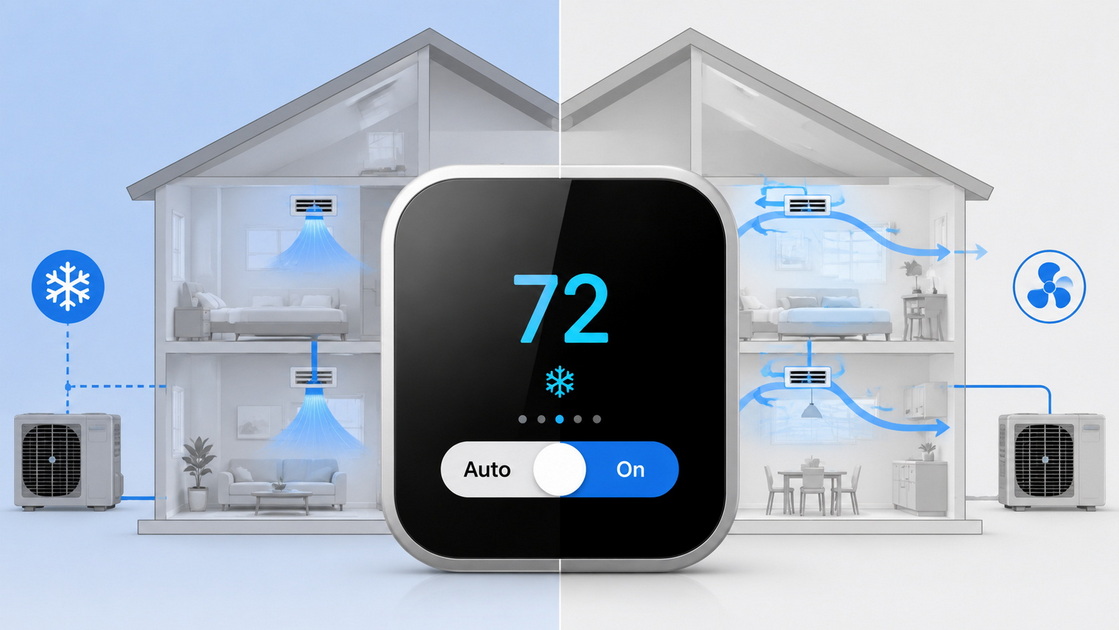
From an industry standpoint, I usually explain it to customers this way:
- Auto = pay less, circulate less
- On = circulate more, pay more
Neither setting is "right" for everyone; the best choice depends on your energy budget, comfort expectations, air quality needs, and climate. [sunheating]
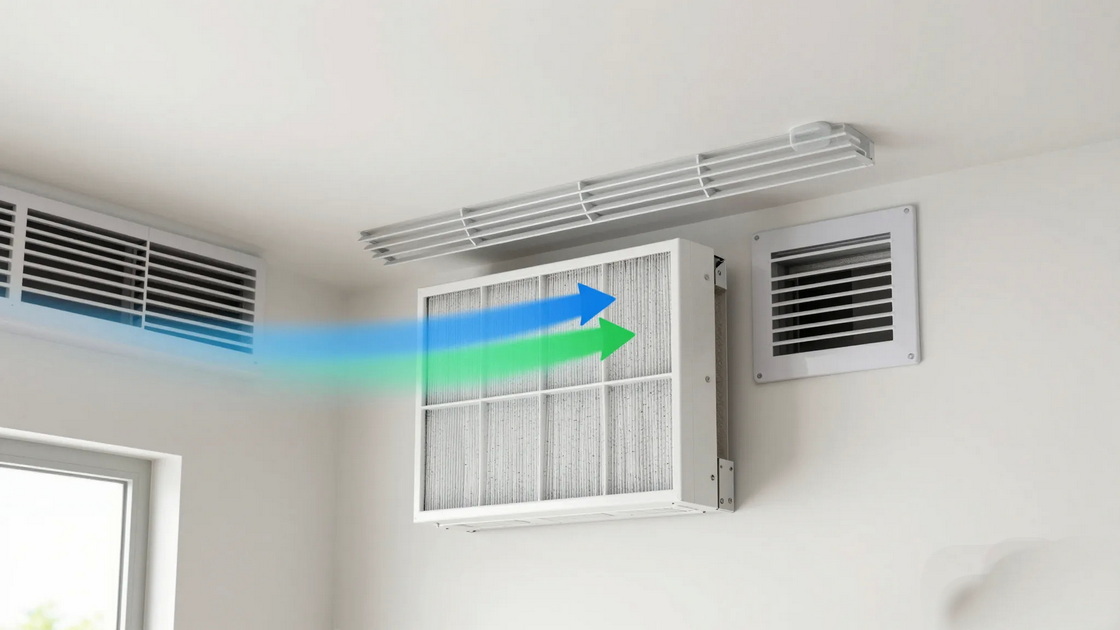
Your HVAC fan is essentially the engine that moves air through your filters, ducts, and vents, so the way you run it has a direct impact on indoor air quality (IAQ). Every minute the fan runs, more air passes through your filter, which means more dust, pollen, smoke particles, and pet dander can be trapped—assuming your filter and system are well maintained. [sunheating]
However, continuous fan operation can also re-circulate contaminants if filters are clogged or ducts are dirty, which is why fan strategy must always be paired with proper filtration and maintenance. In homes with allergies, asthma, or indoor pets, we often use the fan "On" setting strategically during high-pollen days or heavy-use periods, then step back to scheduled or Auto operation for balance. [northnjhvac]
The Auto setting is the default for most thermostats—and for good reason. It provides a solid balance between efficiency and comfort for many households.
Benefits of Auto:
- Lower energy use: The fan only runs during active heating/cooling cycles, which reduces total run-time and helps keep utility bills in check. [cim]
- Less wear on the fan motor: Shorter run-time means less mechanical stress, helping extend the life of blower components. [northnjhvac]
- Slower filter loading: Because air is not constantly moving through the filter, it tends to load more slowly, sometimes extending filter life between changes.
Drawbacks of Auto:
- Air can feel "stale" between cycles: If you keep windows closed, especially during mild seasons, air may feel stuffy before the system kicks back on.
- Hot and cold spots: When the fan stops between cycles, rooms farther from the air handler may experience temperature differences and reduced airflow. [northnjhvac]
As a technician, I typically recommend Auto for:
- Homeowners with tight energy budgets
- Systems with older blower motors that are not designed for continuous duty
- Homes in mild climates where air doesn't need constant mixing to feel comfortable [budgetheating]
The On setting keeps your HVAC blower running continuously, circulating air even when the system isn't heating or cooling. For some households, this setting can dramatically improve comfort and air quality—but it comes with trade-offs. [sunheating]
Benefits of On:
- More even temperatures: Continuous circulation blends hot and cold air from different parts of the home, reducing temperature swings and eliminating many hot/cold spots. [northnjhvac]
- Fresher-feeling air: Constant airflow helps prevent the "stale" feeling, reduces noticeable odors, and improves comfort in tightly sealed homes. [sunheating]
- Better particulate filtration: The more air you move through your filter, the more particles—dust, dander, smoke—get captured, which is especially helpful for allergy sufferers. [sunheating]
Drawbacks of On:
- Higher energy costs: A blower fan can draw hundreds of watts; running it 24/7 can significantly increase your monthly utility bills, especially on older systems. [cim]
- Faster filter clogging: Constant operation pushes more air (and contaminants) through the filter, requiring more frequent filter changes to maintain performance. [northnjhvac]
- More wear on the motor: Continuous operation adds hours to the motor's runtime, which can accelerate wear and lead to earlier repairs or replacement. [northnjhvac]
- Humidity concerns in some climates: In humid regions, running the fan between cooling cycles can pull moist outdoor air into the home or re-evaporate water off the coil, slightly raising indoor humidity. [onehourheatandair]
We often recommend On in combination with good filtration and dehumidification when:
- Someone in the home has severe allergies or respiratory issues
- The home suffers from persistent hot/cold spots
- You've invested in high-efficiency blowers (ECM motors) designed for longer run-times [thechillbrothers]
From a cost and equipment perspective, fan settings have three major impacts: energy consumption, mechanical wear, and maintenance frequency. [cim]
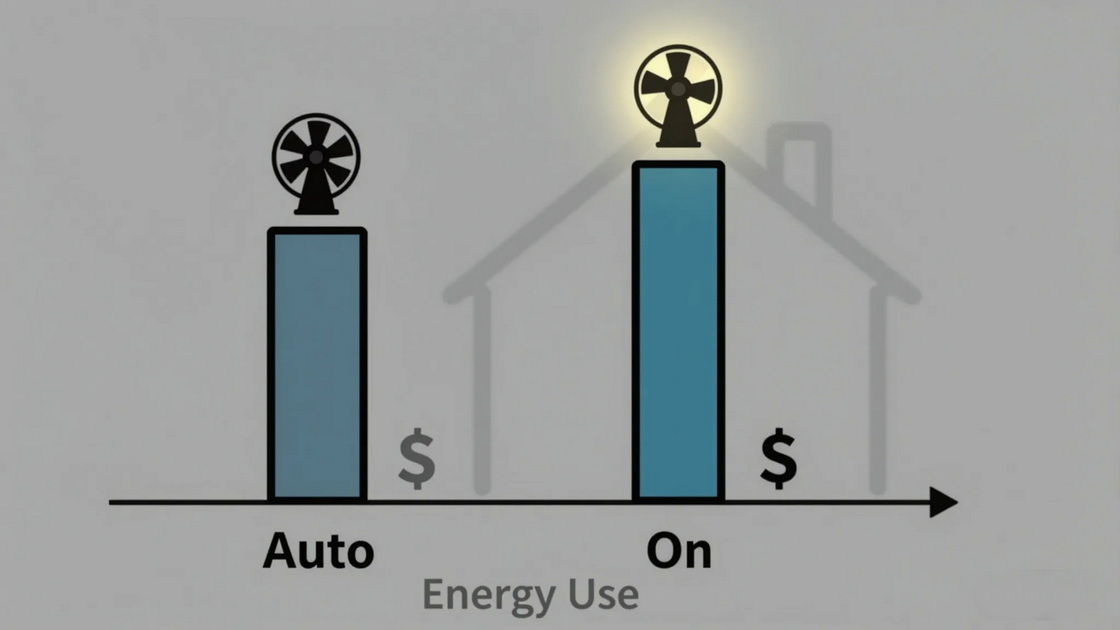
- Energy usage:
Continuous fan operation can add a noticeable line item to your monthly power bill—particularly if your blower uses a standard PSC motor rather than a high-efficiency ECM motor. Many homeowners see savings by using Auto or scheduled runs instead of 24/7 On, especially in shoulder seasons when heating/cooling demand is lower. [budgetheating]
- System wear and tear:
Every hour the blower runs counts toward bearing wear, belt fatigue (if present), and motor life. While modern systems are designed for extended use, unnecessary continuous operation can still shorten component life and increase repair frequency. [northnjhvac]
- Filter and maintenance cycles:
More fan runtime means more air through the filter, which shortens the time between filter changes and can increase the need for duct and coil cleaning if filters are neglected. In our field experience, homes running fans continuously often need filters replaced every 1–2 months instead of every 2–3. [northnjhvac]
If you like the benefits of the On setting but worry about energy use and wear, modern variable speed systems and smart thermostats offer the best of both worlds. [thechillbrothers]
The article we're building from notes that some systems allow you to run high fan speeds during active cooling and lower speeds in between, giving continuous circulation at a fraction of the energy cost. Pair that capability with a smart thermostat, and you can schedule the fan to run, for example, 10–15 minutes every hour to keep air mixed and filtered without running 24/7. [thechillbrothers]
Common strategies we recommend to Mega Services Heating & Cooling customers:
- Run the fan more during the day when the home is occupied and outdoor air quality is poor.
- Use short, scheduled circulation cycles (e.g., 10–20 minutes each hour) instead of continuous operation. [northnjhvac]
- Reduce fan runtime overnight if noise or energy use is a concern. [northnjhvac]
This approach helps balance comfort, air quality, and cost, especially in newer homes with good insulation and tight envelopes. [ifactoryapp]
From a practical homeowner perspective, here is a simple process our technicians often walk through during a service call.
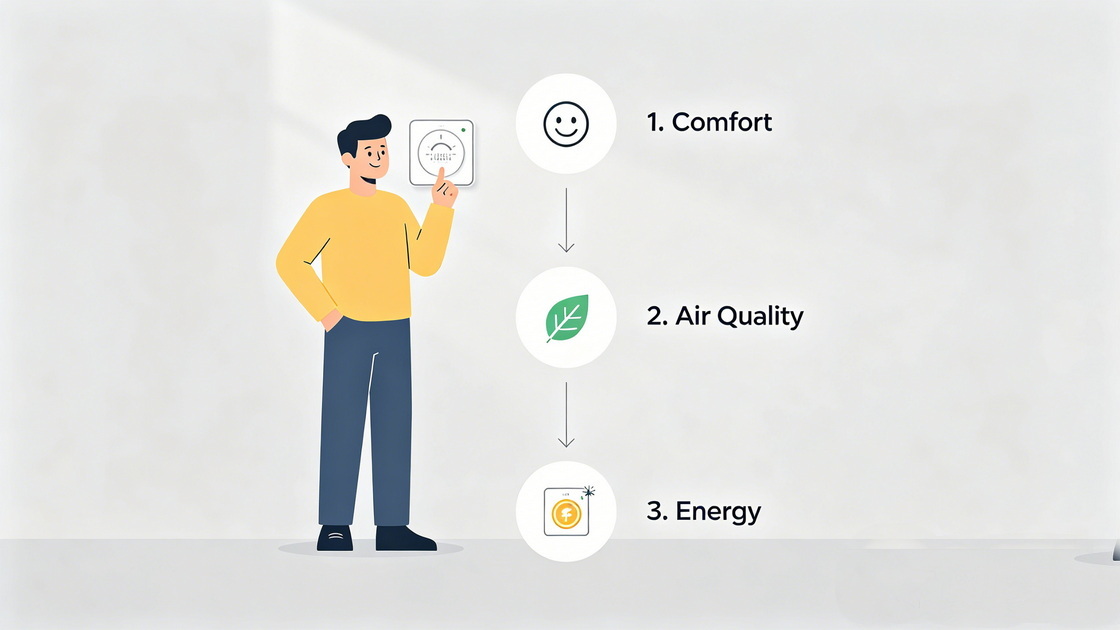
1. Assess your priorities
- Are you more concerned about lower bills, maximum comfort, or cleaner air?
- Do you or your family members have allergies or asthma? [sunheating]
2. Check your existing equipment
- Identify whether your system uses a standard blower or a variable-speed (ECM) blower. [thechillbrothers]
- Confirm your current filter type and MERV rating (typically MERV 8–13 is suitable for most homes). [northnjhvac]
3. Start with Auto as a baseline
- Set the fan to Auto and run the system for several days.
- Note any comfort issues: hot/cold rooms, stuffiness, lingering odors.
4. Test On or scheduled circulation
- Switch the fan to On for a week or use your smart thermostat to run the fan 10–20 minutes each hour. [northnjhvac]
- Compare comfort, air freshness, and noise levels with your previous setup. [sunheating]
5. Monitor energy usage and filters
- Watch your utility bills and check whether they increase with longer fan runtime. [cim]
- Inspect filters every 30 days during continuous or scheduled operation and replace as needed to maintain airflow and IAQ. [northnjhvac]
6. Adjust for seasons and climate
- In humid climates, avoid long fan runs between cooling cycles if you notice higher indoor humidity; consider adding whole-home dehumidification. [onehourheatandair]
- In dry climates, continuous fan operation is less likely to cause humidity issues and can be used more liberally.
As HVAC professionals, we see how local climate dramatically changes the best fan strategy.
- Humid regions:
In high-humidity areas, continuous fan operation can cause condensed moisture on the evaporator coil to re-evaporate, slightly increasing indoor humidity levels between cycles. Here, we often recommend Auto or scheduled fan use paired with dehumidification during cooling seasons. [ifactoryapp]
- Arid or semi-arid regions:
The risk of reintroducing moisture back into the air is far lower in dry climates. Homeowners can often safely use continuous fan operation for better mixing and filtration without significant humidity penalties. [budgetheating]
- New high-performance homes vs older homes:
Tightly sealed, energy-efficient homes tend to trap pollutants indoors, so carefully using fan circulation plus filtration is crucial to maintain IAQ. Older, leakier homes may benefit more from targeted circulation and air sealing rather than 24/7 fan operation. [ifactoryapp]
Whatever fan setting you choose, maintenance is non-negotiable if you want to protect both air quality and your HVAC investment. [northnjhvac]
Key best practices we consistently recommend:
- Change filters regularly:
Every 1–3 months depending on filter type, pets, smoking, and whether you run the fan continuously. [northnjhvac]
- Schedule annual professional tune‑ups:
A yearly inspection helps catch worn motors, dirty coils, restricted airflow, and duct issues before they become expensive repairs. [budgetheating]
- Keep ducts and registers clean:
Vacuum supply and return registers, and consider professional duct cleaning if you see heavy buildup, restricted airflow, or persistent dust issues. [northnjhvac]
At Mega Services Heating & Cooling, we also look for signs of blower stress—unusual noises, vibration, or overheating—especially in homes where the fan has been left on 24/7 for years. [northnjhvac]
Some fan-setting adjustments are safe for homeowners, but there are clear signs you should call a professional:
- The fan runs constantly and never shuts off, even in Auto mode.
- You hear grinding, rattling, or squealing from the blower area. [northnjhvac]
- Airflow feels weak at multiple vents despite a clean filter and open registers.
- Utility bills spike without a clear change in weather or usage. [cim]
In these situations, a licensed HVAC technician can:
- Test and adjust fan speeds,
- Inspect motors, bearings, capacitors, and belts,
- Check duct balancing and zoning,
- Recommend upgrades such as variable-speed blowers or smart thermostats. [thechillbrothers]
If you're unsure which fan setting is right for your home, you don't have to guess. Mega Services Heating & Cooling can evaluate your system, ductwork, filters, and thermostat and design a fan strategy tailored to your comfort, budget, and health needs. [budgetheating]
Call Mega Services Heating & Cooling today to schedule a professional HVAC tune‑up and airflow assessment, or book your appointment online to start enjoying cleaner air, more consistent comfort, and lower energy waste.
It depends on your priorities: Auto typically uses less energy and reduces motor wear, while On provides more continuous circulation and filtration for improved comfort and air quality. Many homeowners benefit from a hybrid approach using scheduled fan runs via smart thermostats. [cim]
Modern systems can handle continuous fan use, but it does add runtime and wear to the blower motor and can accelerate filter loading. With regular maintenance and high-efficiency motors, many homeowners safely use continuous or near-continuous fan operation without premature failure. [thechillbrothers]
Yes. Continuous or scheduled fan operation combined with quality filters (MERV 8–13) can significantly reduce airborne particulates like dust, pollen, and pet dander. For sensitive households, we often pair this approach with regular filter changes and, in some cases, enhanced filtration or air cleaners. [sunheating]
In humid climates, continuous fan operation can re-evaporate moisture from the indoor coil and slightly increase indoor humidity between cooling cycles. In dry climates, this effect is minimal, and continuous fan use is less likely to cause humidity issues. [onehourheatandair]
If your fan runs continuously or for long daily periods, plan to check your filter every 30 days and replace it at least every 1–2 months, depending on household conditions like pets and smoking. In Auto mode with lighter usage, many homes can safely change filters every 2–3 months, but visual inspection is always best. [northnjhvac]
1. One Hour Heating & Air Conditioning. "HVAC Fan Settings Affect Your Air Quality and Utility Bills."
https://www.onehourheatandair.com/expert-tips/air-conditioners/hvac-fan-settings-affect-your-air-quality-and-ut/
2. Sun Heating & Cooling. "Why Constant Fan Mode Can Help Improve Indoor Air Quality."
https://www.sunheating.com/why-constant-fan-mode-can-help-improve-indoor-air-quality/ [sunheating]
3. North NJ HVAC. "How to Use a Furnace Fan to Circulate Air."
https://northnjhvac.com/how-use-furnace-fan-circulate-air/ [northnjhvac]
4. CIM. "HVAC Energy Efficiency in 2026: Strategies That Cut Costs."
https://www.cim.io/blog/hvac-energy-efficiency [cim]
5. Budget Heating. "What's Going On with HVAC Systems in 2026? Trends Overview."
https://www.budgetheating.com/hvac-systems-2026-trends-overview/ [budgetheating]
6. The Chill Brothers. "HVAC Technology to Watch in 2026: What Homeowners Should Know Now."
https://thechillbrothers.com/hvac-technology-to-watch-in-2026-what-homeowners-should-know-now/ [thechillbrothers]
7. iFactory. "HVAC Industry Trends 2026: Smart Systems, Refrigerant Transition & Electrification."
https://ifactoryapp.com/industries/hvac/hvac-industry-trends-2026-smart-refrigerant-electrification [ifactoryapp]


