
Views: 210 Author: Mega Services Publish Time: 2026-10-18 Origin: Site


Content Menu
● What Are HVAC Utility Rebates?
● HVAC Rebates in 2026: Understand What Has Changed
>> Do Not Rely on Expired Federal Tax Credit Information
>> State Heat Pump Rebates Are Not Universal
● How to Find HVAC Replacement Rebates for Your Home
● What Determines Whether Your Equipment Qualifies?
>> Efficiency Ratings Must Meet the Specific Program Rules
>> The Installed Equipment Combination Matters
>> Your Existing Heating System May Affect Eligibility
● How to Apply for HVAC Utility Rebates: A Practical Checklist
>> Step 1: Check Requirements Before Signing
>> Step 2: Get an Itemized Installation Proposal
>> Step 3: Assign Responsibility for the Application
>> Step 4: Build a Complete Documentation File
>> Step 5: Submit Within the Actual Deadline
>> Step 6: Track Approval and Payment
● Compare Net Project Cost, Not Just the Rebate
● Why Installation Quality Matters More Than a Bigger Incentive
>> Start With the Right System Size
>> Evaluate Ducts, Airflow, and Controls
>> Plan for Maintenance After Installation
● Common HVAC Rebate Mistakes to Avoid
● Plan Your Replacement With Mega Services Heating & Cooling
>> 1. Can I Get a Rebate for Replacing Only My Air Conditioner?
>> 2. Are Heat Pump Rebates Available to Every Homeowner?
>> 3. Can I Combine Utility Rebates With Manufacturer Discounts?
>> 4. How Long Does an HVAC Rebate Take to Arrive?
>> 5. Can I Apply After the Installation Is Finished?
>> 6. Is the Federal HVAC Tax Credit Available for a New 2026 Installation?
>> 7. Does Mega Services Guarantee Rebate Approval?
HVAC utility rebates can reduce the cost of replacing an aging furnace, air conditioner, or heat pump. However, receiving an incentive takes more than choosing equipment labeled "high efficiency." Your utility account, equipment combination, installation date, and application paperwork can all affect eligibility.
At Mega Services Heating & Cooling, our focus is helping homeowners create safe, comfortable, and energy-efficient living environments through heating and cooling installation, repair, and maintenance.
This guide explains how to find relevant incentives, compare replacement proposals, and avoid application mistakes. The most important principle is verification: confirm the program's current requirements before committing to equipment or assuming a rebate will lower your final cost.
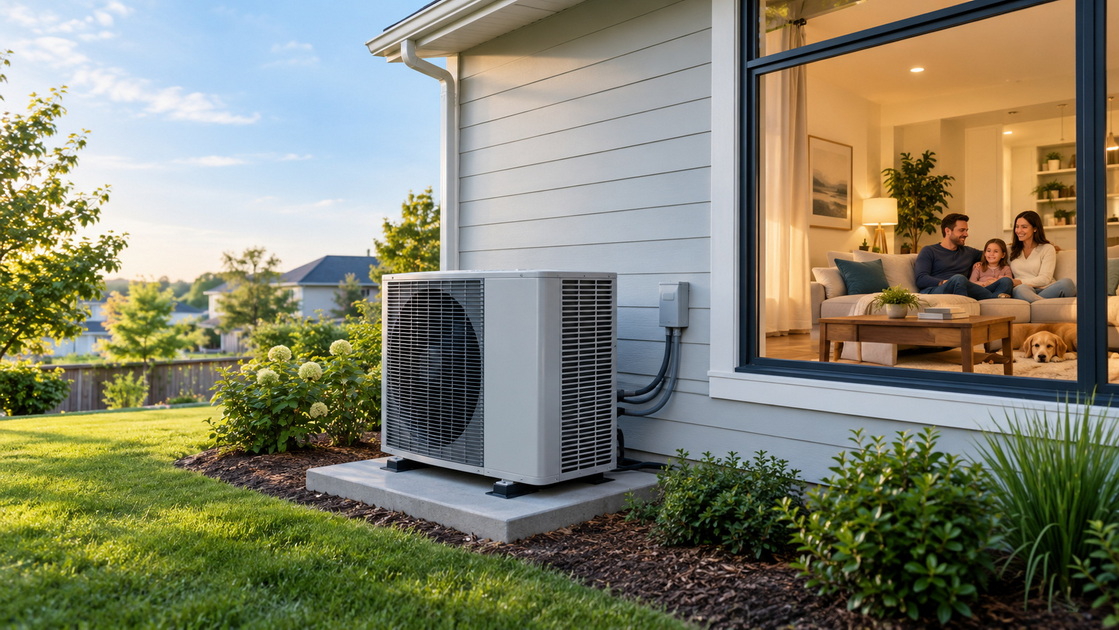
HVAC utility rebates are incentives offered by participating energy providers for qualifying heating and cooling improvements. Depending on the program, eligible upgrades may include central air conditioners, furnaces, air-source heat pumps, ductless systems, or related efficiency improvements.
A rebate is not automatically included with every replacement. Programs may restrict eligibility by service territory, account type, equipment efficiency, installation method, or available funding.
Also, distinguish a utility rebate from other financial offers:
| Incentive | Who provides it? | What should you verify? |
|---|---|---|
| Utility rebate | Participating energy provider | Account eligibility, equipment requirements, deadlines |
| State-administered rebate | State or other program administrator | Local availability, income rules, approved project scope |
| Manufacturer promotion | Equipment manufacturer | Eligible models, purchase dates, combination restrictions |
| Contractor discount | Installing company | Written price, conditions, and expiration |
| Tax credit | Tax authority | Applicable law and qualifying installation year |
Treat each incentive separately until its administrator confirms how it applies to your project.
Some older articles still describe federal heating and cooling tax credits as available through 2032. That information should not guide a new installation without checking current rules.
The IRS states that the Energy Efficient Home Improvement Credit under Section 25C is not available for property placed in service after December 31, 2025.
For a new 2026 installation, do not include that former credit in your expected savings. An eligible installation completed in 2025 is a different situation and should be discussed with a qualified tax professional.
Utility incentives and state-administered rebates are separate programs. The end of a federal tax credit does not, by itself, establish whether a local rebate is available.
The Department of Energy describes potential rebates of up to $8,000 for qualifying heating and cooling heat pumps through participating electrification programs.
That figure is a possible maximum, not a nationwide offer available to every homeowner. Household income, approved project costs, equipment requirements, local implementation, and funding availability affect eligibility.
Before purchasing equipment, confirm whether your state, territory, or Tribal program is accepting applications and whether approval must come before installation.

Start with the electric and gas providers listed on your bills. Your mailing address alone may not identify the correct program, especially where neighboring properties have different providers.
Use this sequence:
1. Identify your current electric and gas utility accounts.
2. Review each provider's residential efficiency program.
3. Search the ENERGY STAR Rebate Finder using your ZIP code.
4. Check your state energy office for additional opportunities.
5. Request the current application and complete program terms.
6. Confirm the rules directly with the administrator before installation.
Ask specific questions rather than simply asking whether rebates exist:
- Does my account qualify?
- Is my replacement system type eligible?
- Must I use a participating contractor?
- Is an energy assessment or reservation required?
- Which installation and submission dates apply?
- Can this incentive be combined with another offer?
Save dated copies of the answers and application materials.
Different equipment categories use different efficiency measurements:
- SEER2 describes seasonal cooling efficiency.
- EER2 measures cooling efficiency under specified test conditions.
- HSPF2 describes seasonal heating efficiency for heat pumps.
- AFUE describes fuel-use efficiency for furnaces and boilers.
These ratings help compare products, but no single threshold guarantees eligibility everywhere. A qualifying heat pump in one utility territory may not qualify under another program.
Ask your contractor to identify the exact program requirement beside the proposed equipment's documented rating.
For many split systems, performance depends on the combination of outdoor equipment, indoor coil, and air handler or furnace—not just the outdoor unit.
Request the complete model numbers and, when required, the corresponding Air-Conditioning, Heating, and Refrigeration Institute certificate.
This distinction matters during partial replacements. Installing a qualifying outdoor unit does not automatically establish that the complete installed system meets the program's requirements.
Some incentives support particular changes, such as moving from electric resistance heating to a qualifying heat pump. Others have rules concerning existing fuel type or service accounts.
Describe your current system accurately, including its fuel source and backup heat. Do not assume that a neighbor's approved project establishes eligibility for yours.
Read the current program terms before approving equipment.
Look for requirements involving:
- Preapproval or funding reservations.
- Home energy assessments.
- Participating contractors.
- Eligible product lists.
- Installation deadlines.
- Income documentation.
Missing a required early step may be difficult to correct afterward.
Request a proposal showing equipment models, installation scope, permits, electrical work, duct modifications, and disposal costs where applicable.
Keep the installation price separate from estimated incentives. This lets you distinguish the contractor's charge from money that another organization may approve later.
Some programs require contractor submission. Others require the homeowner to apply.
Before installation, establish:
- Who submits the application.
- Who gathers supporting documents.
- Who receives the payment.
- Who responds if information is missing.
"Rebate assistance included" should have a clear meaning.
Depending on the program, your application may require:
- An itemized invoice and proof of payment.
- Installation and completion dates.
- Equipment model and serial numbers.
- Efficiency certification or an AHRI certificate.
- Utility account information.
- Permits or inspection records.
- Reservation or approval numbers.
Keep copies rather than relying on a single emailed attachment.
Application windows vary. For example, NIPSCO's published residential rebate instructions require submission within 60 days of installation.
That is an example, not a universal deadline. Follow your own program's terms.
Save the confirmation number and monitor requests for additional information.
Do not budget around a guaranteed four-to-six-week payment window. Processing depends on the program, application completeness, and review requirements.

A larger incentive does not necessarily create the better purchase.
Consider this hypothetical comparison:
| Cost component | Option A | Option B |
|---|---|---|
| Installed price | $10,500 | $12,000 |
| Assumed approved rebate | $500 | $1,200 |
| Net cost after rebate | $10,000 | $10,800 |
Option B provides $700 more in rebates but still costs $800 more after the incentive.
It might justify that difference through better comfort control, appropriate efficiency improvements, or other features. However, the rebate alone does not establish its value.
Compare each proposal using:
- Complete installed cost.
- Verified incentive eligibility.
- Expected operating costs using local energy rates.
- Equipment suitability for your climate.
- Warranty terms.
- Maintenance requirements.
- Financing costs, if applicable.
Keep uncertain rebates outside your committed budget until you understand their approval conditions.
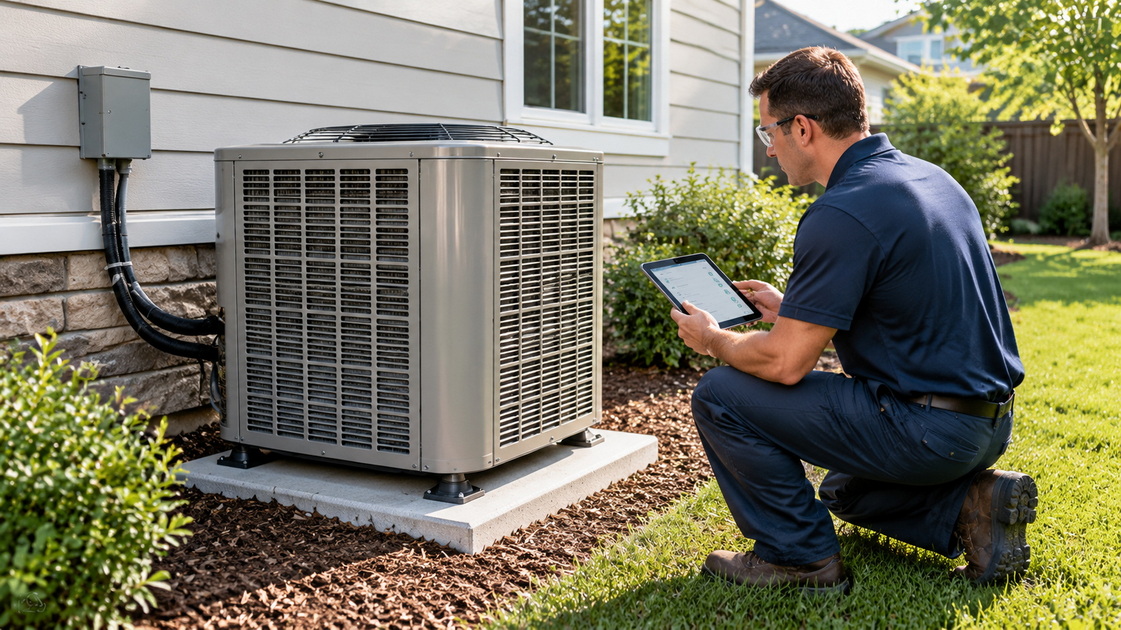
An oversized or undersized system can struggle to deliver the intended comfort and performance.
A contractor should evaluate your home's heating and cooling requirements rather than selecting capacity solely from the old unit's label. ENERGY STAR identifies a Manual J load calculation as an appropriate method for determining residential heating and cooling needs.
Insulation, windows, air leakage, and changes to the home can affect that calculation.
Efficient equipment cannot fully compensate for distribution problems.
Ask whether the replacement evaluation includes duct condition, airflow, thermostat compatibility, and manufacturer installation requirements.
For a heat pump, discuss cold-weather performance and backup heating strategy. For fuel-burning equipment, ask what venting and combustion-safety checks the installation requires.
A replacement project should also include understandable care instructions.
Ask about filter selection, filter-check intervals, outdoor-unit clearance, and recommended professional maintenance. Keep installation and service records together.
The objective is reliable comfort over time—not simply obtaining a payment after installation.
Several preventable mistakes can complicate an otherwise suitable project:
- Assuming certification alone guarantees a rebate.
- Installing before required approval or assessment.
- Using an outdated application.
- Submitting incomplete equipment model numbers.
- Missing the filing deadline.
- Assuming every incentive can be combined.
- Confusing a financing promotion with a price reduction.
- Treating an estimated incentive as guaranteed money.
Combination rules deserve particular attention. For example, NIPSCO specifies that certain dual-fuel customers installing a heat pump alongside a qualifying furnace or boiler must choose between the applicable rebates rather than claiming both.
Always check the rules for your own project.
Start with your home's needs, then evaluate the incentives that may support the right solution.
Contact Mega Services Heating & Cooling to discuss your heating and cooling replacement options. Have your ZIP code, utility providers, current equipment details, and comfort concerns ready.
Ask for an itemized proposal and clarification about any available rebate-related assistance before installation. A well-planned replacement should support a safer, more comfortable home while keeping costs and expectations clear.
Possibly. Some utilities offer central air conditioner rebates, while others prioritize different upgrades. Confirm current eligibility, efficiency requirements, and any indoor-coil matching rules before purchasing.
No. Availability depends on the program, location, account eligibility, equipment, and sometimes household income. Advertised maximum amounts should not be treated as guaranteed savings.
Sometimes. Each offer has its own combination rules. Obtain confirmation before subtracting multiple incentives from your expected project cost.
There is no universal timeline. Ask the administrator about current processing estimates and whether payment follows application acceptance, final approval, or another milestone.
Some programs accept post-installation applications. Others require advance approval, an assessment, or a reservation. Check before work begins rather than relying on a later exception.
The IRS states that Section 25C does not apply to property placed in service after December 31, 2025. Evaluate current utility and state programs separately.
Approval belongs to the program administrator. Confirm eligibility directly and ask Mega Services what documentation or application assistance is included in your proposal.
1.Original article reviewed for its rebate-focused topic, historical customer example, and promotional structure. Its customer experience is not presented as a Mega Services testimonial.
2.Authoritative source for the Section 25C eligibility period and the December 31, 2025 cutoff.
3.Source for potential heat pump rebate amounts and the role of local program administrators in determining eligibility.
4.Source for the distinction between whole-home savings and electrification rebate programs, and their location-dependent availability.
5.ZIP-code-based resource for locating participating incentives and special offers.
6.Source for proper equipment sizing and Manual J guidance. Older tax-credit statements on this page are not used; the article follows current IRS guidance instead.
7.Technical support for proper sizing, installation, and matched split-system components.
8.Specific examples of application deadlines, AHRI documentation, account requirements, and restrictions on combining certain heating rebates.


