
Views: 222 Author: Loretta Publish Time: 2026-02-23 Origin: Site


Content Menu
● What This Furnace Troubleshooting Guide Covers
● Safety First: Before You Start Any Furnace Troubleshooting
>> 1. Turn Off Power When Inspecting Internal Components
>> 2. Watch for Signs of a Gas or Carbon Monoxide Issue
● Quick Furnace Troubleshooting Overview (At-a-Glance)
● Furnace Troubleshooting Tip #1: Check Dirty or Clogged Filters
>> Why a Dirty Filter Is Such a Big Problem
>> How to Inspect and Replace Your Furnace Filter
● Furnace Troubleshooting Tip #2: Verify Thermostat Settings and Power
>> Placement and Wiring Concerns
● Furnace Troubleshooting Tip #3: Inspect Ignition or Pilot Control
>> Common Ignition and Pilot Problems
>> What Homeowners Can Safely Do
● Furnace Troubleshooting Tip #4: Evaluate Blower Motor Operation
>> Signs of a Failing Blower Motor
● Furnace Troubleshooting Tip #5: Understand Normal Mechanical Wear and Tear
>> Smart Habits to Extend Furnace Life
● Furnace Troubleshooting Tip #6: Fix Short Cycling (Turning On and Off Too Frequently)
>> Common Causes of Short Cycling
>> Homeowner Steps to Address Short Cycling
● Furnace Troubleshooting Tip #7: Track and Interpret Unusual Furnace Noises
>> Common Furnace Noises and What They May Mean
>> Simple Noise-Related Checks
● Furnace Troubleshooting Tip #8: Resolve Inconsistent Heating and Cold Spots
>> Likely Causes of Uneven Heating
>> Homeowner Steps to Improve Comfort
● Furnace Troubleshooting Tip #9: Prioritize Carbon Monoxide Prevention
>> Why Carbon Monoxide Is Dangerous
>> Proactive Carbon Monoxide Safety Steps
● Furnace Troubleshooting Tip #10: Commit to Regular Furnace Maintenance
>> What Professional Furnace Maintenance Typically Includes
>> Homeowner Maintenance Checklist (Between Professional Visits)
● Energy-Saving Furnace Tips for Lower Bills and Better Comfort
>> Smart Ways to Boost Furnace Efficiency
● When DIY Furnace Troubleshooting Should Stop
● Why Work With Mega Services Heating & Cooling for Furnace Repair and Maintenance
>> Local, Licensed, and Customer-Focused
● Clear Call to Action: Schedule Expert Furnace Service Today
● Furnace Troubleshooting FAQs
>> 1. How often should I change my furnace filter?
>> 2. Why is my furnace running but not blowing warm air?
>> 3. Is it safe to relight my own furnace pilot light?
>> 4. How can I tell if my furnace is short cycling?
>> 5. Do I really need annual furnace maintenance?
When your furnace stops working on a freezing night, the right troubleshooting steps can save you stress, money, and even protect your family's safety. This guide walks you through practical, homeowner-friendly furnace troubleshooting tips and shows you when it is time to call a licensed HVAC professional like Mega Services Heating & Cooling.

- Essential safety checks you should always start with before touching your furnace.
- Step-by-step furnace troubleshooting for common problems like no heat, weak airflow, or frequent cycling.
- How to improve energy efficiency and comfort while protecting your system from unnecessary wear.
- When to stop DIY and call a licensed HVAC technician in the Montgomery County & DC Metro Area.
Before you open panels, press reset buttons, or touch wiring, always put safety first.
- Locate the furnace power switch (it often looks like a regular light switch on or near the unit) and set it to "Off" before removing access panels.
- For gas furnaces, you may also need to turn off the gas shut-off valve if you smell gas or suspect a leak.
- Never try to repair ignition controls, gas valves, or wiring while power is on.
- If you smell rotten-egg-like gas odors, leave the home immediately and call your gas company or emergency services.
- If your carbon monoxide (CO) alarm sounds, evacuate at once and call a professional; do not try to restart the furnace.
- Install CO detectors on each level of your home, test them monthly, and replace batteries regularly.
Never continue furnace troubleshooting if you suspect a gas or CO leak—this is an emergency situation.
Symptom | Likely Causes | Safe DIY Checks | Call a Pro When... |
Furnace not turning on | Thermostat issues, tripped breaker, power switch off, ignition failure | Check thermostat settings, replace batteries, reset breaker, confirm furnace switch is on | No response after reset, repeated ignition failure, burning or electrical smell |
Weak or no airflow | Dirty filter, blower motor issues, blocked vents, duct problems | Replace filter, open all vents, check for visible obstructions | Blower not running, loud motor noise, hot or burning smell from vents |
Furnace short cycling | Clogged filter, thermostat placement, oversized system, safety shut-off | Change filter, move objects away from thermostat, check vents | System keeps shutting off quickly, error codes on furnace panel, frequent resets needed |
Unusual noises | Loose parts, debris in blower, worn bearings, ignition delays | Change filter, gently remove visible debris, tighten accessible screws on exterior panels | Banging, booming, grinding, or screeching persists or worsens |
Inconsistent heating | Poor insulation, blocked vents, duct leaks, dirty components | Open all vents, check doors/windows, change filters, adjust dampers | Some rooms never heat, visible duct damage, rising bills with declining comfort |
A clogged air filter is one of the most common furnace problems and the easiest to fix.
- Restricted airflow makes the furnace work harder, which can cause overheating and system shutdowns.
- Dust and debris reduce energy efficiency, raising your heating bills.
- Dirty filters recirculate particles, worsening indoor air quality.
1. Turn off the furnace at the power switch for safety.
2. Locate the filter compartment (usually where the return air duct meets the furnace cabinet).
3. Slide the filter out and check if it looks gray, dusty, or clogged.
4. Note the size and airflow direction arrows, then install a new filter of the same size with arrows pointing toward the furnace.
5. Restore power and monitor the system for improved airflow and performance.
Most homes benefit from changing filters every 4–6 weeks during heavy use, especially in winter or if you have pets or allergies.
Thermostat problems are behind many "furnace not turning on" calls.
- Make sure the thermostat is set to "Heat" and the temperature is at least 3–5 degrees above room temperature.
- Replace thermostat batteries if the display is dim, blank, or slow to respond.
- Confirm the fan setting: "Auto" is usually best for comfort and efficiency.
- Disable or review schedules and smart home settings that might be overriding manual changes.
- A thermostat placed near sunlight, appliances, or drafts can cause short cycling and comfort issues.
- If you notice loose, corroded, or damaged wiring, do not attempt a repair; call a professional HVAC technician.
If your furnace still does not respond after these thermostat troubleshooting steps, the issue may be with control boards, safety switches, or internal wiring, which requires professional service.
Modern gas furnaces typically use electronic ignition, while older models may have a standing pilot light.
- Dirty sensors or pilot components preventing proper flame detection.
- Worn or faulty thermocouple failing to keep the pilot lit.
- Improperly positioned flame sensor causing unreliable ignition.
- Insufficient gas pressure or gas supply interruptions.
- Loose, damaged, or corroded electrical connections.
- Reset the furnace if your model has a clearly labeled reset button, following the manufacturer's instructions.
- Check that the gas shut-off valve handle is in the open position (aligned with the pipe) if it was turned off for any reason.
- Visually inspect for obvious dirt or debris around accessible pilot or ignition areas without disassembling sealed components.
Detailed ignition repairs, thermocouple replacement, and gas valve adjustments should be handled by a licensed HVAC technician due to fire and safety risks.
The blower motor pushes heated air through your ducts and into your living spaces, so any failure here directly impacts comfort.
- Very weak airflow from vents even when the furnace is running.
- Unusual noises, such as grinding, squealing, or rattling, near the blower compartment.
- Furnace shuts down due to overheating or runs in short bursts (short cycling).
- Blower fails to start at all, even though you hear the furnace igniting.
- Replace dirty filters to reduce strain on the blower.
- Ensure supply and return vents are open and not blocked by furniture, rugs, or boxes.
- Listen carefully around the blower door for obvious scraping or loose panel vibration.
Lubrication, capacitor testing, and blower motor replacement should be left to a professional HVAC technician with proper tools and training.
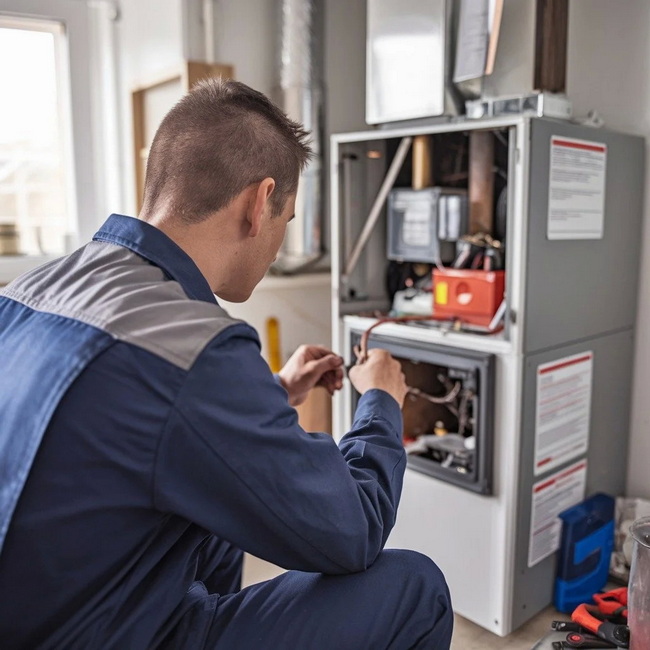
Every furnace experiences mechanical wear and tear as it runs season after season.
- Slight increases in noise levels over time as parts loosen or bearings age.
- Gradual declines in heating performance and efficiency.
- More frequent minor repairs such as belts, sensors, or switches.
- Schedule annual furnace maintenance to clean, inspect, and adjust components for peak performance.
- Address small issues quickly instead of running the furnace with known problems.
- Avoid extreme thermostat swings; do not set the temperature drastically higher than normal just to "heat faster."
- Give the furnace occasional breaks during mild weather by lowering the setpoint or using zoning when available.
Short cycling happens when a furnace runs for a short time, shuts off, and then quickly starts again, often without reaching the desired temperature.
- Oversized furnace that heats the space too quickly and triggers frequent shutdowns.
- Clogged air filters or blocked vents restricting airflow.
- Thermostat located in a draft, near a register, or close to a heat source.
- Flame sensor or safety switches reacting to overheating or ignition issues.
1. Replace the furnace filter if it is dirty.
2. Make sure every supply and return vent is fully open and unobstructed.
3. Check that the thermostat is not directly exposed to sunlight or near exterior doors.
4. Observe any error codes on the furnace's control board (visible through a small window on many units) and provide this information to your technician.
If short cycling continues, there may be deeper issues such as improper sizing, heat exchanger problems, or advanced control faults that require professional diagnosis.
New or louder furnace noises are often your system's way of warning you about developing problems.
- Banging or popping: Expanding and contracting ductwork, delayed ignition, or loose components.
- Screeching or squealing: Worn blower belt or motor bearings.
- Rumbling or booming: Possible combustion or burner issues.
- Clicking or ticking: Normal ignition sounds or minor metal expansion; persistent clicking may indicate relay or ignition troubles.
- Whistling or hissing: Air leaks, blocked filters, or duct restrictions.
- Rattling or vibrating: Loose panels or hardware on the unit or ductwork.
- Replace the air filter to reduce airflow noise and strain.
- Tighten accessible panel screws and secure loose vents or registers.
- Remove visible debris around the blower area and return grilles.
Do not ignore new or worsening sounds, especially loud bangs or booms; these may point to serious combustion issues that need immediate professional attention.
When some rooms feel cozy and others stay cold, you are dealing with inconsistent heating.
- Closed or partially closed vents in some rooms.
- Leaky, crushed, or disconnected ductwork reducing airflow.
- Poor insulation or significant air leaks around windows and doors.
- Improperly balanced duct systems or zoning setup.
- Verify all vents are open and free of furniture, curtains, or rugs.
- Change your filter to maximize system airflow.
- Use basic weather-sealing products on drafty windows and doors.
- If your system has manual duct dampers, follow labeled arrows or existing positions to gently balance airflow between floors (consult your technician if unsure).
If certain rooms never warm up, or if you suspect duct or design issues, a professional airflow and duct inspection can identify leaks, restrictions, and balancing opportunities.
For gas furnaces, carbon monoxide leaks represent one of the most serious risks.
- Carbon monoxide is colorless, odorless, and tasteless, which is why it is often called a "silent killer."
- Exposure can cause headaches, dizziness, nausea, confusion, or flu-like symptoms.
- High levels can be fatal if not addressed immediately.
- Install CO detectors near sleeping areas and on each level of your home.
- Schedule annual furnace inspections and combustion safety checks by a licensed HVAC professional.
- Ensure vents and flues are clear of snow, ice, nests, or debris.
- Never block the furnace area with storage items; maintain proper ventilation and clearances.
If your CO alarm sounds, evacuate the home, call emergency services, and do not re-enter until professionals say it is safe.
The most effective way to avoid emergency furnace troubleshooting is a proactive furnace maintenance plan.
- Thorough cleaning of burners, flame sensors, and internal components.
- Inspection and adjustment of ignition systems, safety switches, and electrical connections.
- Blower assembly inspection, lubrication (where applicable), and airflow testing.
- Combustion analysis for gas furnaces and verification of safe operation.
- Recommendations for repairs or upgrades to improve efficiency and comfort.
- Replace or clean filters regularly during the heating season.
- Keep the area around the furnace clean and clear of clutter and chemicals.
- Listen for new noises and take note of changes in performance or energy bills.
- Test CO detectors and smoke alarms monthly.
Beyond basic furnace troubleshooting, small tweaks can deliver noticeable energy savings and more consistent comfort.
- Use a programmable or smart thermostat to reduce temperature slightly while you sleep or are away, then warm the home before you return.
- Seal duct leaks and insulate exposed ducts in unconditioned spaces like attics or basements to prevent heat loss.
- Upgrade to high-efficiency filters that balance filtration and airflow instead of overly restrictive models.
- Ask your HVAC contractor whether a variable-speed blower or higher-efficiency furnace would significantly cut energy use in your home.
Some situations are not safe or practical for DIY furnace repair and require a qualified HVAC professional.
- You smell gas or hear a hissing sound near gas lines.
- The furnace repeatedly trips the breaker or blows fuses.
- You see scorch marks, melted insulation, or exposed wiring inside the unit.
- The system runs but produces no heat at all after basic checks.
- You notice visible cracks in the heat exchanger or severe rust inside the furnace cabinet.
In these cases, turn the system off and schedule service immediately to protect your home and family.
If you are in Montgomery County or the DC Metro Area, Mega Services Heating & Cooling provides fast, reliable furnace repair, replacement, and maintenance to keep your home safe and comfortable.
- Fully licensed and insured HVAC contractor serving Maryland and DC.
- Experienced technicians trained in gas furnaces, electric furnaces, and heat pumps.
- Prompt response for heating emergencies and transparent, honest recommendations.
- Free estimates on new systems and clear, upfront pricing on repairs.
Mega Services Heating & Cooling proudly serves:
- Bethesda, Rockville, Gaithersburg, Silver Spring, Germantown, Potomac, Kensington, Chevy Chase, Takoma Park, and surrounding communities in Montgomery County.
- Many ZIP codes throughout the DC Metro Area, including 20817, 20814, 20850, 20852, 20878, 20910, and 20902.
If your furnace still is not working correctly after using these furnace troubleshooting tips, or if you notice warning signs like strange smells, loud noises, or frequent shutdowns, it is time to bring in a professional.
Contact Mega Services Heating & Cooling today to schedule furnace repair, maintenance, or a system evaluation in Montgomery County and the DC Metro Area.
- Call: 301-304-6666
- Email: megahvacservices@gmail.com
- Or use the "Call Now" or "Schedule Now" buttons on our website to book fast, friendly service.
Don't wait for the next cold snap—get your heating system back to peak performance now!
Contact Mega Services Heating & Cooling today!
Most homeowners should change their furnace filter every 4–6 weeks during the heating season, especially if they have pets, allergies, or run the system frequently. High-efficiency filters and dusty homes may require even more frequent changes.
A furnace that runs without producing heat may have issues with the ignition system, gas supply, thermostat control, or blower operation. Start by verifying thermostat settings and replacing the filter, then call a professional if the problem continues.
Many older furnaces include instructions for relighting the pilot light, but working around gas and ignition components can be risky. If you are unsure, uncomfortable, or the pilot will not stay lit, it is safer to contact a licensed HVAC technician.
If your furnace turns on, runs for just a few minutes, shuts off, and repeats this pattern frequently without reaching your set temperature, it is likely short cycling. This behavior wastes energy and signals underlying issues that should be checked.
Yes—annual furnace maintenance helps catch small problems early, maintains efficiency, improves safety, and can extend the life of your heating system. Many manufacturers also require regular maintenance to keep warranties valid.
1. https://airprosusa.com/top-10-furnace-troubleshooting-tips/
2. https://www.megaservices.org/service-area.html
3. https://www.dutchenterprises.com/blog/common-furnace-problems-troubleshooting-tips/
4. https://www.homeadvisor.com/rated.MegaServicesheatingand.144295060.html
5. https://fredfcollis.com/furnace-troubleshooting-tips-for-homeowners/
6. https://goendlessenergy.com/blog/natural-gas-furnace-problems-massachusetts-winter-2025-2026/
7. https://www.thumbtack.com/md/bethesda/central-air-conditioning-repair/mega-services-heating-cooling/service/546537166437580800
8. https://ambroseair.com/10-most-common-furnace-issues-and-how-to-fix-and-prevent-them/
9. https://www.yelp.com/biz/mega-services-heating-and-coolin


