
Views: 211 Author: Mega Services Publish Time: 2026-09-23 Origin: Site


Content Menu
● Why Choosing the Right HVAC Company Matters
● What Makes a Reliable Air Conditioning Installation Servicing Company?
>> Licensing and Professional Responsibility
>> Refrigerant Handling Capability
● Top Air Conditioning Installation Servicing Company in Frederick
>> 1. Mega Services Heating & Cooling
>>> Core Strengths
>>> Questions to Ask Before Installation
>> 2. Carrier-Focused Local HVAC Contractors
>>> Best Fit
>> 3. Lennox-Experienced HVAC Contractors
>>> Best Fit
>> 4. Ductless Mini-Split and Heat-Pump Specialists
>>> Best Fit
>> 5. Value-Oriented Air Conditioning Replacement Contractors
>>> Best Fit
● Comparison Table for Frederick HVAC Buyers
● Common Problems Homeowners Should Avoid
>> Choosing Based Only on Price
>> Replacing Equipment Without Checking Ductwork
>> Selecting the Same Size as the Old System Automatically
>> Accepting Vague Warranty Language
● What a Quality Installation Process Should Include
● Buyer's Guide for Air Conditioning Installation Servicing
>> Verify Credentials Before Paying a Deposit
>> Ask for Exact Equipment Model Numbers
>> Review Maintenance Requirements
>> How do I know if my air conditioner needs replacement instead of repair?
>> How can I verify whether a contractor is qualified to work on refrigerant systems?
>> Why does my home have hot and cold rooms even though the air conditioner works?
>> Is a heat pump a good choice for a Frederick home?
>> What should be included in an AC installation warranty?
Finding the right air conditioning installation and servicing company in Frederick is about much more than comparing replacement prices. A dependable HVAC partner should help create a safer, more comfortable, and more energy-efficient home while providing clear recommendations, qualified workmanship, compliant refrigerant handling, and reliable support after installation.
For homeowners, landlords, property managers, and small commercial decision-makers, the most important question is not simply, "Which company can install a new AC system?" It is, "Which company can assess my property properly, recommend the right solution, complete the work to a high standard, and remain available when the system needs maintenance or repair?"
This guide explains how to evaluate leading air conditioning installation servicing companies in Frederick, what separates a well-planned HVAC project from a basic equipment swap, and how Mega Services Heating & Cooling supports local households with practical, long-term comfort solutions.

Air conditioning systems affect more than indoor temperature. A properly designed and installed system can influence humidity, airflow, indoor air quality, energy use, equipment lifespan, and the overall comfort of every room in the home.
Frederick homeowners often need a system that can perform during warm and humid summers while integrating effectively with heating equipment for colder seasons. This makes HVAC selection a whole-home decision. The outdoor condenser, indoor coil, furnace or air handler, ductwork, thermostat, drain system, electrical components, and refrigerant lines must work together as one coordinated system.
A new air conditioner may look impressive on a proposal, but the equipment alone does not determine the final result. Even a high-efficiency system can produce poor comfort if it is oversized, improperly charged, connected to restrictive ductwork, paired with the wrong indoor coil, or installed without proper airflow testing.
A qualified contractor should take time to understand the home before recommending equipment. That means examining the existing system, asking about hot or cold rooms, reviewing insulation and window conditions, checking duct performance, discussing household comfort preferences, and identifying whether the priority is lower utility bills, better humidity control, quieter operation, improved indoor air quality, or a lower initial installation cost.
A trustworthy HVAC contractor should provide a complete service process rather than only an equipment quote. The following factors help homeowners distinguish a long-term service partner from a company focused only on making a quick sale.
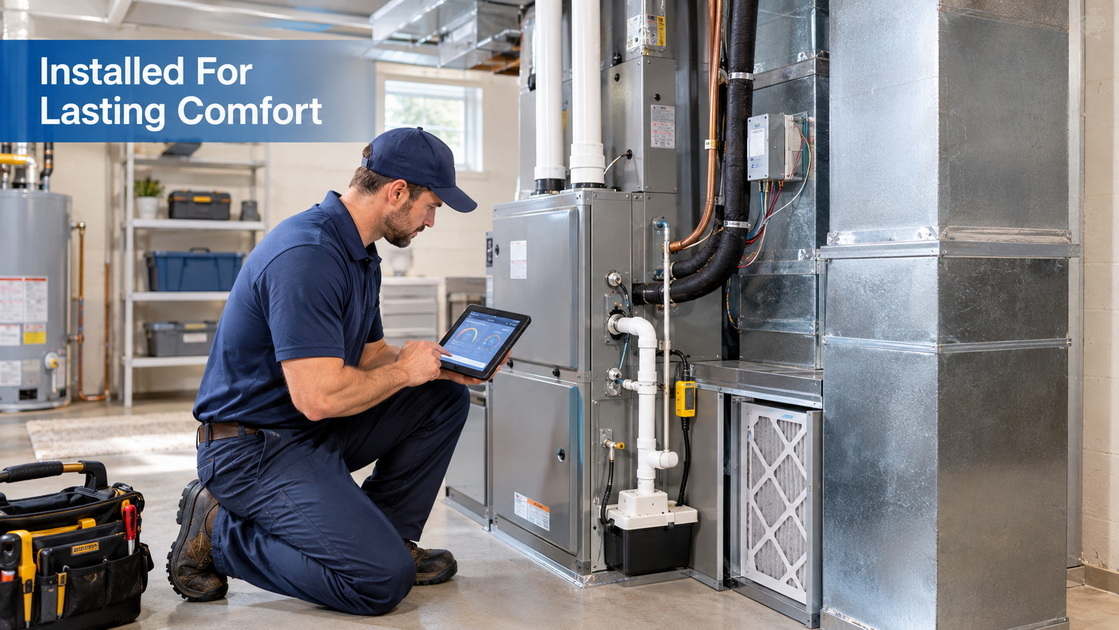
HVAC work involves electrical systems, refrigerant handling, drainage, combustion equipment in some homes, ventilation, and building-code requirements. Homeowners should ask which licensed entity will be responsible for the installation and whether permits are required for the project.
A professional company should be able to explain its credentials clearly and provide accurate business information before collecting a deposit or beginning work.
Refrigerant is essential to air conditioning performance, but it must be handled correctly. Poor refrigerant work can lead to leaks, reduced efficiency, unreliable cooling, compressor damage, and unnecessary environmental impact.
Technicians who work on refrigerant circuits should have the appropriate qualifications for the work being performed. During an installation, proper refrigerant-side procedures should include pressure testing, evacuation, leak checks, and charging the system according to the manufacturer's requirements.
One of the most common mistakes in residential HVAC replacement is selecting the new unit based only on the capacity of the old unit.
For example, a home may currently have a three-ton air conditioner. That does not automatically mean a new three-ton system is the right choice. The original system may have been oversized, undersized, installed before insulation improvements, or selected without considering later renovations or additions.
A reliable contractor should evaluate factors such as:
- Home size and layout
- Ceiling height
- Window size and orientation
- Insulation levels
- Attic and crawlspace conditions
- Air leakage
- Occupancy patterns
- Existing ductwork
- Heat-producing appliances
- Rooms that feel too warm or too cool
The goal is not to install the biggest system. The goal is to install a system that can maintain stable comfort without excessive short cycling, high humidity, unnecessary energy use, or uneven temperatures.
An air conditioning system includes more than the outdoor unit. The outdoor condenser or heat pump must be compatible with the indoor evaporator coil, furnace or air handler, thermostat, and airflow design.
Homeowners should ask for the exact model numbers of all major components included in the proposal. This makes it easier to verify system performance information, understand warranty coverage, and compare proposals fairly.
A quote that lists only "new AC unit" without identifying the indoor equipment, controls, and installation materials may leave important details unresolved.
A detailed proposal should explain what is included and what may require additional work. It should cover equipment models, installation labor, electrical work, duct modifications, refrigerant-line work, condensate drainage, thermostat replacement, equipment removal, cleanup, permit responsibility, warranty terms, and estimated project timing.
Clear scope documentation helps prevent misunderstandings. It also enables homeowners to compare proposals based on actual value rather than just the lowest advertised price.
The following companies and service categories represent common options that Frederick homeowners may consider when planning AC replacement, repair, maintenance, heat-pump installation, or indoor-air-quality upgrades. The best choice depends on the property, comfort priorities, budget, existing equipment, and the contractor's ability to provide a properly documented solution.
Mega Services Heating & Cooling provides air conditioning, heating, heat-pump, maintenance, repair, replacement, and indoor-air-quality services for residential customers. The company focuses on helping families create safer, more comfortable, and more energy-efficient living environments through practical HVAC recommendations and responsive service.
For homeowners who prefer a long-term service relationship rather than a one-time transaction, Mega Services Heating & Cooling offers a balanced approach. The company supports cooling repair, cooling replacement, cooling maintenance, heating repair, heating replacement, heating maintenance, heat-pump solutions, whole-house humidifiers, whole-house dehumidifiers, and air-cleaning options.
Mega Services Heating & Cooling is particularly well suited for homeowners who want clear explanations before making an equipment decision. Instead of treating every home as identical, the company can help customers compare replacement options based on their actual comfort concerns, home layout, equipment condition, energy goals, and budget.

- Residential-focused air conditioning and heating service
- Support for repair, maintenance, replacement, and system upgrades
- Heat-pump and ductless comfort options for appropriate properties
- Indoor-air-quality solutions, including humidity-control equipment
- Multi-brand equipment experience, including Carrier, Bryant, Lennox, Goodman, Ruud, Ducane, and Daikin mini-split systems
- Upfront pricing and free estimate availability
- A homeowner-focused communication style designed to make technical decisions easier to understand
- Long-term support for maintenance and future repair needs
- Manufacturer parts warranty coverage and labor warranty options for qualifying replacement projects
Mega Services Heating & Cooling can be a strong option for homeowners who want a flexible service provider capable of supporting both immediate HVAC concerns and long-term system care.
The company is especially relevant for households that need:
- A replacement air conditioner after repeated repairs
- A heating and cooling system evaluation before major investment
- Improved comfort in rooms that are too warm, humid, or unevenly cooled
- Help selecting a heat pump or ductless mini-split solution
- Routine maintenance to reduce the risk of seasonal system failure
- A clear explanation of equipment choices without unnecessary complexity
- Support for whole-home humidity control and air-quality improvements
Before approving any replacement proposal, homeowners should ask Mega Services Heating & Cooling or another contractor the following questions:
- Which system is recommended for my home, and why?
- How was the recommended equipment size determined?
- Which indoor and outdoor components are included in the proposal?
- Will the existing ductwork support the new system effectively?
- Is thermostat replacement included?
- Will the refrigerant lines be replaced, reused, or properly cleaned?
- Are electrical upgrades included if needed?
- Does the proposal include condensate safety protection?
- What warranty coverage applies to equipment and labor?
- What maintenance schedule is recommended after installation?
These questions do not create unnecessary delays. They help ensure that the homeowner understands what is being purchased and how the system will be supported after installation.
Carrier equipment is commonly selected by homeowners who want access to a broad range of air conditioners, heat pumps, furnaces, thermostats, and comfort-control options. Local contractors may offer Carrier systems in different efficiency tiers, from straightforward replacement solutions to advanced variable-speed equipment.
Carrier-focused contractors can be a practical choice for homeowners who want to compare system features such as energy efficiency, humidity management, sound levels, and smart thermostat compatibility.
However, the quality of the installation remains more important than the equipment badge. Before selecting a Carrier contractor, homeowners should ask for detailed model numbers, a complete list of installation materials, and a written explanation of how the contractor will address ductwork, drainage, electrical connections, and system startup.
Carrier-focused contractors may be suitable for homeowners who want:
- A recognizable equipment brand
- Multiple efficiency levels to compare
- Central air conditioning or heat-pump replacement
- Optional smart control features
- A system designed for long-term maintenance and parts availability
Lennox equipment is often considered by homeowners interested in efficient comfort systems, variable-capacity performance, quieter operation, and advanced comfort controls. A contractor with strong familiarity with Lennox products can help homeowners understand whether a high-efficiency or variable-speed system is appropriate for the home.
Advanced equipment can provide meaningful benefits, but it also requires careful installation. High-performance equipment may require more attention to airflow, thermostat setup, duct design, condensate management, and electrical requirements.
A homeowner should not select a high-efficiency system simply because it has an impressive rating. The system must fit the home and be installed correctly to deliver its potential value.
Lennox-experienced contractors may be appropriate for homeowners who prioritize:
- Better humidity control
- Lower operating noise
- Advanced thermostat integration
- Improved seasonal efficiency
- Variable-speed comfort performance
- Multi-stage heating and cooling operation
Ductless mini-split systems and heat pumps can be useful for homes with additions, garages, finished basements, attic conversions, sunrooms, older properties, or rooms that never seem comfortable.
Instead of relying only on central ductwork, ductless systems use indoor wall-mounted, ceiling-mounted, or concealed air-handling units connected to an outdoor heat pump. This can allow homeowners to create separate comfort zones without extending major ductwork into difficult spaces.
Ductless systems are not automatically the right answer for every home. Placement, line-set routing, wall penetration sealing, condensate drainage, electrical requirements, and room load calculations all require careful planning.
Ductless specialists are often a good choice for:
- Home additions
- Converted garages
- Finished basements
- Bonus rooms
- Rooms above garages
- Older homes with limited duct access
- Home offices
- Rooms with persistent hot or cold spots
- Supplemental cooling and heating needs
Many Frederick homeowners compare proposals from contractors offering Goodman, Ruud, and other mainstream HVAC equipment brands. These systems can provide practical value when paired with qualified installation, clear warranty terms, correct sizing, and proper commissioning.
A value-oriented system should not mean a low-quality installation. Homeowners should be cautious when a proposal is significantly cheaper than others but does not explain what work is included.
A lower upfront quote may exclude important items such as electrical upgrades, a new disconnect box, pad replacement, line-set replacement, condensate safety switches, duct sealing, permit fees, thermostat replacement, equipment removal, or full system startup procedures.
Value-oriented contractors may be a sensible choice for homeowners who want:
- A practical replacement system
- A balanced initial investment
- Straightforward central air conditioning
- Clear equipment and labor warranty terms
- Reliable maintenance availability
- A documented installation scope
| Provider Type | Main Focus | Typical Services | Equipment Flexibility | Important Buyer Verification |
|---|---|---|---|---|
| Mega Services Heating & Cooling | Residential comfort, repair, replacement, maintenance, indoor air quality | AC repair, AC replacement, heating service, heat pumps, maintenance, humidity control | Multi-brand options and ductless solutions | Written scope, system sizing, warranty details, maintenance plan |
| Carrier-Focused Contractor | Central air conditioning and heat-pump systems | Installation, replacement, repair, comfort controls | Carrier product range | Indoor and outdoor equipment match, duct evaluation, full commissioning |
| Lennox-Experienced Contractor | Higher-efficiency and variable-capacity systems | AC, heat pumps, furnaces, controls | Lennox-oriented equipment options | Airflow testing, control setup, system compatibility |
| Ductless Heat-Pump Specialist | Zoned heating and cooling | Mini-split installation, retrofit comfort solutions | Ductless and multi-zone systems | Room load calculation, condensate design, electrical scope |
| Value-Oriented Replacement Contractor | Standard HVAC replacement | Conventional AC and heating systems | Goodman, Ruud, and comparable brands | Complete scope, model numbers, permit and warranty inclusion |
A low installation price may look attractive, but homeowners should compare the full scope of work. A complete proposal should identify all equipment models, accessories, labor tasks, warranty coverage, and potential additional costs.
When comparing quotes, ask whether each proposal includes:
- New indoor coil or air handler
- Thermostat replacement
- Refrigerant-line work
- Electrical disconnect replacement
- Condensate drain improvements
- Float switches or drainage protection
- Equipment pad replacement
- Duct modifications
- Permit handling
- Disposal of old equipment
- Startup and performance testing
- Warranty registration
A quote that appears inexpensive may not be directly comparable to one that includes a more complete installation package.
A new air conditioner cannot solve every comfort problem. If ductwork is undersized, leaking, damaged, poorly insulated, or improperly balanced, the home may continue to experience uneven temperatures and weak airflow after replacement.
Before installing new equipment, homeowners should ask whether the contractor has evaluated supply and return airflow. This is especially important in homes with rooms that are consistently hotter, colder, more humid, or harder to cool than the rest of the house.
The "same-tonnage replacement" approach is one of the most common hidden problems in HVAC buying.
An older system may have been installed before renovations, insulation upgrades, window replacements, or changes in household occupancy. It may have been too large from the beginning. Replacing it with the same capacity without a proper assessment can repeat the same comfort issues for another decade or more.
Oversized systems may cool quickly but fail to run long enough to remove humidity effectively. They can also cycle on and off more often, which may increase wear and reduce comfort consistency.
In humid weather, indoor comfort depends on both temperature and moisture control. A home can feel uncomfortable even when the thermostat displays a reasonable temperature if humidity remains high.
Ask the contractor how the proposed system will manage humidity. Depending on the home and equipment, the answer may involve variable-speed airflow, staged cooling, thermostat settings, drainage design, duct improvements, or a whole-house dehumidifier.
A contractor may mention a "10-year warranty," but homeowners should ask whether that refers to parts, labor, compressor coverage, registration requirements, or limited coverage with exclusions.
Warranty questions should include:
- What manufacturer parts warranty applies?
- Is registration required?
- Is labor included?
- How long does labor coverage last?
- What service call fees may apply?
- Are refrigerant leaks covered?
- Are thermostat or electrical components included?
- Is preventive maintenance required to keep coverage valid?
A reliable air conditioning installation should follow a structured process. While every home is different, homeowners should expect the contractor to address the following stages.
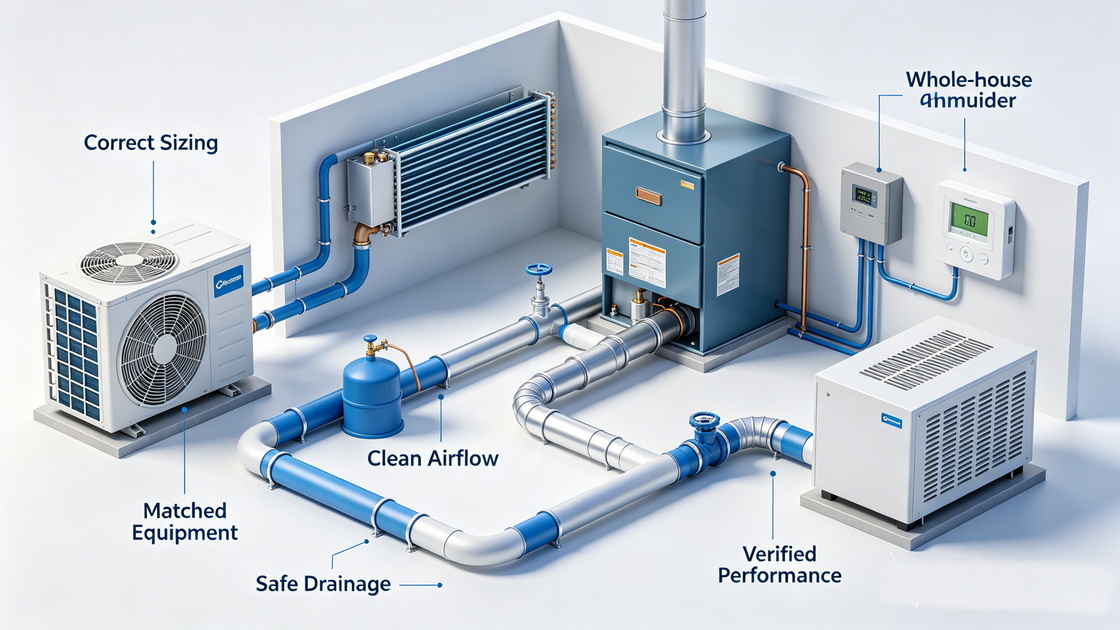
The contractor should discuss comfort concerns, inspect the existing equipment, examine accessible ductwork, review electrical and drainage conditions, and identify any indoor-air-quality priorities.
The goal is to understand why the homeowner is replacing or upgrading the system. A system that fails frequently may have an equipment issue, but it may also have airflow, drainage, electrical, ductwork, or sizing problems that should be addressed during replacement.
The contractor should explain the recommended system capacity, equipment configuration, efficiency level, control options, and expected installation scope.
A useful recommendation should not be overly technical, but it should be specific. Homeowners should know what equipment is being proposed and why it fits the property.
The proposal should include equipment model numbers, installation details, warranty information, payment terms, estimated installation timing, and a clear list of included and excluded work.
A detailed proposal gives homeowners a stronger basis for comparison and reduces the risk of surprise costs later.
Before work begins, the contractor should confirm access requirements, protect work areas, coordinate equipment delivery, review parking or entry needs, and identify the location of electrical panels, attic access, basement access, or crawlspace access.
The installation team should remove old equipment safely, position the new system correctly, complete required electrical and refrigerant-line work, connect the drain system, verify airflow, and install or configure the thermostat.
For ductless systems, the team should also verify indoor-head placement, line-set routing, wall penetration sealing, condensate drainage, and outdoor-unit location.
Startup is one of the most important stages of an HVAC installation. The contractor should verify that the system operates safely and as intended.
A complete commissioning process may include:
- Electrical safety checks
- Refrigerant-side pressure testing
- Leak testing
- Proper evacuation
- Refrigerant charging verification
- Airflow confirmation
- Drainage testing
- Thermostat setup
- Temperature-difference checks
- Safety-control testing
- Homeowner orientation
Before leaving the property, the contractor should explain basic operation, thermostat controls, filter replacement, maintenance recommendations, warranty registration requirements, and what to do if the system does not operate as expected.
Before committing to an HVAC contractor, homeowners should request business information, licensing details, proof of insurance, and the name of the responsible licensed party.
This should be a normal part of the selection process. Reputable contractors understand that homeowners are making a significant investment and need confidence before approving the work.
Do not accept a proposal that only says "new 3-ton air conditioner" or "high-efficiency system." Request the exact outdoor unit, indoor coil, air handler or furnace, and thermostat model numbers.
These details help homeowners understand what they are buying, compare proposals properly, review performance data, and confirm warranty coverage.
When comparing contractors, create a side-by-side comparison of the following points:
| Comparison Item | Proposal A | Proposal B | Proposal C |
|---|---|---|---|
| Outdoor equipment model | |||
| Indoor equipment model | |||
| Thermostat included | |||
| Cooling capacity | |||
| Heating capability | |||
| Duct modifications included | |||
| Electrical work included | |||
| Drain safety protection included | |||
| Permit responsibility | |||
| Parts warranty | |||
| Labor warranty | |||
| Maintenance plan available | |||
| Estimated project timing | |||
| Total installed price |
This process makes it easier to identify which proposal offers the strongest long-term value.
Even a new HVAC system needs regular maintenance. Seasonal tune-ups can help identify small problems before they become major repairs, improve operating efficiency, maintain airflow, and support longer equipment life.
Ask the contractor what maintenance schedule is recommended and whether the company offers a service plan that includes inspections, priority scheduling, filter reminders, or repair benefits.
Homeowners should choose a contractor they would be comfortable calling after installation. HVAC systems require filters, maintenance, occasional repairs, warranty coordination, and performance checks over time.
A good installation company should be prepared to support the homeowner beyond the installation date.
Selecting an air conditioning installation servicing company in Frederick is a long-term home-comfort decision. The strongest choice is not always the company with the lowest initial quote or the most recognizable equipment brand. It is the provider that takes time to assess the home, explains options clearly, documents the work, installs matched equipment correctly, verifies system performance, and remains available for future service.
Mega Services Heating & Cooling is a practical option for homeowners seeking residential air conditioning, heating, heat-pump, maintenance, repair, replacement, and indoor-air-quality support. With a focus on clear communication, flexible equipment solutions, transparent estimates, and long-term customer care, the company helps Frederick-area households make more confident heating and cooling decisions.
A carefully selected and properly installed HVAC system can improve comfort, support better humidity control, reduce avoidable energy waste, and provide dependable performance through changing seasons. The most effective next step is to request a detailed, model-specific assessment that explains the recommended solution, installation scope, warranty coverage, and long-term maintenance plan.
Replacement may be worth considering when the system requires frequent repairs, has major compressor or coil issues, uses an older refrigerant type, produces inconsistent comfort, has rising operating costs, or is approaching the end of its expected service life.
A qualified contractor should explain both repair and replacement options so the homeowner can make an informed decision based on cost, age, system condition, and long-term comfort goals.
Ask the company about technician qualifications for refrigerant-related work and request verification before installation or major repair. A professional contractor should be able to explain who will handle the refrigerant circuit and what procedures will be used to protect system performance.
Uneven temperatures can result from duct leakage, insufficient return airflow, poor insulation, solar heat gain, room layout, thermostat location, improperly balanced ducts, oversized equipment, undersized equipment, or a system that was not designed for current home conditions.
A replacement air conditioner alone may not solve the problem. Ask the contractor to evaluate airflow and room-specific comfort issues before recommending equipment.
A heat pump can be a practical choice for many Frederick homes because it can provide cooling in summer and heating during colder months. The right choice depends on the home's existing heating system, electrical capacity, insulation, comfort expectations, budget, and desired operating costs.
A contractor should explain whether a heat pump, dual-fuel system, conventional air conditioner with furnace, or ductless solution is the best fit for the property.
A complete warranty discussion should cover manufacturer parts coverage, labor coverage, registration requirements, exclusions, maintenance expectations, service-call fees, and responsibility for warranty claims.
Homeowners should request warranty terms in writing and keep copies of invoices, model numbers, registration records, and maintenance documentation.
-
-
-
-
-


