
Views: 221 Author: Mega Services Publish Time: 2026-09-29 Origin: Site


Content Menu
● Introduction: Choose the Installation, Not Just the Unit
● How the Companies Were Selected
● Six Air Conditioning Service Companies to Consider
>> 1. Mega Services Heating & Cooling
>> 2. Presidential Heating, Air Conditioning & Plumbing
>> 3. Cool Breeze Heating & Air Conditioning
>> 6. Germantown Heating & Air Conditioning
● Buyer's Guide: What to Verify Before Signing
>> Confirm the contractor's credentials and permit plan
>> Make every quote describe the same project
>> Ask why the proposed system is the right size
>> Watch for the less obvious equipment substitution
>> Put the handover records in the agreement
>> Clarify refrigerant and equipment availability
>> 1. How do I verify that an HVAC contractor's license is current?
>> 2. Does an EPA Section 608 certification expire?
>> 3. How can I compare two quotes with very different prices?
>> 4. Should I request a heat pump quote instead of an AC quote?
>> 5. What should a property manager request for several homes?

Finding an air conditioning installation servicing company in Gaithersburg is about more than choosing a brand or comparing prices. The contractor must determine what the home needs, explain the proposed work, install the equipment correctly, and remain available when the system needs attention.
Those questions have become more important as equipment choices change. Industry shipment data published in 2026 indicates that heat pumps accounted for 47% of U.S. cooling-equipment shipments in 2025. A heat pump is not automatically the right choice for every Gaithersburg home, but buyers planning a replacement may benefit from comparing it with a conventional air conditioner.
This guide reviews six companies that publicly describe relevant services in Gaithersburg or its surrounding area. It is a shortlist for further evaluation, not a claim that every company has been independently audited or that one provider is the right fit for every project.

The companies below were included because their published information identifies relevant air conditioning services and a Gaithersburg-area presence. The comparison focuses on factors a buyer can investigate before signing a contract:
- Service scope: Installation, replacement, repair, maintenance, or a combination of these.
- Project fit: Whether the published offering appears relevant to an individual home or a residential property portfolio.
- Technical approach: The ability to explain sizing, equipment selection, duct condition, and installation checks.
- Accountability: Licensing, insurance, permits, written proposals, and warranty terms.
- Long-term support: Maintenance options, repair service, and clarity about what happens after installation.
Published service descriptions are a starting point. They do not independently establish current licensing, insurance, available crews, prices, or the quality of an individual installation. Buyers should verify those matters directly.
Air conditioning contractors are service businesses, not equipment factories. Factory production capacity, export markets, and manufacturing minimum order quantities are therefore poor measures of their suitability. For a local project, ask instead about installation availability, the size of job a company accepts, equipment lead times, and who will service the system later.
| Company | Published service emphasis | Annual installation capacity | Minimum project size | Buyer's key verification |
|---|---|---|---|---|
| Mega Services Heating & Cooling | Residential AC and heating installation, repair, and maintenance | Not publicly stated | No published minimum | License, insurance, permit plan, and written warranty terms |
| Presidential Heating, Air Conditioning & Plumbing | HVAC service and maintenance for residential and commercial customers | Not publicly stated | No published minimum | Scope of maintenance coverage and responsible licensed contractor |
| Cool Breeze Heating & Air Conditioning | Installation, replacement, repair, and preventive maintenance | Not publicly stated | No published minimum | Emergency-service terms and equipment compatibility |
| GAC Services | HVAC, electrical, and plumbing services | Not publicly stated | No published minimum | Responsibilities and permits when several trades are involved |
| Airtron Mid-Atlantic | Gaithersburg AC installation, repair, heating, and maintenance | Not publicly stated | No published minimum | Difference between an initial quote and the final site-based scope |
| Germantown Heating & Air Conditioning | AC installation and heating and cooling service | Not publicly stated | No published minimum | Itemized proposal, credentials, and warranty documents |
"Not publicly stated" does not mean a company lacks capacity. It means buyers should request current scheduling and staffing information rather than rely on an unsupported estimate.
Mega Services Heating & Cooling describes itself as a residential HVAC company focused on air conditioning and heating installation, repair, and maintenance. Its published service area includes Gaithersburg. The company also describes work involving several established equipment brands, including Carrier, Bryant, Lennox, and Goodman.
For buyers, the practical advantage of that offering is the opportunity to discuss different equipment options alongside repair and maintenance needs. Mega states that system replacements begin with a free estimate and upfront pricing. It also advertises a 10-year manufacturer parts warranty and a three-year labor warranty at no extra charge.
Those published terms make Mega a useful first quote for a homeowner seeking a clear picture of replacement cost and subsequent support. They should still be reviewed in writing. Ask which equipment qualifies, when coverage begins, what is excluded, whether maintenance is required, and how a labor claim is handled.
Mega states that it is licensed and insured and that it coordinates permits and inspections for applicable work in Montgomery County. As with any contractor, request the responsible license information and current insurance documentation before hiring. Its website does not establish a verified annual installation capacity or a guaranteed response time for every project; ask directly if either factor is important to your decision.
Presidential describes HVAC and plumbing services for Gaithersburg-area residential and commercial customers. The company states that it has served the area since 1982. Its published offering includes installation consultations, heating and cooling services, and a Home Comfort Club maintenance program.
That mix may appeal to a property manager seeking both planned upkeep and access to repairs. Before enrolling multiple addresses, however, request the current agreement. Confirm which properties it covers, what each visit includes, whether priority scheduling applies during peak demand, and how after-hours work is priced.
For a replacement project, ask Presidential to identify the proposed equipment and explain its sizing assessment. A maintenance plan and an installation contract solve different problems; evaluate both on their written terms.
Cool Breeze says it has served Gaithersburg and nearby communities since 1981. It describes installation, replacement, retrofits, repairs, preventive maintenance, and emergency service. The company identifies itself as a Bryant dealer and says it repairs other brands.
This may be a relevant option for a home with mixed-brand equipment or an owner comparing a Bryant replacement with another proposal. Ask whether a quote covers both indoor and outdoor components, how existing ducts will be assessed, and what changes are needed to support the proposed system.
Cool Breeze publishes information about emergency support. If fast service is a deciding factor, distinguish between phone availability and technician dispatch. Obtain the applicable response expectations, service area, and after-hours charges in writing.
GAC describes HVAC, electrical, and plumbing services in Maryland. It states that it has operated since 1970 and offers HVAC installations and a maintenance membership.
A multi-trade provider can simplify a project when an AC replacement also requires electrical modifications or related repairs. The important question is how that work will be coordinated. Ask which company or licensed professional is responsible for each trade, which permits are included, and whether any portion will be subcontracted.
If you are comparing maintenance plans, request the current membership document rather than relying on a benefits summary. Check visit frequency, covered equipment, exclusions, scheduling priority, and cancellation terms.
Airtron's Gaithersburg service information covers air conditioning installation and repair, heating work, online estimates, and maintenance plans. Its quoting process may be convenient for buyers establishing an initial budget or collecting several proposals.
An initial estimate is not a substitute for evaluating the property. Before accepting the final price, ask what changed after the site visit and why. Older equipment, restricted access, inadequate ductwork, or electrical requirements can materially change the scope.
Airtron is worth comparing when you want to evaluate a cooling replacement alongside heating and ongoing maintenance. As with every bidder, make sure the signed proposal names the actual equipment and specifies the work needed to install it.
Despite its name, Germantown Heating & Air Conditioning lists a Gaithersburg address. Its published information describes AC installation, heating and cooling services, and free installation estimates.
It can provide another locally based quote for a buyer comparing HVAC-focused contractors. Ask for the proposed indoor and outdoor model numbers, a clear list of included and excluded work, and a sample of the paperwork supplied when installation is complete.
The reviewed company information does not establish a dependable founding year, annual installation volume, or detailed terms for every service arrangement. Request those details if they will influence your decision; do not infer them from the company name or website presentation.
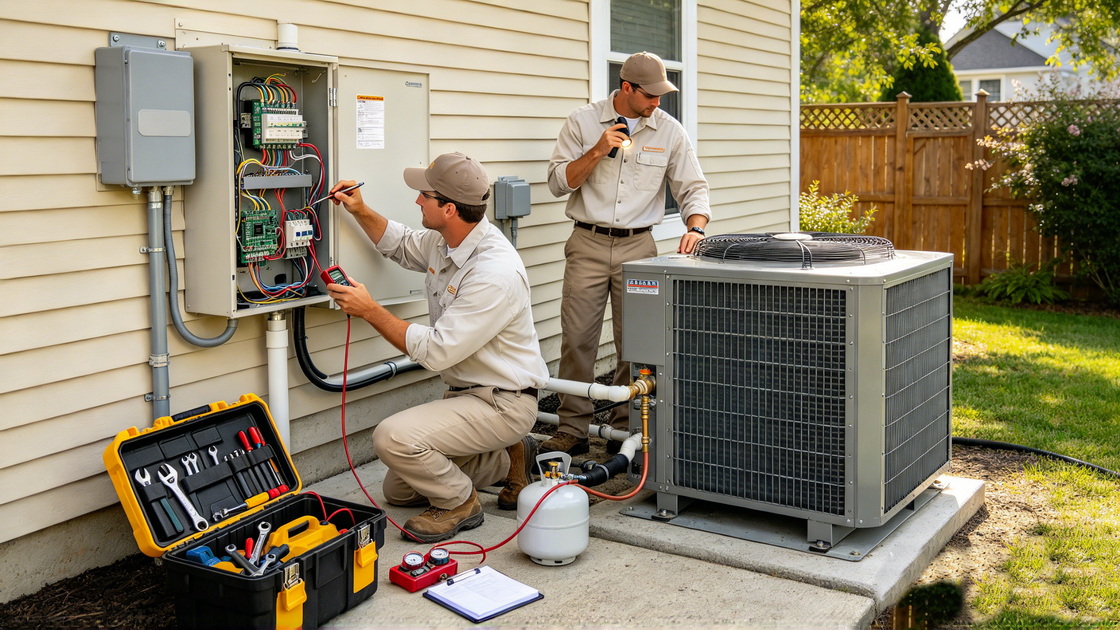
Ask who will be legally responsible for the installation. Obtain the relevant Maryland HVACR license information and check the current record through the state's licensing system. Request proof of insurance for the entity named on the contract.
For work involving refrigerant handling, ask about the assigned technician's EPA Section 608 certification and whether its type is appropriate for the equipment. A technician credential and a state contractor license serve different purposes; do not treat one as a replacement for the other.
Next, establish who will obtain any required Montgomery County mechanical permit and arrange inspections. If a bidder says a permit is unnecessary, ask for an explanation tied to the exact work proposed. Keep copies of applicable permit and inspection records with the system documents.
A useful comparison begins with the same information supplied to each bidder. Provide the property address, approximate conditioned area, existing equipment model numbers, known comfort problems, repair history, and any planned renovations.
Ask each contractor to distinguish the base installation from optional improvements. A complete proposal should address:
1. The exact indoor and outdoor equipment models.
2. How the cooling and heating loads were assessed.
3. Any planned duct, electrical, drainage, thermostat, or line-set work.
4. Permits, inspections, equipment removal, and site restoration.
5. Equipment availability and a proposed schedule.
6. Startup checks and documents you will receive at handover.
7. Manufacturer parts coverage and contractor labor coverage.
Do not compare a quote for only an outdoor condenser with a quote for a complete matched system as though they include the same work. Also avoid selecting equipment solely by its advertised efficiency rating. System design, airflow, and installation affect how the equipment performs in the home.
Replacing a failed unit with another unit of the same nominal capacity may appear straightforward, but the existing system may never have been properly sized. Changes to insulation, windows, additions, or ductwork can also change the home's needs.
Ask the contractor to explain its load-calculation approach and how it selected the proposed equipment. For residential work, Manual J addresses load calculations, Manual S addresses equipment selection, and Manual D addresses duct design. You do not need to perform these calculations yourself. You should, however, be able to understand the assumptions behind the recommendation.
An oversized system is not necessarily an upgrade. Likewise, a high-efficiency unit connected to an unsuitable duct system may fail to deliver the comfort you expect. If a contractor identifies a duct limitation, ask whether its correction is included in the price.
A common buyer concern is being sold a visibly inferior outdoor unit. A less obvious risk is a proposal that names an attractive outdoor model but leaves the indoor coil, air handler, or furnace pairing unclear.
Before approving a purchase, request exact model numbers for the components that will be installed. Ask the contractor to identify the applicable rated equipment combination and explain what will happen if a component is unavailable. Any substitution should be documented and approved before installation, not discovered when you receive the invoice.
Apply the same scrutiny to a proposal that says "reuse existing line set," "reuse ducts," or "electrical work if needed." Reuse may be appropriate, but it should follow an assessment of condition and compatibility. Otherwise, a lower initial price may simply postpone necessary work.
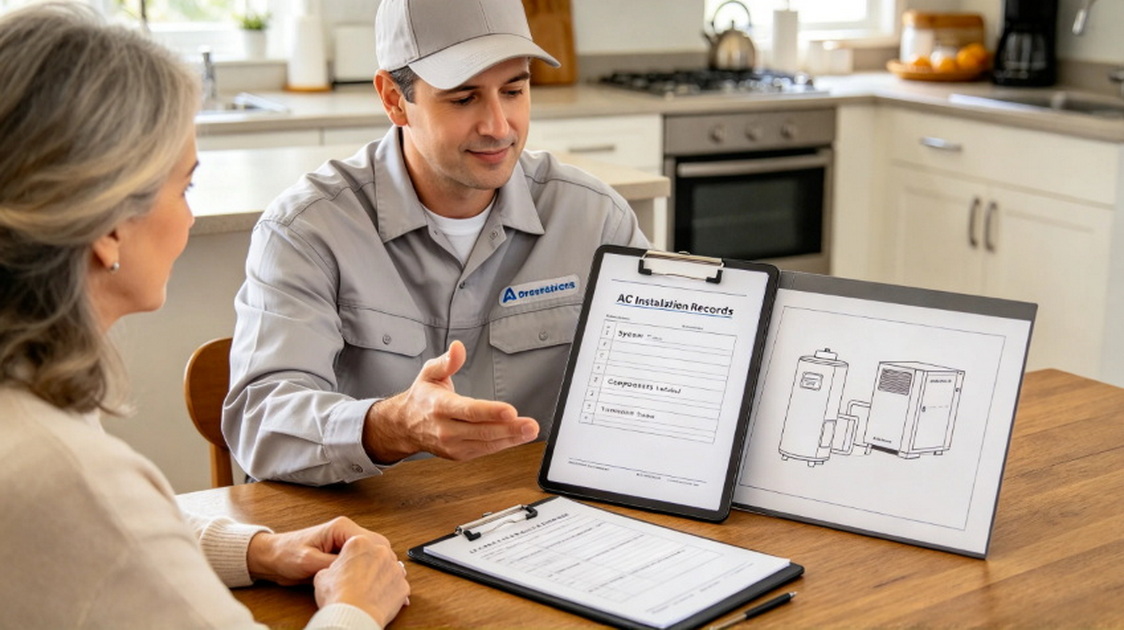
One of the most useful safeguards is to specify the installation records you expect before work begins. A finished system may look clean while an airflow problem, drainage issue, or equipment mismatch remains undocumented.
Ask for a handover packet containing installed model and serial numbers, applicable equipment-rating information, permit and inspection documents, warranty details, and the startup checks appropriate to that system. Where relevant, request recorded findings for airflow or static pressure, refrigerant-charge verification, condensate drainage, and thermostat operation.
This is not paperwork for its own sake. If the system develops a problem later, a future technician can compare current conditions with the original installation record. It also helps a property manager maintain consistent records across several addresses.
Refrigerant rules and equipment inventories are changing. Avoid broad claims that every older component is automatically prohibited or that any available component can be installed without qualification.
Instead, ask the bidder to identify the refrigerant, exact models, and any compatibility or regulatory considerations relevant to the proposed installation. Confirm that the quoted equipment is available and that a substitution will require your approval.
For a local installation, equipment logistics matter more than export documentation. Ask where the ordered components will be delivered, whether access to the property creates a constraint, who removes the old equipment, and what happens if a component is delayed.
The most useful shortlist is not the one with the boldest ranking. It is the one that helps you obtain comparable proposals and verify how each contractor will protect your home after installation.
Mega Services Heating & Cooling is a relevant first contact for Gaithersburg homeowners who want to discuss residential AC replacement, repair, and maintenance alongside its published estimate and warranty terms. Presidential, Cool Breeze, GAC, Airtron, and Germantown Heating & Air Conditioning offer other service combinations worth comparing against the same written requirements.
To begin, request an itemized estimate from Mega Services Heating & Cooling at 301-304-6666. Ask for the proposed equipment models, license information, permit approach, installation scope, startup records, and complete warranty terms. Then obtain comparable documentation from other providers before making your choice.
Request the legal name and license number of the individual or business responsible for the work. Check the record using Maryland's official licensing query and confirm that it matches the contracting party. If the names differ, ask the bidder to explain the relationship before signing.
EPA Section 608 technician credentials do not expire, but certification type matters. Ask whether the assigned technician has the appropriate credential for the work. This certification does not replace a current state contractor license, insurance, or a required permit.
First compare scope, not totals. Check indoor and outdoor models, sizing work, duct and electrical modifications, permits, removal, startup checks, and warranties. Identify every exclusion and ask each bidder to price any work that may otherwise become an extra charge.
It can be worthwhile when you are already considering replacement. Ask for proposals that explain installation requirements, heating performance, compatibility with the existing home, and total costs. National sales trends are useful context, but the decision should reflect your property and how you use the system.
Request an equipment inventory for each address, a standard inspection report, maintenance scope, repair-approval limits, emergency contact procedure, and separate pricing for repairs and replacements. Confirm whether scheduling and service-plan terms apply to every property, rather than assuming one household agreement covers the portfolio.


