
Views: 213 Author: Mega Services Publish Time: 2026-08-24 Origin: Site


Content Menu
● How to Choose a Reliable Air Conditioning Company in Maryland
● Top Air Conditioning Installation and Servicing Options in Maryland
● Mega Services Heating & Cooling
>> Why Flexible Service Matters
● Technical Factors That Affect Air Conditioning Performance
>> System Sizing and Home Load
>> Refrigerant Lines and Commissioning
>> Humidity Control and Indoor Comfort
● Common Problems When Buying HVAC Services
>> Replacing Equipment With the Same Size Without Evaluation
>> Confusing Manufacturer Warranty With Full Service Coverage
>> Ignoring Permits and Inspections
>> The Less-Discussed Installation Risk
● A Practical Homeowner Checklist
>> 1. Do I need a new air conditioner if my existing system still cools?
>> 2. How can I verify an HVAC contractor's Maryland license?
>> 3. Why does my upstairs stay hot even after replacing the air conditioner?
>> 4. Is a heat pump a good option for Maryland homes?
>> 5. What should I ask before approving an HVAC replacement quote?
Maryland homeowners need cooling and heating systems that can manage humid summers, changing spring and fall temperatures, and cold winter conditions. A reliable HVAC partner should therefore do more than replace an old air conditioner with a new unit of the same size.
A properly planned system must match the home's size, insulation level, windows, ductwork, electrical capacity, indoor humidity needs, and family lifestyle. The right contractor can help improve comfort, reduce avoidable energy waste, protect equipment life, and prevent costly installation mistakes.
This guide outlines the most important factors to consider when selecting an air conditioning installation, repair, and maintenance company in Maryland.
The lowest quote is not always the lowest long-term cost. A low initial price can leave out necessary ductwork repairs, electrical updates, permits, condensate drainage work, system commissioning, equipment registration, or labor warranty coverage.
A qualified HVAC company should be able to explain its recommendations in plain language and provide a written scope of work before installation begins.
| Selection Factor | What Homeowners Should Check | Why It Matters |
|---|---|---|
| Licensing and insurance | Active Maryland HVAC licensing, liability insurance, and local permit procedures | Helps protect the homeowner and supports compliant installation work |
| Home load evaluation | Assessment of home size, insulation, windows, layout, occupancy, and comfort concerns | Helps avoid oversized or undersized equipment |
| Equipment compatibility | Indoor and outdoor unit matching, thermostat compatibility, coil compatibility, and electrical requirements | Supports reliable performance and warranty eligibility |
| Ductwork condition | Return-air capacity, airflow balance, leakage, insulation, and static pressure | A new air conditioner cannot perform properly through poor ductwork |
| Installation process | Refrigerant line work, pressure testing, evacuation, drainage, electrical protection, and start-up testing | Installation quality affects efficiency, noise, reliability, and equipment life |
| Written proposal | Exact model numbers, included work, permit responsibility, warranty details, and exclusions | Makes it easier to compare proposals fairly |
| Maintenance support | Seasonal maintenance, repair responsiveness, and clear service documentation | Helps prevent unexpected breakdowns and protects long-term system performance |
A professional contractor should evaluate the entire HVAC system rather than focusing only on the outdoor condenser. This includes airflow, return vents, duct sizing, humidity, thermostat controls, condensate drainage, and indoor air quality needs.
Maryland homeowners have several types of HVAC service providers to consider. The most suitable choice depends on the property, existing equipment, budget, comfort priorities, and desired level of ongoing support.
| Company or Provider Type | Best Fit | Typical Strengths | Questions to Ask |
|---|---|---|---|
| Mega Services Heating & Cooling | Homeowners seeking installation, repair, maintenance, heating, cooling, heat pump, and indoor air quality support | Flexible residential service, clear communication, multi-brand equipment options, maintenance-focused support | What equipment options fit my home? What is included in the proposal? What warranty coverage applies? |
| Large regional HVAC companies | Homeowners who prefer broad scheduling availability and standardized service processes | Larger dispatch teams, established maintenance programs, broader marketing presence | Who will perform the installation? Are permits, ductwork, and electrical work included? |
| Brand-focused HVAC dealers | Homeowners who already prefer a specific equipment manufacturer | Familiarity with a particular product line, manufacturer registration, and brand-specific components | Is the selected equipment right for the home, or simply available in current inventory? |
| Independent local HVAC contractors | Older homes, custom upgrades, complex repairs, and homeowners who prefer direct communication | Personal service, flexible problem-solving, local project familiarity | Can they provide written licensing, insurance, permit, and warranty information? |
| Heat pump and electrification specialists | Homeowners considering high-efficiency heat pumps or replacing fossil-fuel heating systems | Knowledge of heat pump design, controls, electrical requirements, and available incentive programs | Is the electrical panel sufficient? Is backup heat needed? What paperwork is required for incentives? |
Mega Services Heating & Cooling is a residential HVAC service provider serving homeowners who need dependable cooling, heating, heat pump, and indoor air quality support.
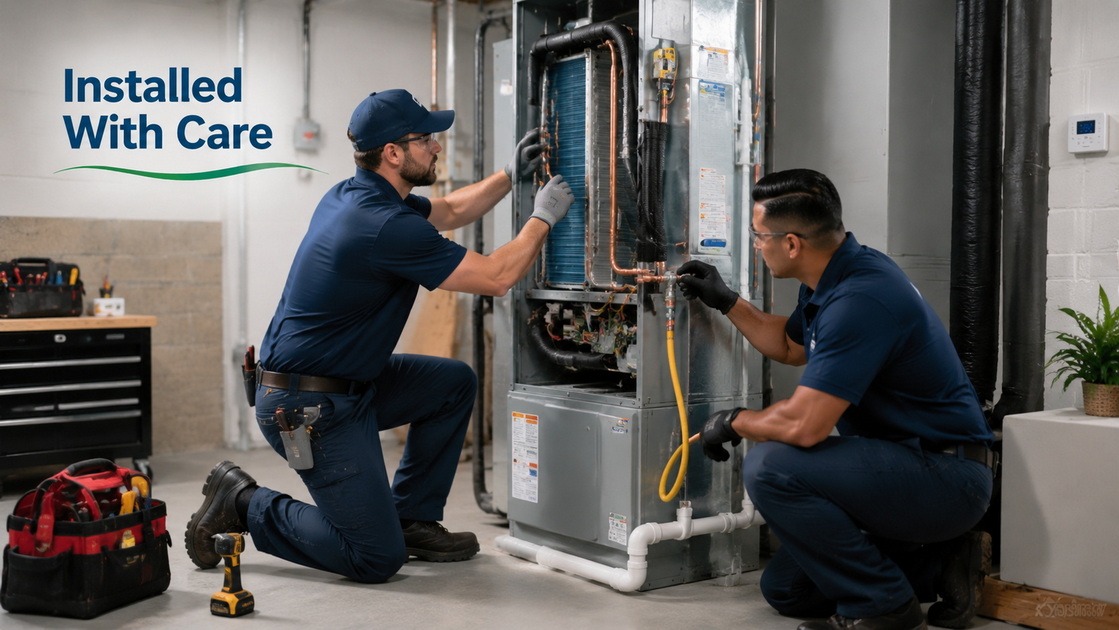
The company's service offering includes:
- Air conditioning repair, replacement, installation, and maintenance
- Heating repair, replacement, installation, and maintenance
- Heat pump services
- Whole-house humidifier and dehumidifier solutions
- Indoor air quality solutions
- Multi-brand equipment options, including Carrier, Bryant, Lennox, Goodman, Ruud, Ducane, and Daikin mini-split systems
- Free estimates for qualifying system replacement projects
- Clear pricing discussions before work begins
- Manufacturer parts warranty coverage and labor warranty options for eligible replacement systems
Mega Services Heating & Cooling is particularly relevant for homeowners who want practical guidance rather than a one-size-fits-all replacement recommendation. A home with humidity problems may require a different solution than a home with uneven room temperatures, undersized returns, aging ductwork, or repeated cooling failures.
Instead of treating every service request as a standard equipment swap, a careful HVAC evaluation should account for how the home actually performs throughout the year.
Residential HVAC projects are rarely identical. One homeowner may need emergency air conditioning repair during a summer heatwave. Another may need a complete central air replacement, a ductless mini-split for an addition, a heat pump upgrade, or a whole-house dehumidification solution.
Flexible service matters because the right solution depends on the specific problem:
- A home that feels cool but humid may need improved humidity control rather than a larger air conditioner.
- A second floor that remains warm may have ductwork, insulation, return-air, or zoning issues.
- A frequently repaired system may need a replacement comparison that includes repair cost, expected reliability, efficiency, and warranty coverage.
- A renovated basement, home addition, or converted garage may be better served by a ductless mini-split than by extending an already limited central duct system.
- A household looking to reduce heating fuel use may benefit from a heat pump assessment combined with electrical capacity planning.
Clear communication is especially important when homeowners are comparing multiple quotes. A reliable company should explain what is included, what is optional, what may require further inspection, and what conditions could affect the final project scope.
A high-quality air conditioning system is not defined only by its brand name or efficiency rating. The system must be properly selected, installed, and adjusted to the home.
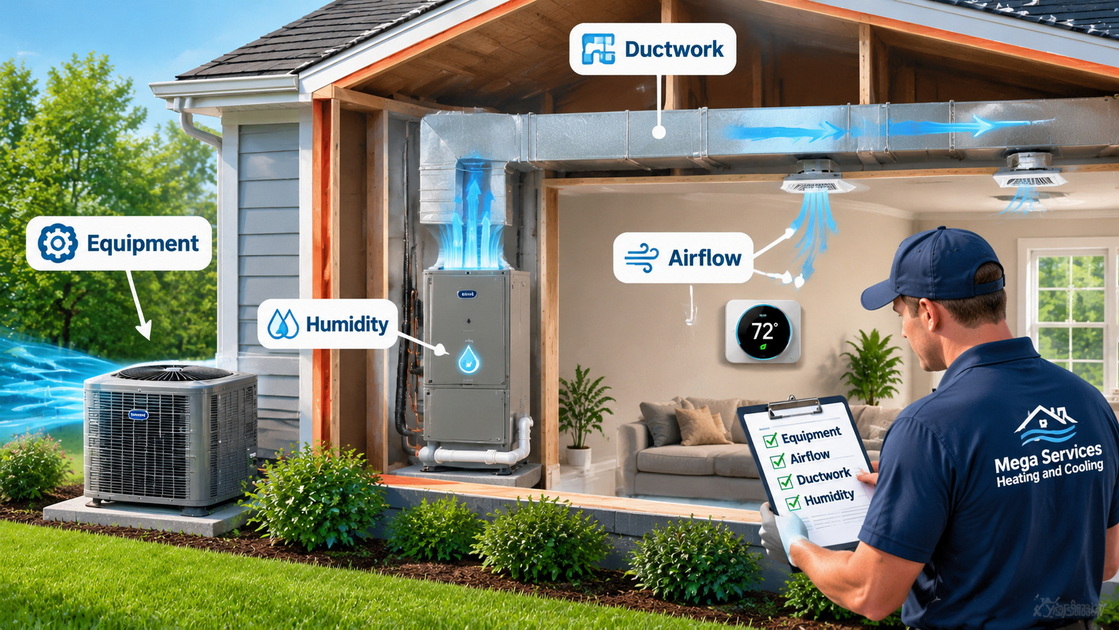
Air conditioner capacity is commonly measured in tons, but more tonnage does not automatically mean better cooling.
An oversized air conditioner may cool the thermostat area too quickly and shut off before it removes enough moisture from the air. This can leave rooms feeling clammy even when the temperature setting is reached. Oversized systems can also cycle more frequently, increase wear on components, and create uneven temperature conditions.
An undersized system may run continuously during peak summer weather and still struggle to maintain comfort.
A proper system recommendation should consider:
- Total conditioned square footage
- Ceiling height and open-concept areas
- Window size, direction, and solar exposure
- Wall, attic, and basement insulation
- Air leakage and building envelope condition
- Number of occupants
- Kitchen appliances and internal heat loads
- Existing ductwork design
- Desired indoor temperature and humidity levels
A professional home load evaluation helps determine whether the existing system size remains appropriate or whether the home's changing conditions require a different approach.
Ductwork is often the hidden reason why a new HVAC system does not deliver expected comfort.
Even a high-efficiency air conditioner can underperform when the duct system has restricted return air, leaks, poor insulation, undersized supply runs, excessive bends, or unbalanced airflow between rooms.
Common airflow symptoms include:
- Upstairs rooms that stay warmer than the rest of the home
- Bedrooms that receive too little cooling or heating
- Loud airflow at registers
- Weak airflow from specific vents
- Excessive dust accumulation
- Long run times without consistent comfort
- Hot and cold spots throughout the house
- High humidity despite a working air conditioner
Before installing replacement equipment, homeowners should ask whether the contractor will inspect the condition and capacity of the ductwork. In some homes, modest duct repairs, additional return air, sealing, insulation, or balancing may improve comfort more than selecting a larger system.
Proper commissioning is one of the most important stages of air conditioning installation.
A new system should not simply be connected and turned on. The installation process should include appropriate refrigerant line preparation, pressure testing, evacuation, electrical verification, drainage checks, airflow review, thermostat setup, and performance testing.
A careful contractor should be able to explain the steps used to verify system operation after installation.
Homeowners can ask questions such as:
- Was the refrigerant line set pressure-tested before the system was started?
- Was the system evacuated before refrigerant was released?
- Was the condensate drain tested for proper flow?
- Was airflow checked and adjusted where needed?
- Were electrical connections, disconnects, and circuit protection reviewed?
- Was the thermostat configured for the installed equipment?
- Were operating conditions checked after start-up?
These questions help homeowners understand whether the job includes a complete installation process rather than only equipment placement.
In Maryland, indoor comfort is strongly affected by humidity. A home can feel uncomfortable even when the thermostat shows the desired temperature.
High indoor humidity may contribute to:
- A sticky or clammy feeling
- Musty odors
- Condensation around windows or vents
- Basement dampness
- Increased dust-mite and mold concerns
- Poor sleeping comfort
- Greater reliance on lower thermostat settings
Depending on the home, solutions may include a properly sized variable-speed system, a two-stage cooling system, a whole-house dehumidifier, improved return airflow, duct sealing, drainage improvements, or better thermostat control settings.
Mega Services Heating & Cooling provides whole-house humidifier and dehumidifier options alongside cooling and heating services, which can be useful for homeowners who need to address year-round moisture balance rather than temperature alone.
A low quote may not include every item needed for a complete and compliant installation. It may exclude permit fees, electrical work, duct repairs, condensate drain modifications, new refrigerant lines, thermostat upgrades, crane or lifting requirements, old equipment removal, or system start-up testing.
When comparing quotes, homeowners should compare the full scope of work rather than just the final total.
Many replacement projects are quoted based solely on the size of the old unit. This can be risky because homes change over time.
A home may have new windows, added insulation, attic improvements, an addition, a finished basement, changed occupancy, or airflow issues that did not exist when the original system was installed.
The old equipment may also have been improperly sized from the beginning.
A manufacturer parts warranty does not always cover labor, diagnostic time, refrigerant, shipping, maintenance-related damage, installation issues, or service calls.
Before approving a replacement proposal, homeowners should ask for written answers to the following:
- How long is the manufacturer parts warranty?
- Is registration required to receive the full warranty period?
- Who completes product registration?
- How long is the labor warranty?
- Are diagnostic charges covered during the labor warranty period?
- Are refrigerant-related costs covered?
- What maintenance requirements must be followed to protect warranty coverage?
For eligible replacement systems, Mega Services Heating & Cooling states that it provides a 10-year manufacturer parts warranty and an additional 3-year labor warranty. Homeowners should verify the applicable terms, equipment eligibility, registration requirements, and exclusions in their final written agreement.
Permits and inspections can be an important part of HVAC replacement and installation work. Requirements vary by county, city, equipment type, electrical scope, and project location.
Before work starts, ask:
- Is a permit required for this project?
- Who applies for the permit?
- Is the permit cost included in the proposal?
- Will an inspection be scheduled when required?
- Who is responsible if changes are required after inspection?
- Will I receive final permit and inspection documentation?
A contractor should be able to provide a clear answer rather than suggesting that permits should be avoided to reduce cost.
One of the most overlooked issues in residential HVAC installation is the difference between simply starting a new system and properly verifying it.
Homeowners often ask, "Was the system vacuumed?" That is a useful question, but it is not enough by itself.
A more complete question is:
> "Before releasing refrigerant and starting the system, did the team pressure-test the refrigerant lines, perform evacuation, verify that the system held properly, and record the final operating conditions?"
A professional contractor should be able to explain the process used to confirm that the system is installed and operating according to the equipment manufacturer's requirements.
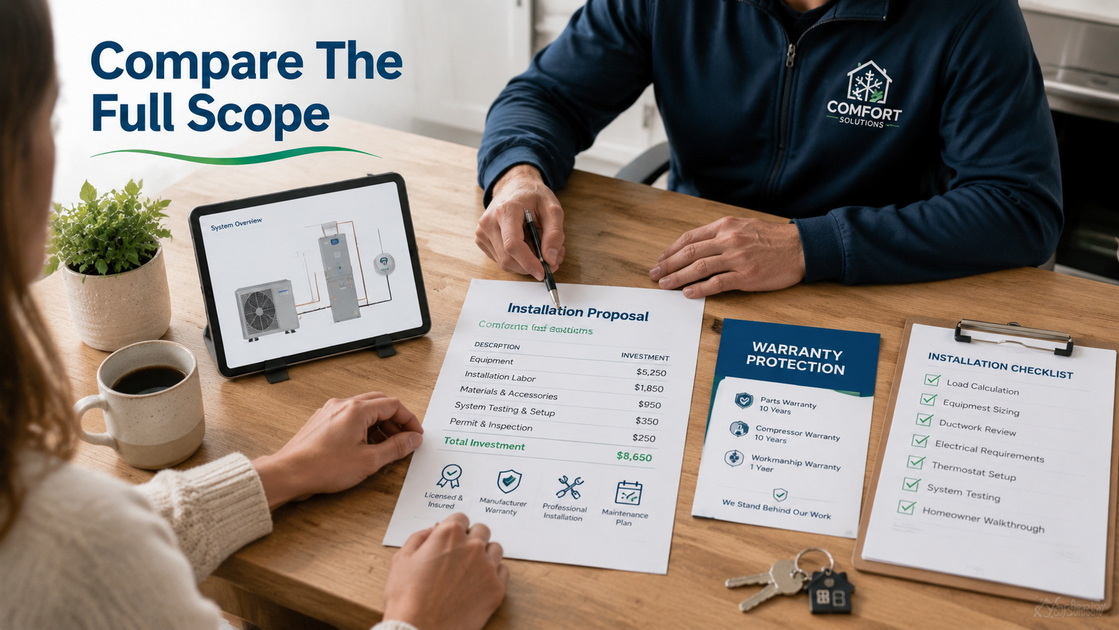
Before selecting an air conditioning company in Maryland, prepare the following information:
- Current system brand, model, approximate age, and known repair history
- Utility bills from recent summer and winter seasons
- Rooms that are too warm, too cold, humid, noisy, or difficult to cool
- Recent home improvements, such as windows, insulation, roofing, additions, or basement finishing
- Household comfort priorities, including humidity, allergies, pets, sleep comfort, or air quality
- Interest in central air conditioning, heat pumps, ductless mini-splits, zoning, humidifiers, dehumidifiers, or smart thermostats
- Budget range and preferred timing for the project
Then request written proposals that clearly state:
- Equipment manufacturer, model number, capacity, and efficiency level
- Indoor and outdoor equipment included
- Thermostat and accessory details
- Ductwork modifications, if any
- Electrical work, if any
- Condensate drainage work
- Permit and inspection responsibility
- Removal and disposal of existing equipment
- Warranty details
- Expected installation schedule
- Payment terms
- Conditions that could create additional charges
Selecting an air conditioning installation and servicing company in Maryland is a long-term home comfort decision. The right provider should evaluate the home as a complete system, explain equipment options clearly, identify ductwork and humidity concerns, provide a detailed written proposal, handle required compliance steps, and stand behind the installation with understandable warranty terms.
Mega Services Heating & Cooling offers homeowners a practical option for air conditioning, heating, heat pump, maintenance, and indoor air quality needs. Its focus on flexible residential solutions, multi-brand equipment support, transparent communication, and long-term service makes it a suitable company to consider when evaluating HVAC repair, replacement, or maintenance options in Maryland.
A careful selection process today can help create a safer, more comfortable, and more energy-conscious home for the years ahead.
Not always. If the system is cooling effectively, repair costs are reasonable, refrigerant leaks are not recurring, and the equipment is not causing major comfort or energy issues, a repair may be a sensible option.
Replacement becomes more worth considering when the system requires frequent repairs, uses an outdated refrigerant, has major compressor or coil issues, cannot maintain comfort, produces excessive humidity, or has reached an age where repair costs are becoming less predictable.
Ask for the contractor's license information and verify it through the appropriate Maryland licensing authority. Confirm that the license is active, relevant to the work being performed, and associated with the company responsible for the project.
Do not rely only on online advertisements, vehicle graphics, or verbal statements. It is also reasonable to request proof of liability insurance before approving a major installation project.
An upstairs comfort problem may be caused by more than the air conditioner. Common causes include inadequate attic insulation, solar heat gain, undersized return-air pathways, duct leakage, poor airflow balance, blocked vents, thermostat placement, insufficient duct capacity, or an improperly sized system.
A complete evaluation should consider airflow and building conditions before assuming a larger air conditioner is the solution.
A heat pump can be a strong option for many Maryland homes because it provides both cooling and heating. However, the right choice depends on insulation, ductwork, electricity availability, existing heating equipment, winter comfort expectations, electrical panel capacity, and the homeowner's energy goals.
A detailed assessment should clarify whether a standard heat pump, dual-fuel configuration, backup heat strategy, or another system design is most suitable.
Ask for exact equipment model numbers, capacity, efficiency ratings, installation scope, permit responsibility, ductwork details, electrical work, warranty terms, maintenance requirements, expected project schedule, and conditions that could result in additional charges.
The best proposal is not necessarily the cheapest. It is the one that clearly explains what will be installed, how the work will be completed, and how the contractor will support the system after installation.


