
Views: 213 Author: Mega Services Publish Time: 2026-08-16 Origin: Site


Content Menu
● What Has Changed for R-410A Air Conditioners and Heat Pumps?
>> What This Means for Homeowners
● Is an Existing R-410A System Still Legal to Use?
>> A Practical Way to Think About Your Current System
● When Repairing an R-410A System Makes Sense
>> Signs That Repair May Be a Good Option
>> Refrigerant Leaks Need More Than a Recharge
● When HVAC Replacement May Be the Better Choice
>> Consider Replacement If Your System Has These Issues
● Why New Refrigerants Require Professional Installation
>> What Professional Installation Should Include
● Questions to Ask Before Choosing a New HVAC System
● A Smart Maintenance Plan for 2026 and Beyond
>> What Routine Maintenance Can Help Identify
>> A Simple Homeowner Checklist
● Making the Right Decision for Your Home
>> 1. Is R-410A illegal in existing air conditioners?
>> 2. Should I replace my R-410A air conditioner immediately?
>> 3. Will R-410A become more expensive?
>> 4. Are newer A2L refrigerants safe for residential HVAC systems?
>> 5. Can refrigerant simply be added when an air conditioner is not cooling?
>> 6. What should I prepare before requesting a heating or cooling estimate?
>> 7. How often should my HVAC system receive maintenance?
The answer depends on much more than a regulatory update. Your system's age, refrigerant type, maintenance history, repair needs, energy use, and comfort problems all matter. A well-maintained system may continue to serve your home reliably. An older unit with repeated breakdowns, refrigerant leaks, or rising utility costs may deserve a closer look.
At Mega Services Heating & Cooling, we believe homeowners deserve clear explanations rather than pressure. The recent changes provide more flexibility around certain older R-410A equipment, but the heating and cooling industry is still transitioning toward lower-global-warming-potential refrigerants, updated equipment designs, and enhanced service procedures.
The most important takeaway is simple: you do not need to make a rushed decision, but you should make an informed one.
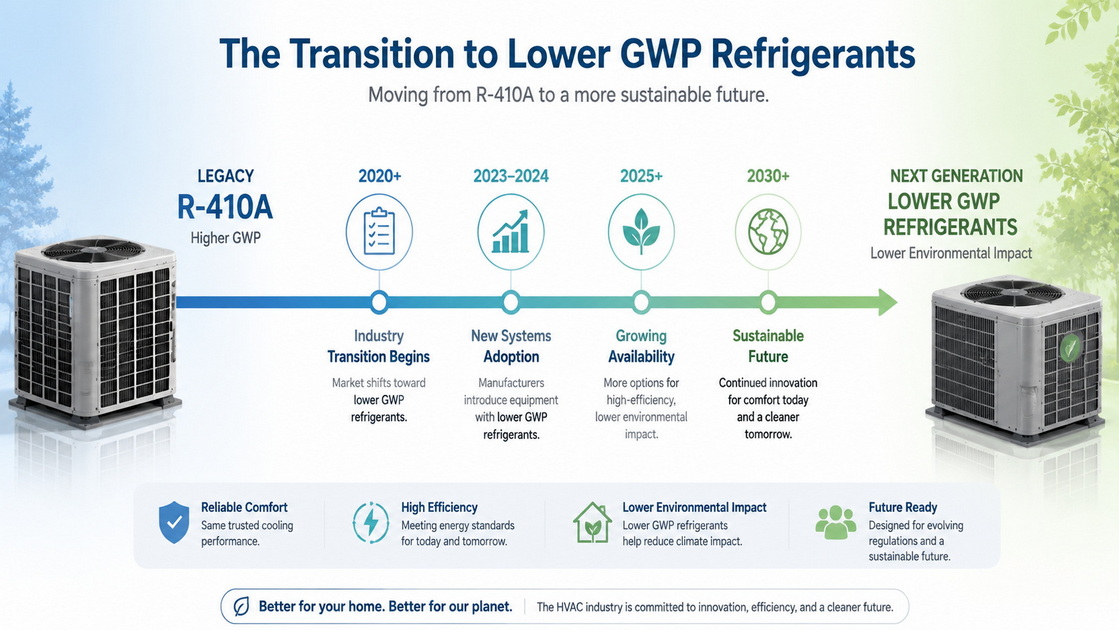
R-410A has been used in millions of residential air conditioners and heat pumps. It became common after older R-22 equipment was no longer used in newly manufactured systems.
R-410A is an HFC refrigerant with a higher global warming potential than many newer refrigerant options. Federal regulations have encouraged the heating and cooling industry to move toward refrigerants with lower environmental impact.
Earlier rules created deadlines affecting the manufacture, import, and installation of certain new equipment using higher-GWP refrigerants. More recent changes created additional flexibility for eligible R-410A systems manufactured or imported before January 1, 2025.
This means that certain qualifying R-410A air conditioning and heat pump systems may continue to be installed while existing inventory remains available. However, manufacturers are no longer producing new complete residential R-410A systems at the same scale as before. Over time, available inventory will naturally decline.
The change does not mean that every homeowner should keep an aging system indefinitely. It also does not mean that all R-410A equipment will remain equally available or equally affordable in the future.
It does mean that homeowners have more flexibility to evaluate their options based on their own household needs.
For example, you may choose to repair an R-410A system if it is relatively new, dependable, and facing a minor issue. You may prefer replacement if your system is older, inefficient, frequently leaking refrigerant, or approaching a major repair.
A regulatory change should not be the only factor in your decision. Your home's comfort, safety, reliability, and operating costs should come first.
Yes. Existing R-410A air conditioners and heat pumps can generally remain in operation and be serviced when repairs are appropriate.
If your home currently has an R-410A system, you do not need to remove it simply because refrigerant standards have changed. There is no need to replace a properly operating system solely because it uses R-410A.
However, homeowners should understand that refrigerant availability and pricing can evolve over time. R-410A supplies are expected to remain available for servicing existing systems, but the cost of refrigerant may become less predictable as the industry continues its transition.
Instead of asking, "Is my refrigerant banned?" ask these questions:
- Is my air conditioner or heat pump cooling and heating reliably?
- Has the system needed repeated repairs?
- Are my energy bills increasing without another clear explanation?
- Does the system struggle during very hot or cold weather?
- Are some rooms too warm, too cold, or too humid?
- Has a technician found a refrigerant leak or major component concern?
- Is the cost of the recommended repair reasonable for the system's age?
These questions create a more useful starting point than focusing on refrigerant type alone.
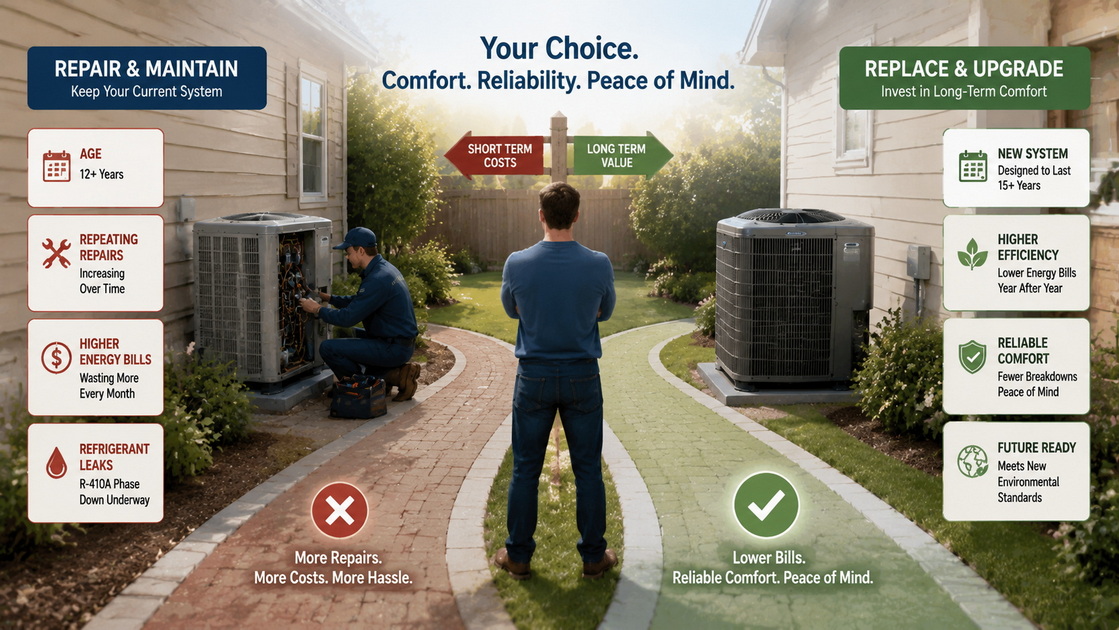
Repairing your existing system can be a sensible choice when the unit is in good overall condition and the problem is limited.
For instance, a newer system may need a capacitor, contactor, electrical repair, drain-line service, thermostat adjustment, or blower-related repair. These issues do not automatically justify replacement.
A professional diagnosis should identify the actual cause of the problem and explain the expected repair cost before work begins.
- Your system is less than 10 years old.
- It has been maintained regularly.
- The repair is isolated and reasonably priced.
- The unit has no history of recurring refrigerant leaks.
- Cooling, heating, humidity control, and airflow have otherwise been reliable.
- Your energy bills remain stable for your household and home size.
A repair is often the most practical solution when it restores dependable performance without creating a cycle of recurring expenses.
A system that is low on refrigerant may have a leak. Adding refrigerant without understanding why it became low can lead to repeat service calls, higher costs, and weaker performance.
A careful technician should assess:
- Whether a leak is present
- Where the leak is located
- Whether the affected component can be repaired
- Whether repair is durable and cost-effective
- Whether the system has experienced similar issues before
- How the repair compares with replacement value
A recharge may solve a short-term symptom, but a complete diagnosis helps protect your long-term investment.
Almost every heating and cooling system can be repaired in some form. The more important question is whether that repair is likely to deliver reliable, efficient comfort for long enough to justify its cost.
Replacement may be a stronger option when your system has a major compressor failure, a severely damaged coil, repeated refrigerant leaks, substantial corrosion, or multiple expensive repairs within a short period.
| Situation | Why It Matters |
|---|---|
| The system is 12 to 15 years old or older | Older equipment may be less efficient and more likely to need major repairs |
| Refrigerant leaks keep returning | Repeated leak-related repairs can become expensive and unpredictable |
| A compressor or coil has failed | Major component repairs can represent a significant portion of replacement cost |
| Energy bills are steadily rising | The system may be losing efficiency or running longer than necessary |
| Your home has uneven temperatures | Equipment sizing, ducts, airflow, or zoning may need improvement |
| Humidity is difficult to control | Short cycling, poor airflow, or an oversized system may be involved |
| You are renovating or adding living space | Your current system may no longer match the home's heating and cooling load |
Replacement also creates an opportunity to correct problems that may have existed since the original installation.
A new system alone does not guarantee better comfort. Proper sizing, duct condition, airflow, thermostat placement, insulation, and installation quality all affect the final result.
New residential HVAC equipment increasingly uses lower-GWP refrigerants. Some of these refrigerants are classified as A2L, which means they are considered mildly flammable under recognized safety classifications.
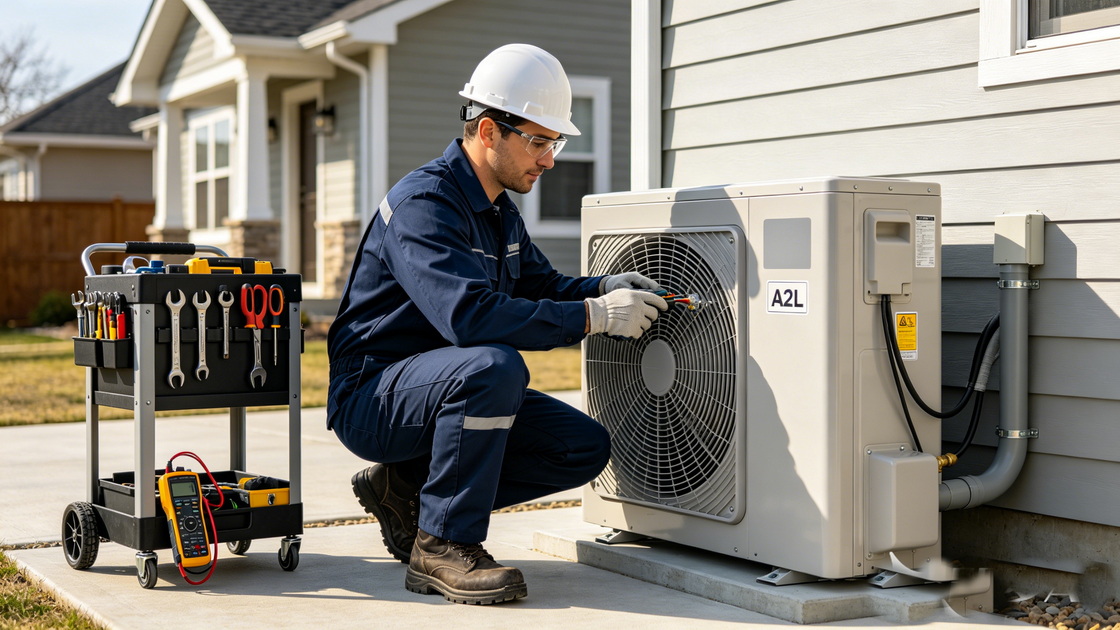
That description can sound concerning, but it should be understood in context. Modern systems using these refrigerants are engineered with specific safety requirements, compatible components, installation procedures, and manufacturer instructions.
The key is choosing properly matched equipment and working with trained professionals who understand the required procedures.
A complete installation should involve more than removing an old unit and connecting a new one.
A quality heating and cooling installation should include:
- A documented evaluation of your home's heating and cooling requirements
- Proper equipment sizing for your home
- Review of ducts, return-air capacity, insulation, and airflow restrictions
- Verification that indoor and outdoor components are correctly matched
- Proper electrical connections and protection
- Correct condensate drainage setup
- Manufacturer-required refrigerant handling procedures
- System startup and operational testing
- Airflow, temperature, and performance verification
- Guidance on warranty registration and future maintenance
An oversized system can cool the home too quickly and may not remove enough humidity. This can leave rooms feeling cool but clammy.
An undersized system may run for long periods during extreme weather and struggle to maintain comfort.
A properly sized system should be selected based on your home's actual needs, not only the capacity of the old equipment. Home additions, window upgrades, insulation improvements, occupancy changes, and duct modifications can all affect what your home requires today.
Comfort comes from the complete system, not just the equipment nameplate.
A replacement project is a major home decision. Asking thoughtful questions can help you compare proposals more accurately.
1. Which refrigerant does this proposed system use?
2. Are the indoor and outdoor components designed to operate together?
3. How was the equipment size determined for my home?
4. Will you inspect my ductwork and airflow before installation?
5. Does the estimate include electrical, drainage, thermostat, or duct modifications if needed?
6. What performance checks will be completed after installation?
7. What warranty coverage is included?
8. What ongoing maintenance will help protect the new system?
A detailed proposal should make it easier to understand what you are receiving. It should clearly identify the equipment, scope of work, warranty details, and any recommended improvements.
Be cautious if you are told that you must replace a working R-410A system immediately. Existing systems can generally continue to be operated and serviced. The right decision should reflect the condition of your equipment and the needs of your home.
Waiting until an air conditioner or furnace stops working can turn a manageable issue into an emergency decision. Regular maintenance gives homeowners more control.
A seasonal service visit can help identify developing problems before peak summer or winter weather arrives. It can also provide a clearer understanding of your system's condition, remaining service life, and potential repair needs.
- Dirty filters and restricted airflow
- Weak electrical components
- Drainage issues
- Worn belts, motors, or blower components
- Thermostat concerns
- Refrigerant performance concerns
- Dirty coils
- Unusual operating sounds
- Early signs of component wear
- Safety concerns related to heating equipment
Maintenance cannot prevent every breakdown. However, it can reduce surprises and help you plan ahead.
- Replace or clean filters according to the manufacturer's recommendation.
- Keep outdoor equipment clear of leaves, grass, branches, and stored items.
- Make sure supply and return vents are open and unobstructed.
- Pay attention to unusual noises, odors, short cycling, or weak airflow.
- Schedule seasonal system maintenance before extreme weather arrives.
- Keep records of repairs, maintenance visits, and system performance concerns.
- Request a written explanation when a major repair is recommended.
The refrigerant landscape is changing, but homeowners do not need to react out of fear. Existing R-410A systems can continue to provide comfort when they are properly maintained and repaired. At the same time, newer equipment offers opportunities to improve efficiency, reliability, humidity control, and long-term operating performance.
The best choice depends on your specific home.
A newer R-410A system with a minor repair need may be worth maintaining. An older unit with repeated leaks, rising energy use, and major repair costs may be ready for replacement. A professional assessment should help you understand both paths clearly.
At Mega Services Heating & Cooling, our goal is to help families create a home environment that feels safe, comfortable, and energy-conscious throughout the year. Whether your system needs maintenance, repair, or replacement planning, a clear evaluation can help you move forward with confidence.
No. Existing R-410A air conditioners and heat pumps can generally continue to operate and receive service when appropriate. Homeowners are not required to replace a working system solely because it uses R-410A.
Not necessarily. Replacement should be considered based on your system's age, repair history, energy use, refrigerant leaks, major component condition, and overall comfort performance.
R-410A is expected to remain available for existing systems, but pricing and supply conditions can change over time. If your system has a major refrigerant leak or needs a costly repair, it may be useful to compare repair and replacement options.
A2L refrigerants require equipment and service practices designed for their characteristics. When installed, maintained, and serviced correctly by trained professionals, approved systems are designed to operate safely in residential settings.
A technician may need to restore the refrigerant charge, but low refrigerant can indicate a leak. The right approach is to identify the cause, explain repair options, and verify system performance after service.
Share the approximate age of your system, model number if available, repair history, comfort concerns, utility-bill changes, room additions, and any plans for renovation. These details help create a more accurate recommendation.
Most homes benefit from seasonal maintenance, typically before heavy cooling use and before the heating season. The exact schedule can vary by equipment type, age, usage, and manufacturer guidance.
Air Conditioning Contractors of America: EPA Proposes Rollback of Refrigerant Rule—What It Means for HVACR Contractors hvac-blog.acca
U.S. Environmental Protection Agency: EPA Cuts Biden-Era Refrigerant Rules, Saving Americans Over $2.4 Billion epa
U.S. Environmental Protection Agency: Technology Transitions Program Fact Sheet, Updated May 2026 epa
U.S. Environmental Protection Agency: Regulatory Actions for Technology Transitions epa
U.S. Environmental Protection Agency: Background on Hydrofluorocarbons and the AIM Act epa
National Association of Home Builders: EPA Finalizes Refrigerant Rule Update to Allow Older HVAC Unit Installation nahb
Occupational Safety and Health Administration: Storage of Pre-Charged Air Conditioners and Heat Pumps


