
Language
Views: 220 Author: Mega Services Publish Time: 2026-09-05 Origin: Site


Content Menu
● Why the Timing of Furnace Replacement Matters
● When Is the Best Time of Year to Buy a Furnace?
>> Spring Is Ideal for a Planned Furnace Replacement
>> Early Fall Helps You Prepare Before Winter
>> Summer Can Be Helpful for Full HVAC Planning
>> Winter Replacement May Be Necessary
● Furnace Buying Seasons at a Glance
● How to Know When It Is Time to Replace Your Furnace
>> Furnace Safety Signs You Should Never Ignore
● Understanding Furnace Efficiency Before You Buy
● Why Proper Furnace Sizing Is Essential
● Furnace Installation Quality Matters
● How to Prepare Before Buying a Furnace
>> Gather Basic Information About Your Current System
>> Think About Your Long-Term Home Plans
● Maintain Your Furnace After Installation
● Summary
>> 1. What is the best month to buy a furnace?
>> 2. Is it cheaper to buy a furnace during the off-season?
>> 3. How long does a furnace usually last?
>> 4. Should I replace my furnace before it stops working?
>> 5. What does AFUE mean on a furnace?
>> 6. Should I replace my air conditioner and furnace at the same time?
>> 7. Why is a furnace load calculation important?
Buying a furnace is one of the most important decisions you can make for your home. Your heating system affects your family's comfort, indoor safety, monthly energy use, and peace of mind throughout the coldest part of the year.
At Mega Services Heating & Cooling, we have seen how stressful it can be when a furnace stops working unexpectedly. A homeowner may be dealing with cold rooms, rising utility bills, unfamiliar equipment choices, and the pressure to make a fast decision. Planning your furnace replacement before an emergency gives you more control, more time to compare options, and a better chance of choosing a system that truly fits your home.
So, what is the best time of year to buy a furnace?
For many homeowners, spring and early fall are the best times to plan a furnace replacement. These seasons often provide comfortable weather, greater scheduling flexibility, and more time to review efficiency ratings, system features, installation details, and long-term operating costs.
However, the best time to replace a furnace is ultimately when your current system becomes unreliable, unsafe, too expensive to repair, or no longer capable of keeping your home comfortable.

A furnace is not a small household purchase. It is a major comfort system that may serve your home for many years. When you replace your furnace at the right time, you can make a thoughtful decision rather than reacting to a sudden heating emergency.
During the coldest weeks of the year, heating companies often receive a high volume of calls from homeowners with no heat. A furnace that fails during freezing temperatures can quickly become an urgent problem, especially for households with children, older adults, pets, or people with health concerns.
Replacing your furnace before it breaks down can help you avoid rushed choices. It also gives you time to understand your options and select equipment based on your home's needs instead of choosing only what is immediately available.
A planned furnace replacement can give you more time to:
- Compare furnace efficiency levels.
- Understand different heating system features.
- Review manufacturer warranties.
- Schedule an in-home evaluation.
- Ask about financing or payment options.
- Consider indoor air quality upgrades.
- Evaluate ductwork and airflow concerns.
- Choose a thermostat that fits your lifestyle.
- Coordinate furnace replacement with air-conditioning improvements.
- Prepare your home for the next heating season.
The greatest advantage of planning ahead is not always the purchase price. It is the ability to make a better long-term comfort decision.
Spring is often one of the best times to replace an old furnace. The winter heating season is ending, temperatures are becoming milder, and homeowners are less likely to need heat every day.
This creates an excellent opportunity to evaluate a furnace that struggled during the winter. Perhaps your system made loud noises, required repairs, heated rooms unevenly, or caused higher-than-normal energy bills. Even if it survived the season, those signs may indicate that replacement planning should begin before the next winter arrives.
Spring furnace replacement can offer several practical benefits:
- You can replace aging equipment before the next cold season.
- Mild weather reduces the stress of temporarily being without heat.
- You have time to compare more than one equipment option.
- You can evaluate both heating and cooling needs at the same time.
- You can address thermostat, filter, airflow, and ductwork issues.
- You can test your new system before winter weather returns.
Spring is particularly useful for homeowners who want to avoid repeating the same winter comfort problems year after year.
Early fall is another excellent time to buy a furnace. Many homeowners use this season to prepare for colder temperatures, schedule heating maintenance, and resolve problems before they become emergencies.
The important thing is to start early. Once the first major cold front arrives, many homeowners discover that their furnace is not working as expected. Installation schedules can become busy, and homeowners may have less time to compare systems or consider additional improvements.
If your furnace is old, unreliable, inefficient, or expensive to repair, early fall gives you the chance to replace it before you depend on it every day.
Early fall is a smart time to:
- Schedule a heating system inspection.
- Check your furnace filter and thermostat.
- Ask about furnace replacement options.
- Review heating efficiency ratings.
- Identify ductwork or airflow problems.
- Upgrade an older thermostat.
- Prepare your home for cold-weather comfort.
Summer is usually the busiest season for air-conditioning repair and replacement. Even so, it can be a useful time to evaluate your furnace if you are considering replacing both your heating and cooling systems.
Many homes use a central HVAC system where the furnace and air conditioner share important components, including the indoor blower. If both systems are aging, replacing them at the same time may create a more balanced and compatible comfort solution.
A complete system replacement may allow you to improve:
- Heating efficiency.
- Cooling performance.
- Airflow consistency.
- Thermostat functionality.
- Humidity control.
- Indoor air quality.
- Equipment compatibility.
- Long-term maintenance planning.
Replacing both systems is not always necessary. If your air conditioner is newer, properly sized, and operating reliably, replacing only the furnace may be the more practical choice. A professional home evaluation can help you understand whether a furnace-only replacement or a complete system upgrade makes more sense.
Winter is not always the easiest time to make a furnace purchase, but sometimes it is the only reasonable option. If your furnace fails during cold weather, becomes unsafe to operate, or needs a major repair that does not make financial sense, replacing it immediately may be the best decision.
A winter furnace replacement can feel stressful because your household needs heat quickly. That is why it is important to work with a heating company that can clearly explain your options, evaluate your home, and install equipment safely.
If your furnace is approaching the end of its service life, planning ahead is usually easier. But if you are dealing with a serious safety issue or complete breakdown, restoring safe and reliable heat should come first.
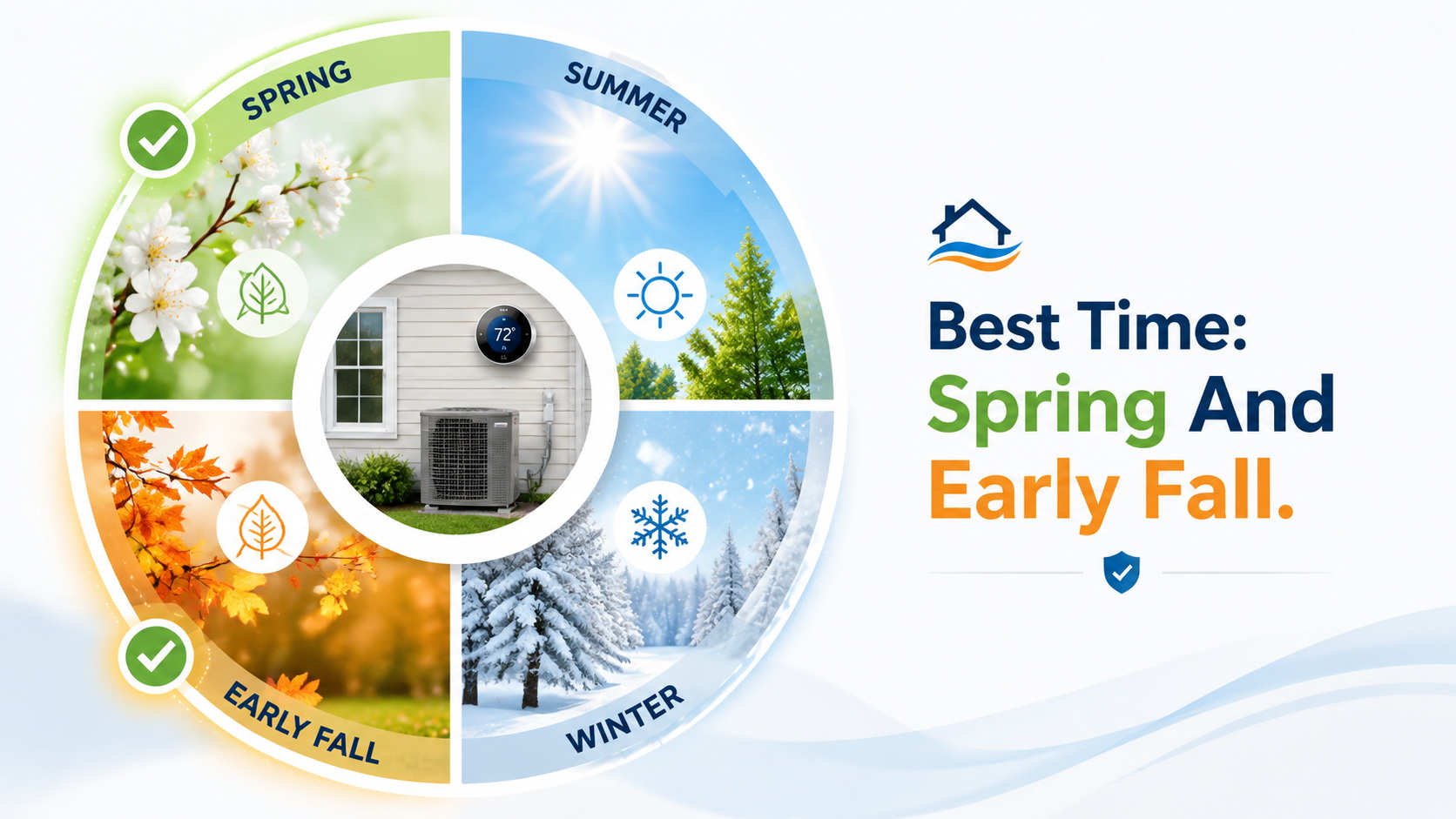
| Time of Year | Main Benefits | Things to Consider | Best For |
|---|---|---|---|
| Spring | Mild weather, more planning time, less urgency | Heating problems may feel less urgent after winter ends | Homeowners planning ahead after a difficult heating season |
| Summer | Helpful for combined heating and cooling projects | Air-conditioning service demand may be high | Homeowners considering a full HVAC replacement |
| Early Fall | Prepares the home for winter and supports proactive decisions | Schedules may become busier as cold weather approaches | Homeowners with aging or unreliable furnaces |
| Winter | Immediate solution when heating fails | Less time to research during an emergency | Urgent furnace replacement and safety-related concerns |
The best time to buy a furnace may not depend on the calendar. In many cases, it depends on the condition of your current heating system.
A well-maintained furnace can often operate for 15 to 20 years. However, age alone should not determine whether you need a replacement. A newer furnace may have problems because of poor installation, lack of maintenance, airflow restrictions, or component failures. An older furnace may continue to work well if it has been professionally maintained and remains safe, efficient, and reliable.
You may want to schedule a furnace evaluation if you notice any of the following warning signs:
- Your furnace is more than 15 years old.
- Heating bills keep increasing without a major change in usage.
- Your furnace requires frequent repairs.
- Your home has hot and cold spots.
- Some rooms never feel warm enough.
- The furnace turns on and off more often than usual.
- The system makes banging, rattling, squealing, or grinding noises.
- You notice dust buildup or weak airflow.
- Your home feels unusually dry during winter.
- The burner flame appears yellow instead of mostly blue.
- You are facing an expensive repair.
- You plan to sell, remodel, or improve your home's energy performance.
A furnace that repeatedly breaks down can become an expensive and frustrating problem. If repair costs continue to add up, replacement may provide better long-term value and more dependable comfort.
Heating equipment should always be treated with care. Contact a qualified heating professional promptly if you notice warning signs that may affect your household's safety.
Important warning signs include:
- A carbon monoxide alarm activates.
- You smell gas or burning odors.
- The furnace produces visible soot.
- The burner flame is yellow, flickering, or irregular.
- Household members experience unexplained headaches, dizziness, nausea, or fatigue while the heating system is running.
- The furnace repeatedly shuts down or fails to ignite.
- You hear unusual booming or delayed ignition sounds.
If you smell gas, leave the area immediately, avoid operating electrical switches or devices, and contact your gas utility or emergency services from a safe location. If a carbon monoxide alarm sounds, follow the alarm manufacturer's instructions and leave the home if necessary.
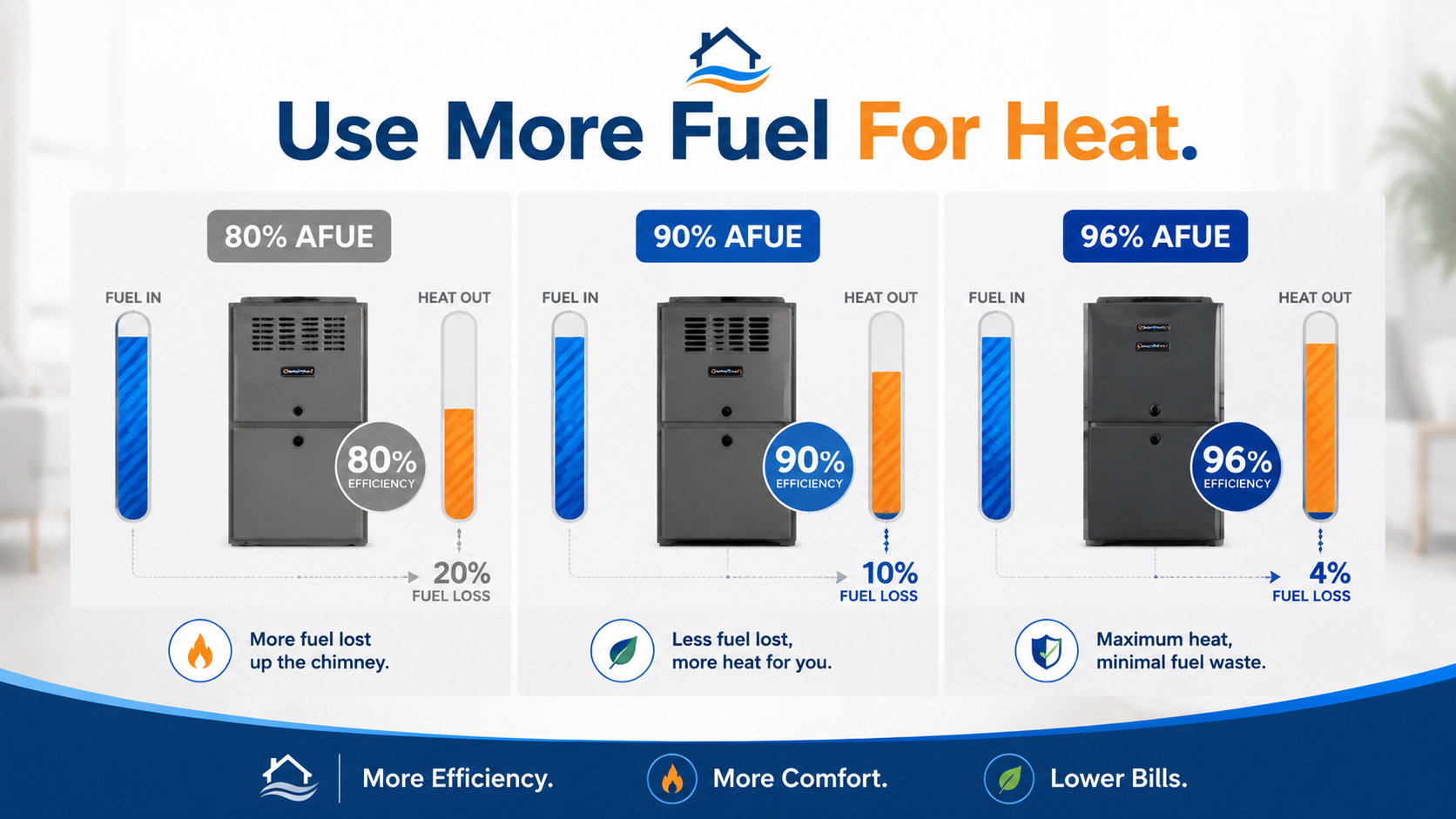
One of the most important numbers to understand when buying a furnace is the Annual Fuel Utilization Efficiency, often called AFUE.
AFUE measures how efficiently a furnace converts fuel into usable heat over a typical heating season. The higher the rating, the more efficiently the system uses fuel.
For example:
- An 80% AFUE furnace converts approximately 80% of the fuel it uses into heat for your home.
- A 90% AFUE furnace converts approximately 90% of its fuel into usable heat.
- A 96% AFUE furnace converts approximately 96% of its fuel into heat.
The remaining percentage represents energy that is generally lost through the combustion and venting process.
| Furnace Efficiency | Approximate Usable Heat | Approximate Fuel Loss |
|---|---|---|
| 80% AFUE | 80 cents of every fuel dollar | 20 cents |
| 90% AFUE | 90 cents of every fuel dollar | 10 cents |
| 96% AFUE | 96 cents of every fuel dollar | 4 cents |
A higher-efficiency furnace may reduce fuel waste and lower heating costs over time. However, a higher AFUE rating does not automatically mean it is the best choice for every household.
The right furnace efficiency level depends on several factors:
- Local winter temperatures.
- Fuel prices in your area.
- Your current heating costs.
- Your home's insulation level.
- Window quality and air leakage.
- Ductwork condition.
- Installation requirements.
- Available budget.
- How long you plan to remain in the home.
A professional evaluation should help you understand the real-world difference between furnace options instead of focusing only on the highest number on a product label.
Choosing the right furnace size is just as important as choosing the right furnace brand or efficiency rating.
Many homeowners assume that a larger furnace will heat the home more effectively. In reality, an oversized furnace can create comfort problems. It may heat the home too quickly, shut off before distributing warmth evenly, and turn on and off more frequently than necessary.
This frequent cycling can increase wear on system components and make temperature control more difficult.
An oversized furnace may contribute to:
- Uneven heating from room to room.
- Short heating cycles.
- Higher equipment wear.
- Uncomfortable temperature swings.
- Excessive system noise.
- Reduced airflow consistency.
- Less predictable energy use.
An undersized furnace can also create problems. It may run for long periods without reaching the desired indoor temperature during extremely cold weather.
The goal is not to install the biggest furnace. The goal is to install the right-sized furnace for your specific home.
A professional heating assessment should consider more than square footage. It should account for factors such as:
- Home size and layout.
- Ceiling height.
- Insulation quality.
- Window type and placement.
- Sun exposure.
- Local climate.
- Ductwork design.
- Air leakage.
- Number of occupants.
- Home renovations or additions.
A detailed load calculation helps determine the amount of heating capacity your home actually needs. This approach supports better comfort, more balanced airflow, and more efficient system operation.
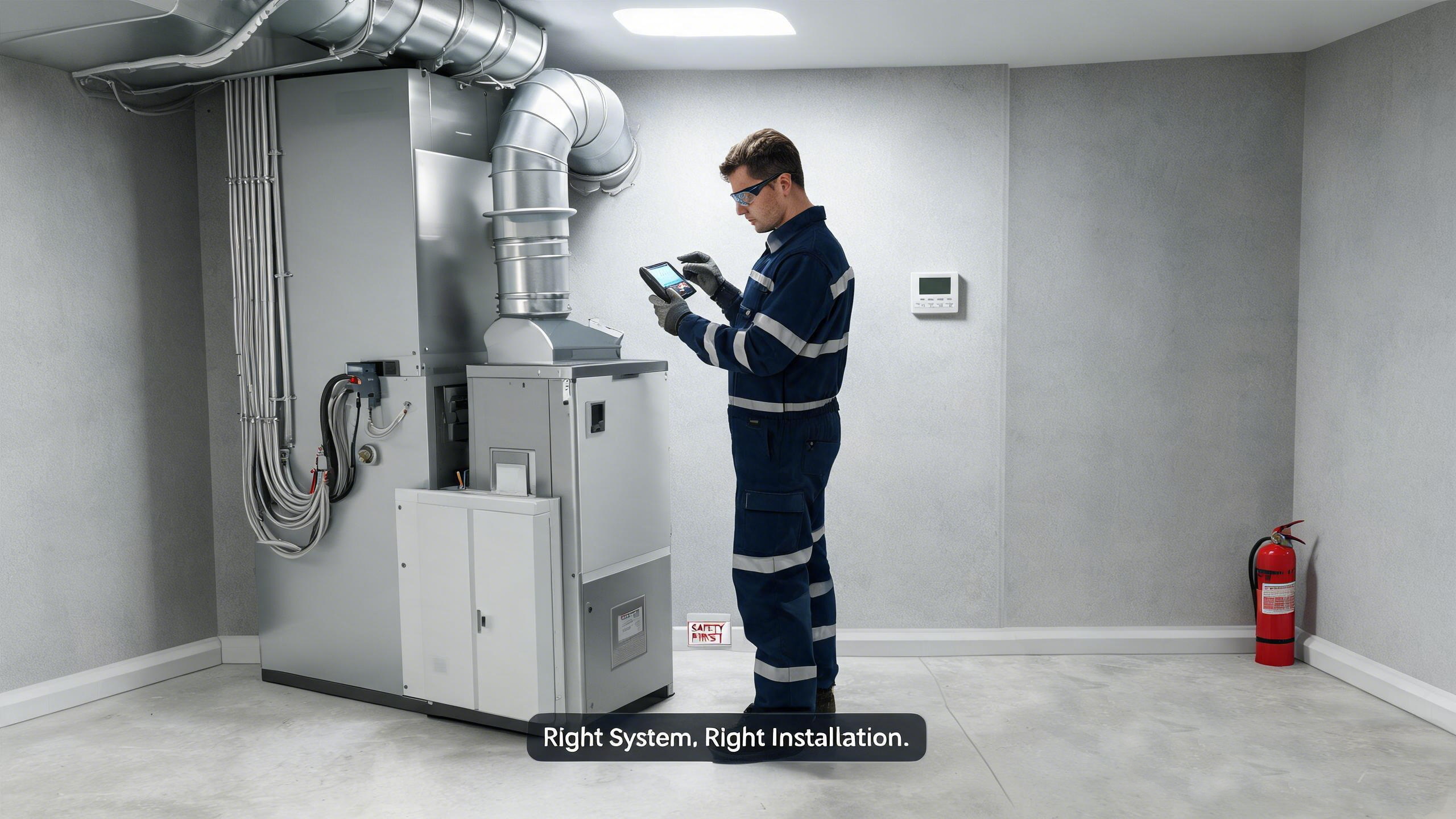
A new furnace is only as reliable as the installation behind it.
Even a high-quality furnace may not perform as expected if it is installed incorrectly. Proper installation affects safety, comfort, airflow, fuel use, equipment longevity, and future maintenance needs.
A professional furnace installation should address:
- Safe removal of old equipment.
- Proper electrical connections.
- Gas line inspection and connection.
- Correct venting configuration.
- Condensate drainage for high-efficiency equipment.
- Airflow testing and adjustment.
- Filter access and replacement guidance.
- Thermostat setup.
- System start-up verification.
- Homeowner education.
The installation process should not feel rushed or unclear. You should understand what equipment is being installed, why it was selected, how it will operate, and what maintenance it needs.
At Mega Services Heating & Cooling, we believe furnace replacement should be approached as a complete home comfort project. We focus on safe installation, dependable performance, clear communication, and solutions designed around your household's needs.
A little preparation can make the furnace buying process easier and more productive.
Before your appointment, collect any information you have about your existing furnace:
- Approximate age of the furnace.
- Brand and model number.
- Recent repair records.
- Maintenance history.
- Current utility bills.
- Areas of the home that feel too cold or too warm.
- Any unusual sounds, odors, or performance changes.
- Information about recent home renovations.
This information can help a heating professional understand your current system and identify possible comfort issues.
Your expected length of ownership can influence the right furnace choice.
If you plan to stay in your home for many years, you may place more value on high efficiency, advanced comfort features, improved filtration, and long-term operating savings.
If you expect to move sooner, you may prioritize reliable performance, reasonable upfront cost, strong warranty coverage, and a system that improves buyer confidence.
A knowledgeable heating company should be comfortable answering your questions clearly.
Consider asking:
1. How was the furnace size determined?
2. Does my ductwork support the new system?
3. What AFUE rating is appropriate for my home?
4. Will this furnace work with my existing air conditioner?
5. What maintenance does this system require?
6. What warranty coverage is included?
7. Are permits required for the installation?
8. Will the installation include airflow testing?
9. What thermostat options are compatible with this furnace?
10. How can I maintain safe and efficient operation after installation?
Buying the right furnace is only the first step. Routine maintenance helps protect your investment and supports consistent comfort.
Simple homeowner maintenance may include:
- Replacing or cleaning filters as recommended.
- Keeping supply and return vents open and unobstructed.
- Keeping the area around the furnace clear.
- Monitoring for unusual sounds or odors.
- Checking thermostat settings before the heating season.
- Testing carbon monoxide alarms regularly.
- Scheduling professional maintenance before winter.
Professional maintenance can help identify developing problems before they become major repairs. It may also help maintain airflow, improve reliability, and support safe system operation.
The best time of year to buy a furnace is often spring or early fall, when you have time to compare options, schedule an in-home assessment, and make a thoughtful decision before cold weather creates urgency.
Still, timing should never outweigh safety or comfort. If your furnace is unreliable, increasingly expensive to repair, unsafe, or unable to heat your home effectively, replacing it sooner may be the right choice.
A successful furnace replacement goes beyond selecting a model. It includes proper sizing, appropriate efficiency, professional installation, reliable airflow, safe operation, and a maintenance plan that supports your home for years to come.
Mega Services Heating & Cooling is committed to helping homeowners create safer, more comfortable, and more energy-conscious living environments. Our team can assess your existing furnace, explain your options clearly, and help you select a heating solution designed for your home and family.
Spring and early fall are often practical times to plan a furnace purchase because temperatures are usually milder and homeowners may have more time to compare options. However, the right time to replace a furnace depends on its age, reliability, repair history, efficiency, and safety condition.
It may be possible to find seasonal offers at certain times of the year, but pricing varies by equipment type, manufacturer, local demand, installation requirements, and available inventory. The best value comes from selecting properly sized equipment and receiving professional installation rather than choosing solely based on the lowest upfront price.
A well-maintained furnace commonly lasts around 15 to 20 years. Actual lifespan depends on equipment quality, installation, maintenance history, operating conditions, repair needs, airflow, and how often the system runs.
In many situations, yes. Replacing an aging or unreliable furnace before it fails can reduce stress, prevent an emergency heating interruption, and give you more time to compare efficiency levels, installation details, warranties, and system features.
AFUE stands for Annual Fuel Utilization Efficiency. It measures how efficiently a furnace converts fuel into usable heat during a typical heating season. A higher AFUE rating means the furnace generally wastes less fuel during operation.
Not always. Replacing both systems may make sense if they are similar in age, both require frequent repairs, or you want a fully matched heating and cooling system. If your air conditioner is newer and operating well, replacing only the furnace may be a better option.
A furnace load calculation helps determine the heating capacity your home actually needs. It considers factors such as home size, insulation, windows, ductwork, climate, air leakage, and layout. Proper sizing can support more even temperatures, dependable performance, and efficient operation.
1. Logan Services A/C, Heat & Plumbing. "" Accessed September 2026.
2. ENERGY STAR. "" Accessed September 2026.
3. ENERGY STAR. "" Accessed September 2026.
4. Air Conditioning Contractors of America. "" Accessed September 2026.
5. Carrier. "" Published June 27, 2026.
6. American Standard. "" Published March 2, 2026.


