
Views: 222 Author: Mega Services Publish Time: 2026-04-15 Origin: Site


Content Menu
● Key Takeaways: Why Your AC Stops Cooling
● Understanding How Your AC Should Work (In Simple Terms)
● 1. Start With the Thermostat: Small Setting, Big Problem
>> 1.1 Thermostat Mode and Fan Settings
>> 1.2 Temperature and Battery Check
● 2. Dirty or Clogged Air Filter: The #1 AC Cooling Killer
>> 2.1 How a Dirty Filter Stops Cooling
>> 2.2 How Often Should You Replace Filters?
● 3. Outdoor Condenser Issues: Dirt, Debris, and Blocked Airflow
>> 3.2 Vegetation and Clearance
>> 3.3 DIY vs. Professional Cleaning
● 4. Internal Parts: Fans, Motors, and Capacitors
>> 4.1 Circulating Fan and Fan Motor
>> 4.2 Compressor Circuit and Capacitor Problems
● 5. Refrigerant, Frozen Coils, and Hidden AC Problems
>> 5.1 Frozen Evaporator Coils
>> 5.2 Refrigerant Leaks and Low Charge
● 6. Safety and When to Call a Professional
● 7. Expert Troubleshooting Flow: DIY vs. Professional Tasks
● 8. Preventive Maintenance: The Most Affordable Fix You Can't See
● 9. Energy, Comfort, and Indoor Air Quality: Why Fast AC Repairs Matter
● 10. When You're in Our Service Area: How Mega Services Heating & Cooling Can Help
● FAQs: AC Not Blowing Cold Air
>> 1. Why is my AC running but not blowing cold air?
>> 2. Is it safe to run my AC if it's not cooling properly?
>> 3. How often should I schedule professional AC maintenance?
>> 4. Can I fix low refrigerant myself?
>> 5. What can I check before calling an HVAC technician?
When your air conditioner is running but not blowing cold air, it's more than an inconvenience—it's a warning sign from a complex piece of equipment that protects your comfort, health, and energy bills. As a professional HVAC team at Mega Services Heating & Cooling, we see this problem every season, and in most homes the underlying causes are surprisingly similar. [bryant]
In this guide, you'll learn why your AC stops blowing cold air, which DIY checks are safe, when it's time to call a licensed technician, and how preventive maintenance can dramatically reduce breakdowns and energy waste. [dimaticcontrol]
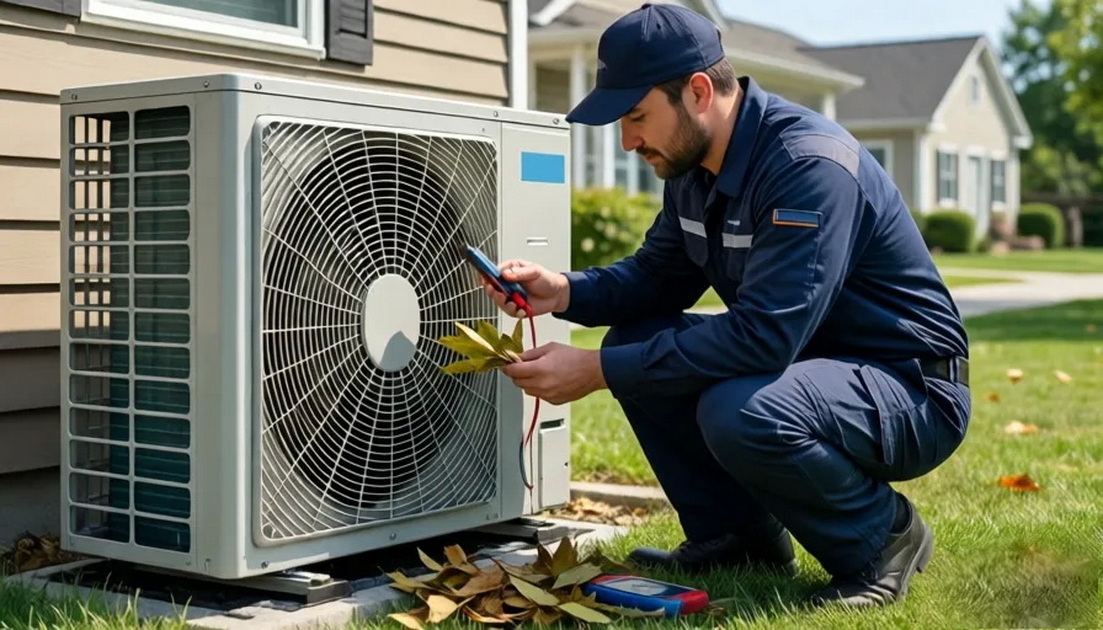
- The most common causes are incorrect thermostat settings, dirty air filters, dirty or blocked outdoor condensers, and failing internal components such as fan motors or capacitors. [bryant]
- Simple issues like thermostat mode, filter replacement, and clearing debris around the outdoor unit are often safe for homeowners to check first. [rwlapine]
- Persistent problems, refrigerant issues, repeated breaker trips, or frozen coils are clear signs that you need a professional HVAC inspection. [ars]
- Annual professional maintenance remains one of the most cost‑effective ways to prevent no‑cool calls and extend the life of your system. [lennox]
A central air conditioner doesn't "create" cold—it moves heat from inside your home to the outdoors using refrigerant, coils, a compressor, and one or more fans. When any link in that chain is dirty, restricted, mis‑set, or broken, you may still feel air blowing from your vents, but it won't be cold. [energy]
From a technician's point of view, we divide "AC not blowing cold air" into three basic scenarios:
1. Fan is running, but air is warm or only slightly cool
2. Very little air is coming from the vents
3. System runs, then stops or freezes up, with no cold air at all
The sections below walk through the most likely causes and solutions for each, starting with the easiest homeowner checks.
Before you assume a major failure, check your thermostat. In many service calls, the AC "problem" turns out to be a simple setting issue. [projecthvac]
- Make sure the thermostat is set to "Cool", not "Heat" or "Off". [infinityheatingandair]
- Set the fan to "Auto", not "On."
- In "On" mode, the indoor fan runs continuously—even when the outdoor unit (the part that actually cools) is not running—so you may feel air moving but not cooling.
- In "Auto" mode, the fan runs only during a cooling cycle, so you feel truly cold air each time it starts.
- Confirm that the temperature is set at least 3–5°F lower than the current indoor temperature. [projecthvac]
- If your thermostat has batteries, replace them if the screen is dim, flashing, or blank. [infinityheatingandair]
If the thermostat is correctly set and you still don't get cold air, move on to airflow and outdoor unit checks.
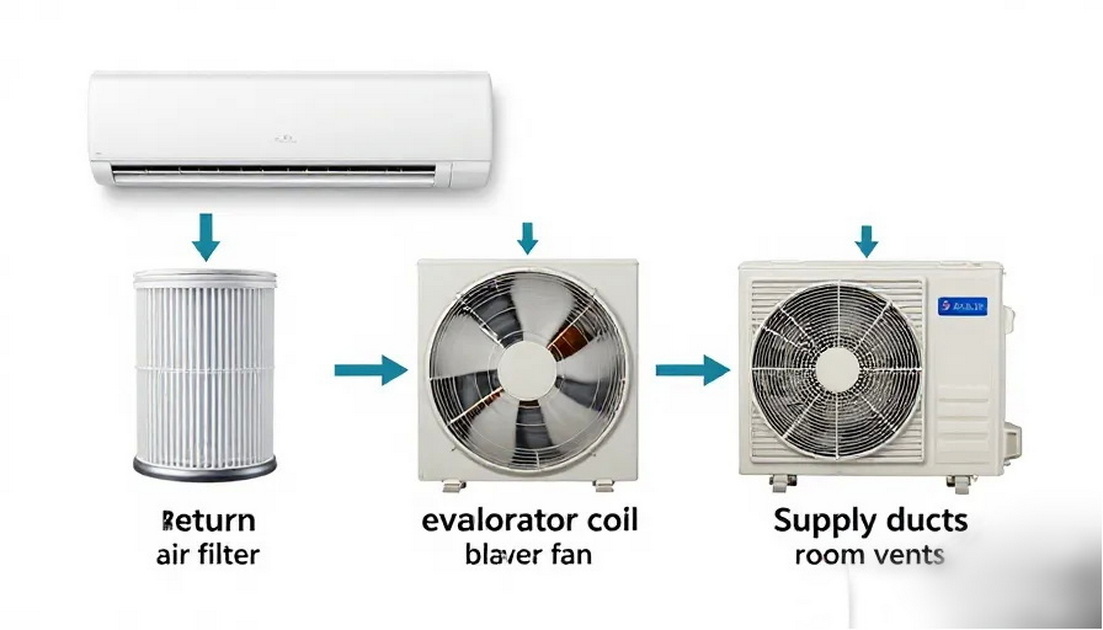
From an HVAC expert's perspective, a dirty air filter is the single most common cause of an air conditioner not blowing cold air. [dimaticcontrol]
When the filter is clogged with dust, pet hair, and debris, it restricts airflow across the indoor evaporator coil. That can cause: [bryant]
- Reduced airflow at vents
- Frozen evaporator coils, which block cooling entirely
- Higher energy use and stress on your compressor and fan motors [energy]
In the field, we regularly see frozen coils and no‑cool calls that could have been avoided by simple filter changes.
General guidelines:
- Homes with pets or allergies: check monthly; replace every 1–2 months. [lennox]
- Average households: replace every 2–3 months during cooling season. [lennox]
Be cautious with some "high‑efficiency" filters: while they can capture fine particles, they may overly restrict airflow if your system is not designed for them.
DIY Step:
1. Turn off the system.
2. Remove the current filter and inspect it. If it looks gray, dusty, or clogged, replace it with the correct size and rating.
3. Restart the system and check for improved cooling within 15–30 minutes. [rwlapine]
Your condenser unit is the outdoor box that releases heat from your home. If it cannot breathe, your AC cannot cool properly.
Over time, the outdoor coils accumulate dirt, pollen, and grime, acting like an insulating blanket. This forces your system to work harder and can cause: [qrc123]
- Warmer air from your vents
- Higher electric bills
- Premature compressor failure [qrc123]
Most manufacturers and energy experts recommend that condenser coils be cleaned at least once per year. [lennox]
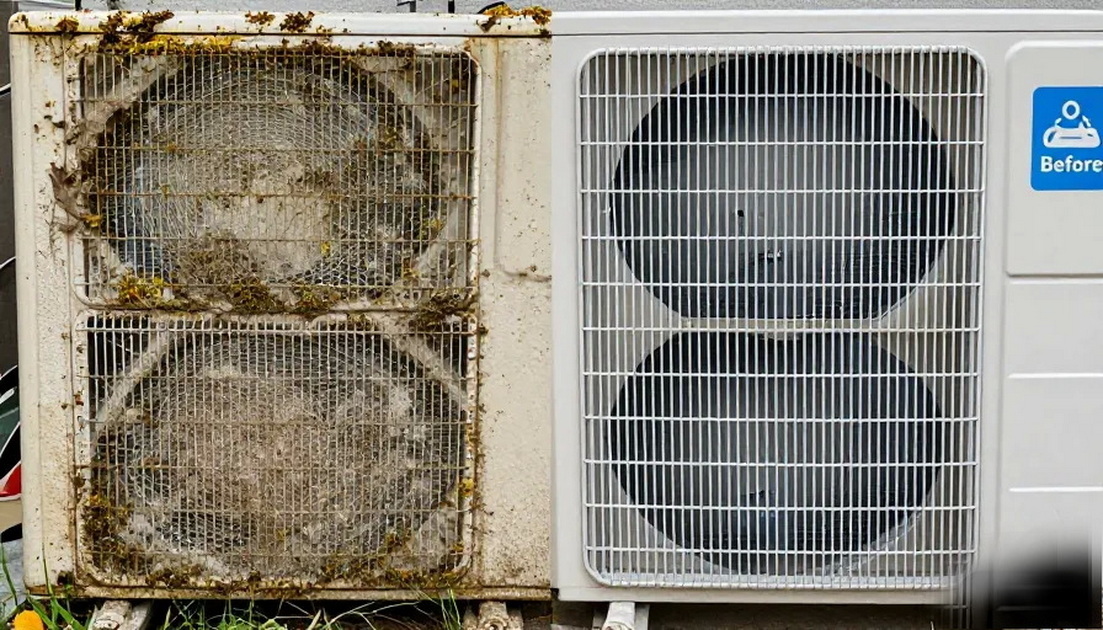
Shrubs, grass, and stored items pushed against the outdoor unit can choke off airflow. [qrc123]
As a rule of thumb, keep at least 2 feet of clear space on all sides of the condenser and several feet above it.
The original reference guide outlines a basic DIY process: safely shut off power, remove the top panel carefully (the fan is attached), gently clean coils and fins, vacuum debris, then restore power. However:
- Fins are delicate and easy to bend.
- Wiring and capacitor components near the top panel can be damaged if mishandled.
Best practice: Simple debris removal around the unit is safe for most homeowners, but deep cleaning and internal work are best left to licensed professionals. [homedepot]
When settings and basic airflow checks look fine, we move to internal components inside the indoor and outdoor cabinets.
The indoor fan pulls air across the evaporator coils and pushes it through your ductwork. If the fan is not working or is running too slowly, you'll notice:
- Very weak airflow at vents
- Coils becoming too cold or frosting over
- Little or no cold air in the home [dimaticcontrol]
In many systems, the fan and motor are located in a sealed cabinet that should be inspected annually by a technician.
Most air conditioners use a capacitor to start the compressor—a component that does the heavy lifting of pumping refrigerant. If the capacitor fails:
- The fan may run, but the compressor never starts, so you only get warm air circulating. [dimaticcontrol]
- Some systems use capacitors for both compressor and fan circuits, further complicating diagnosis.
Checking a capacitor properly requires specialized electrical testing equipment and safety training. This is not a DIY task. [ars]
Modern troubleshooting data shows a strong link between restricted airflow, low refrigerant, and frozen coils when an AC is not blowing cold air. [energy]
Signs you may have frozen indoor coils:
- Little or no air from vents
- Water around the indoor unit as ice melts
- Ice visible on copper refrigerant lines or coil panels [dimaticcontrol]
Temporary DIY action:
- Turn off the AC cooling at the thermostat.
- Turn the fan to "On" to help thaw the coils.
- Replace a dirty filter and ensure vents are open. [dimaticcontrol]
If coils refreeze within 24 hours, you likely have low refrigerant or another mechanical issue, and you should stop running the system and call a professional. [qrc123]
Refrigerant is the "lifeblood" of your air conditioner, and it does not get used up under normal operation. If your system is low, there is almost always a leak. Common symptoms include: [energy]
- AC runs for long periods but never reaches the set temperature
- Higher energy bills
- Ice on coils or refrigerant lines
- Reduced cooling capacity over time [qrc123]
Locating and repairing leaks requires special tools, EPA‑regulated handling, and system recharging—this is strictly a professional service. [ars]
While homeowner checks are helpful, some situations require immediate professional attention:
- Repeated breaker trips when the AC runs [greenleafair]
- Burning smells, sparks, or visible wire damage near the indoor or outdoor unit [homedepot]
- No cooling after simple checks (thermostat, filter, and visible debris)
- Water leaks around the indoor unit or ceiling below it (possible clogged drain line and overflow risk) [energy]
Electrical and refrigerant work involve shock, fire, and environmental hazards if done incorrectly. Professional technicians are trained and equipped to diagnose these issues safely. [homedepot]
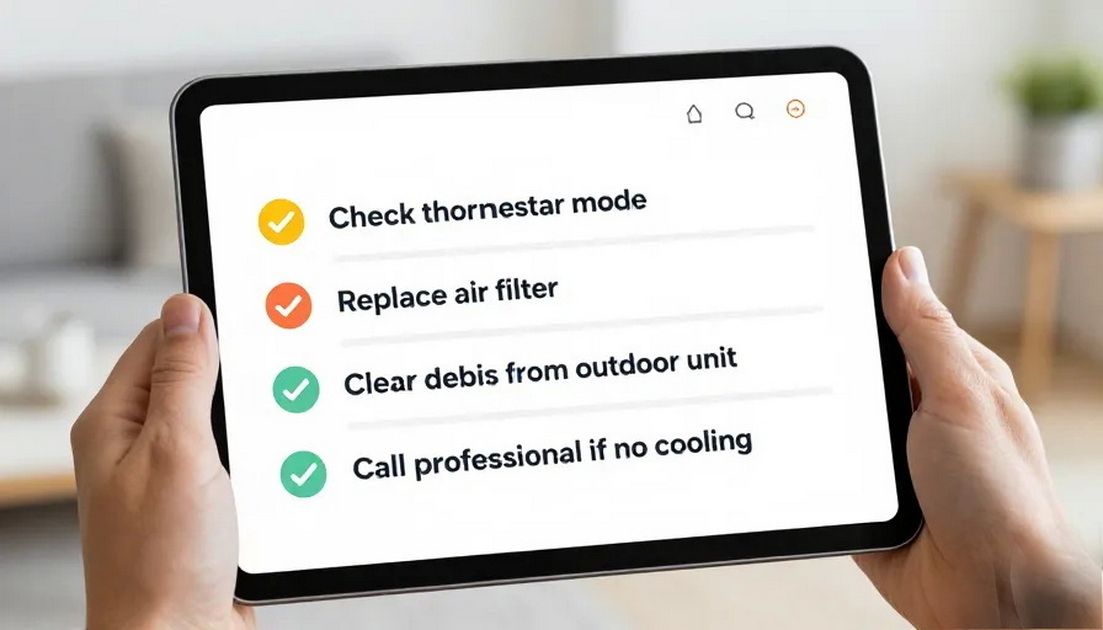
The table below summarizes what homeowners can usually check safely versus problems that should be left to a licensed HVAC technician.
| Issue / Task | Homeowner DIY? | Recommended Action |
|---|---|---|
| Check thermostat mode & fan setting | Yes | Confirm "Cool" + "Auto"; adjust temperature 3–5°F below room temp. (projecthvac) |
| Replace or clean air filter | Yes | Inspect monthly; replace every 1–3 months. (bryant) |
| Clear leaves/debris around outdoor unit | Yes | Keep 2 ft clearance on all sides for airflow. (qrc123) |
| Reset a tripped breaker once | Yes | If it trips again, stop and call a pro. (ars) |
| Deep coil cleaning / opening condenser | Usually No | Risk of fin damage and wiring issues; schedule professional cleaning. (homedepot) |
| Diagnose refrigerant leaks or low charge | No | Requires certified technician and special equipment. (qrc123) |
| Replace fan motors, capacitors, compressor | No | Electrical and mechanical work; professional service only. (ars) |
| Investigate recurring frozen coils | No | Often linked to low refrigerant or airflow design issues. (dimaticcontrol) |
The original article is absolutely right on one key point: annual preventive maintenance is often the difference between a reliable system and repeated no‑cool emergencies. Current HVAC and energy guidance continues to stress:
- Annual coil cleaning (indoor and outdoor) to maintain heat transfer efficiency [lennox]
- Filter checks every 1–3 months
- Electrical and safety inspections (wiring, capacitors, contactors, and safety switches) [greenleafair]
- Drain line cleaning to prevent water damage and float switch shutdowns [qrc123]
From our experience at Mega Services Heating & Cooling, customers on a maintenance plan report fewer surprise breakdowns, more stable indoor temperatures, and longer equipment life compared with those who only call when something fails.
When your AC isn't blowing cold air, it's not just about comfort:
- Energy use spikes because the system runs longer without effective cooling. [energy]
- Humidity control suffers, making the home feel clammy even if the thermostat reading looks normal. [energy]
- Indoor air quality declines if filters and coils are dirty, circulating more dust and possibly mold spores. [lennox]
Addressing no‑cool problems quickly helps protect your health, budget, and equipment.
If your air conditioner has stopped blowing cold air—or you're noticing weaker cooling than last season—our licensed technicians can:
1. Perform a detailed diagnostic, from thermostat to compressor.
2. Check filters, coils, drains, electrical components, and refrigerant levels using professional instruments. [greenleafair]
3. Provide clear repair options and upfront pricing, so you can choose what fits your home and budget.
4. Offer maintenance plans designed to reduce breakdowns, improve energy efficiency, and document your equipment history for future decisions. [lennox]
If your AC is running but not blowing cold air, don't wait for a total breakdown. A quick diagnosis today can save you from a mid‑season emergency, higher energy bills, and costly component failures.
Call Mega Services Heating & Cooling now to schedule a same‑day AC diagnostic or preventive maintenance visit and get your home back to safe, efficient comfort.

Most often, the problem is incorrect thermostat settings, a dirty air filter, or a dirty/blocked outdoor condenser that can't release heat properly. If these look fine, internal components or refrigerant issues may be to blame. [bryant]
If you suspect frozen coils, repeated breaker trips, or unusual noises, it's best to shut the system off and call a professional. Running a failing system can damage the compressor. [ars]
Most HVAC manufacturers and energy experts recommend a professional tune‑up at least once per year, ideally before peak cooling season. [lennox]
No. Refrigerant systems are sealed and regulated; low refrigerant almost always means a leak that must be located, repaired, and recharged by a certified technician using specialized equipment. [qrc123]
Verify thermostat mode and fan settings, ensure the set temperature is below room temperature, replace a dirty filter, and make sure the outdoor unit is clear of debris. If you still don't have cold air, schedule a professional visit. [rwlapine]
1. Duggan's One Hour Heating & Air Conditioning®. "Why Does My Air Conditioner Stop Blowing Cold Air?"
<https://www.onehourheatandair.com/augusta/about-us/blog/2017/august/why-does-my-air-conditioner-stop-blowing-cold-ai/>
2. Bryant. "Why Is My AC Not Blowing Cold Air? 7 Causes & Expert Fixes."
<https://www.bryant.com/en/us/products/air-conditioners/ac-not-blowing-cold-air/> [bryant]
3. The Home Depot. "How to Fix an AC Not Blowing Cold Air."
<https://www.homedepot.com/c/ah/how-to-fix-an-ac-not-blowing-cold-air/9ba683603be9fa5395fab90140a8b842> [homedepot]
4. Lennox. "What to Do When Your AC Is Not Blowing Cold Air."
<https://www.lennox.com/residential/lennox-life/consumer/ac-not-blowing-cold-air> [lennox]
5. Dimatic Control. "AC Not Cooling? 7 Common Causes & Quick Fixes."
<https://dimaticcontrol.com/blog/ac-not-cooling-7-causes-fixes> [dimaticcontrol]
6. ARS / Rescue Rooter. "AC Not Blowing Cold Air: Common Causes & How to Fix."
<https://www.ars.com/blog/ac-not-blowing-cold-air> [ars]
7. U.S. Department of Energy. "Common Air Conditioner Problems."
<https://www.energy.gov/energysaver/common-air-conditioner-problems> [energy]
8. Project HVAC / Greenleaf Air. "HVAC Troubleshooting Chart & What You Need To Know."
<https://greenleafair.com/hvac-troubleshooting-chart/> [greenleafair]
9. QRC Heating & Cooling. "8 Hidden Reasons for Recurring AC Failures."
<https://qrc123.com/hidden-ac-failure-issues/> [qrc123]
10. Infinity Heating & Air. "HVAC Troubleshooting Guide for 2026."
<https://www.infinityheatingandair.com/blog/hvac-troubleshooting-guide> [infinityheatingandair]


