
Views: 262 Author: Mega Services Publish Time: 2026-08-10 Origin: Site


Content Menu
● Why Attic Installation Demands More Care
● Carrier Performance System Upgrade in the Attic
● Information Gaps in the Original Copy
● Expert View on Better HVAC Results
● What Homeowners Should Expect
● Maintenance That Protects the Investment
● Why Customers Trust Mega Services
● FAQ
>> 1. Why is attic HVAC installation more difficult?
>> 2. Why is condensate drain rerouting important?
>> 3. What does a vacuum and refrigerant charge do?
>> 4. How often should HVAC filters be replaced?
>> 5. What makes a good HVAC contractor?
In a hot attic, HVAC installation becomes a test of precision, not just equipment choice. This guide will introduce Mega Services Heating & Cooling, with a clear focus on attic air handler installation, Carrier Performance system replacement, condensate drain rerouting, and long-term home comfort.
Installing an HVAC system in an attic is more demanding than installing one in a basement because attic temperatures are higher and access is harder. That means every detail matters, from equipment placement to drainage and airflow design.
A strong attic installation should do more than cool or heat the home. It should protect efficiency, reduce the risk of water damage, and support stable performance over time.
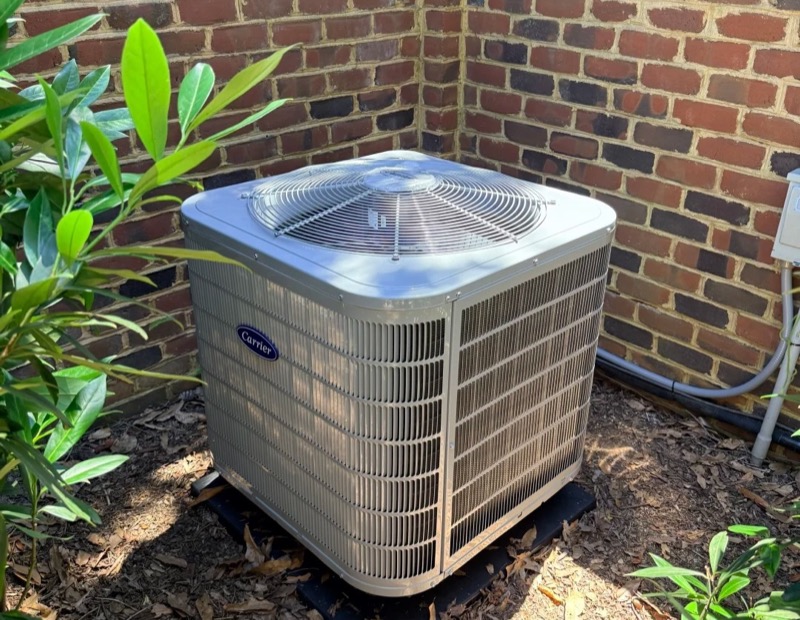
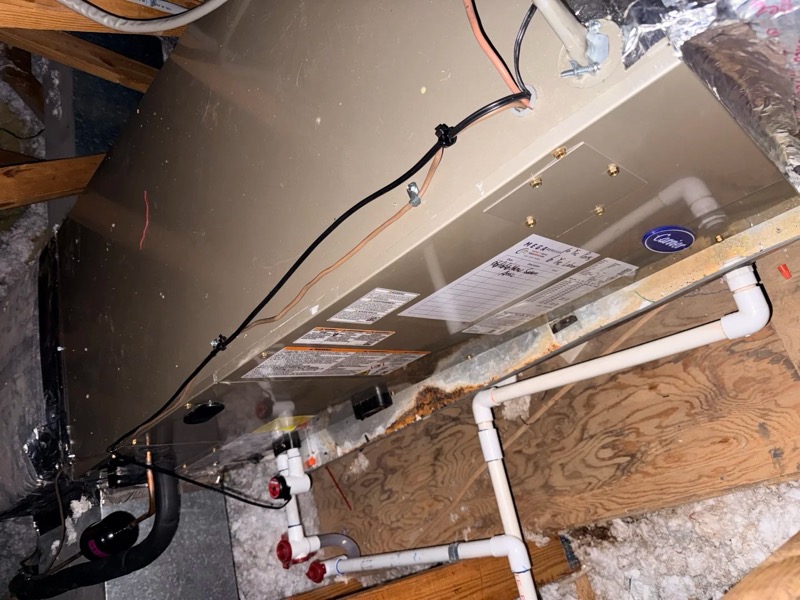
Mega Services recently completed a Carrier Performance installation in an attic, pairing a new air handler with a carefully reworked condensate drain layout. The work also included vacuuming, refrigerant charging, and final system testing to confirm proper operation.
That kind of completion sequence matters because a system is only as reliable as its installation. Poor airflow, incorrect refrigerant charge, or a weak drainage setup can shorten equipment life and reduce comfort.
The project included several important upgrades that improve both comfort and reliability.
- Carrier Performance high-efficiency system. Designed to support better energy use and consistent indoor comfort.
- New air handler installation. Helps restore proper airflow and system balance.
- Condensate drain rerouting. Reduces the risk of water pooling, leaks, and attic damage.
- Vacuum, refrigerant charging, and startup testing. Essential steps for stable cooling performance and safer operation.
These are not cosmetic changes. They are the details that often determine whether an HVAC system performs well for years or becomes a recurring service problem.
The original text communicates the job clearly, but it leaves several important questions unanswered. It does not explain why attic installations are riskier, how proper sizing affects performance, or what homeowners should check before approving a replacement.
It also misses practical guidance that would help a homeowner understand value. For example, it does not mention load calculation, duct sealing, filter maintenance, or why maintenance matters after installation.
From an industry standpoint, the best HVAC projects start with correct system sizing. A proper load calculation helps ensure the equipment matches the home's insulation, layout, and climate conditions rather than being oversized or undersized.
A second priority is airflow. Ductwork should be properly sized, sealed, and insulated so conditioned air reaches each room efficiently and without major losses. Filter access also matters; EPA guidance highlights the importance of proper filter slot design to protect both indoor air and system components.
A quality attic HVAC replacement should usually include a clear process.
1. Inspection and assessment. The technician checks the current system, attic conditions, and duct layout.
2. Load calculation and equipment selection. The new system should fit the home, not just replace the old one with the same size.
3. Installation and drainage planning. The air handler, lines, and condensate system should be arranged to support safe operation.
4. Testing and commissioning. Vacuuming, charging, and startup testing help confirm the unit is ready.
This process gives homeowners more confidence that the system was installed for long-term performance, not just for a quick swap.
After installation, routine maintenance becomes the next layer of protection. Filter changes, duct checks, and seasonal tune-ups help preserve airflow and reduce unnecessary strain on the system.
Homeowners should also keep the outdoor unit clear of debris and avoid closing vents in an attempt to force more air into certain rooms. These habits can reduce efficiency and increase wear. A well-installed system still needs regular care to keep delivering comfort and savings.
Mega Services Heating & Cooling presents itself as a company built on transparent pricing, reliable service, and quality workmanship. Its Thumbtack profile also shows verified licensing and customer feedback highlighting professionalism, responsiveness, and punctuality.
The customer reviews reinforce the company's service reputation. One reviewer said the technician was "fantastic," while another described the experience as "good," and the listing shows a 5.0 rating from reviews on the platform. That combination of craftsmanship and customer care is exactly what homeowners want in a comfort service provider.
This type of attic installation is especially relevant for homeowners in Maryland and the broader DMV region, where older homes, retrofit projects, and hot attic spaces often create installation challenges. It also applies to homes where the existing HVAC system is aging, inefficient, or poorly configured for the home's current needs.
Whether the job is repair, replacement, or maintenance, the same principle applies: details decide performance. A careful installation today helps prevent discomfort, leaks, and avoidable repair costs later.
If your home needs an attic HVAC replacement, air handler upgrade, or condensate drain correction, the right time to act is before minor issues turn into expensive damage. Contact Mega Services Heating & Cooling to schedule an expert evaluation and get a system built for comfort, efficiency, and long-term reliability.
Attics are hotter, harder to access, and more sensitive to drainage and airflow mistakes, so the installation must be planned carefully.
A better drain layout helps reduce the chance of leaks, standing water, and attic damage, especially in high-heat spaces.
Vacuuming removes air and moisture from the system, while the correct refrigerant charge helps the unit cool properly and operate efficiently.
EPA-based guidance and maintenance best practices support checking filters regularly and replacing them as needed, often every 90 days or sooner depending on conditions.
A good contractor combines licensing, experience, clear communication, proper system sizing, and careful commissioning after installation.
- Mega Services Heating & Cooling official website: [https://www.megaservices.org/] [megaservices]
- Mega Services Heating & Cooling Thumbtack profile and customer reviews: [https://www.thumbtack.com/md/bethesda/central-air-conditioning-repair/mega-services-heating-cooling/service/546537166437580800] [thumbtack]
- HVAC installation best practices: [https://florida-academy.edu/hvac-installation-best-practices/] [florida-academy]
- Maryland HVAC regulations and load calculation overview: [https://www.acaircare.com/maryland-hvac-regulations/] [acaircare]
- EPA HVAC and indoor air quality guidance: [https://www.epa.gov/iaq-schools/heating-ventilation-and-air-conditioning-systems-part-indoor-air-quality-design-tools] [epa]
- HVAC maintenance best practices: [https://www.capitalhvac.com/blog/5-best-practices-to-keep-your-hvac-running-smoothly/] [capitalhvac]
- Duct leakage and dust control guidance: [https://www.airtechsheatingcooling.com/blog/why-is-my-house-so-dusty-common-hvac-causes-fixes/] [airtechsheatingcooling]
- Attic installation example discussion: [https://www.youtube.com/watch?v=w5j_h7gT96U] [youtube]


