
Views: 222 Author: Mega Services Publish Time: 2026-06-13 Origin: Site


Content Menu
● Can Air Conditioning Really Make You Sick?
● How AC Systems Can Contribute to Illness
>> 1. Airflow and Circulating Irritants
>> 2. Mold and Bacteria in the System
>> 3. Overly Cold, Dry Air and Your Body
● Common "Air Conditioning Sickness" Symptoms
● When AC Helps Protect Your Health
>> 1. Protection from Heat-Related Illness
>> 2. Better Sleep and Cognitive Performance
● Practical Steps: How to Prevent "Air Conditioner Sickness"
>> 1. Keep Your AC Professionally Tuned Up
>> 2. Upgrade and Maintain Your Air Filters
>> 3. Manage Indoor Humidity the Smart Way
>> 4. Keep Your Home Clean and Ventilated
>> 5. Pay Attention to How You Feel
● New Expert Section: How HVAC Pros Diagnose "AC-Related" Health Complaints
>> Step 1: Symptom and Usage Interview
● New Expert Section: HVAC, Viruses, and Modern Health Concerns
● New Expert Section: Ideal AC Settings for Comfort, Health, and Efficiency
● When to Call a Professional vs. DIY
● Mega Services Heating & Cooling: Your Partner in Healthy Home Comfort
● Call to Action: Keep Your Cool, Not Your Concerns
● Frequently Asked Questions (FAQ)
>> 1. Can air conditioning give me a cold or the flu?
>> 2. Why do I get headaches when the AC is on?
>> 3. Is it safe to sleep with the AC on all night?
>> 4. How often should I service my AC to protect my health?
>> 5. What type of filter should I use if I have allergies or asthma?
You generally do not get sick from air conditioning itself, but a poorly maintained HVAC system can dry out your airways, spread dust and allergens, and even circulate mold or viruses if other risk factors are present. With the right maintenance, filtration, and humidity control, your AC actually becomes a key tool for protecting your family's health and comfort, not a source of illness. [webmd]
For most homeowners, the cold air coming out of the vents is not the direct cause of illness. Instead, problems arise when dry air, dirty filters, and hidden moisture build-up combine to irritate your body or spread contaminants. [webmd]

From my experience as an HVAC consultant working with families in hot, humid summers and cool winters, the question usually isn't "Is AC dangerous?" but rather "Is my specific system helping or hurting my indoor air quality?" The answer depends almost entirely on how your system is designed, cleaned, and used day to day. [torch.aetc.af]
When a customer tells our Mega Services Heating & Cooling team they "get sick every time the AC turns on," we look at three main factors. [tsi]
Every time your AC runs, it pulls indoor air through the return vents, passes it through a filter, and re-distributes it throughout your home. If your filter is clean and properly sized, the air blowing out of your vents is normally cleaner than the air that went in. [energy]
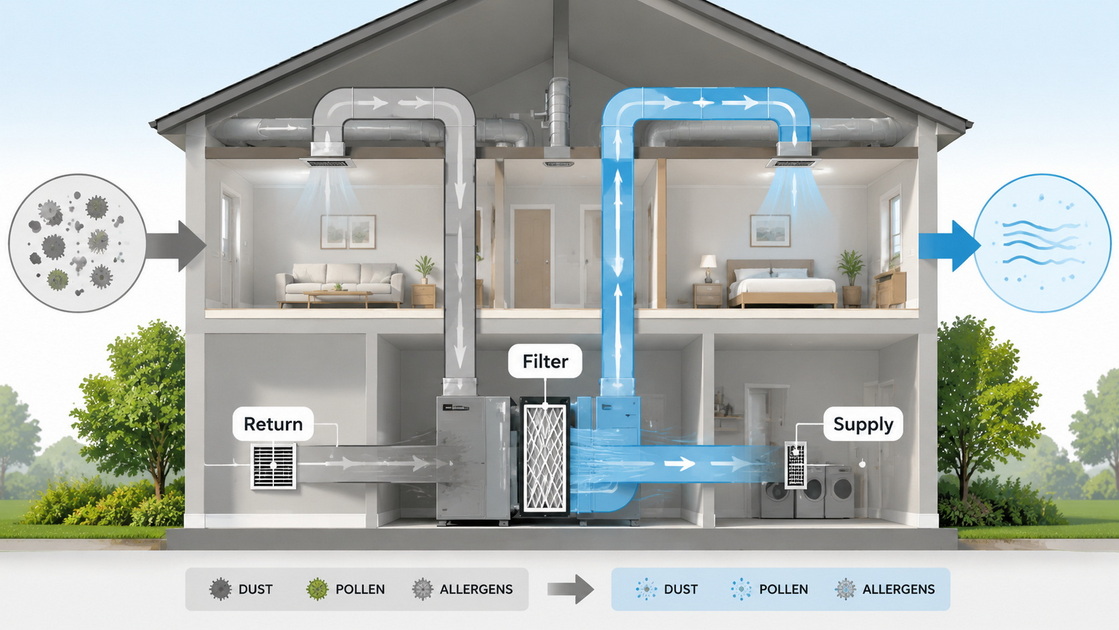
However, issues start when:
- Filters are dirty or low-quality, so dust, pet dander, or pollen keep recirculating. [energy]
- Ductwork leaks and draws in attic dust, insulation fibers, or garage fumes.
- Indoor sources like candles, cleaning chemicals, or smoking add more particles for the AC to distribute throughout the house. [tsi]
In poorly ventilated buildings, research shows that people in air‑conditioned environments can report more respiratory irritation and "sick building syndrome" symptoms than those in naturally ventilated spaces, especially when filters and ventilation aren't maintained. [iaqscience.lbl]
Homeowner takeaway: AC airflow itself is not harmful, but whatever is in your air will go wherever the AC pushes it, for better or worse. [tsi]
Your AC system naturally removes moisture from the air, which is why condensate drains and pans exist. When those drains clog or the system is not serviced, you can end up with standing water in dark, enclosed spaces—ideal conditions for mold and bacteria. [energy]
Common risk points include:
- Evaporator coil and condensate pan inside your air handler
- Hidden ductwork running through damp basements or crawlspaces
- Poorly insulated supply ducts that sweat and stay damp in humid climates
Public health and indoor air quality agencies link poorly maintained HVAC systems and low ventilation rates with increased risk of *sick building syndrome*, where occupants report headaches, fatigue, and respiratory irritation linked to time spent in a building even when no single disease is identified. [pmc.ncbi.nlm.nih]
Homeowner takeaway: A clean, dry system is your friend, but a wet, neglected system can become a reservoir of microbes that your AC then distributes around the home. [tsi]
AC doesn't just cool the air; it also reduces humidity, which can be good or bad depending on how far you go. [webmd]
When indoor air is kept too cold and too dry:
- Your eyes, nose, and throat can become dry and itchy, making it easier for irritants to cause symptoms. [webmd]
- Some people feel tightness in the chest or worsened asthma/allergy symptoms. [webmd]
- Prolonged exposure to chilled, dry air can contribute to tension headaches or fatigue in sensitive individuals. [webmd]
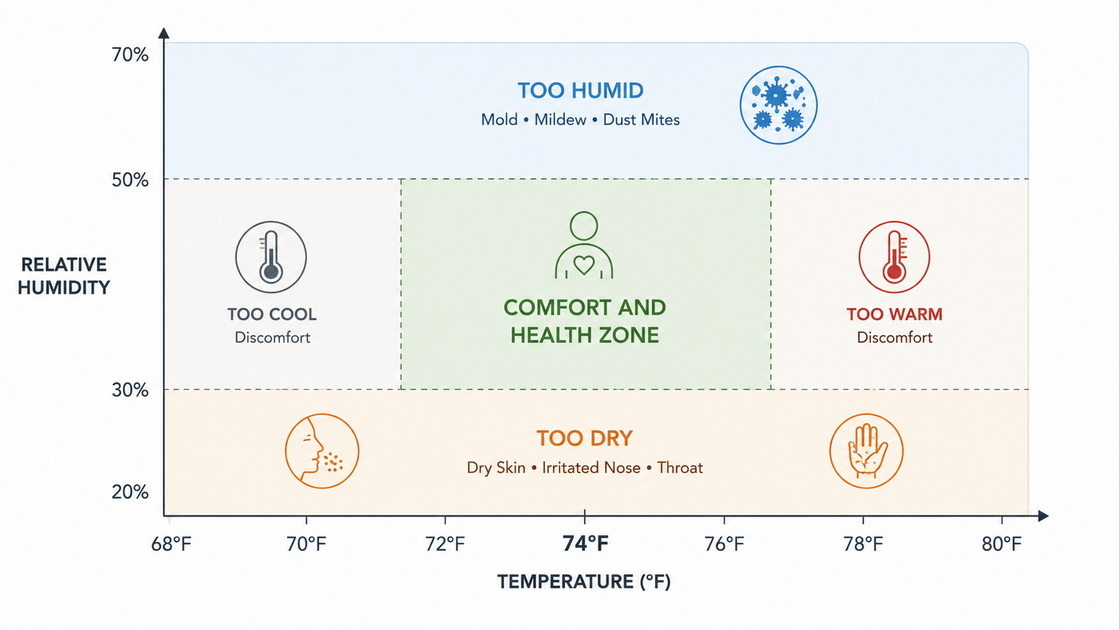
On the other hand, keeping indoor humidity around 30–50% helps limit mold growth and dust mite activity, a range also recommended by indoor air quality experts. [tsi]
Homeowner takeaway: It's not about turning the AC off; it's about keeping temperature and humidity in the "comfort zone," not the "refrigerator zone." [torch.aetc.af]
Homeowners who blame AC for making them sick often report similar issues. [webmd]
Typical symptoms associated with long stays in poorly maintained, over‑cooled environments include:
- Dry, itchy eyes, nose, and throat [webmd]
- Dry, irritated skin [webmd]
- Coughing or wheezing, especially in people with asthma or allergies [webmd]
- Fatigue, trouble concentrating, or dizziness [iaqscience.lbl]
- Headaches or sinus pressure [webmd]
- Nasal congestion or runny nose
In our own field calls at Mega Services, the pattern we see is that symptoms improve when people spend time outdoors or in a better‑ventilated space and return when they go back to the same room or building, which is a classic sign of an indoor air quality issue rather than a single virus. [tsi]
It's important to balance the risks with the very real health benefits of properly used AC.
Public health data consistently shows that air conditioning dramatically reduces the risk of heat exhaustion and heat stroke during extreme heat. Once body temperature rises too high, symptoms such as nausea, cramps, dizziness, and fainting can set in, and AC becomes a literal lifesaver. [webmd]
Studies indicate that people sleep best in cool rooms, typically around the mid‑60s Fahrenheit, because the body naturally cools down as part of the sleep cycle. Another study from Harvard found that students in dorms without AC performed worse on cognitive tests during heat waves compared with those in cooled buildings. [webmd]
Homeowner takeaway: AC, when properly controlled, supports your body's natural rhythms and keeps your brain functioning better in hot weather. [webmd]
From a homeowner's perspective, the goal is to turn your AC system into a health asset instead of a health risk. Here is how we coach our Mega Services Heating & Cooling customers to do that. [torch.aetc.af]
A professional tune‑up at least once a year helps catch issues like clogged drains, dirty coils, or weak airflow before they affect your health or your power bill. [torch.aetc.af]

During a typical maintenance visit, a trained technician will:
- Inspect and clean the evaporator and condenser coils
- Clear and test the condensate drain
- Check refrigerant charge and system pressures
- Verify fan performance and airflow
- Inspect ductwork for signs of leaks or moisture
Regular maintenance not only extends equipment life, it also reduces the risk of mold growth and IAQ problems. [torch.aetc.af]
> Pro tip: Schedule your tune‑up before peak season so issues are fixed before continuous operation puts extra stress on the system. [torch.aetc.af]
Your filter is your first line of defense against airborne particles. [energy]
Best practices include:
- Change filters every 1–3 months, or more often if you have pets, allergies, or construction dust in the home. [energy]
- Use a filter with an appropriate MERV rating for your system—high enough to capture fine particles, but not so high that it chokes airflow.
- Consider high‑efficiency filters or whole‑home air cleaners if you have respiratory conditions or live in a high‑pollution area. [tsi]
A dirty, clogged filter reduces airflow, lowers efficiency, and can even cause coils to freeze, which increases moisture and mold risk. [energy]
Keeping humidity between 30–50% is one of the simplest ways to protect your health. [tsi]
Practical steps:
1. Use your thermostat's humidity readout if available, or consider a standalone hygrometer.
2. If humidity stays high even when the AC runs, talk to an HVAC professional about dehumidification options, such as adding a whole‑home dehumidifier.
3. In naturally dry climates or during winter heating, consider a humidifier to avoid excessively dry air that irritates your eyes, nose, and throat. [iehs.chinacdc]
National and environmental health agencies highlight this humidity range as ideal for limiting mold and bacterial growth while keeping occupants comfortable. [iehs.chinacdc]
Your AC can only work with the air it gets. To reduce irritants:
- Vacuum and dust regularly, especially carpets, upholstery, and vents.
- Use exhaust fans in kitchens and bathrooms to remove excess moisture and fumes.
- When outdoor air quality allows, open windows periodically to let in fresh air and dilute indoor pollutants. [tsi]
Indoor air quality experts emphasize that indoor contaminants like cleaning products, building materials, and gas appliances can all contribute to symptoms if not managed. [tsi]
Your body is often the earliest warning system.
If you notice that:
- Symptoms like headaches, congestion, or fatigue always appear in one room
- You feel better when you leave that environment and worse when you return
- Multiple family members report similar complaints
then it's time to have your HVAC system and indoor air quality professionally evaluated. Technicians can measure ventilation rates, temperature, humidity, and airborne particles to identify and correct problems before they become serious. [pmc.ncbi.nlm.nih]
When homeowners call Mega Services Heating & Cooling worried that their AC is making them sick, we follow a structured, evidence‑based process inspired by indoor air quality research. [iaqscience.lbl]
We start by asking:
- When do symptoms appear and disappear?
- Are they tied to specific rooms, times of day, or weather conditions?
- How often is the system running, and at what temperature settings?
This helps us distinguish between general seasonal allergies and issues linked more specifically to the building or system. [pmc.ncbi.nlm.nih]
Next, we:
- Inspect filters, coils, and condensate drains
- Check for visible mold or moisture in the air handler or ductwork
- Verify airflow and ventilation, including fresh air intake where applicable
This aligns with best practices recommended by building science organizations for addressing sick building syndrome factors. [iaqscience.lbl]
Finally, we recommend a prioritized action plan—for example:
- Immediate cleaning or repairs
- Filter and humidity upgrades
- Follow‑up indoor air quality testing if needed
We then encourage homeowners to track how symptoms change after each intervention. This combination of homeowner feedback and technical measurement brings your home in line with modern IAQ guidance. [iaqscience.lbl]
Since the pandemic, many homeowners ask whether AC can spread viruses like COVID‑19. Current evidence suggests that:
- Poor ventilation and crowded indoor spaces increase the risk of airborne virus transmission. [iaqscience.lbl]
- Well‑maintained systems with good filtration and adequate outdoor air can lower risk by diluting and capturing particles. [iaqscience.lbl]
Public health guidance emphasizes:
- Regular filter changes
- Maintaining recommended ventilation rates
- Avoiding recirculation of air without filtration in high‑risk settings [iaqscience.lbl]
In homes, the biggest risk is usually close person‑to‑person contact, not the AC unit itself. With proper maintenance and ventilation, your HVAC system becomes part of your overall risk‑reduction strategy. [iaqscience.lbl]
Finding the "sweet spot" for your thermostat can protect your health and your wallet. [torch.aetc.af]
Best‑practice guidelines and industry experience suggest:
- Keep cooling setpoints around 76°F (24°C) or a bit higher when you're home and awake, as recommended by HVAC organizations for comfort and efficiency. [torch.aetc.af]
- Aim for bedtime temperatures in the mid‑60s°F if possible for better sleep. [webmd]
- Avoid large indoor‑outdoor temperature gaps; many health agencies suggest keeping the difference within about 5–8°C to reduce stress on your body and joints. [iehs.chinacdc]
By combining these settings with proper humidity control and filtration, you can create a stable, comfortable environment that supports your immune system instead of stressing it. [iehs.chinacdc]
Some steps are perfect for DIY; others are safer in professional hands.
Safe DIY tasks:
- Changing or upgrading filters on schedule
- Cleaning supply and return vent grilles
- Using bathroom and kitchen exhaust fans
- Monitoring temperature and humidity with simple devices
Best left to professionals:
- Deep coil cleaning and drain line service
- Ductwork inspection and remediation
- Advanced filtration or air purification upgrades
- Diagnosing persistent "sick building" symptoms
If you are in our service area, Mega Services Heating & Cooling can help you evaluate and optimize your entire system so it supports both comfort and health. [megaservices]
At Mega Services Heating & Cooling, our mission is to create safe, comfortable, and energy‑efficient homes for families in our community. We approach every system not just as a machine, but as a living part of your home's health ecosystem. [megaservices]
When you schedule a visit with us, we can:
- Conduct a comprehensive AC health check
- Recommend filter and humidity solutions tailored to your home
- Identify hidden issues like duct leaks or moisture problems
- Design a maintenance plan that prevents problems before they start [torch.aetc.af]
If you're worried that your air conditioner might be making you feel unwell, don't ignore it. A brief inspection today can prevent bigger health and comfort problems tomorrow. [torch.aetc.af]
Contact Mega Services Heating & Cooling to schedule a professional AC and indoor air quality assessment. We'll help you turn your system into a reliable ally for healthier, more comfortable living—season after season. [megaservices]
No. Colds and flu are caused by viruses, not by cold air itself. However, dry, over‑cooled environments can irritate your airways and make you feel more sensitive to allergens or infections already present. [webmd]
Headaches can be linked to dry air, poor ventilation, or exposure to indoor pollutants, especially in poorly maintained buildings. If headaches consistently occur in one space, it's important to inspect the HVAC system, filters, and ventilation. [iaqscience.lbl]
Yes, sleeping with the AC on is generally safe and may even improve sleep quality by keeping your bedroom at a cool, stable temperature. Just avoid excessively cold settings and maintain a comfortable humidity level to prevent dryness. [iehs.chinacdc]
Most experts recommend professional maintenance at least once a year, often before peak cooling season. Regular servicing helps prevent mold, moisture issues, and airflow problems that can affect indoor air quality. [tsi]
Homeowners with allergies or asthma often benefit from higher‑efficiency filters or whole‑home air cleaners that capture finer particles. It's important to choose a filter that your system can handle without restricting airflow, so consulting an HVAC professional is recommended. [energy]
1. One Hour Heating & Air Conditioning. "Can You Get Sick from Air Conditioning?"
<https://www.onehourheatandair.com/expert-tips/air-conditioners/can-you-get-sick-from-air-conditioning/>
2. WebMD. "What Air Conditioning Does to Your Body."
<https://www.webmd.com/a-to-z-guides/ss/slideshow-what-ac-does-to-your-body> [webmd]
3. TSI / Indoor Environments. "The Power of Knowing: How to Combat Sick Building Syndrome."
<https://tsi.com/indoor-environments/learn/how-to-combat-sick-building-syndrome> [tsi]
4. Indoor Air (LBNL). "Ventilation Rates and Sick Building Syndrome Symptoms."
<https://iaqscience.lbl.gov/ventilation-rates-and-sick-building-syndrome> [iaqscience.lbl]
5. U.S. Department of Energy. "Air Conditioner Maintenance."
<https://www.energy.gov/energysaver/air-conditioner-maintenance> [energy]
6. Torch / U.S. Air Force Safety. "Home HVAC tips to keep healthy during warm or cool months."
<https://www.torch.aetc.af.mil/News/Article-Display/Article/3443492/home-hvac-tips-to-keep-healthy-during-warm-or-cool-months/> [torch.aetc.af]
7. China CDC – Environment & Health Related Product Safety Institute. "Summer Air Conditioning Health Hazards."
<https://iehs.chinacdc.cn/jkfh/jkzn/202504/t20250428_306316.html> [iehs.chinacdc]
8. Mega Services. "About Us – Mega Services Heating & Cooling."
<https://www.megaservices.org/about-us.html> [megaservices]


