
Views: 222 Author: Mega Services Publish Time: 2026-06-16 Origin: Site


Content Menu
● When a 5‑Ton AC Actually Makes Sense
>> Why Manual J load calculations matter
● Key Efficiency Ratings: SEER2, EER2, and Comfort
>> What SEER2 and EER2 actually tell you
>> What this means for your bills
● Must‑Have Features in Modern 5‑Ton AC Units
>> Smart comfort and air quality
● Why Installation Quality Can Make or Break a 5‑Ton System
>> Best practices we follow on every 5‑ton install
● Real‑World Customer Experience: Why the Contractor Matters
● Proactive Maintenance: Protecting Your 5‑Ton Investment
>> Professional maintenance checklist
● Cost Expectations for 5‑Ton AC Units
● Common Mistakes Homeowners Make With 5‑Ton AC Units
● How Mega Services Helps You Choose the Right 5‑Ton System
● Call to Action: Get a 5‑Ton AC Assessment You Can Trust
>> 1. How do I know if my home really needs a 5‑ton AC?
>> 2. What's the difference between a 5‑ton 14.3 SEER2 unit and a 5‑ton 18 SEER unit?
>> 3. How often should I service my 5‑ton AC?
>> 4. Are there situations where a 5‑ton unit is too big?
>> 5. How much should I budget for a new 5‑ton AC with installation?
A well‑sized, properly installed 5‑ton AC unit can deliver quiet, reliable cooling for large homes while keeping energy bills under control—if you choose the right system and the right installer. As an HVAC professional at Mega Services Heating & Cooling, I'll walk you through how we help homeowners decide when a 5‑ton air conditioner makes sense, what to look for in a system, and how expert installation and maintenance protect your investment. [carrier]
A "5‑ton" AC unit refers to cooling capacity, not weight. One ton of cooling equals 12,000 BTU (British Thermal Units) per hour, so a 5‑ton system can remove about 60,000 BTU of heat per hour from your home. [carrier]
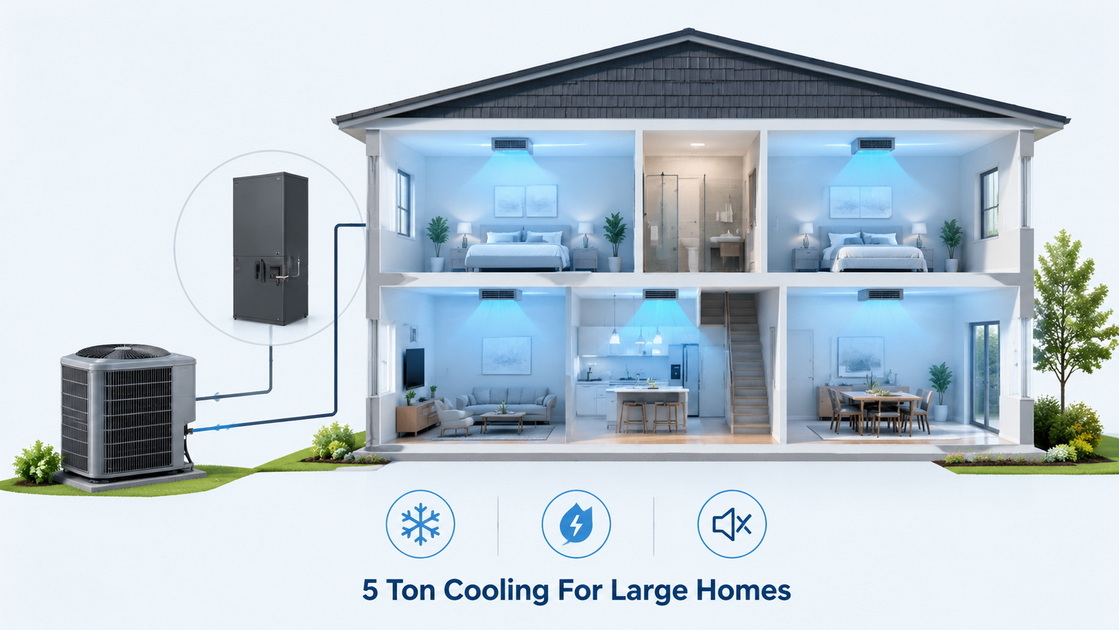
In residential applications, 5 tons is typically the largest standard size installed as a single central air conditioner for a house. In practical terms, a correctly sized 5‑ton unit is usually considered for medium‑to‑large homes, especially those around 2,800–3,500+ square feet, but square footage alone is not enough to make the decision. [climapro]
> Pro insight: Many homeowners assume "bigger is safer." In reality, an oversized 5‑ton system can short‑cycle, wear out faster, and struggle with humidity control. Proper sizing is non‑negotiable. [joplins]
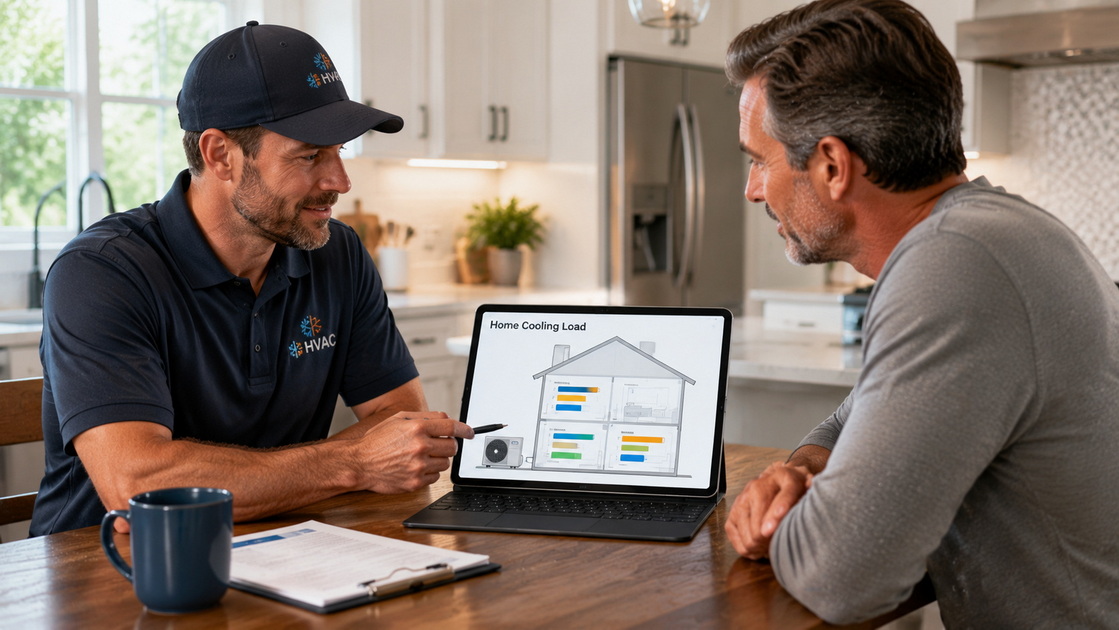
The original Logan article correctly points out that square footage, sun exposure, windows, doors, and climate all impact cooling requirements. We agree—and in the field, we go further by looking at:
- Ceiling height and open layouts (two‑story foyers, great rooms). [climapro]
- Insulation quality in walls and attic.
- Window orientation and glass type (south‑ and west‑facing glass loads your AC). [climapro]
- Air leakage around doors, recessed lights, and older framing.
Most online calculators will flag a 5‑ton system for homes around 3,000 square feet or more, but that estimate assumes average construction and climate. In hotter, more humid regions or older, leaky homes, similar square footage can require more capacity or zoning; in a tight, well‑insulated newer build, 5 tons may actually be too large. [masairhomecomfort]
For every 5‑ton system we install, we perform or verify a Manual J load calculation, the ACCA‑standard engineering method for sizing HVAC equipment. This step: [joplins]
- Quantifies room‑by‑room cooling loads.
- Prevents both undersizing (won't keep up in heat waves) and oversizing (short cycling, poor humidity control). [joplins]
- Supports zoning or additional systems for long, tall, or complex floor plans. [climapro]
If a contractor recommends a 5‑ton unit based only on square footage or "what's already there," get a second opinion. [joplins]
The original article correctly recommends choosing high‑efficiency units, but it predates the latest SEER2 and EER2 standards now used by major brands. [americanstandardair]
- SEER2 (Seasonal Energy Efficiency Ratio 2): Measures seasonal efficiency across varying conditions. Higher SEER2 = lower cooling costs over an entire season. [americanstandardair]
- EER2 (Energy Efficiency Ratio 2): Measures efficiency at a single high‑temperature test condition—helpful in very hot climates or for comparing performance during peak heat. [carrier]
Today's 5‑ton central AC units typically range from around 13.4 SEER2 up to the high teens or low 20s, depending on the brand and features. [hvacdirect]
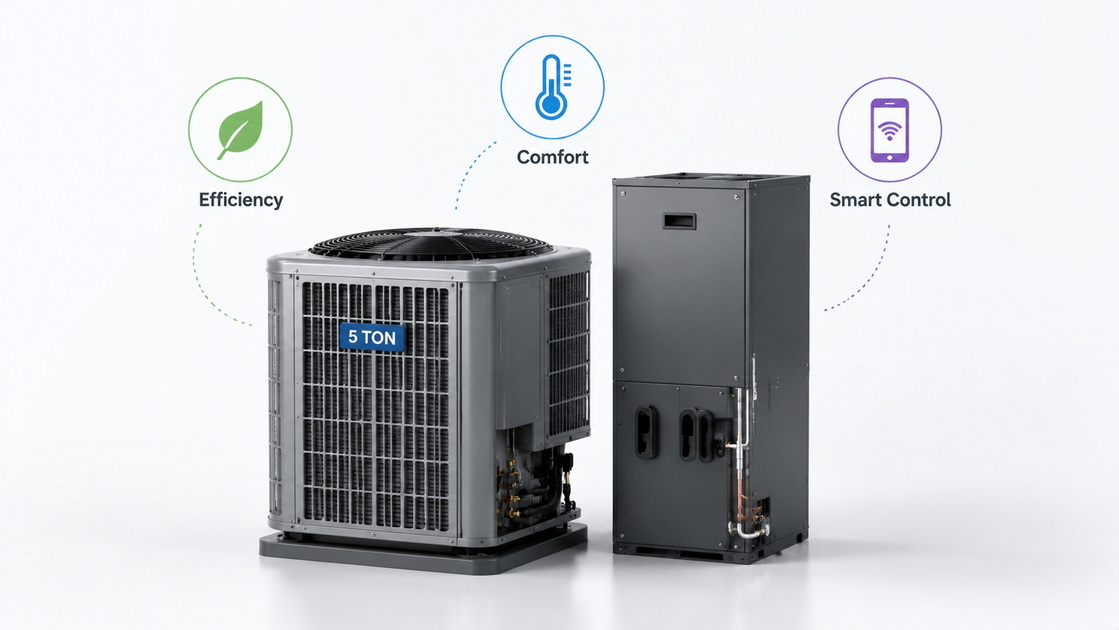
Higher‑efficiency 5‑ton systems cost more upfront but less to run. For example, premium residential models from major brands like Carrier, American Standard, and Goodman advertise 5‑ton condensers with SEER2 ratings in the 16–19+ range, often paired with variable‑speed technology. Over the 10–15‑year life of the system, those savings compound—especially in hot climates where the AC runs many hours per year. [hvacdirect]
> Expert tip: If you plan to stay in your home for 5+ years, it often makes financial sense to step up one efficiency tier from the minimum you initially budgeted for. [americanstandardair]
The Logan guide highlights coil design, compressor type, fan speeds, operating modes, filtration, and warranty. Those fundamentals still matter, but today's systems add additional layers of comfort and control.
When we help homeowners evaluate 5‑ton units, we look at:
- Compressor type: Scroll compressors are now standard for reliability; inverter‑driven compressors provide variable capacity and even smoother comfort. [hvacdirect]
- Coil design: Copper tubes with aluminum fins remain a durable, efficient standard when properly sized and matched.
- Air handler / blower: Variable‑speed indoor blowers improve comfort, noise levels, and filtration by running longer at lower speeds.
Newer 5‑ton systems can integrate:
- Smart thermostats and home automation for remote control, scheduling, and energy reporting. [carrier]
- Enhanced filtration and air purification, which is especially important for allergy sufferers or homes with pets.
- Quiet operation modes that matter when the outdoor unit sits near patios or bedrooms. [carrier]
> Real‑world note: In our installations, many homeowners tell us the most noticeable upgrade isn't raw cooling power—it's the quieter, more consistent comfort they get from variable‑speed and smart‑controlled systems. [thumbtack]
The original article is absolutely right: proper installation is critical. In the field, we see more failures and comfort complaints tied to poor installation than to the equipment itself.
Drawing on industry standards and best‑practice guidance, a successful 5‑ton installation should include: [joplins]
1. Correct sizing using Manual J.
2. Ductwork inspection and upgrades where needed—leaky or undersized ducts can lose up to 30% of output. [masairhomecomfort]
3. Verified airflow rates across the evaporator coil, matched to manufacturer specs. [joplins]
4. Proper refrigerant charge, neither over‑ nor under‑filled. [joplins]
5. Outdoor unit clearances and level pad, with adequate airflow around the condenser.
6. Sealed and insulated refrigerant lines and plenums to prevent energy loss and condensation issues. [masairhomecomfort]
At Mega Services, our lead technicians use detailed install checklists, similar to what Logan describes, to ensure no step is missed. We walk homeowners through the new system, thermostat controls, and basic troubleshooting before we consider the job complete. [angi]
Equipment specs are only half the story; the experience you have during and after installation is equally important. Reviews for Mega Services consistently highlight professionalism, responsiveness, and punctuality, with customers praising how quickly and cleanly issues are resolved. [thumbtack]
Homeowners mention:
- Fast response for repairs and replacements. [angi]
- Clear explanations of options and pricing.
- Noticeable comfort improvements after system upgrades or balancing work. [thumbtack]
> When you invest in a 5‑ton AC, you're also investing in the team that will design, install, and maintain that system for the next decade or more. [angi]
The original guide recommends filter changes and annual tune‑ups, which aligns with current best practices. For a high‑capacity 5‑ton system, proactive maintenance isn't optional—it is the cheapest "insurance policy" you can buy. [thefurnaceoutlet]
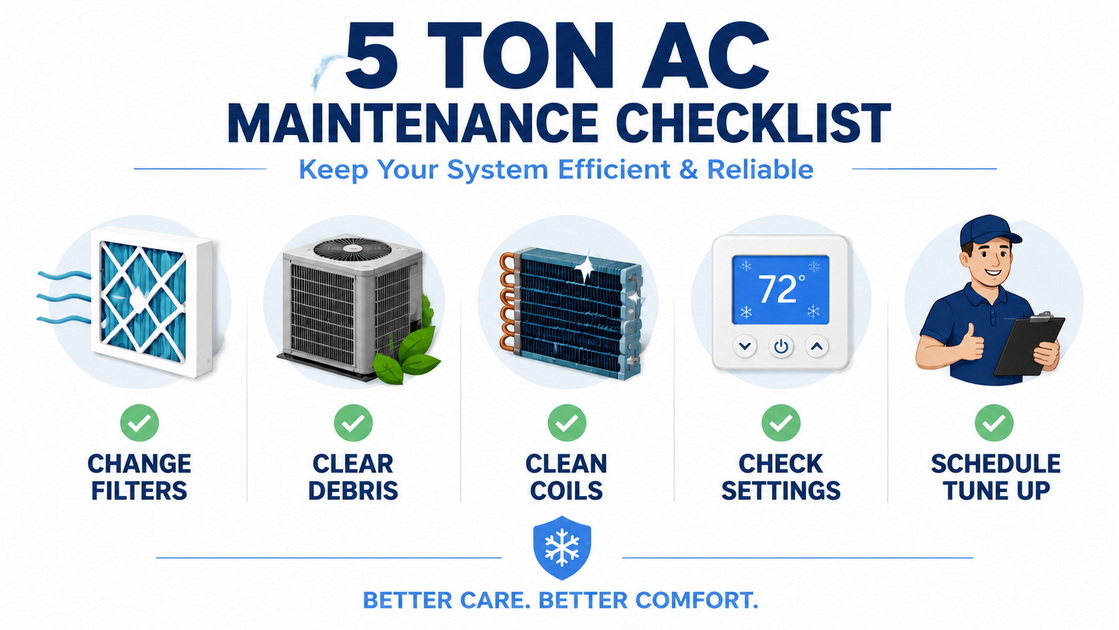
- Replace or clean filters every 1–3 months, depending on usage and filter type. [thefurnaceoutlet]
- Keep outdoor coils and the surrounding area clean—no leaves, debris, or shrubs blocking airflow. [thefurnaceoutlet]
- Monitor your energy bills and comfort level. Sudden spikes or rooms that won't cool can signal airflow or refrigerant issues.
We recommend—and provide—annual or semi‑annual professional maintenance, which typically includes: [thefurnaceoutlet]
- Coil cleaning (dirty coils can cut heat transfer capacity significantly).
- Refrigerant level checks and leak inspection.
- Verifying airflow and static pressure.
- Inspecting electrical connections, capacitors, and safety controls. [climapro]
Neglect is the number‑one cause of premature AC failure, especially with large, hard‑working 5‑ton systems. [thefurnaceoutlet]
The original article puts a typical installed cost range for 5‑ton systems around 7,000–11,500 USD, which remains realistic for quality equipment and professional installation in many U.S. markets. Online HVAC retailers show 5‑ton condensers alone priced roughly in the 2,000–5,500+ USD range, depending on brand and efficiency. [hvacdirect]
Your final installed price depends on:
- Brand and efficiency rating (SEER2/EER2).
- Single‑stage vs. two‑stage vs. variable‑speed equipment. [hvacdirect]
- Ductwork repairs or modifications.
- Local permits, code requirements, and labor rates.
At Mega Services, we provide transparent, written estimates and, when possible, multiple system options at different price and efficiency tiers so homeowners can match comfort, budget, and long‑term savings. [thumbtack]
Drawing from years in the field, here are issues we see repeatedly:
- Skipping a proper load calculation and relying on "rule of thumb" sizing. [joplins]
- Ignoring ductwork problems, assuming a new 5‑ton unit will "power through" design flaws. [masairhomecomfort]
- Chasing the cheapest bid without verifying licensing, insurance, or install standards. [linkedin]
- Assuming high SEER2 guarantees comfort, even if the system is poorly installed or unbalanced.
- Forgetting regular maintenance until a summer breakdown forces an emergency call. [climapro]
Avoiding these mistakes is often the difference between a 5‑ton system that quietly does its job for 15 years and one that becomes a recurring source of stress and expense.
As a company dedicated to safe, comfortable, and energy‑efficient homes, Mega Services Heating & Cooling brings both technical expertise and a service‑first mindset to every project. [angi]
When you ask us about a 5‑ton AC, we typically:
1. Evaluate your home with a load calculation and duct assessment, not just square footage. [climapro]
2. Review equipment options from reputable brands, explaining efficiency, features, and warranties in clear language. [americanstandardair]
3. Provide a written proposal with transparent pricing and scope.
4. Schedule installation at your convenience and complete it with a trained, supervised team. [thumbtack]
5. Offer ongoing maintenance plans so your system continues to perform as designed. [thefurnaceoutlet]
This process reflects current HVAC SEO and content best practices as well: answering real homeowner questions, providing local expertise, and backing claims with social proof and professional standards. [fieldedge]
If you're wondering whether a 5‑ton AC is right for your home, the next step isn't guessing—it's getting a professional in‑home assessment.
At Mega Services Heating & Cooling, we'll:
- Perform a load calculation and duct review.
- Explain equipment choices in plain English.
- Provide clear pricing before any work starts.
- Stand behind our installation with a strong warranty and ongoing support. [angi]
Contact Mega Services Heating & Cooling today to schedule your 5‑ton AC consultation and design a cooling solution built around your home, your comfort, and your energy goals.
You'll know after a Manual J load calculation that accounts for square footage, insulation, windows, and climate—not just a rough estimate. A professional assessment is the only reliable way to avoid costly over‑ or under‑sizing. [climapro]
Both cool at roughly the same capacity (about 60,000 BTU/hour), but the higher‑efficiency unit uses less electricity to do the same work. Over time, that can translate into significantly lower energy bills, especially in hot climates with long cooling seasons. [americanstandardair]
Plan on filter changes every 1–3 months and a professional tune‑up at least once per year. Heavy‑use systems or homes with pets and allergies may benefit from more frequent maintenance. [thefurnaceoutlet]
Yes. In smaller, well‑insulated, or tightly built homes, a 5‑ton system may cycle on and off too quickly, leading to poor humidity control and uneven temperatures. In those cases, a smaller tonnage or zoning may provide better comfort. [climapro]
Many homeowners spend around 7,000–11,500 USD for a quality system with professional installation, although prices vary by brand, efficiency, and local labor costs. A detailed, written quote from a reputable contractor is the best way to understand your specific investment. [hvacdirect]
1. Logan A/C & Heat. "How to Choose the Right 5 Ton AC Unit." https://www.logan-inc.com/blog/5-ton-ac-units/
2. Carrier Residential. "5 Ton AC Unit | Powerful Cooling for Large Homes." https://www.carrier.com/us/en/residential/hvac-resources/air-conditioners/5-ton-ac-unit/
3. American Standard. "Air Conditioners – SEER2 and EER2 Ratings." https://www.americanstandardair.com/products/air-conditioners/
4. HVACDirect.com. "5 Ton Air Conditioners." https://hvacdirect.com/cooling/air-conditioners-by-ton/5-ton-air-conditioners.html
5. ClimaPro. "Maximize Commercial Comfort: The Complete Guide to 5-Ton AC Units." https://www.climapro.com/blog/maximize-commercial-comfort-the-complete-guide-to-5-ton-ac-units/
6. Joplins. "4 Best Practices That Will Make Your A/C Installation a Success." https://joplins.net/4-best-practices-that-will-make-your-ac-installation-a-success/
7. The Furnace Outlet. "The Ultimate Guide to 5-Ton AC Units: Costs, Features, and Installation Tips." https://thefurnaceoutlet.com/blogs/news/the-ultimate-guide-to-5-ton-ac-units-costs-features-and-installation-tips
8. Mas Air Home Comfort. https://masairhomecomfort.ca/2022/07/02/%E7%A9%BA%E8%B0%83%E9%80%89%E6%8B%A9/
9. Mega Services Heating & Cooling – Thumbtack listing and reviews. https://www.thumbtack.com/md/bethesda/central-air-conditioning-repair/mega-services-heating-cooling/service/546537166437580800
10. Mega Services Heating & Cooling – Angi reviews. https://www.angi.com/companylist/us/md/bethesda/mega-services-heating-cooling-corp-reviews-1.htm
11. FieldEdge. "HVAC SEO for Blogs: How to Get Your Content to Rank." https://fieldedge.com/blog/blog-seo-for-hvac/
12. LinkedIn. "Content Marketing Strategies for HVAC SEO: Creating Content That Ranks Well." https://www.linkedin.com/pulse/content-marketing-strategies-hvac-seo-creating-ranks-well-josh-dodyc


