
Views: 222 Author: Mega Services Publish Time: 2026-06-17 Origin: Site


Content Menu
● Do AC Units Still Use Freon in 2026? An HVAC Expert Explains
● What Is Freon, Really? (And Why People Still Call Every Refrigerant "Freon")
● Key Timeline – When Was Freon Banned for Home Air Conditioners?
>> Montreal Protocol and EPA Phase‑Out Milestones
● So What Do AC Units Use Instead of Freon Today?
>> R‑410A (Puron) – The Current Standard in Existing Systems
>> What's Coming Next – A2L Refrigerants (R‑454B, R‑32)
● How to Tell if Your AC Uses Freon or a Modern Refrigerant
>> 4 Quick Ways to Identify Your AC Refrigerant
● Why Refrigerants Keep Changing – Ozone, Climate, and Regulations
>> Ozone Depletion and the Montreal Protocol
>> Global Warming Potential (GWP) and the AIM Act
● Practical Homeowner Guide – Should You Replace an Old Freon System?
>> When Keeping Your R‑22 System Still Makes Sense
>> When It's Smarter to Upgrade to a New Refrigerant System
● How Refrigerant Actually Cools Your Home (Plain‑English Walkthrough)
>> The Basic Refrigerant Cycle
● Troubleshooting – Is Freon Why Your AC or Window Unit Freezes Up?
● Safety, Legal, and Cost Considerations Around Freon
● When to Call an HVAC Professional – And What to Expect
● Ready to Talk About Your AC Refrigerant? (CTA)
● FAQs About Freon and Modern AC Refrigerants
>> 1. Do AC units still use Freon in 2026?
>> 3. Can I convert my R‑22 system to use R‑410A?
>> 4. What refrigerant will my next new AC likely use?
>> 5. How can I tell if low refrigerant is my real problem?
Do modern AC units still use Freon? In most cases, no—today's residential air conditioners in the U.S. use newer refrigerants such as R‑410A and, increasingly, even lower‑GWP options, while only older systems still rely on R‑22 "Freon." As HVAC professionals at Mega Services Heating & Cooling, we see this transition every day in local homes, and it has real implications for safety, energy efficiency, and long‑term repair costs. [freon]
> Primary target keyword: Do AC units still use Freon
> Secondary keywords: R‑22 phase out, what refrigerant do AC units use now, Freon vs R‑410A, 2026 refrigerant changes, AC refrigerant replacement
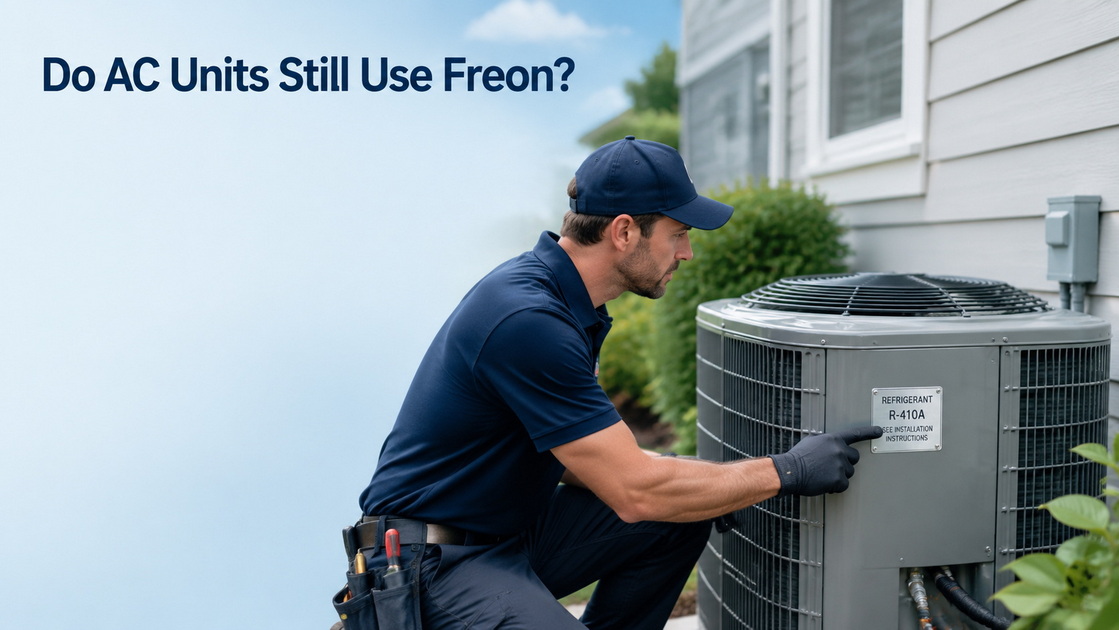
If you're wondering "Do AC units still use Freon?", the short answer is that only older systems do, and no new central air conditioners have used R‑22 Freon since 2010 in the U.S. As of 2020, production and import of R‑22 Freon stopped completely, which means homeowners are relying on reclaimed or stockpiled refrigerant when those older systems need a recharge. [trane]
From our field experience at Mega Services Heating & Cooling, most homes we service in recent years use R‑410A or are being prepared for the next wave of A2L refrigerants like R‑454B and R‑32 due to new EPA and AIM Act rules taking effect around 2025–2026. This shift isn't just regulatory; it affects how we repair, maintain, and replace your system, and how much you'll pay over the next decade. [howeinc]
"Freon" started as a trademark originally registered by The Chemours Company (formerly DuPont) for a family of halocarbon‑based refrigerants used in AC, refrigeration, and aerosols. Technically, it refers mainly to CFCs and HCFCs such as CFC‑12 and HCFC‑22, which contain chlorine and can damage the ozone layer when released into the atmosphere. [summitcollege]
The two most famous "Freon" products in comfort cooling were:
- R‑12 (CFC‑12) – Common in older refrigeration systems and early vehicle AC systems. [freon]
- R‑22 (HCFC‑22) – The classic "Freon" used in residential central air conditioners and heat pumps for decades. [trane]
Even though many homeowners still say "Freon" for any refrigerant, modern AC units do not use R‑22 Freon and are instead designed around R‑410A or new low‑GWP blends. Calling everything "Freon" can cause confusion during service calls, because refrigerants are not interchangeable and each system is designed for one specific type. [howeinc]
Understanding the R‑22 phase‑out timeline helps you know what's in your system and what your options are.
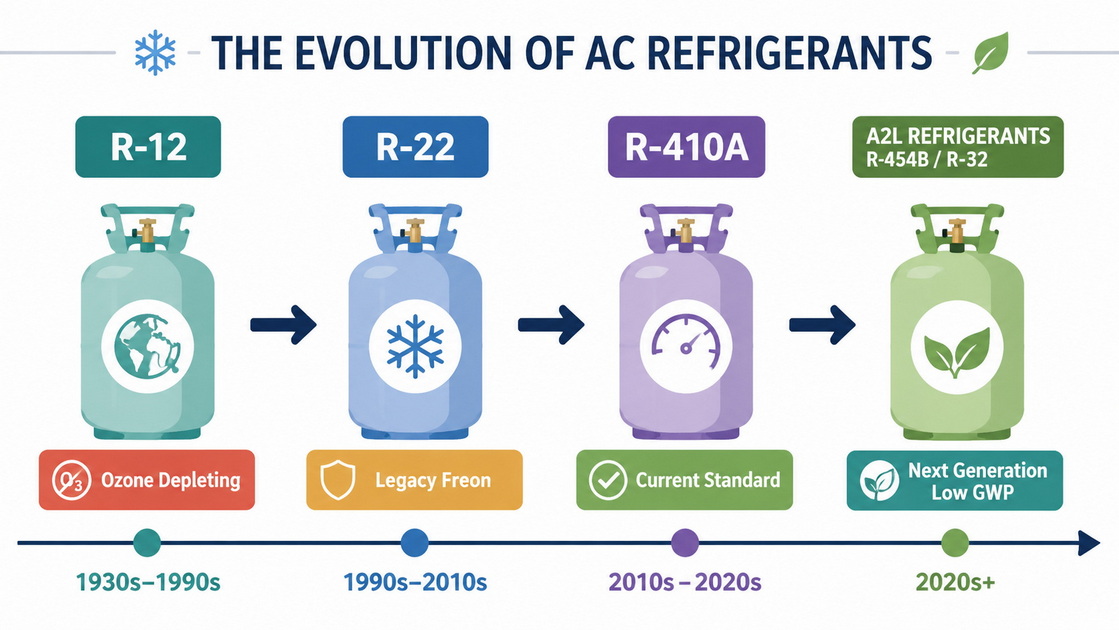
Under the Montreal Protocol, the U.S. committed to phasing out ozone‑depleting substances like CFC‑12 and HCFC‑22. That global agreement drove a series of EPA rules that affected what manufacturers could build and what technicians could use. [epa]
Key dates for R‑22 "Freon" in residential AC:
| Year | Regulation milestone | What it means for homeowners |
|---|---|---|
| 1996 | CFC‑based Freon (like R‑12) banned from new equipment in U.S. | Older refrigeration/AC systems became legacy equipment. |
| 2010 | R‑22 banned in new AC and heat pump systems. | No new R‑22 units; existing R‑22 systems still allowed. |
| 2020 | Production and import of R‑22 stopped in the U.S. | Only reclaimed or stockpiled R‑22 can be used for service. |
| 2025–2026 | New GWP limits phase down R‑410A in new equipment. | New systems move to A2L refrigerants like R‑454B and R‑32. |
These rules do not make it illegal to own or run an older R‑22 system; they restrict manufacturing and supply of the refrigerant itself. As supply tightens, servicing an R‑22 leak becomes more expensive, which is where homeowners start weighing repair versus replacement more seriously. [goodmanmfg]
Modern central AC systems no longer use R‑22 Freon; instead, they use high‑efficiency HFC and next‑generation low‑GWP refrigerants. [summitcollege]
Since around 2010, R‑410A (often branded as Puron) has been the standard refrigerant in new residential air conditioners and heat pumps in the U.S. R‑410A contains no chlorine, so it does not deplete the ozone layer, and it operates at higher pressures and capacities than R‑22, which can support higher efficiency designs. [trane]
From a homeowner's perspective:
- Your system either uses R‑22 or R‑410A—you cannot "convert" one to the other without replacing core components. [freon]
- R‑410A is still allowed in existing systems, and you can continue to use and service these units even as new equipment transitions to A2L refrigerants. [rheem]
Due to new EPA GWP limits and the AIM Act phasedown of HFCs, manufacturers are switching away from R‑410A in new equipment starting around 2025–2026. The most common replacements are A2L refrigerants, which have lower global warming potential but are mildly flammable and require purpose‑built equipment and specific handling procedures. [lg]
Common A2L refrigerants:
- R‑454B – A primary R‑410A replacement chosen by many major HVAC manufacturers. [hvacmirage]
- R‑32 – Another low‑GWP alternative used in mini‑splits and some residential systems, especially outside the U.S. [hvacmirage]
These refrigerants cannot be dropped into existing R‑410A or R‑22 systems; they require new equipment designed and listed for A2L use. As service professionals, this means technicians must be specially trained and certified to handle A2L refrigerants safely and in accordance with local code. [rheem]
Homeowners often call us saying, "My AC probably needs more Freon," but the first thing we confirm is what refrigerant the system actually uses. You can do an initial check yourself before you call an HVAC company. [freon]
Use these simple steps at home:
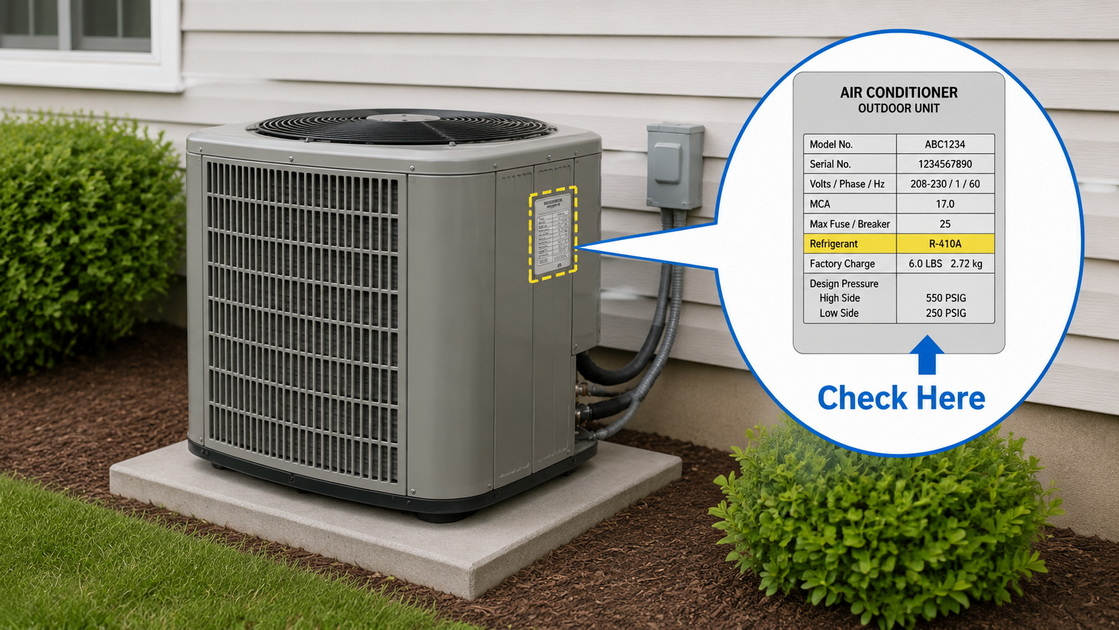
1. Check the outdoor unit's data plate
- Look for a large white or silver label on the condenser cabinet.
- It should list "Refrigerant: R‑22," "HCFC‑22," "R‑410A," or similar. [trane]
2. Check the manufacturing date
- If the system was installed before 2010, there's a good chance it's R‑22.
- Systems built from roughly 2010 onward almost always use R‑410A. [trane]
3. Look at service tags and past invoices
- Many systems that were updated from R‑22 to R‑410A have a technician label indicating the new refrigerant type. [freon]
- Invoices or service records often list which refrigerant was added during previous repairs.
4. Ask a certified HVAC technician
- During a maintenance visit, our techs at Mega Services Heating & Cooling check and document refrigerant type so you have it on file. [freon]
- This is also a good time to discuss long‑term options if you still use R‑22.
Homeowners sometimes feel like the rules "keep changing" just to force new equipment, but the refrigerant shifts are driven by environmental science and international agreements. [summitcollege]
Older refrigerants like R‑12 and R‑22 contain chlorine atoms that can break apart ozone molecules in the upper atmosphere. The Montreal Protocol targeted these substances because the ozone layer protects us from harmful ultraviolet radiation, and the global community agreed that preserving it was critical. [epa]
That is why:
- CFC‑based Freon (like R‑12) was removed from new equipment in the 1990s. [epa]
- HCFC‑based Freon (R‑22) was phased out over several decades, culminating in the 2020 production/import ban. [trane]
Newer refrigerants such as R‑134a and R‑410A do not harm the ozone layer, but they are powerful greenhouse gases with high GWP values. The AIM Act in the U.S. now requires a 15‑year phasedown of HFCs, which directly impacts HVAC refrigerant choices. [rheem]
By 2025, the EPA is setting a GWP limit of about 750 for new air conditioning equipment, which R‑410A (GWP ~2,088) does not meet. That's why manufacturers are pivoting to A2L refrigerants like R‑454B and R‑32, which provide comfort cooling with a much smaller climate footprint. [lg]
From a real‑world service perspective, the question isn't just "Do AC units still use Freon," but "If mine does, what should I do next?" Our technicians see three common scenarios in homes around our service area. [freon]
You might reasonably keep your current R‑22 system if:
- The unit is running well and has no known leaks.
- Recent repairs have been minor and affordable.
- You plan to sell or move in the next couple of years.
In those cases, we usually recommend preventive maintenance and a realistic plan for eventual replacement, rather than rushing into a new install. [goodmanmfg]
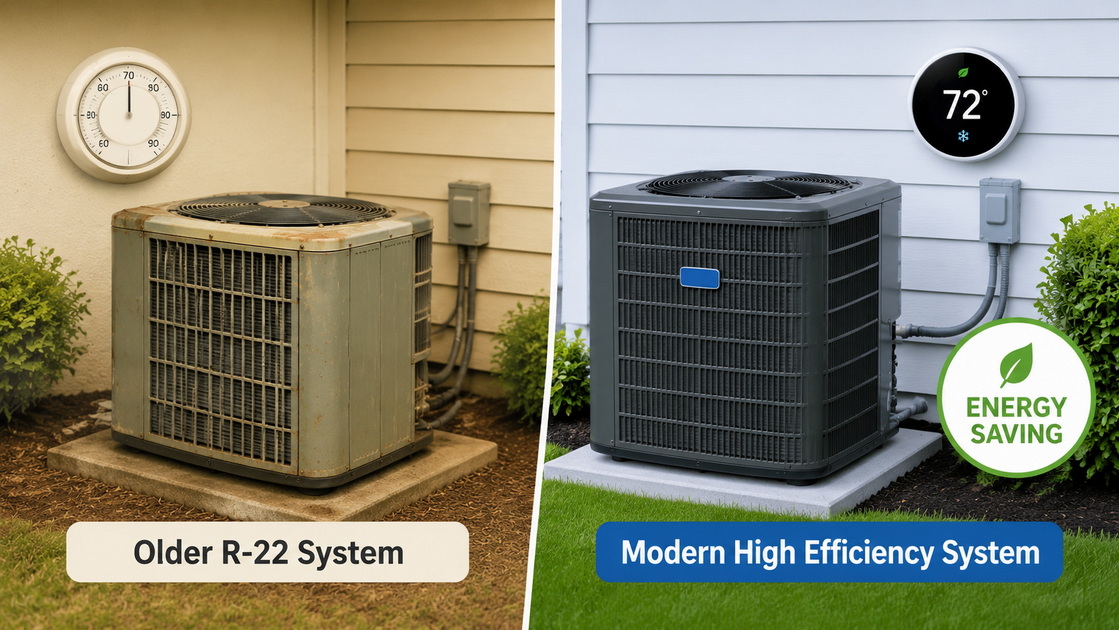
We typically advise upgrading when:
- The system has a refrigerant leak and requires multiple pounds of R‑22, which is now very expensive and harder to source. [goodmanmfg]
- The unit is more than 12–15 years old and has other performance problems (poor airflow, noisy compressor, frequent breakdowns). [trane]
- You want lower utility bills and better comfort from newer high‑efficiency equipment.
Modern systems using R‑410A and the upcoming A2L refrigerants can deliver significantly better SEER2 ratings, quieter operation, and smarter controls, which adds day‑to‑day comfort as well as long‑term savings. [hvacmirage]
Regardless of whether your unit uses R‑22, R‑410A, or a future A2L, the cooling process is essentially the same. Understanding this helps you make sense of symptoms like freezing coils or warm air. [summitcollege]
In simple terms, refrigerant:
- Evaporates in the indoor coil and absorbs heat from indoor air.
- Compresses in the outdoor unit, which raises its pressure and temperature.
- Condenses in the outdoor coil and releases heat to the outside air.
- Expands through a metering device to drop pressure and temperature, ready to absorb heat again.
When refrigerant charge is low due to a leak, pressure changes cause the evaporator coil to run too cold, which can freeze moisture on the coil and eventually block airflow entirely. That's why a frozen indoor coil can be a red flag that you need a professional leak check, not just a "top‑off." [summitcollege]
A common question we hear is, "Is low Freon why my window AC keeps freezing?" The answer: sometimes, but not always. [freon]
Common causes of a freezing AC or window unit:
- Low refrigerant charge from a leak (R‑22, R‑410A, or other). [summitcollege]
- Dirty air filters or coils restricting airflow across the evaporator. [summitcollege]
- Blocked return vents or closed supply registers.
- Thermostat or sensor problems causing the system to run longer than it should. [freon]
Because refrigerant is a controlled substance, only EPA‑certified technicians are allowed to handle, recover, or charge it. From a homeowner UX standpoint, the best thing you can do is: [epa]
- Turn the system off to allow ice to melt.
- Replace or clean the air filter.
- Call a professional if freezing repeats or you suspect a leak.
There are three important points we stress to every homeowner with a suspected refrigerant issue.
- Do not attempt DIY refrigerant charging.
Refrigerants require specialized gauges, recovery equipment, and safety practices; venting them illegally can lead to fines and environmental harm. [epa]
- Understand that "topping off" without fixing leaks is a short‑term band‑aid.
For R‑22 systems, this can become especially costly because the refrigerant is scarce and each recharge could be your last affordable one. [goodmanmfg]
- Recognize that newer refrigerants bring safety nuances.
A2L refrigerants like R‑454B and R‑32 are mildly flammable and must be installed, serviced, and vented according to updated codes and manufacturer guidelines. [howeinc]
At Mega Services Heating & Cooling, our technicians are trained on legacy refrigerants like R‑22 as well as R‑410A and the latest A2L products, so we can help you make an informed, code‑compliant decision for your home. [lg]
From a user experience standpoint, the ideal service visit is predictable, transparent, and educational, not mysterious or rushed.
When you schedule a visit for a suspected Freon issue, a professional technician should:
1. Verify the refrigerant type and system age at the data plate.
2. Inspect the indoor and outdoor coils, filters, and airflow to rule out non‑refrigerant causes.
3. Check refrigerant pressures and temperatures to confirm if the system is low on charge.
4. Perform leak detection if low charge is confirmed and discuss repair versus replacement.
5. Explain your long‑term options in clear language—especially if you own an R‑22 system and face high refill costs.
At Mega Services Heating & Cooling, we emphasize clear communication, upfront pricing, and post‑visit recommendations so you know exactly where your system stands and what to budget for. [howeinc]
If you're still unsure whether your AC uses Freon, R‑410A, or a new A2L refrigerant, the safest next step is a professional system evaluation. Our certified team at Mega Services Heating & Cooling can:
- Identify your current refrigerant and system age.
- Check for leaks, performance issues, and safety risks.
- Give you clear options for repair, retrofit, or full system replacement based on your budget and timeline.
Schedule your AC inspection today to stay safe, comfortable, and compliant with the latest refrigerant regulations—before the next heat wave hits.
Some older AC units still use R‑22 Freon, but no new residential systems have used it since 2010, and its production and import ended in 2020. Most systems we see today use R‑410A, with new equipment shifting to lower‑GWP A2L refrigerants. [rheem]
2. Can I legally keep using my old R‑22 Freon system?
Yes, you can continue to run an existing R‑22 system, but any refrigerant added during service must come from reclaimed or stockpiled R‑22, which is becoming more expensive and less available. Eventually, repair costs may justify upgrading to a new system. [trane]
Not in any simple or recommended way. R‑410A operates at much higher pressures and requires different components, so converting an R‑22 system is usually cost‑prohibitive and often unsafe compared with installing new, purpose‑built equipment. [trane]
If you install a new system now or in the next few years, it will typically be R‑410A or an A2L refrigerant like R‑454B or R‑32, depending on the manufacturer and timing of local code adoption. Your HVAC contractor can explain which options are available and permitted in your area. [lg]
Signs such as warm air, long run times, and ice on the indoor coil can indicate low refrigerant, but they can also result from airflow issues or dirty coils. A certified technician should test pressures, temperatures, and system components to confirm the actual cause before adding any refrigerant. [summitcollege]
1. One Hour Heating & Air Conditioning – "Do Air Conditioning Units Still Use Freon?" (June 17, 2025). [Link] [freon]
2. Chemours – "Freon Refrigerants for Residential AC Systems." [Link] [freon]
3. Summit College – "How Refrigerants Work in the HVAC System." [Link] [summitcollege]
4. Trane Residential – "What Is R‑22 and Why Is It Being Phased Out?" and "A Complete Guide to HVAC Refrigerants." [Link] [trane]
5. Howe, Inc. – "2026 Refrigerant Changes: What Homeowners Need to Know." [Link] [howeinc]
6. Rheem – "What to Know About the 2025 HVAC Refrigerant Change." [Link] [rheem]
7. LG HVAC – "HVAC Trends in 2026: Electrification, Refrigerants, and Digitalization." [Link] [lg]
8. U.S. EPA – "Acceptable Refrigerants and Their Impacts." [Link] [epa]
9. Goodman – "Will the Phase Out of R22 Refrigerant Affect You?" [Link] [goodmanmfg]


