
Views: 222 Author: Mega Services Publish Time: 2026-06-15 Origin: Site


Content Menu
● What Is a Ductless Mini‑Split System?
● Main Ductless AC Installation Options
>> Single‑Zone Mini‑Split Systems
>> Multi‑Zone Ductless Systems
>> Floor‑Mounted Ductless Units
● How Ductless AC Compares to Traditional Systems
● Real‑World Lessons From Homeowners
● Key Technical Considerations Before Installation
● Latest Trends in Ductless and Residential HVAC
● Simple Planning Framework: Which Ductless Option Fits Your Home?
● Practical Homeowner Checklist Before You Call
● Why Work With a Professional Ductless AC Installer
● Call to Action: Design Your Ductless System With a Local Expert
● Frequently Asked Questions (FAQ)
>> 1. Is a ductless mini‑split worth it if I already have central air?
>> 2. How long does a typical ductless installation take?
>> 3. Are ductless systems noisy?
>> 4. How often do ductless systems need maintenance?
>> 5. Can a ductless heat pump replace my furnace?
A ductless mini‑split is a heating and cooling system that connects an outdoor unit (condenser/heat pump) to one or more indoor air handlers using small refrigerant lines instead of bulky ductwork. Conditioned air is delivered directly into each room, which eliminates energy losses through ducts and allows true room‑by‑room temperature control. [hvacdirect]
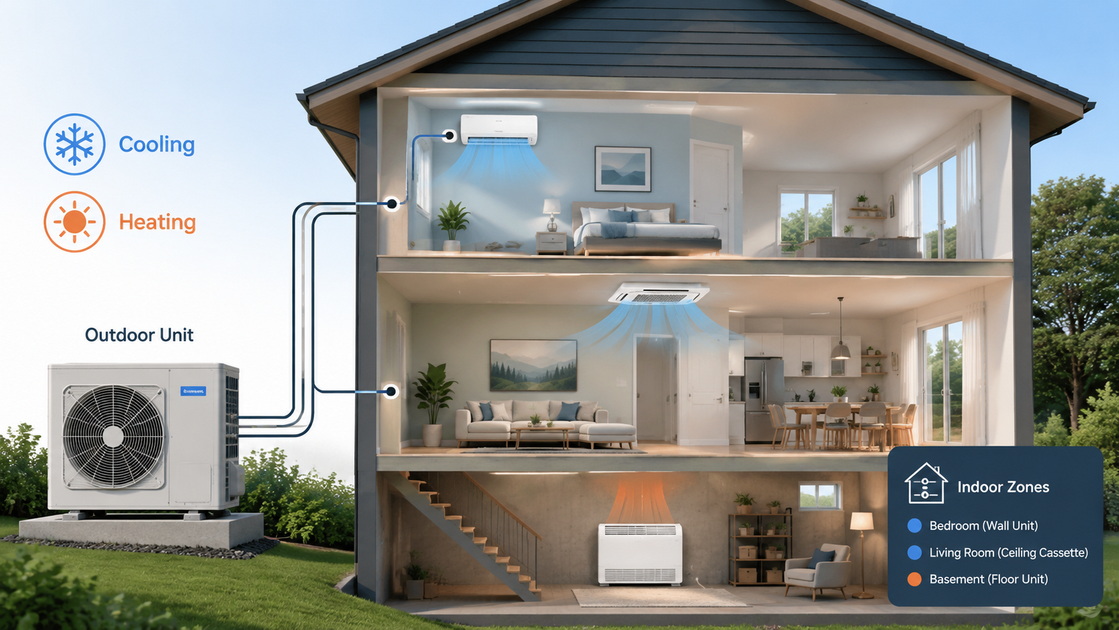
Homeowners typically consider ductless systems when they:
- Live in an older home without ducts. [onehourheatandair]
- Add a new room, ADU, or sunroom that their current system can't handle. [onehourheatandair]
- Have hot‑and‑cold spots in multi‑story homes. [onehourheatandair]
- Want separate temperature control for bedrooms, offices, or in‑law suites. [hvacdirect]
From my experience, the homeowners who are happiest with ductless are those who value precision comfort, quiet operation, and long‑term energy savings more than simply the lowest upfront price. [hvacdirect]
Single‑zone systems connect one outdoor unit to a single indoor unit. This is often the most cost‑effective starting point if you want to solve a comfort problem in just one area. [onehourheatandair]
Best use cases: [onehourheatandair]
- Primary or guest bedrooms
- Home offices or studios
- Finished basements or converted garages
- New additions over the garage or off the back of the house
Key benefits: [hvacdirect]
- Fast, minimally invasive installation
- No ductwork required
- Very high efficiency (no duct losses)
- Focused comfort where you need it most
From a contractor's perspective, I often recommend a single‑zone system when a homeowner is "testing" ductless for the first time or has one clearly problematic room, such as a south‑facing bonus room that never stays cool. [onehourheatandair]
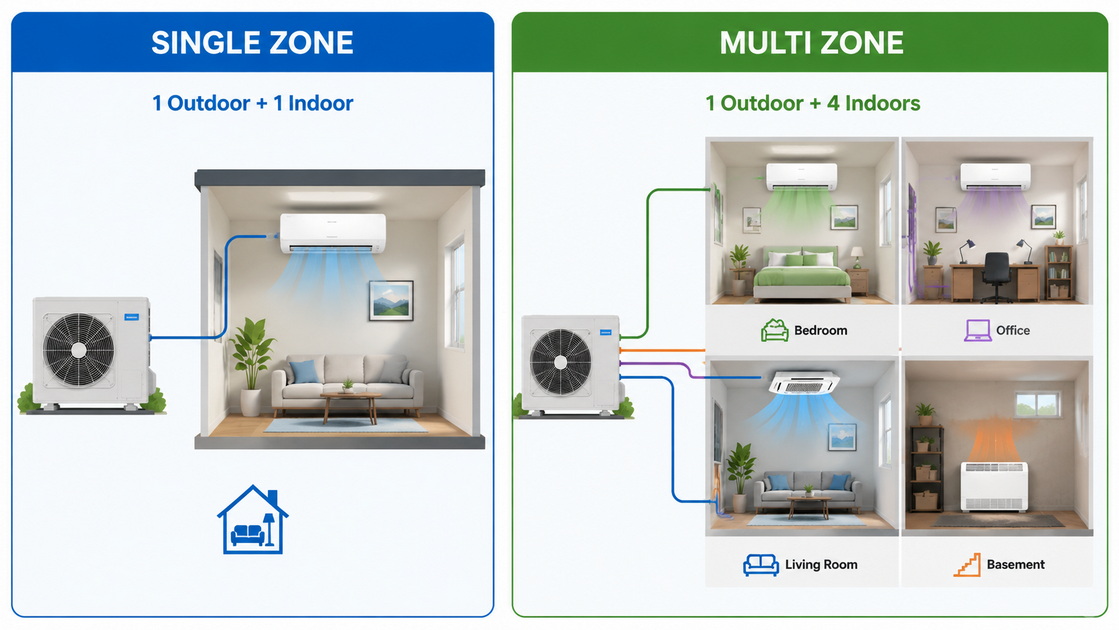
Multi‑zone configurations connect one outdoor unit to multiple indoor units (often 2–8). Each indoor unit has its own thermostat or remote, allowing independent temperature settings room by room. [delcohvac]
Ideal situations: [delcohvac]
- Multi‑level homes with uneven temperatures
- Homes without existing ductwork where central air would be costly
- Families with different comfort preferences in different spaces
Advantages: [hvacdirect]
- Personalized temperature in each zone
- The ability to cool or heat only occupied rooms
- Better overall balance and fewer "thermostat wars"
For families with members working from home, I've seen multi‑zone systems dramatically cut energy use because we can keep offices and living areas comfortable while letting rarely used rooms drift closer to outdoor temperatures. [delcohvac]
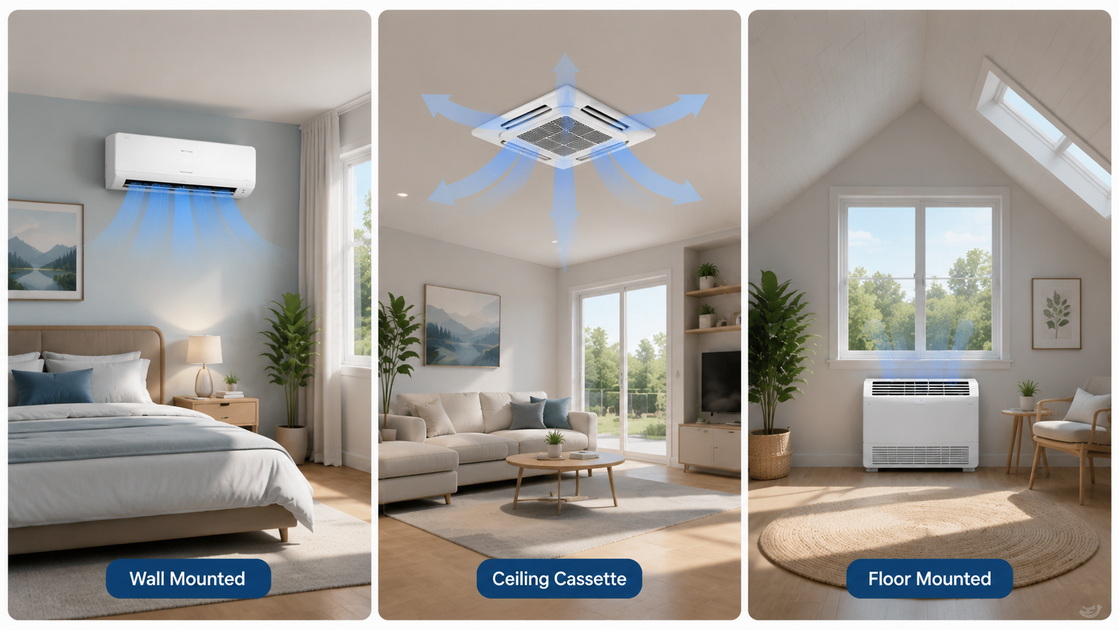
Wall‑mounted air handlers are the most common ductless AC installation you'll see in homes. Units are typically installed high on an interior or exterior wall to maximize airflow and keep them out of the way. [hvacdirect]
Why professionals like them: [hvacdirect]
- Straightforward installation and maintenance
- Strong, adjustable airflow for most room sizes
- Flexible placement options in new or existing spaces
When I walk through a home, I look for a wall location that gives the unit a clear "throw" across the room and easy access for filter cleaning and servicing. Homeowners often focus on how it looks; my job is to balance aesthetics with airflow and long‑term serviceability. [hudsonsacpro]
Ceiling‑cassette ductless units are recessed into the ceiling and sit nearly flush with the surface, making them one of the most discreet options. They usually blow air in four directions, which helps distribute comfort evenly in larger or open‑concept areas. [onehourheatandair]
Best applications: [delcohvac]
- Open living/dining/kitchen spaces
- Great rooms or vaulted living areas
- Commercial‑style home offices or studios
Upsides: [hvacdirect]
- Minimal impact on wall space and room design
- Even air distribution across wider spaces
- Excellent choice when wall‑mounted units would be visually intrusive
We recommend ceiling cassettes when homeowners want "invisible" comfort—particularly in higher‑end living areas where interior design is a priority. [delcohvac]
Floor‑mounted units sit low on the wall, similar to a radiator or console heater. They work especially well in rooms where upper wall or ceiling space is limited. [onehourheatandair]
Good candidates: [onehourheatandair]
- Attics with sloped ceilings
- Basements with low ceilings
- Sunrooms with large window walls
Key advantages: [hvacdirect]
- Strong low‑level heating performance
- Easier access for homeowners with mobility limitations
- Smart solution when architectural constraints limit other options
In colder climates, I often prefer floor‑mounted units for primary living areas because they deliver warm air closer to the floor where people feel it first. [trane]
| Aspect | Ductless Mini‑Split | Traditional Ducted System | Source |
|---|---|---|---|
| Distribution | Room‑by‑room air handlers | Central air through ductwork | onehourheatandair |
| Energy losses | Minimal (no ducts) | Up to ~30% lost through ducts | onehourheatandair |
| Installation disruption | Small wall openings, compact lines | Larger renovations if ducts must be added | onehourheatandair |
| Zoning | Built‑in multi‑zone capability | Requires additional zoning controls | onehourheatandair |
| Aesthetics | Visible indoor units, concealed options available | Only vents visible in rooms | onehourheatandair |
| Ideal use cases | Additions, older homes, spot or whole‑home comfort | Homes with existing ductwork in good condition | onehourheatandair |
For homeowners starting from scratch (no ducts), ductless systems routinely win on both total project cost and long‑term efficiency, especially when factoring in heating and cooling together via a heat pump. [trane]
User feedback from real‑world installations consistently highlights a few themes:
- Owners regret choosing cheap, unbranded equipment that becomes noisy or unreliable after a few seasons. [reddit]
- Many wish they had installed an extra zone in advance instead of trying to "stretch" one indoor unit to cover multiple rooms. [reddit]
- Good line‑set routing and clean exterior finishing significantly affect satisfaction, even if they don't change performance. [pioneerminisplit]
One experienced homeowner on a home improvement forum put it simply: don't buy inferior equipment just to save money, because in the long run it often costs more in repairs and early replacement. That aligns closely with what I see in the field. [reddit]
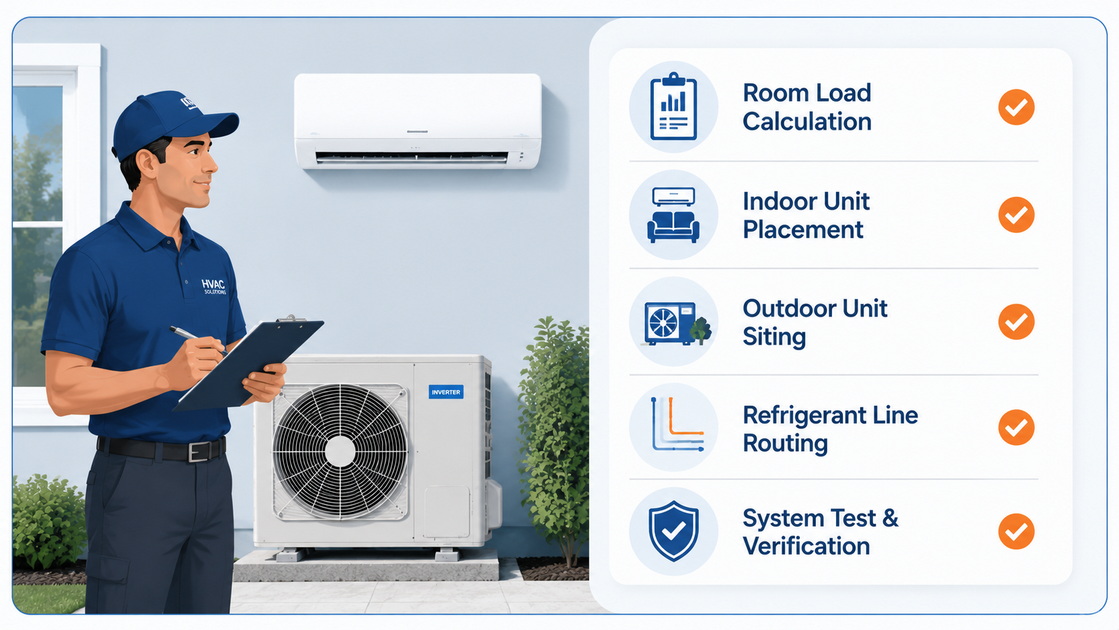
When we design a ductless system for a home, we walk through several technical checkpoints:
1. Room load calculation
We size the system based on square footage, insulation levels, window area, orientation, and local climate, not just rule‑of‑thumb BTU numbers. Oversizing leads to short cycling and poor humidity control; undersizing leaves you uncomfortable on the hottest days. [grainger]
2. Indoor unit placement
We prioritize unobstructed airflow, structural support, and condensate drainage over purely aesthetic considerations. For wall units, that often means placing the unit on an interior wall with a clear path across the room and a safe route for line sets. [hudsonsacpro]
3. Outdoor unit siting
The outdoor unit needs solid support, adequate clearance for airflow, and protection from snowdrifts or standing water. We also factor in noise for neighboring properties and avoid locations near bedrooms or property lines when possible. [carrier]
4. Refrigerant line routing
Professional installers plan the cleanest, shortest line routes that minimize bends and elevation changes while maintaining proper slope for condensate management. [carrier]
From an expert standpoint, these design decisions matter more to long‑term performance than the specific brand logo on the unit—as long as you choose a reputable manufacturer. [grainger]
Ductless technology is no longer a niche solution; it sits at the heart of modern residential HVAC. [achrnews]
Important trends:
- Inverter‑driven compressors that modulate capacity rather than switching fully on/off, improving efficiency and comfort. [achrnews]
- Integration with smart thermostats and apps, allowing control from phones and smart home platforms. [delcohvac]
- Higher homeowner awareness of indoor air quality, pushing demand for advanced filtration and cleaner, quieter equipment. [delcohvac]
Industry data shows ductless mini‑split and heat pump adoption growing rapidly as more homeowners look for low‑carbon, high‑efficiency alternatives to fossil‑fuel heating. For many homes, especially in milder climates, a ductless heat pump can replace both a furnace and a separate AC system. [trane]
When we consult with a new homeowner, we usually start with three core questions:
1. Are you solving one problem room or the whole home?
- One room: single‑zone system. [onehourheatandair]
- Entire home without ducts: multi‑zone system or multiple single‑zone systems. [hvacdirect]
2. What does your architecture allow?
- Plenty of wall space: wall‑mounted units. [onehourheatandair]
- Open concept or high‑end aesthetics: ceiling cassettes. [delcohvac]
- Sloped ceilings or low wall height: floor‑mounted units. [onehourheatandair]
3. Do you need heating as well as cooling?
- Yes: choose a heat pump mini‑split rated for your climate. [trane]
- No or mild needs: cooling‑only may be sufficient, but many homeowners still opt for heat pump flexibility. [hvacdirect]
This clear decision path helps you have a more focused conversation with your HVAC contractor and makes quotes much easier to compare.
Here is a straightforward checklist I encourage homeowners to work through:
1. List the rooms or areas that are consistently uncomfortable.
2. Note any architectural constraints: low ceilings, large windows, limited wall space.
3. Gather your last 12 months of utility bills to set a rough efficiency target.
4. Decide how important aesthetics are compared to upfront cost.
5. Think about whether you want app‑based or smart‑home control. [delcohvac]
The clearer you are on these points, the more tailored and accurate your ductless proposal will be.
DIY mini‑split kits exist, but full‑scale installations involve electrical work, refrigerant handling, vacuuming and charging, and precise commissioning that must comply with local codes. Many DIYers who start down this route end up calling a licensed contractor to finish or fix the job—often at a higher total cost than hiring a professional from the start. [pioneerminisplit]
A qualified installer will:
- Perform or verify load calculations and system sizing. [grainger]
- Help you choose the right unit types and locations. [hudsonsacpro]
- Install and pressure‑test line sets and electrical connections. [carrier]
- Set up controls, test drainage, and fine‑tune airflow and setpoints. [carrier]
From a long‑term perspective, professional installation also protects your warranty and reduces the risk of performance issues that quietly drain efficiency and shorten equipment life. [grainger]
If you're considering ductless AC or a whole‑home mini‑split heat pump, the best next step is a professional in‑home assessment. A seasoned HVAC specialist can evaluate your layout, understand your comfort priorities, and model energy savings so you can make a confident, data‑driven decision. [onehourheatandair]
Schedule a consultation with a trusted local team to map out the ideal mix of zones, unit types, and smart controls for your home. With the right design and installation, you'll enjoy quiet, efficient, customized comfort in every season for years to come. [aireserv]
Yes, especially if you have persistent hot or cold spots or are finishing new spaces that your existing system can't handle efficiently. Many homeowners add ductless to supplement central systems instead of replacing them. [delcohvac]
Most single‑zone installations can be completed in one day, while multi‑zone projects often take one to three days depending on the number of indoor units and line‑set complexity. [carrier]
Indoor units are designed for very quiet operation, often quieter than normal conversation or a box fan, and outdoor units are also engineered to minimize noise. This makes them well suited for bedrooms, nurseries, and home offices. [hvacdirect]
Filters should be cleaned or replaced every few weeks to months depending on use, and professional maintenance is recommended annually to inspect refrigerant charge, electrical connections, and condensate drainage. [aireserv]
In many climates, yes—a properly sized cold‑climate ductless heat pump can handle most or all of your heating needs. In very cold regions, some homeowners keep a backup heat source for extreme conditions. [trane]
1. One Hour Heating & Air Conditioning. "The Complete Guide to Ductless AC for Home Installation and Your Ductless Air Conditioning Options." March 26, 2026. [Link] [onehourheatandair]
2. Reddit – r/HomeImprovement. "Advice on ductless mini split install and whether I should …" [Link] [reddit]
3. ACHR News. "HVAC Trends: Ductless & Inverter Technology." [Link] [achrnews]
4. Delco HVAC. "Top 10 Trends Shaping the Future of Residential HVAC Solutions." December 19, 2023. [Link] [delcohvac]
5. Grainger. "Ductless Mini-Split Air Conditioner Guide." [Link] [grainger]
6. Carrier Residential. "How to Install a Ductless Mini Split AC." November 9, 2025. [Link] [carrier]
7. Pioneer Mini Split. "Tips for Mini-Split Installation Success." [Link] [pioneerminisplit]
8. HVACDirect. "Ductless Mini Split Systems." [Link] [hvacdirect]
9. Trane Residential. "What Is Ductless HVAC?" [Link] [trane]
10. Aire Serv. "Expert Home Ductless Air Conditioner Installation." [Link] [aireserv]


