
Views: 213 Author: Mega Services Publish Time: 2026-09-01 Origin: Site


Content Menu
● Do Air Purifiers Really Improve Indoor Air Quality?
● What Air Purifiers Can Help Remove
>> Pre-Filters
>> HEPA Filters
>> UV Lights and Electronic Air Cleaners
● Where Should You Place an Air Purifier?
● When an Air Purifier Is Worth Considering
>> Wildfire Smoke and Outdoor Pollution
>> Dusty Homes
● Portable Air Purifiers and HVAC Filtration
● Why an Air Purifier May Not Solve the Problem
>> Weak Airflow
>> Carbon Monoxide and Combustion Safety
● A Simple Indoor Air Improvement Plan
>> 1. Identify the Main Concern
>> 2. Reduce Pollution at the Source
>> 3. Maintain Your Heating and Cooling System
>> 5. Reassess Your Home Environment
● When Professional Help May Be Needed
>> 1. Do air purifiers really help with allergies?
>> 2. Can one air purifier clean my entire house?
>> 3. What CADR should I look for?
>> 4. Are ionizers and ozone generators safe?
>> 5. Should I upgrade my HVAC filter to MERV 13?
>> 6. Do air purifiers remove odors and VOCs?
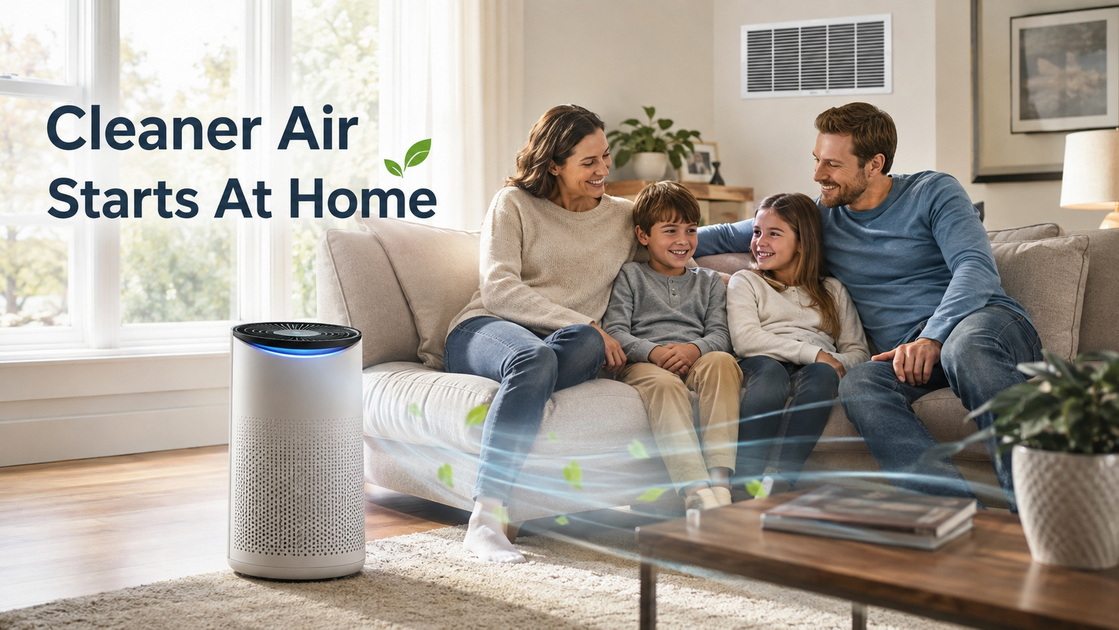
Air purifiers can work well, but they are not a universal fix for every indoor air problem. When chosen correctly and used consistently, they can reduce airborne particles such as dust, pollen, pet dander, smoke particles, and some mold spores.
At Mega Services Heating & Cooling, we believe cleaner air starts with understanding what is actually affecting your home. A portable air purifier may be a helpful part of the solution, but lasting comfort usually comes from a combination of proper filtration, healthy airflow, humidity control, routine HVAC maintenance, and practical habits at home.
If you are dealing with allergy symptoms, visible dust, pet dander, smoke, lingering odors, or stale indoor air, it is important to look beyond the purifier itself. The right device can make a noticeable difference in a bedroom, office, nursery, or living area. However, it cannot fix a hidden moisture issue, a blocked vent, a dirty HVAC component, or poor ventilation on its own.
Yes, air purifiers can improve indoor air quality by capturing certain pollutants that are floating in the air. Their performance depends on the type of filter, the amount of air moving through the unit, the size of the room, and the type of pollutant present.
A high-quality air purifier is most effective when it is used in the right space and operated regularly. For example, a properly sized purifier in a bedroom may help reduce airborne allergens overnight. A small unit placed in a large open-concept living room, however, may have limited impact.
Air purifiers are best viewed as one layer of a healthier indoor environment. They work alongside a well-maintained heating and cooling system, clean filters, controlled humidity, regular cleaning, and sensible ventilation.
Most portable air purifiers are designed to capture particles that move through their filters. Depending on the model, they may help reduce the concentration of:
- Dust and fine dust particles
- Pollen from outdoor plants and trees
- Pet dander
- Smoke particles
- Some mold spores
- Fine particles from traffic and outdoor pollution
- Airborne particles created by cooking
- Certain bacteria and virus-sized particles when captured by an appropriate filter
The amount removed depends on how much air the purifier processes and how often it circulates the room's air through the filter.
A purifier cannot remove everything from the air. It is also important to understand the difference between airborne particles, household odors, chemical gases, moisture problems, and safety hazards.
| Indoor Air Concern | Can an Air Purifier Help? | What Else May Be Needed |
|---|---|---|
| Dust and pollen | Yes | Frequent cleaning and HVAC filter replacement |
| Pet dander | Yes | Pet grooming, washing bedding, vacuuming |
| Wildfire smoke particles | Yes | Closed windows, filtered HVAC operation, clean-air room |
| Cooking particles | Yes | Kitchen exhaust fan and proper ventilation |
| Household odors | Sometimes | Source removal and ventilation |
| Chemical fumes | Limited | Remove the product or chemical source |
| Musty smell | Limited | Moisture control and inspection |
| Visible mold | No | Professional evaluation and moisture correction |
| Carbon monoxide | No | Working carbon monoxide alarms |
| Radon | No | Radon testing and mitigation when necessary |
The most important point is simple: an air purifier filters the air that reaches it. It does not remove the cause of every indoor air problem.
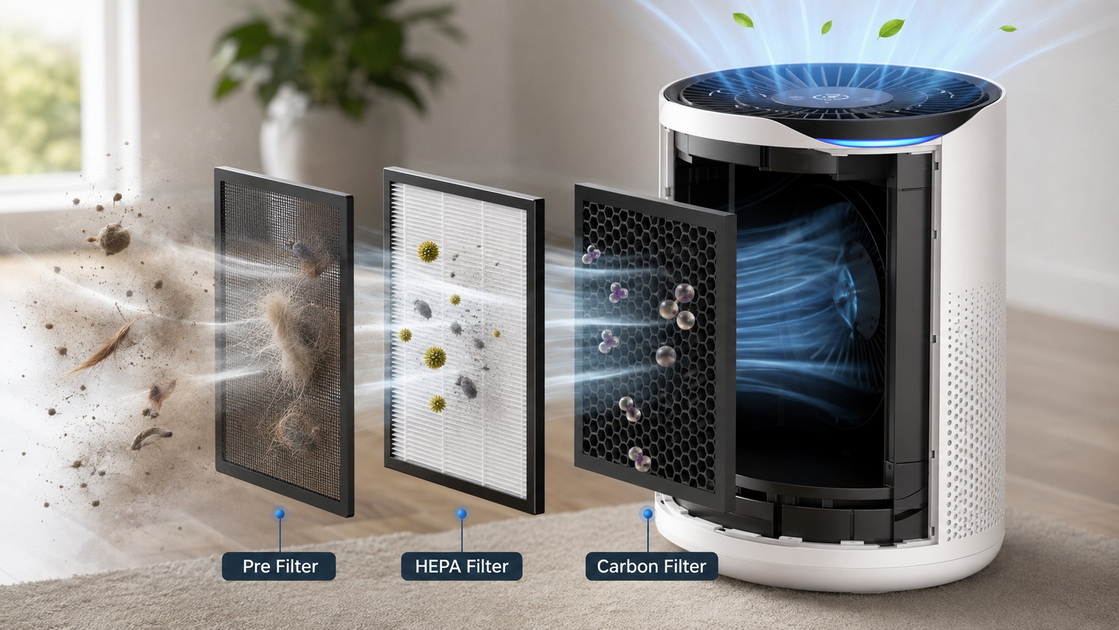
A portable air purifier uses a fan to pull air through one or more filters. The filtered air is then released back into the room. As this process continues, the unit can reduce the amount of certain airborne particles in that space.
The most effective models generally combine several stages of filtration.
A pre-filter captures larger particles such as hair, lint, and large dust particles. This layer can help protect the main filter and may extend its usable life.
For homes with pets, a washable or replaceable pre-filter can be especially useful. Pet hair can build up quickly and reduce airflow if it is not removed regularly.
A HEPA filter is designed to capture very small airborne particles. This type of filtration is often the preferred choice for homeowners concerned about dust, pollen, pet dander, and fine smoke particles.
A purifier with a high-efficiency particle filter can be a practical choice for:
- Bedrooms used by allergy sufferers
- Nurseries and children's rooms
- Home offices
- Living rooms with pets
- Homes affected by seasonal pollen
- Homes exposed to wildfire smoke or outdoor pollution
HEPA filtration is highly effective for particles, but it is not designed to solve every odor or gas problem.
Activated carbon is commonly used to help reduce certain odors and gases. It may help with cooking smells, pet odors, smoke odors, and some household chemical odors.
However, the amount of carbon inside a purifier matters. A thin carbon sheet may offer only limited odor control. Homes with strong, persistent odors may need better source control, ventilation improvements, or a more specialized filtration solution.
Some air cleaners use ultraviolet light, ionization, or electronic technology. These features are often promoted as advanced solutions, but homeowners should carefully review how the device works before purchasing.
Avoid devices that intentionally produce ozone in occupied spaces. Ozone can irritate the respiratory system and may be especially concerning for people with asthma, allergies, or other breathing sensitivities.
For most households, a filter-based purifier with reliable airflow and appropriate room coverage is the most practical choice.
One of the most common reasons an air purifier seems ineffective is that it is too small for the room.
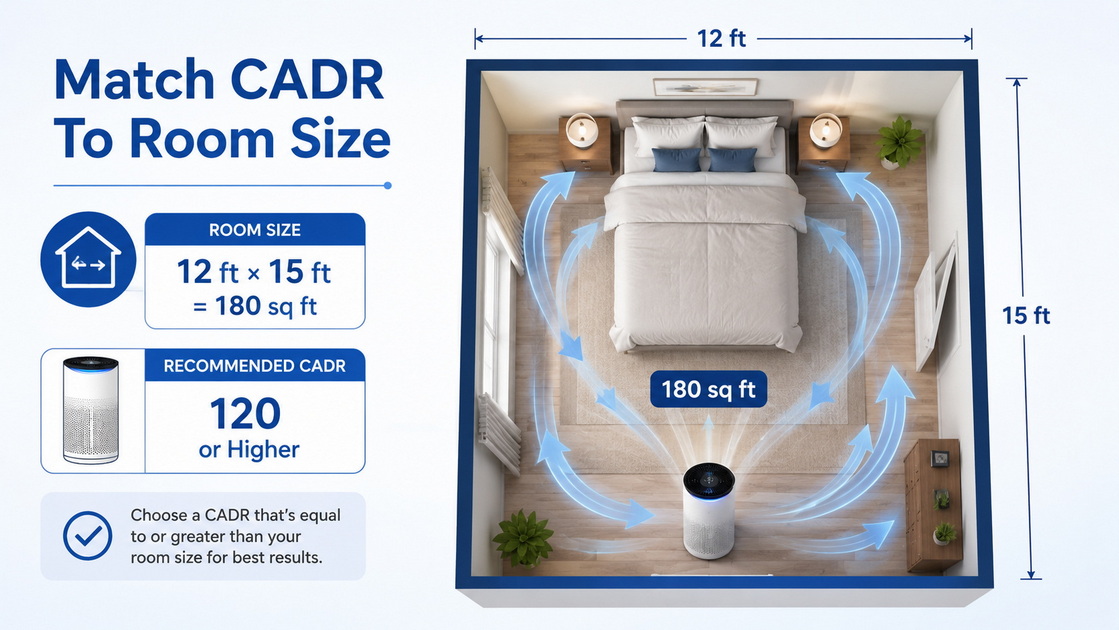
A portable purifier is not automatically designed to clean an entire home. It is usually intended for a single room or a defined area. Before purchasing, measure the room's length and width to calculate its square footage.
For example, a bedroom measuring 12 feet by 15 feet has:
Once you know the room size, compare it with the purifier's Clean Air Delivery Rate, often called CADR. CADR helps show how quickly a unit can deliver filtered air for different kinds of particles, including smoke, dust, and pollen.
A useful starting guideline is to choose a smoke CADR that is at least two-thirds of the room's square footage.
For a 180-square-foot bedroom:
A purifier with a smoke CADR of at least 120 would be a reasonable starting point for that space.
If your home has high ceilings, open doorways, large windows, frequent foot traffic, pets, smoke exposure, or an open floor plan, it is often wise to choose a more powerful model.
Correct placement can have a significant effect on performance. A purifier needs room to pull in air and release filtered air without obstruction.
For best results:
- Place the unit in the room where you spend the most time.
- Keep the intake and outlet areas clear.
- Avoid placing it behind furniture, curtains, or large storage items.
- Keep it away from corners whenever possible.
- Position it on a stable, level surface.
- Avoid placing it directly beside a wall or under a table.
- Keep doors and windows closed during heavy smoke or high-pollen events.
- Run the purifier consistently instead of only turning it on when the room feels dusty.
For many households, the bedroom is the best place to begin. People often spend seven to nine hours there each night, making overnight air filtration a practical way to create a more comfortable sleeping environment.
An air purifier can be a valuable addition when there is a specific airborne particle concern in a room or part of the home.
Pollen can enter homes through open doors, windows, clothing, pets, and HVAC systems. A properly sized purifier may help reduce airborne pollen in bedrooms and other frequently used areas.
It is still important to remove shoes near the entrance, wash bedding regularly, shower after spending time outdoors during high-pollen days, and replace HVAC filters on schedule.
Pets bring comfort and companionship, but they can also contribute dander, hair, and odors. An air purifier can help reduce airborne particles, especially in rooms where pets spend the most time.
Regular grooming, vacuuming, washing pet bedding, and cleaning furniture remain essential. A purifier works best when it supports a regular cleaning routine rather than replacing one.
During wildfire events, smoke particles can enter through gaps, windows, doors, and ventilation openings. A portable purifier with high-efficiency particle filtration can help create a cleaner indoor space when outdoor air quality is poor.
Choose one room as a clean-air space. Keep windows and doors closed, avoid burning candles or incense, limit frying or high-smoke cooking, and run the purifier continuously if possible.
Excessive dust can come from many places, including pets, outdoor soil, carpet fibers, attic leakage, poorly sealed ducts, construction activity, clutter, and HVAC filter problems.
A purifier may reduce airborne dust, but repeated dust buildup often signals that the home needs a closer inspection. If dust returns quickly after cleaning, check your HVAC filter, return vents, duct condition, indoor humidity, and overall airflow.
Portable air purifiers and HVAC filters are often discussed as if homeowners need to choose one or the other. In reality, they can work together.
A portable purifier is designed to improve air in a specific room. An HVAC filter works when your heating and cooling system circulates air through the return system.
| Feature | Portable Air Purifier | HVAC Filtration |
|---|---|---|
| Main coverage | One room or defined area | Multiple rooms throughout the home |
| Best use | Bedrooms, nurseries, offices, living rooms | Everyday filtration across the home |
| How it operates | Built-in fan runs independently | Works when the HVAC system circulates air |
| Main factor to compare | CADR and room size | Filter rating, airflow, and system compatibility |
| Maintenance | Replace purifier filters | Replace HVAC filters and maintain equipment |
| Key limitation | Does not clean every room | Does not operate continuously unless the system fan runs |
A properly selected HVAC filter can help reduce airborne particles across the home. However, higher-efficiency filters can create more resistance to airflow. Not every heating and cooling system can safely handle the same filter level.
Before installing a significantly denser filter, it is important to consider:
- System age and condition
- Blower capacity
- Return-air design
- Filter cabinet size
- Existing airflow
- Filter replacement schedule
- Household allergy, pet, smoke, and dust concerns
A filter that is too restrictive for a system may reduce airflow, affect comfort, and place unnecessary strain on equipment. Professional guidance can help ensure that improved filtration does not create a new heating or cooling problem.
A purifier can be helpful, but there are many situations where it is not the main solution.
A persistent musty smell may point to high humidity, a plumbing leak, damp insulation, poor bathroom ventilation, condensation, or hidden mold growth.
An air purifier may slightly reduce the smell, but it will not eliminate the moisture source. The underlying cause should be identified and corrected as soon as possible.
If some rooms feel stuffy, dusty, too hot, or too cold, the issue may be related to weak airflow rather than a lack of purification.
Potential causes include:
- Dirty HVAC filters
- Blocked return vents
- Closed or obstructed supply registers
- Leaking ductwork
- Dirty coils
- Blower problems
- Improper system sizing
- Poorly balanced air distribution
In these situations, improving airflow may provide more meaningful results than adding another portable purifier.
High humidity can make a home feel warmer, encourage musty odors, and support conditions that allow mold growth. An air purifier does not remove moisture from the air.
A properly operating air conditioner, dehumidifier, bathroom exhaust fan, kitchen ventilation system, and sealed building envelope can all play a role in humidity control.
Air purifiers do not protect against carbon monoxide. Every home with fuel-burning appliances, fireplaces, attached garages, or gas heating equipment should have properly installed carbon monoxide alarms.
If a carbon monoxide alarm activates, leave the home immediately and contact emergency services or the appropriate utility provider. Do not rely on an air purifier to address a combustion-safety concern.
A healthier indoor environment does not depend on one product. It is created through consistent habits and properly functioning home systems.
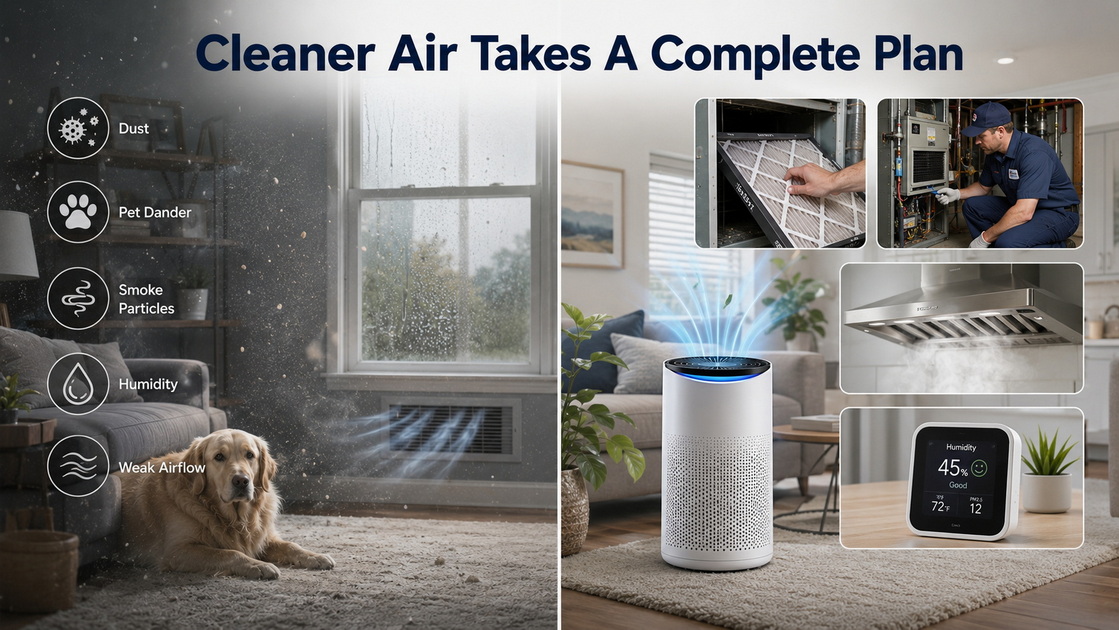
Start by identifying what you notice most often:
- Allergy symptoms
- Pet dander
- Smoke exposure
- Dust buildup
- Stale air
- Musty odors
- Uneven temperatures
- High humidity
- Weak airflow
A clear diagnosis helps prevent unnecessary purchases and makes it easier to choose the right solution.
Use simple household practices to reduce indoor pollutants:
- Vacuum carpets, rugs, and upholstery regularly.
- Wash bedding weekly.
- Keep shoes near the entrance instead of tracking outdoor debris indoors.
- Keep smoking and vaping outside.
- Use kitchen exhaust fans while cooking.
- Use bathroom exhaust fans during and after showers.
- Clean pet bedding and grooming tools.
- Repair water leaks promptly.
- Limit candles, incense, and aerosol sprays.
- Store paints, cleaners, fuels, and chemicals properly.
Routine HVAC maintenance helps support cleaner air, better comfort, and efficient operation.
Keep an eye on:
- Filter condition and fit
- Supply and return vent airflow
- Thermostat performance
- Indoor humidity
- Unusual noises or odors
- Dust buildup around vents
- Uneven room temperatures
- Frequent system cycling
Regular service can help identify issues before they affect comfort, energy use, or equipment reliability.
Choose a properly sized portable purifier for the room that needs the most support. Bedrooms, nurseries, home offices, and pet areas are often good starting points.
Run the unit consistently and replace filters according to the manufacturer's guidance. A filter that is overdue for replacement can reduce airflow and performance.
After several weeks, consider whether you have noticed changes in dust, odors, comfort, sleep quality, or allergy-related concerns.
If problems continue, the issue may involve airflow, ductwork, humidity, ventilation, or HVAC performance. A detailed home comfort assessment can help identify the next practical step.
Some indoor air concerns deserve closer attention. Consider scheduling a heating and cooling evaluation if you notice:
- Persistent musty or unusual odors
- Visible mold or repeated condensation
- Dust that returns quickly after cleaning
- Weak airflow from supply vents
- Rooms that never feel comfortable
- High indoor humidity
- Frequent filter clogging
- Excessive pet dander or allergy concerns
- An HVAC system that runs constantly
- Unusual noises, leaks, or performance changes
- Smoke entering the home during poor outdoor air events
Mega Services Heating & Cooling helps homeowners create safer, more comfortable, and more energy-efficient living spaces through reliable heating, cooling, maintenance, filtration, and indoor air quality solutions.
A properly maintained HVAC system, the right filtration strategy, and a clear understanding of your home's needs can make a meaningful difference in the air your family lives with every day.
They can help reduce airborne allergy triggers such as pollen, pet dander, and dust particles, particularly when a properly sized HEPA-filtered unit runs consistently in the room where symptoms are most disruptive. They work best alongside cleaning, bedding care, HVAC filter maintenance, and source control.
Usually, no. Portable air cleaners are designed primarily for a single room or defined area. A large home may require multiple units, improved central HVAC filtration, or a professionally designed whole-home air-cleaning solution.
A general AHAM rule is to choose a smoke CADR at least two-thirds of the room's square footage. For a 180-square-foot room, look for a smoke CADR of at least 120. For wildfire smoke, consider a smoke CADR closer to the room's full square footage.
Do not use ozone-generating air cleaners in occupied spaces. EPA states that ozone can irritate airways and is not effective at safe concentrations for removing biological pollutants. Choose a filter-based purifier with transparent performance information instead.
A MERV 13 filter can capture more smaller particles than a lower-efficiency filter, but not every HVAC system can accommodate it without affecting airflow or equipment performance. Have an HVAC professional assess system compatibility before upgrading.
They may reduce some odors and gaseous pollutants only if they contain enough activated carbon or other gas-phase filtration media. For strong or ongoing odors, the most effective strategy is to find and remove the source, then ventilate safely and use filtration as support.
Improve Your Home's Air With Mega Services Heating & Cooling
Air purifiers can be valuable tools, but the right solution depends on your home's airflow, HVAC system, room layout, pollutant sources, and family needs. Do not guess when indoor air quality affects your comfort, energy use, or peace of mind.
Mega Services Heating & Cooling provides professional heating, air-conditioning, maintenance, filtration, and indoor-air-quality support for homeowners who want a safer, more comfortable, and more energy-efficient home. Contact our team to schedule an HVAC and indoor air quality evaluation and get a clear plan tailored to your home.
1. U.S. Environmental Protection Agency.
2. U.S. Environmental Protection Agency.
3. U.S. Environmental Protection Agency.
4. Association of Home Appliance Manufacturers.
5. American Lung Association.
6. California Air Resources Board.


