
Views: 222 Author: Mega Services Publish Time: 2026-10-24 Origin: Site


Content Menu
● Are Goodman AC Units a Good Choice for Your Home?
● Understanding Goodman Central Air Conditioning Systems
>> Central Air Conditioners Versus Heat Pumps
>> Why Indoor Equipment Compatibility Matters
● Goodman AC Models and SEER2 Ratings
>> Is Higher Efficiency Always Worth the Additional Cost?
● Goodman AC Installation Cost: What Should Your Quote Include?
>> Compare Complete Installation Scopes
>> Compare Ownership Costs, Not Just Purchase Prices
● Proper Goodman AC Sizing: Why Bigger Is Not Better
>> Ask for a Home-Specific Load Calculation
>> Evaluate Ductwork Before Adding Capacity
● A Practical Installation Acceptance Checklist
>> 1. Confirm the Installed Equipment
>> 2. Request Airflow Verification
>> 3. Confirm Refrigerant Charging Procedures
>> 4. Check Drainage and Controls
>> 5. Keep the Startup Documentation
● What R-32 Refrigerant Means for Buyers
● Understanding Goodman AC Warranty Coverage
>> Parts Coverage and Labor Coverage Are Different
● How to Evaluate Customer Reviews Without Being Misled
● Goodman AC Maintenance and Repair Decisions
● Plan Your Next Step With Mega Services Heating & Cooling
>> 1. Are Goodman AC units reliable?
>> 2. How much does a Goodman AC installation cost?
>> 3. How long does a Goodman air conditioner last?
>> 4. Does Goodman offer a ten-year warranty?
>> 5. Can I replace only the outdoor Goodman AC unit?
>> 6. Will a higher-SEER2 Goodman unit lower my bills?
Goodman AC units deserve consideration when you want dependable home cooling without paying for features you may not need. But choosing an air conditioner involves more than comparing brand names. The right system must fit your home, work with your ductwork, and come with a clearly defined installation plan.
At Mega Services Heating & Cooling, our focus is helping families create safe, comfortable, and energy-efficient living environments through heating and air conditioning installation, repair, and maintenance.
This guide explains how to evaluate Goodman air conditioners, compare proposals, understand warranty terms, and recognize installation details that influence long-term comfort. The central buying principle is fit: equipment, airflow, controls, and installation must work together.
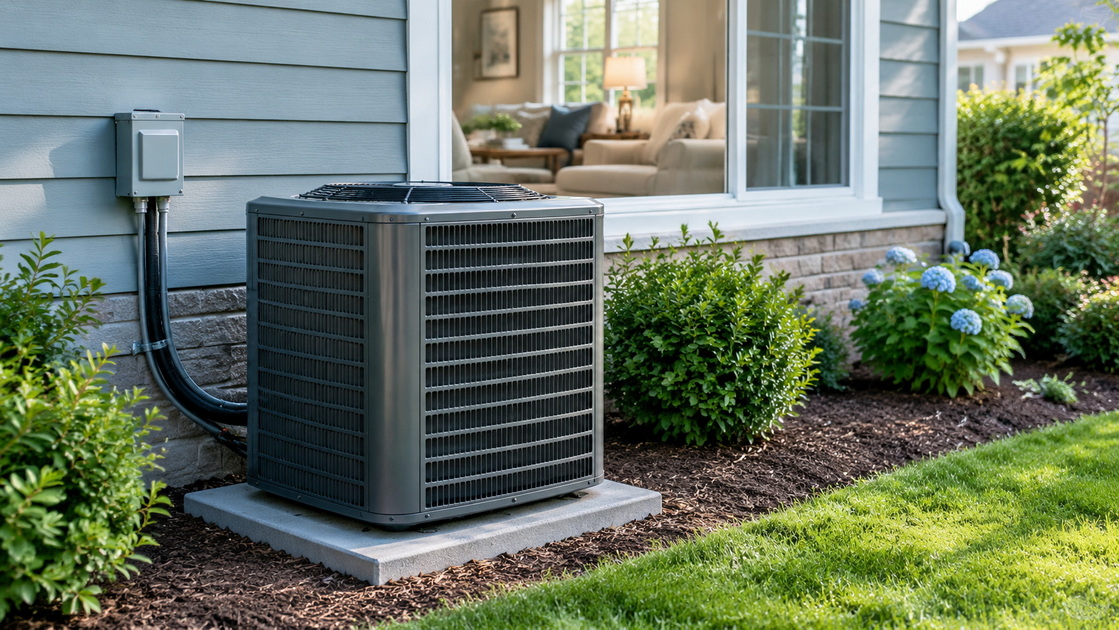
A Goodman central air conditioner can be a practical option when its capacity, efficiency, and installed price match your needs. However, a brand name alone cannot establish reliability or predict operating costs.
A useful evaluation starts with three questions:
- What comfort problems does your current system leave unresolved?
- What equipment and installation work does the proposed price include?
- How will the contractor verify performance after installation?
For example, a homeowner with uneven upstairs temperatures may need duct improvements alongside new equipment. Someone facing frequent breakdowns may prioritize repair coverage and service availability.
The best proposal addresses those priorities rather than simply recommending a larger unit.
A conventional split central air conditioner uses an outdoor condenser and an indoor evaporator coil. The indoor blower moves air through the ductwork, while refrigerant transfers heat from inside the home outdoors.
The outdoor unit is therefore only one part of the cooling system.
A central air conditioner provides cooling. Home heating typically comes from separate equipment, such as a furnace.
A heat pump can provide both heating and cooling. Its suitability depends on climate, heating demand, electricity prices, and any backup heating requirements.
When comparing Goodman AC units with heat pumps, ask for a whole-system recommendation. A lower cooling-only equipment price does not necessarily represent the best year-round solution.
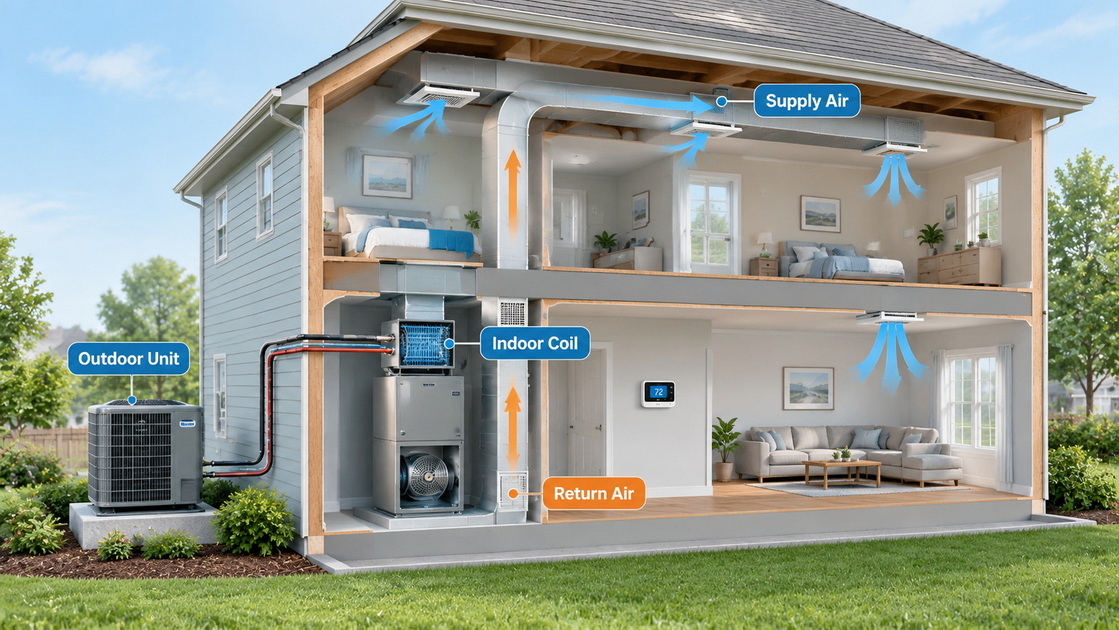
Do not assume an existing indoor coil will work with a replacement outdoor unit.
The contractor should confirm refrigerant compatibility, manufacturer-approved equipment combinations, airflow requirements, and the efficiency rating of the complete system. Replacing only the outdoor condenser may not deliver the performance advertised for a matched combination.
Goodman's current product information includes R-32 central air conditioners such as the GLXS4B and GLXS5B.
| Goodman model family | Published maximum efficiency | Main comparison point |
|---|---|---|
| GLXS4B | Up to 15.2 SEER2 | Compare installed cost and the exact matched-system rating |
| GLXS5B | Up to 16.5 SEER2 | Evaluate additional efficiency against the price difference |
These are maximum published ratings, not guarantees for every size or equipment combination. Request the exact outdoor model, indoor coil or air-handler model, and documented system rating.
SEER2 measures seasonal cooling efficiency under standardized test conditions. A higher rating indicates greater efficiency under those conditions.
Actual electricity use also depends on weather, thermostat settings, insulation, duct leakage, maintenance, and installation quality.
Compare current SEER2 ratings with other SEER2 ratings. Older SEER figures use a different testing procedure and should not be treated as directly interchangeable.
Not necessarily.
Higher efficiency becomes more valuable when cooling demand and electricity prices are high. In a home with limited cooling use, the additional purchase cost may take longer to recover.
Ask for estimated annual operating costs and the assumptions behind them. A useful estimate identifies local electricity rates, expected cooling demand, and the efficiency of each proposed system.
An equipment-only price does not tell you what a completed installation will cost.
The total depends on system capacity, efficiency, indoor equipment, electrical requirements, access, duct condition, permits, and the amount of corrective work needed.
Without those details, a nationwide price range can create false expectations.
Request an itemized proposal covering:
1. Outdoor condenser and compatible indoor equipment.
2. Equipment removal and disposal.
3. Refrigerant piping work or replacement.
4. Electrical connections and required upgrades.
5. Condensate drainage and applicable overflow protection.
6. Permits and inspections where required.
7. Startup testing and performance verification.
8. Manufacturer warranty and separate labor coverage.
Also ask what is excluded. Duct repairs, thermostat replacement, and electrical-panel work can materially change the final cost.
Two proposals may look similar while offering different protection and installation quality.
Consider the purchase price alongside projected electricity use, maintenance needs, labor coverage, and potential repair exposure. A cheaper quote may exclude work another contractor has included.
Before accepting the lowest bid, make sure both proposals solve the same problem.
An oversized air conditioner may cool the thermostat area quickly and shut off before distributing air evenly or removing enough moisture.
An undersized system may struggle to maintain comfortable temperatures during demanding weather.
Neither problem is reliably solved by selecting equipment from floor area alone.
A residential load calculation, commonly performed using ACCA Manual J, considers factors such as:
- Local climate and design temperatures.
- Insulation and air leakage.
- Window area, orientation, and shading.
- Ceiling height and building layout.
- Internal heat gains and duct conditions.
One ton of cooling equals 12,000 BTU per hour. That describes cooling capacity, not the amount of floor space a unit can automatically serve.
Weak airflow in a bedroom does not automatically mean the air conditioner is too small.
Restricted returns, leaking ducts, poor balancing, or inadequate duct capacity may be responsible. Installing a larger condenser without correcting airflow can leave the original complaint unresolved.
Ask the contractor to explain whether the recommendation addresses equipment capacity, air distribution, or both.
Homeowners do not need to perform technical tests themselves. They should, however, know what evidence to request before considering the project complete.
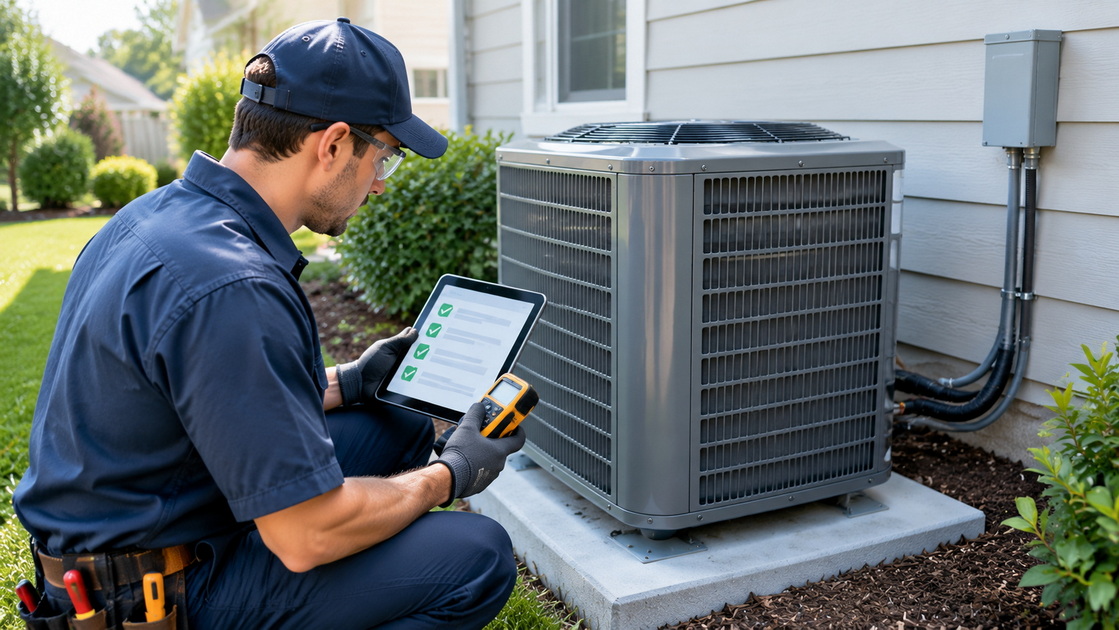
Check that model numbers match the approved proposal. Keep photographs of equipment labels and copies of the invoice.
The contractor should verify that system airflow meets manufacturer requirements. Ask whether duct restrictions or excessive static pressure were identified.
Correct refrigerant charge affects efficiency and equipment operation. Charging should follow the manufacturer's procedure and account for installation conditions.
Ask for confirmation that condensate drains correctly and that applicable protective devices function. Have the thermostat settings and operating modes demonstrated.
Request available commissioning records, maintenance instructions, and warranty information.
This handover turns an equipment purchase into a documented installation and gives future service technicians useful baseline information.
Goodman's current product range includes systems designed for R-32 refrigerant.
Goodman states that R-32 has zero ozone-depletion potential and approximately 68% lower global warming potential than R-410A.
For homeowners, the practical issue is compatibility. Refrigerant selection affects equipment, installation requirements, and servicing procedures.
Do not assume an older system can be converted by changing refrigerant alone. Ask the contractor to identify the refrigerant specified for the complete installation and explain which existing components can remain.
Refrigerant work belongs with appropriately qualified professionals, not homeowner maintenance.
Warranty language deserves the same attention as equipment specifications.
Goodman describes enhanced parts coverage for qualifying equipment when applicable conditions are met. Its guidance commonly identifies a 60-day registration window, but registration requirements and legal exceptions vary by location.
The warranty certificate for the exact product remains the controlling document.
A covered replacement component does not automatically mean a repair has no out-of-pocket cost.
Depending on the agreement, labor, diagnostic visits, refrigerant, or other expenses may not be included.
Before purchasing, ask:
- What parts coverage applies to this exact model?
- Does registration affect coverage in my location?
- Who handles registration and provides confirmation?
- Is labor covered separately?
- What conditions, exclusions, or ownership restrictions apply?
Keep the warranty certificate, installation invoice, and registration confirmation together. Do not rely solely on a verbal description.
Customer reviews can reveal useful service patterns, but they are not controlled comparisons of equipment reliability.
A complaint about weak cooling might involve sizing, ductwork, refrigerant charge, maintenance, or equipment failure. Without a diagnosis, it cannot establish the cause.
Look for reviews that describe:
- Whether the original comfort problem was resolved.
- How clearly the contractor explained the work.
- How installation issues were handled.
- Whether follow-up service matched expectations.
- Whether warranty costs were explained accurately.
Give more weight to detailed, relevant accounts than isolated star ratings. For your own estimate, translate review concerns into specific questions about communication, testing, and after-installation support.
Routine care supports performance, but homeowners and technicians have different responsibilities.
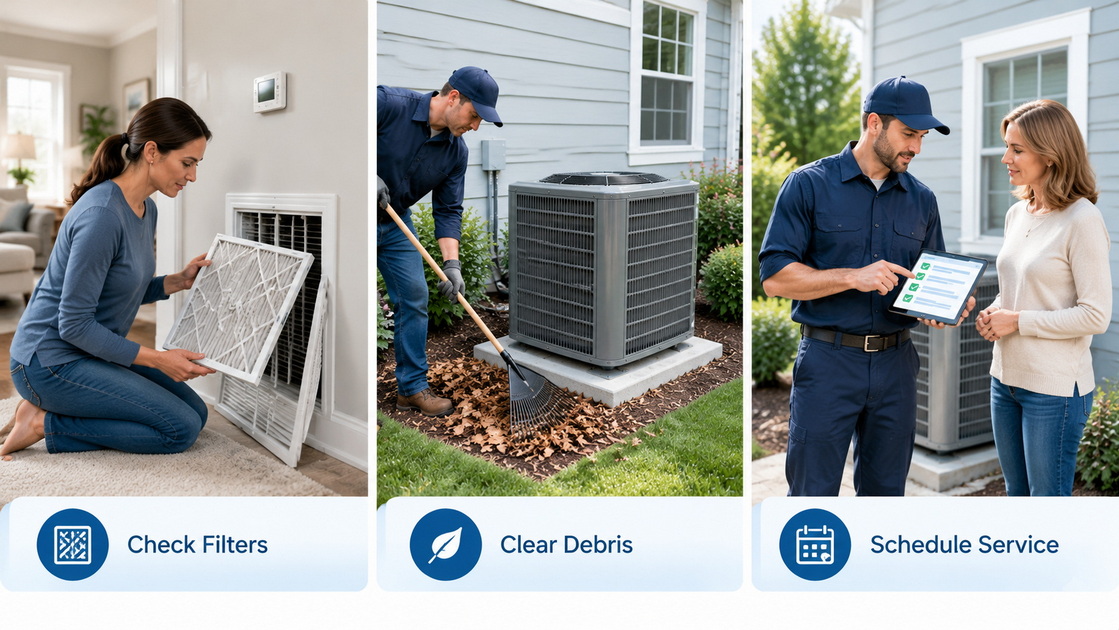
Check the air filter monthly, particularly during heavy use, and replace or clean it as appropriate for the filter type and conditions.
Keep supply and return grilles unobstructed. Remove loose debris around the outdoor unit without opening equipment panels.
Pay attention to new noises, water around indoor equipment, and changes in cooling performance.
A preseason inspection should address relevant items such as coils, electrical connections, condensate drainage, controls, airflow, and refrigerant-system condition.
Repeated refrigerant additions should prompt investigation rather than become a routine maintenance strategy.
Replacement deserves consideration when equipment is older, breakdowns become frequent, and operating costs rise. ENERGY STAR identifies air conditioners over ten years old as candidates for replacement evaluation—not automatic replacement.
Compare the diagnosed repair, remaining warranty, overall condition, and replacement scope before deciding.
Start with the comfort problem you want to solve, not simply the model you want to buy.
Contact Mega Services Heating & Cooling to request an assessment of your cooling needs and discuss installation, repair, or maintenance options. Share your current system's age, recent repair history, and any concerns about uneven temperatures, humidity, or energy use.
Ask for a written recommendation explaining equipment sizing, installation scope, warranty responsibilities, and maintenance needs. Clear expectations help you make a confident decision before work begins.
Reliability cannot be established by brand alone. Correct sizing, compatible components, installation quality, operating conditions, and maintenance all matter. Evaluate the complete proposal and available service support.
The installed price depends on capacity, efficiency, indoor equipment, electrical work, duct condition, and local project requirements. Request an itemized estimate rather than comparing condenser-only prices.
There is no guaranteed lifespan for every installation. Usage, climate, maintenance, and equipment condition affect service life. Use age alongside repair history and performance when planning replacement.
Qualifying equipment may receive ten-year limited parts coverage when applicable conditions are satisfied. Check the exact model's certificate, registration requirements, location-specific exceptions, and separate labor coverage.
Sometimes, but compatibility must be verified. The indoor coil, refrigerant, blower performance, and approved equipment combination determine whether that approach is suitable.
It can reduce cooling electricity use compared with a less efficient system under comparable conditions. Actual savings depend on cooling demand, electricity rates, installation, ductwork, and operating habits.
1.Original article reviewed for topic coverage, structure, and information gaps. Its company-specific claims and customer-service promises were not attributed to Mega Services Heating & Cooling.
2.Manufacturer source for current central air conditioner families and published maximum efficiency ratings.
3.Product specifications supporting the GLXS4B's published efficiency of up to 15.2 SEER2.
4.Product specifications supporting the GLXS5B's published efficiency of up to 16.5 SEER2.
5.Guidance supporting home-specific sizing, airflow verification, correct refrigerant charge, and duct evaluation.
6.Technical background for cooling capacity, sizing limitations, and ACCA Manual J calculations. Older efficiency thresholds in this document were not used as current requirements.
7.Manufacturer source for R-32's stated ozone-depletion potential and global-warming-potential comparison with R-410A.
8.Background on qualifying warranty coverage, registration timing, and location-specific exceptions. Exact product certificates take precedence.
9.Source for preseason professional inspections, filter checks, coil maintenance, and related service tasks.
10.Source for replacement evaluation based on equipment age, frequent repairs, and rising energy bills.


