
Views: 222 Author: Loretta Publish Time: 2026-02-19 Origin: Site


Content Menu
● What Are HRV and ERV Systems?
● Why Modern Homes Need Mechanical Ventilation
● How HRV and ERV Systems Work
● HRV vs. ERV: Key Differences at a Glance
● Choosing HRV or ERV for Your Climate and Home
>> When an ERV Is the Better Choice
● Real-World Benefits for Homeowners
● Practical Steps to Select the Right System
>> 1. Assess Your Climate and Lifestyle
>> 2. Evaluate Your Home's Construction
>> 3. Factor in Health and Comfort Needs
>> 4. Get a Professional Ventilation Calculation
● Installation and Maintenance Best Practices
● Emerging Trends: Ductless and Smart HRV/ERV Systems
● When HRV vs. ERV Is Not a Simple Either/Or
● How a Professional HVAC Partner Helps
● Ready to Upgrade Your Home Ventilation?
● Frequently Asked Questions (FAQ)
>> Q1. What is the main difference between an HRV and an ERV?
>> Q2. Which system is better for humid climates?
>> Q3. Can an HRV or ERV reduce my energy bills?
>> Q4. Do HRV and ERV systems replace my existing HVAC system?
>> Q5. How often do HRV/ERV systems need maintenance?
As modern homes become more airtight and energy-efficient, mechanical ventilation is no longer a luxury – it is essential for healthy indoor air. For homeowners in humid or mixed climates, understanding the difference between Heat Recovery Ventilation (HRV) and Energy Recovery Ventilation (ERV) is critical to choosing the right system for comfort, air quality, and energy savings.

Heat Recovery Ventilation (HRV) systems exchange stale indoor air with fresh outdoor air while transferring heat between the two airstreams. In winter, HRVs capture heat from exhaust air to pre-warm incoming fresh air; in summer, they can help keep incoming air cooler relative to outdoors. HRVs transfer heat only, not moisture.
Energy Recovery Ventilation (ERV) systems also exchange stale indoor air with fresh outdoor air, but they transfer both heat and moisture through a specialized heat exchanger core. This allows ERVs to help stabilize indoor humidity levels while still recovering heating or cooling energy from exhaust air.
In simple terms:
- HRV = heat transfer only.
- ERV = heat + humidity transfer.
Newer building codes and construction practices favor airtight homes to cut energy loss, but this also traps pollutants, excess moisture, and odors indoors. Mechanical ventilation with HRV or ERV systems ensures a continuous, controlled exchange of indoor and outdoor air without wasting the energy already used for heating or cooling.
Key benefits of balanced HRV/ERV systems include:
- Healthier indoor air quality by reducing everyday household pollutants, odors, and excess carbon dioxide.
- Better energy efficiency because a large portion of exhaust energy can be recovered and transferred to incoming air.
- More consistent comfort with stable temperature and humidity throughout the home.
- Reduced condensation and mold risk through controlled ventilation and moisture management.
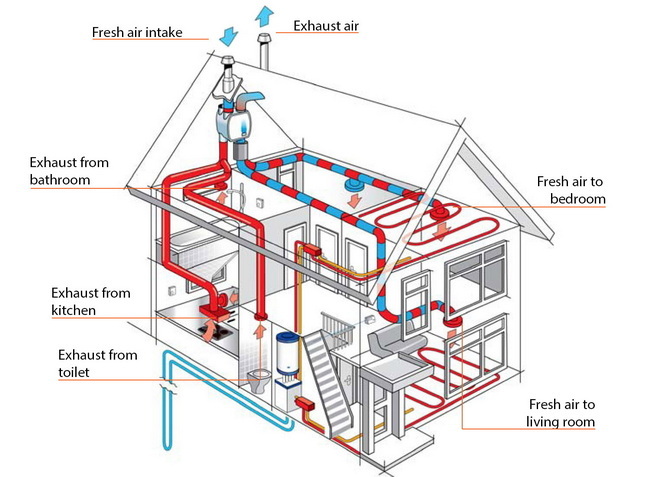
Both HRV and ERV systems use an air-to-air heat exchanger to transfer energy between stale outgoing air and fresh incoming air.
1. Stale indoor air is drawn from bathrooms, kitchens, and other areas and sent to the unit.
2. Fresh outdoor air is simultaneously pulled into the system.
3. The two airstreams pass through a heat exchanger core that allows energy transfer without mixing the actual air.
4. Conditioned fresh air is distributed back through your ducts, while exhaust air is expelled outside.
- HRV cores are designed to move sensible heat (temperature) only.
- ERV cores are made of materials that allow the transfer of water vapor as well as heat, balancing humidity along with temperature.
Because ERVs move moisture, they help keep incoming air from being too humid in summer and prevent indoor air from becoming overly dry in winter.
Factor | HRV (Heat Recovery Ventilation) | ERV (Energy Recovery Ventilation) |
What it recovers | Heat only (sensible energy). | Heat and humidity (total energy). |
Humidity control | Does not directly manage humidity. | Helps regulate indoor humidity levels. |
Best climate type | Cold or dry climates where winter humidity indoors can be high. | Humid climates, or homes with dry winters and humid summers. |
Condensation and defrost | More prone to condensation, often needs drain pans and defrost cycles. | Less condensation, typically no active defrost needed. |
Installation flexibility | Orientation limited by condensate drain requirements. | Can often be installed in multiple orientations. |
Energy efficiency potential | High, but defrost cycles can reduce effective ventilation time. | High and consistent, with fewer interruptions. |
Typical use case | Airtight homes in colder regions focused on heating efficiency. | Wide range of climates, especially humid regions and mixed climates. |
The right system depends heavily on climate, building design, and indoor humidity needs.
An HRV is typically a better fit if:
- You live in a cold, relatively dry climate where indoor humidity can be too high in winter.
- Your main concern is removing excess humidity and stale air during the heating season.
- Your home is newer and airtight, but not in a region with extreme summer humidity.
In such conditions, allowing some humidity to escape with exhaust air can improve comfort and reduce condensation on windows and walls.
An ERV is often recommended when:
- You live in a humid climate where outdoor air is moist for much of the year.
- You run air conditioning frequently and want to avoid bringing in excess humidity.
- Your home tends to dry out in winter and you want to preserve indoor moisture.
- Occupants have respiratory issues, or you have materials such as hardwood that are sensitive to very dry air.
ERVs can introduce fresh outdoor air while reducing the added moisture load on your cooling system, helping lower energy use and improve comfort.
Properly sized and installed HRV/ERV systems provide tangible day-to-day benefits.
- Healthier air: Continuous fresh air reduces allergens, odors, and indoor pollutants from cooking, cleaning, and building materials.
- Lower energy bills: By recovering a significant portion of the energy from exhaust air, these systems can reduce the load on your HVAC equipment.
- More even comfort: Balanced ventilation helps prevent stuffy rooms, cold corners, and indoor condensation.
- Protection for your home: Controlled humidity and ventilation help prevent mold growth, wood warping, and damage from excess moisture or extreme dryness.
- Check average outdoor humidity and temperature in your region across the year.
- Consider how often you use heating versus cooling.
- Think about indoor humidity issues you already see, such as fogged windows, dry throat, musty odors, or mold spots.
If summers are long and humid and your air conditioning runs frequently, an ERV is usually preferred.
- Newer, tightly sealed homes trap more moisture and pollutants, making balanced mechanical ventilation critical.
- Older, leaky homes may still benefit from HRV/ERV, especially after upgrades like new windows, air sealing, or added insulation.
- People with asthma or allergies may benefit from continuous fresh air with filtration.
- Homes with lots of wood finishes, musical instruments, or other sensitive materials often need stable humidity, which can favor ERVs.
Proper system sizing depends on:
- Square footage and layout of your home.
- Number of occupants and typical occupancy patterns.
- Required air changes per hour based on standards and local codes.
A qualified HVAC contractor can calculate the right airflow and capacity so you get the performance and efficiency you expect.
Correct installation and regular maintenance are critical for both HRV and ERV performance.
Installation essentials:
- Use dedicated ducting or carefully designed connections to existing ducts to avoid cross-contamination.
- Follow manufacturer guidelines for intake and exhaust termination distances and locations.
- In cold climates, position and insulate ductwork to minimize condensation and freezing.
Routine maintenance includes:
- Cleaning or replacing filters every few months, depending on usage and air quality.
- Inspecting and cleaning the heat exchanger core as recommended by the manufacturer.
- Checking fans, drains (for HRVs), and outdoor hoods for debris or blockages.
Keeping the system clean and properly balanced ensures consistent airflow, optimal energy recovery, and long equipment life.
Recent years have seen strong growth in ductless HRV/ERV units and smarter, connected systems that support modern, energy-efficient homes.
- Ductless units can serve specific rooms or small apartments without extensive ductwork.
- Many models deliver very high heat recovery efficiency, which enhances comfort in compact or retrofit applications.
- Smart controls and Wi-Fi connectivity allow homeowners to schedule ventilation, adjust modes, and integrate systems into broader smart-home platforms.
These innovations make it easier to add high-performance ventilation to existing homes and support low-energy and net-zero building strategies.
In some homes, a hybrid approach may offer the best balance of performance and cost.
Examples include:
- Using an ERV as the primary whole-home ventilator in a humid climate while relying on existing exhaust fans in kitchens and baths for localized humidity control.
- Considering HRV in certain zones, such as a cool, dry basement, and ERV in main living spaces where humidity control is more critical.
- Adjusting ERV settings and controls to maintain slightly positive or neutral pressure for specific indoor air quality goals.
A professional can help you evaluate room-by-room needs and design a solution that reflects how your family actually lives in the space.
Working with an experienced HVAC company ensures you get more than just a box with fans – you get a well-designed system that integrates with your existing heating and cooling equipment.
A qualified contractor will:
- Analyze your home's envelope, insulation, and current HVAC system.
- Perform proper ventilation and load calculations.
- Recommend HRV versus ERV based on climate, building design, and lifestyle.
- Design, install, and commission the system so it delivers the expected airflow and efficiency.
- Offer ongoing maintenance plans to keep your ventilation system performing at its best.
If your home feels stuffy, you struggle with humidity issues, or you are planning an energy-efficient renovation, this is the ideal time to evaluate HRV and ERV options. A properly selected and professionally installed system can transform your indoor comfort, protect your home, and reduce energy waste for years to come. Contact a trusted local HVAC specialist today to schedule a ventilation assessment, compare tailored HRV and ERV solutions for your climate, and receive a clear, customized quote for installation, integration, and ongoing maintenance.
Contact us to get more information!

An HRV transfers heat only, while an ERV transfers both heat and moisture between the incoming and outgoing air streams, helping to control indoor humidity as well as temperature.
In humid climates, an ERV is usually the better choice because it reduces the amount of moisture entering with the fresh air, easing the load on your air conditioner and improving comfort.
Yes, both HRVs and ERVs can recover a significant portion of the energy from exhaust air, reducing the work required from your heating and cooling equipment and helping to lower energy costs over time.
No, they are designed to work with your existing heating and cooling equipment. The ventilation system manages fresh air and energy recovery, while your furnace, heat pump, or air conditioner handles temperature control.
Filters should generally be checked every few months and cleaned or replaced as needed, and the heat exchanger core and related components should be inspected and maintained according to manufacturer guidelines, typically at least once a year.
1. https://airprosusa.com/indoor-air-quality/heat-energy-recovery-ventilation/
2. https://www.energy.gov/energysaver/whole-house-ventilation
3. https://www.drhvac.ca/blog/difference-between-hrv-and-erv-systems/
4. https://www.renewaire.com/erv-vs-hrv/
5. https://www.sylvane.com/blogs/knowledge-center/hrv-vs-erv
6. https://www.pvhvac.com/blog/erv-vs-hrv-which-one-makes-sense-for-your-home/
7. https://www.buildwithrise.com/stories/best-ductless-ervs-hrvs-2025


