
Views: 209 Author: Mega Services Publish Time: 2026-08-18 Origin: Site


Content Menu
● What Does Mold in an AC Unit Look and Smell Like?
>> Common Signs of Mold in an Air Conditioner
>> Where Mold-Related HVAC Problems Often Begin
● Is Mold in an Air Conditioner a Health Concern?
>> Signs That Require Prompt Attention
● What to Do If You Suspect Mold in Your AC Unit
>> Step 1: Avoid Spreading the Problem
>> Step 2: Look for Obvious Moisture Clues
>> Step 3: Arrange the Right Type of Help
● Can You Clean Mold From an Air Conditioner Yourself?
>> Basic Safety Practices for Small Surface Areas
>> When Professional Support Is the Better Choice
● Why Does the Musty Smell Keep Coming Back?
>> Common Causes of Recurring AC Odors
● How to Help Prevent Mold in Your HVAC System
>> Homeowner Prevention Checklist
>> Why Seasonal Service Matters
● Restore Comfort and Confidence in Your Home
>> 1. Can mold grow inside an AC unit?
>> 2. Why does my air conditioner smell musty when it turns on?
>> 3. Should I turn off my AC if I suspect mold?
>> 4. Can a dirty air filter cause mold?
>> 5. What indoor humidity level helps reduce mold risk?
>> 6. Does duct cleaning remove mold?
>> 7. Will a UV light solve mold problems in my AC system?

A musty odor when your air conditioner begins running can make any homeowner concerned. You may notice dark marks near a vent, moisture around the indoor unit, or rooms that feel humid even while the cooling system is operating. These signs do not always confirm mold inside the air conditioner, but they should not be ignored.
At Mega Services Heating & Cooling, we help homeowners identify heating and cooling concerns that affect comfort, energy use, and indoor conditions. When moisture collects around HVAC equipment, it can lead to unpleasant odors, reduced system performance, water damage, and conditions that may support mold growth.
Mold-related HVAC concerns are often connected to a larger moisture issue. A clogged condensate drain, dirty drain pan, restricted airflow, duct condensation, damaged insulation, or high indoor humidity may all contribute to the problem. The most effective solution is not simply covering an odor or wiping a vent. It is finding and correcting the source of moisture.
> Important: If you see suspected mold growth inside HVAC equipment, smell a strong musty odor whenever the system operates, or find standing water near the indoor unit, arrange a professional inspection before continuing to run the system.
Mold grows when moisture is present for a long enough period of time. HVAC systems naturally remove humidity from the air during cooling. That moisture should collect in the condensate pan and leave through the drain line.
When water does not drain properly, or when humidity remains too high, damp conditions can develop in and around the system. Dust, pet dander, debris, insulation, and other organic materials can then create surfaces where mold may grow.
A mold concern may be visible, but it is often first noticed through smell.
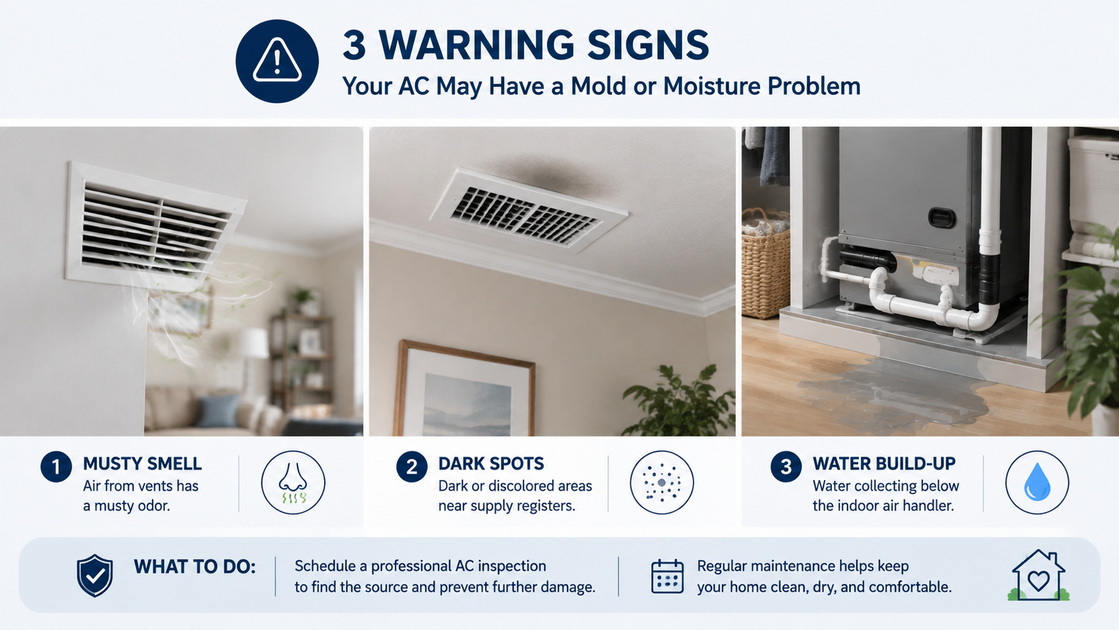
Look for the following warning signs:
- A musty, earthy, or mildew-like smell when the AC or blower starts
- Dark, fuzzy, spotty, or powdery-looking buildup around vents or registers
- Reappearing dark residue after a vent cover has been cleaned
- Standing water, slime, debris, or rust in the condensate drain pan
- Water leaking near the air handler, furnace, or indoor cooling equipment
- Damp spots or water stains on ceilings near air vents
- Condensation forming on ducts, pipes, walls, or nearby surfaces
- Uneven cooling combined with a consistently humid or clammy feeling indoors
- Visible mold growth near bathrooms, laundry rooms, basements, crawl spaces, or water-damaged areas
A musty odor does not automatically mean there is mold inside the ductwork. Dirty filters, stagnant water, dirty cooling components, pests, or other moisture issues can produce similar odors. However, odors that repeatedly occur only when the system runs deserve attention.
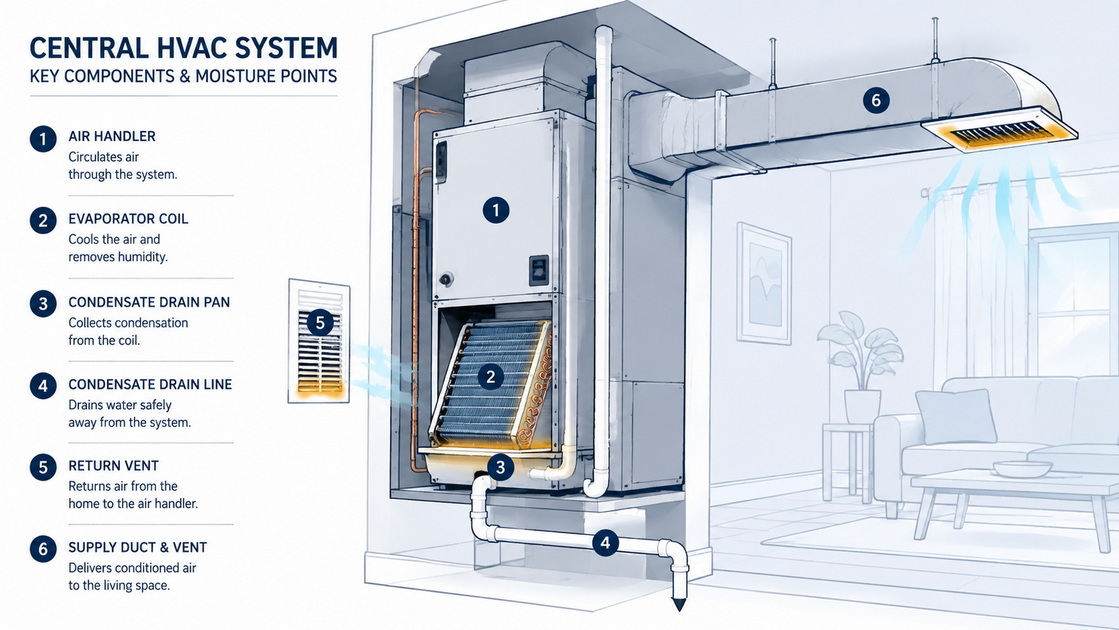
| HVAC Area | Why It Matters | What You May Notice |
|---|---|---|
| Evaporator coil | The coil removes heat and moisture from indoor air and can remain damp during cooling cycles | Musty odor, weak cooling, reduced airflow |
| Condensate drain pan | It collects moisture created during normal air conditioning operation | Standing water, overflow, slime, water stains |
| Condensate drain line | It carries collected moisture away from the system | Clogs, backups, leaking water, recurring dampness |
| Air handler cabinet | Internal parts can collect dust and moisture over time | Odors when the unit starts, visible residue |
| Ductwork and vents | Ducts may collect debris or develop condensation if airflow or insulation is poor | Dark marks, moisture near vents, uneven comfort |
| Return-air areas | These areas draw indoor air and dust back to the system | Dust buildup, odors, poor filter performance |
Mold can affect people differently. Some people may experience symptoms such as nasal congestion, throat irritation, coughing, wheezing, eye irritation, or skin irritation. People with asthma, chronic respiratory conditions, mold allergies, or weakened immune systems may be more sensitive to indoor mold exposure.
The concern becomes more significant when a heating and cooling system moves air through the home. If mold is present in the system or near areas where air travels, the blower may distribute particles to multiple rooms.
Not every dark spot on a vent is an emergency. Still, recurring odors, visible growth, unexplained moisture, or symptoms that appear to worsen while the system is running should be taken seriously.
Stop using the cooling system and seek professional guidance if you notice:
- Suspected mold growth inside the air handler, on internal insulation, or near accessible duct openings
- Water overflowing from the drain pan or leaking near electrical components
- A strong mildew smell each time the blower turns on
- Recent flooding, major plumbing leaks, roof leaks, or water damage affecting HVAC equipment
- Breathing discomfort or increased respiratory symptoms that seem connected to AC use
- A household member with asthma, COPD, severe allergies, or an immune condition experiencing symptoms indoors
A qualified HVAC technician can inspect the equipment for mechanical and moisture-related causes. If a larger contamination issue is present, specialized remediation services may also be necessary.
The key to solving a mold-related HVAC concern is controlling moisture. Cleaning visible buildup without fixing the water source often leads to the same problem returning.
If you see suspected mold growth inside HVAC equipment or suspect contamination after water damage, avoid operating the air conditioner until the system has been evaluated.
Do not scrape, brush, or vacuum suspected mold with a standard household vacuum. Do not spray chemicals into ducts, coils, or electrical compartments. These actions can spread material, damage sensitive components, or create an unsafe indoor environment.
Without opening sealed panels or touching suspected growth, inspect the area around your equipment.
1. Check for standing water around the indoor unit.
2. Look beneath the air handler for damp flooring, stains, or visible leaks.
3. Notice whether the condensate drain pan appears full or overflowing.
4. Check if the air filter is heavily loaded with dust or debris.
5. Pay attention to when the odor occurs—continuously, only when cooling starts, or after rainy weather.
6. Look for condensation on nearby ducts, pipes, walls, or insulation.
7. Use a digital hygrometer to monitor indoor humidity.
Indoor humidity should generally stay below 60 percent. For many homes, a range of approximately 30 to 50 percent helps support a more comfortable environment and reduces moisture-related risks.
Heating and cooling equipment has multiple components that affect drainage, airflow, humidity, and comfort. A professional inspection can identify whether the issue is related to:
- A clogged condensate drain line
- A dirty or damaged drain pan
- A dirty evaporator coil
- Restricted airflow
- A failing blower component
- Duct leakage or poor duct insulation
- High indoor humidity
- Improper equipment operation
- A plumbing, roof, crawl-space, or basement moisture issue near the system
Not every situation requires the same solution. HVAC service addresses equipment operation, airflow, filtration, drainage, cooling performance, and humidity control. Mold remediation may be needed when contamination is extensive, affects porous building materials, involves duct interiors, or is connected to broader water damage.
Small, isolated spots on an accessible, non-porous surface outside the equipment may sometimes be cleaned carefully. However, central heating and cooling systems contain coils, blower assemblies, electrical parts, drains, insulation, and ductwork that should not be cleaned casually.
A homeowner may be able to safely clean a small visible spot on a hard surface, such as the outside of a vent cover, if the source of moisture has been identified and corrected. Internal HVAC components are different. Improper cleaning can damage the system, leave hidden contamination behind, or spread particles into the air.
If you are cleaning a small, accessible area on a hard surface:
- Wear gloves, eye protection, and a properly fitted protective mask.
- Keep the surrounding area ventilated.
- Use mild detergent and water on hard surfaces.
- Dry the surface completely after cleaning.
- Never mix cleaning products.
- Avoid spraying cleaners into vents, ducts, coils, or electrical equipment.
- Replace a dirty disposable air filter if needed.
A filter change can improve airflow and reduce dust circulation, but it may not resolve the source of a musty odor or moisture issue.
Avoid do-it-yourself cleaning and arrange an inspection when:
- The suspected growth is inside ducts, the air handler, or behind equipment panels.
- Mold-like material is on insulation, flex ducts, drywall, ceiling tiles, or other porous surfaces.
- The affected area is large or keeps returning.
- There is standing water, active leaking, or water damage.
- You cannot determine where the moisture is coming from.
- A household member has asthma, respiratory disease, serious allergies, or a weakened immune system.
- The system smells musty whenever it operates but no visible source can be found.
A recurring odor is often a sign that moisture remains in the system or nearby building materials. Cleaning a vent cover may temporarily improve its appearance, but it will not repair a clogged drain line, humid crawl space, poorly insulated duct, leaking roof, or dirty coil.
The lasting solution begins with identifying why moisture is present.
- A clogged condensate drain line that prevents water from leaving the system
- A dirty, rusted, damaged, or improperly draining condensate pan
- High indoor humidity during warm weather
- Short cooling cycles that do not remove enough moisture from the air
- Duct leaks that allow warm, humid air to contact cold duct surfaces
- Poorly insulated ductwork that develops condensation
- A dirty filter that restricts airflow
- A dirty evaporator coil that affects cooling and moisture removal
- Plumbing leaks, roof leaks, basement moisture, or crawl-space dampness
- Long periods of inactivity followed by hot and humid weather
- Improperly maintained window or portable AC units
A complete solution usually follows a practical sequence:
1. Identify the moisture source.
2. Repair the drainage, airflow, insulation, or building issue.
3. Clean or replace affected components when appropriate.
4. Restore proper system operation.
5. Monitor humidity and odor levels after the repair.
Routine maintenance and moisture control help reduce the conditions that can support mold growth. While no home can eliminate every moisture risk, consistent attention to HVAC performance, drainage, ventilation, and humidity can make a meaningful difference.
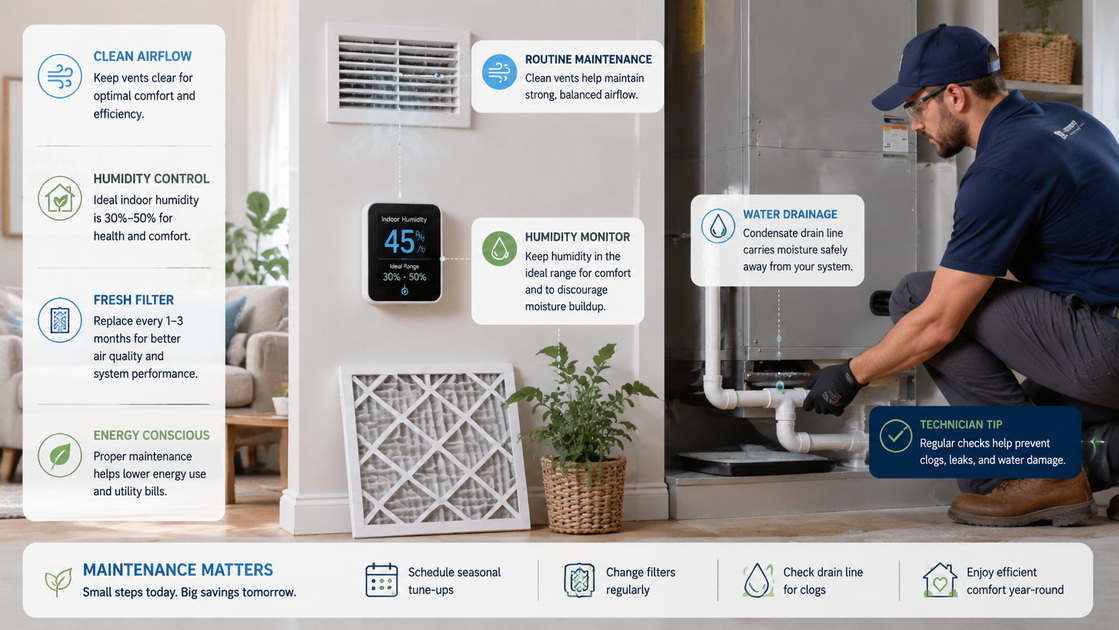
- Replace or clean HVAC filters based on the system manufacturer's guidance and household conditions.
- Keep supply and return vents open and clear of furniture, rugs, and stored items.
- Have the condensate drain, drain pan, coil area, and airflow checked during routine system service.
- Run bathroom exhaust fans during and after showers.
- Use kitchen exhaust ventilation when cooking.
- Repair plumbing leaks, roof leaks, window leaks, and foundation moisture problems quickly.
- Monitor humidity with a digital hygrometer.
- Consider a properly sized dehumidifier if indoor humidity remains high.
- Make sure clothes dryers vent outdoors.
- Dry water-damaged materials as quickly as possible after leaks or flooding.
- Address musty odors, drainage problems, or reduced cooling performance early.
Seasonal heating and cooling service helps identify problems before they affect comfort or lead to larger moisture concerns. During an inspection, a technician can assess drainage, filter condition, coil cleanliness, airflow, electrical operation, duct condition, thermostat performance, and other factors that influence humidity control.
This is especially important in humid climates, homes with basements or crawl spaces, properties with older ductwork, and homes that have experienced water intrusion.
At Mega Services Heating & Cooling, we focus on the full comfort picture. That includes dependable cooling, proper airflow, drainage performance, humidity management, and practical recommendations tailored to your home.
A musty AC odor, standing water near the indoor unit, or recurring dark buildup around vents should not become part of everyday life. Early attention can help prevent discomfort, protect HVAC equipment, improve moisture control, and reduce the risk of a more extensive indoor issue.
Mega Services Heating & Cooling is ready to inspect your heating and cooling system, identify possible moisture-related concerns, and recommend the next steps needed to support a safer, more comfortable, and more energy-efficient home.
Yes. Mold can grow in or around air conditioning equipment when moisture combines with dust, debris, organic material, insulation, or damp surfaces. Common areas of concern include the evaporator coil section, condensate drain pan, drain line, air handler, nearby insulation, and ductwork.
A musty smell can be caused by mold, excess humidity, stagnant condensate water, drainage problems, dirty components, or buildup around the evaporator coil. Since several HVAC issues can create a similar odor, an inspection is the best way to identify the actual cause.
If you see suspected mold growth inside the equipment or believe the system may be contaminated after water damage, avoid operating the system until it has been evaluated. Running the system may circulate particles through the home.
A dirty air filter does not directly create mold on its own. However, it can restrict airflow and allow dust to build up inside the system. When dust, poor airflow, and moisture occur together, they can create conditions that support odors and mold-related concerns.
Indoor relative humidity should generally remain below 60 percent. Many homes benefit from maintaining indoor humidity between approximately 30 and 50 percent, particularly during warm or rainy weather.
Duct cleaning may be part of a larger solution in certain circumstances, but it does not replace moisture control. A recurring mold or odor concern requires identification and correction of the water source, drainage issue, humidity problem, or building-related leak that allowed the condition to develop.
UV equipment may be considered as one component of a broader HVAC strategy in certain situations. However, it does not replace proper drainage, airflow, humidity control, filtration, coil maintenance, and repair of water-related issues. The cause of moisture should always be addressed first.
1. U.S. Environmental Protection Agency.
2. U.S. Environmental Protection Agency.
3. U.S. Environmental Protection Agency.
4. Centers for Disease Control and Prevention.
5. Centers for Disease Control and Prevention.
6. One Hour Heating & Air Conditioning.


