
Views: 212 Author: Mega Services Publish Time: 2026-07-22 Origin: Site


Content Menu
● What an AC Tonnage Calculator Does
>> Example
● Factors That Affect the Right Size
● Why Manual Load Calculations Are Better
● When the Calculator May Be Less Accurate
● Common Signs the System May Be Wrong
● Why Correct Sizing Improves Comfort
● FAQs
>> 1. What does AC tonnage mean?
>> 2. How do I calculate AC tonnage from square footage?
>> 3. Is square footage enough to size an AC unit?
>> 4. What happens if my AC is too large?
>> 5. What happens if my AC is too small?
>> 6. Why should I use a professional load calculation?
AC tonnage is one of the most important factors in choosing a cooling system. It describes how much heat an air conditioner can remove from a home in one hour. One ton of cooling equals 12,000 BTUs per hour, which is the standard measurement used throughout the HVAC industry.
When a system is too small, it may run constantly and still fail to cool the home properly. When a system is too large, it may cool too quickly without removing enough humidity. That can leave rooms feeling damp, uneven, or uncomfortable.
A properly sized system supports better comfort, better humidity control, and better energy use. It also helps reduce unnecessary strain on equipment over time.
An AC tonnage calculator gives you a fast estimate of the cooling capacity your home may need. Most calculators use square footage as the starting point and then adjust for factors such as insulation, windows, ceiling height, occupancy, and climate.
This kind of calculator is useful for early planning. It helps homeowners narrow down the likely size range before speaking with an HVAC professional.
Still, a calculator should be viewed as a starting point, not the final answer. The most accurate sizing method takes the entire home into account, not just the square footage.
A simple way to estimate AC size is to use square footage and convert the cooling load into BTUs and then into tons. A common rule of thumb is to multiply the home's square footage by 25 BTUs, then divide the result by 12,000.
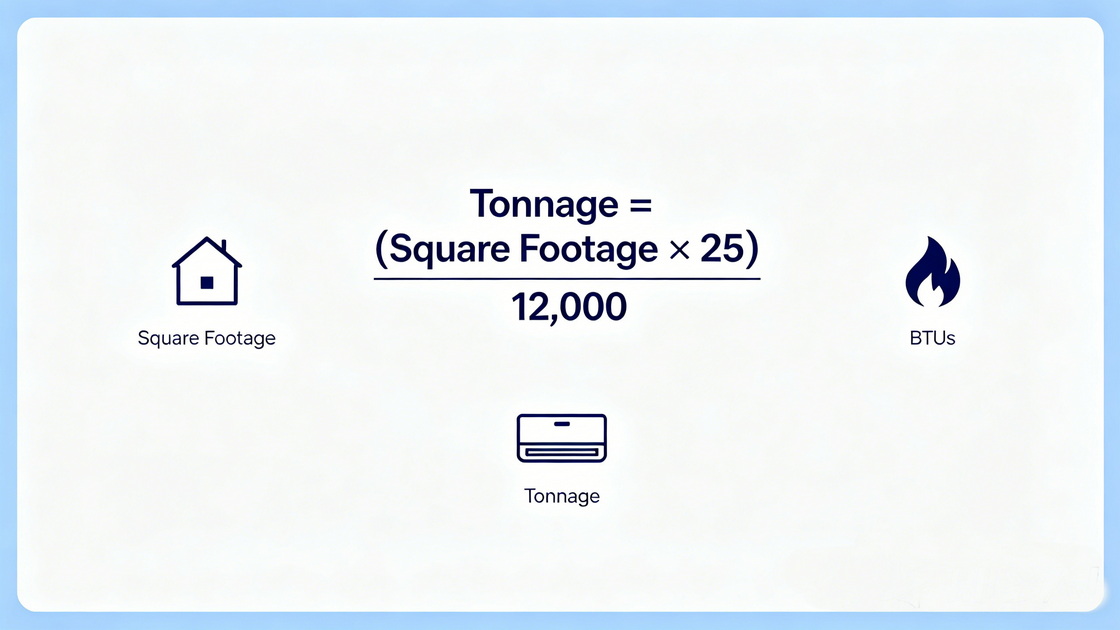
AC Tonnage = (Square Footage × 25) ÷ 12,000
If a home is 1,500 square feet:
- 1,500 × 25 = 37,500 BTUs
- 37,500 ÷ 12,000 = 3.125 tons
That means the home may need a 3-ton or 3.5-ton system, depending on other conditions in the home.
This estimate works well as a rough guide, but it should not replace a full load analysis when selecting equipment.
Square footage is only one part of the sizing process. Several other conditions can raise or lower the amount of cooling a home needs.
- Ceiling height: Taller ceilings increase the amount of air that must be cooled.
- Insulation quality: Poor insulation allows heat to enter more easily.
- Window size and placement: Large or sunny windows can increase indoor heat gain.
- Home orientation: Rooms facing strong afternoon sun often need more cooling.
- Number of occupants: People naturally add heat to a space.
- Appliances and electronics: Heat-producing equipment can increase the cooling load.
- Climate: Homes in hotter regions usually need more cooling capacity.
These factors can shift the best AC size higher or lower than a basic square-foot estimate suggests.
The table below provides a general reference for common home sizes. It is useful for quick planning, but it should always be confirmed with a detailed assessment.
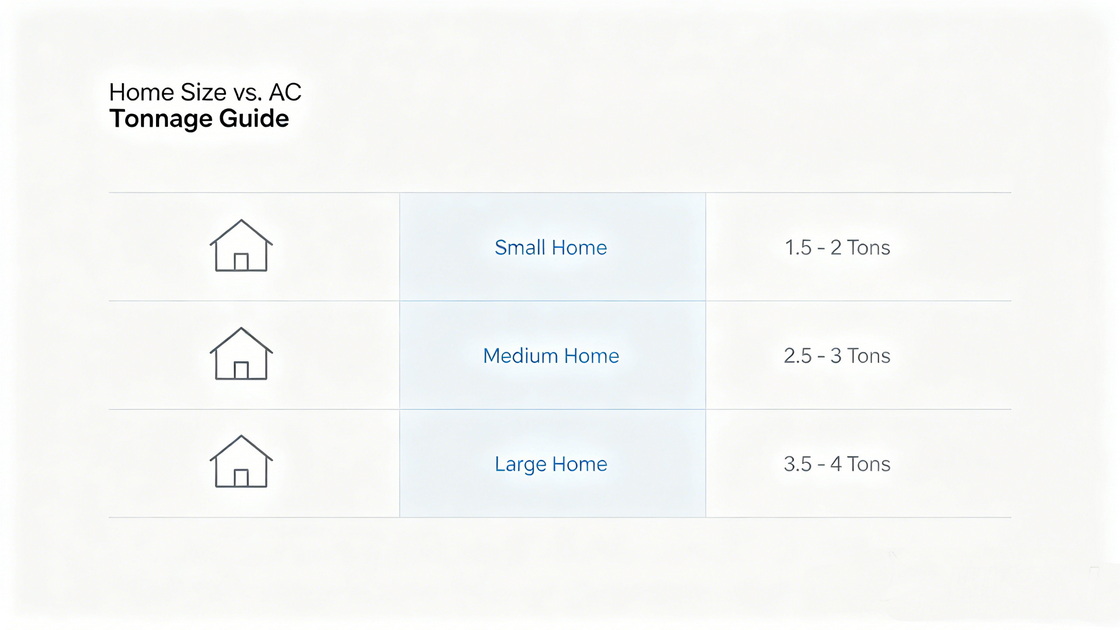
| Home Size | Typical AC Size | Approx. BTUs |
|---|---|---|
| 750–1,000 sq. ft. | 2 tons | 24,000 |
| 1,050–1,400 sq. ft. | 2.5 tons | 30,000 |
| 1,450–1,700 sq. ft. | 3 tons | 36,000 |
| 1,750–1,900 sq. ft. | 3.5 tons | 42,000 |
| 1,950–2,200 sq. ft. | 4 tons | 48,000 |
| 2,250+ sq. ft. | 5 tons | 60,000 |
These numbers are broad estimates. A well-insulated home with modest sun exposure may need less cooling than a home of the same size with large windows and high ceilings.
A manual load calculation is more accurate than a basic rule of thumb. It takes into account the specific features of the home, including the building envelope, insulation, windows, air leakage, ventilation, and internal heat gains.
This matters because two homes with the same square footage can have very different cooling needs. One may have a shaded layout and efficient insulation, while another may have large west-facing windows and poor attic protection.
Professional load calculations help reduce the risk of choosing a system that is too large or too small. They also create a more reliable foundation for comfort, energy use, and equipment performance.
When a professional evaluates AC size, they typically look beyond the floor plan. A proper assessment usually includes the following:
- Square footage and room layout.
- Ceiling height.
- Insulation levels in walls and attic spaces.
- Window type, size, and direction.
- Air leakage around doors and windows.
- Duct condition and airflow balance.
- Number of people living in the home.
- Heat-producing appliances and equipment.
These details help determine whether the home needs more or less cooling than a standard estimate suggests.
An AC tonnage calculator is helpful, but there are situations where the estimate may be less precise. Homes with additions, unusual layouts, finished basements, or large sunrooms often need more detailed review.
Older homes may also have insulation problems or duct issues that change the final recommendation. Likewise, homes in very hot climates may need adjustments that are not fully reflected in a basic formula.
If the home has hot and cold spots, weak airflow, or humidity problems, the issue may not be only the system size. It may also involve ductwork, insulation, or air distribution.

A poorly sized system often shows clear warning signs. Homeowners should pay attention if they notice any of the following:
- The AC runs almost nonstop.
- Some rooms feel much hotter or colder than others.
- The system turns on and off too often.
- Indoor air feels sticky or humid.
- Energy bills are higher than expected.
- The home takes too long to reach the set temperature.
These signs do not always mean the unit is the wrong size, but they often point to a sizing or airflow issue that should be checked.
This guide is meant to help you make an informed first estimate. Start with square footage, then adjust your thinking based on insulation, windows, ceiling height, and climate.
If you are replacing an existing system, compare the current unit size with the home's actual comfort performance. A system that "worked" in the past may not have been ideal in the first place.
If you are planning a new installation, use the estimate as a starting point and confirm the final size with a professional assessment. That approach gives you the best chance of choosing a system that fits the home correctly.
Correct sizing does more than control temperature. It also improves humidity management, reduces unnecessary wear, and helps the home feel more even from room to room.
In many homes, comfort problems come from imbalance rather than temperature alone. The right system size, combined with proper airflow and duct design, can make a noticeable difference in daily comfort.
That is why sizing should always be treated as a core part of the installation process, not an afterthought.
Choosing the right AC tonnage is one of the smartest ways to protect comfort and efficiency in your home. A simple calculator can give you a helpful estimate, but the best result comes from looking at the whole home, not just the square footage.
If your home is hard to cool, humid, or uneven from room to room, the issue may be system size, airflow, or both. A detailed evaluation can help identify the right solution and support better long-term performance.
Schedule a professional AC sizing assessment with Mega Services Heating & Cooling to make sure your next system is the right fit for your home.
AC tonnage measures how much heat an air conditioner can remove in one hour. One ton equals 12,000 BTUs per hour.
Multiply the square footage by 25 BTUs, then divide by 12,000. This gives a rough estimate of the cooling capacity needed.
No. Square footage is only a starting point. Insulation, windows, ceiling height, occupancy, and climate also matter.
An oversized AC may cool too quickly, fail to remove enough humidity, and short-cycle more often than it should.
A small AC may run constantly, struggle to keep the home comfortable, and wear out faster from overuse.
A professional load calculation gives a more accurate result because it evaluates the home's actual conditions instead of relying on a simple estimate.
1. [AC Tonnage Size Calculator – AC Direct]
2. [AC Tonnage Calculator | Omni Calculator]
3. [AC Tonnage Calculator | Field Promax]
4. [BTU and Tonnage Calculator for Air Conditioners – Kobie Complete]
5. [How Many Tons is My AC? – Aire Serv]
6. [Manual J Residential Load Calculation – ACCA]
7. [Load Calculation Applications Manual – ASHRAE]
8. [Residential Load Calculations: Manual J and More]
9. [Original source page]


