
Views: 211 Author: Mega Services Publish Time: 2026-10-25 Origin: Site


Content Menu
● What Does Duct Wrapping Actually Do?
>> Duct Insulation and Duct Sealing Solve Different Problems
● Which Ducts Should You Insulate First?
● How Much Energy Can Duct Insulation Save?
● What R-Value Should Duct Insulation Have?
>> Is R-6 or R-8 Better for Ductwork?
● Why Are My Air Ducts Sweating?
>> Check These Problems Before Adding More Wrap
● Which Duct Insulation Material Makes Sense?
>> Foil-Faced Fiberglass Duct Wrap
>> Factory-Insulated Flexible Duct
>> Reflective and Specialty Products
● How to Wrap Ductwork: The Correct Project Sequence
>> 1. Inspect Before Covering Anything
>> 2. Repair Structural and Airflow Problems
>> 4. Install the Specified Insulation
>> 5. Close the Exterior Facing
>> 6. Inspect the Finished Work
● When Duct Wrapping Should Not Be a DIY Project
● What Should a Professional Duct Insulation Quote Include?
>> How Can You Tell Whether the Work Helped?
● Plan Your Next Step With Mega Services Heating & Cooling
>> 1. Should I Wrap Ductwork Inside Conditioned Space?
>> 2. Should Ducts Be Sealed Before They Are Insulated?
>> 3. Can I Add New Insulation Over Old Duct Wrap?
>> 4. Will Duct Insulation Fix a Hot Upstairs Bedroom?
>> 5. Do Both Supply and Return Ducts Need Insulation?
>> 6. Is Duct Cleaning Required Before Wrapping?
Should I wrap my ductwork? Yes, if your heating and cooling ducts run through an unconditioned attic, crawl space, garage, or basement and lack adequate insulation. However, wrapping should come after checking for leaks, damage, and moisture. Insulation slows heat transfer; it cannot repair a disconnected duct or stop air escaping through an open joint.
For homeowners, the real question is not simply whether ducts need covering. It is whether the right improvements will deliver more comfortable rooms without creating hidden problems.
At Mega Services Heating & Cooling, our focus is helping families maintain safe, comfortable, energy-conscious homes. This guide explains where duct insulation matters, what a proper installation involves, and which questions to ask before approving work.
Duct wrapping adds insulation around existing ductwork, usually sheet metal. A common product combines fiberglass insulation with an exterior foil-faced vapor retarder.
The insulation slows heat moving through the duct walls. During summer, it helps protect cooled air from surrounding heat. During winter, it helps heated air retain its temperature while traveling toward your rooms.
The exterior facing has a different job: limiting moisture movement into the insulation when its seams and penetrations are properly sealed.
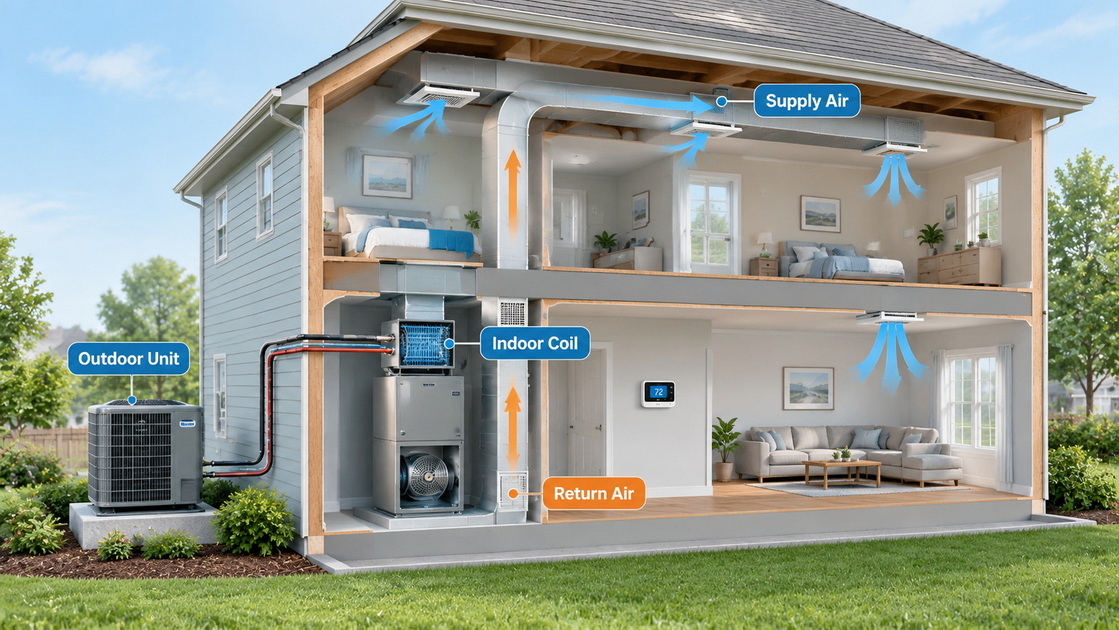
Think of duct insulation as a thermal jacket and duct sealing as closing holes in the air-delivery system.
- Sealing reduces air escaping through joints, seams, and connections.
- Insulation reduces heat transfer through duct surfaces.
- Repair restores damaged, disconnected, or restricted sections.
A successful project may require all three. Installing new wrap over unresolved problems can conceal the very defects that need attention.
Start with location, condition, and exposure—not simply the amount of visible metal.
| Duct location or condition | Recommended priority |
|---|---|
| Bare metal ducts in an unconditioned attic | High priority for assessment, sealing, and insulation |
| Ducts in an unconditioned crawl space or garage | Evaluate insulation and moisture exposure |
| Ducts in an unfinished basement | Determine whether the basement is inside the conditioned enclosure |
| Ducts entirely within conditioned rooms | Usually lower priority for reducing heat transfer |
| Pre-insulated flexible ducts | Inspect existing insulation, jacket, supports, and connections |
| Wet, crushed, or disconnected ducts | Correct the underlying problem before wrapping |
An unfinished space is not automatically unconditioned. A basement may sit inside the home's thermal enclosure even without finished walls.
Likewise, return ducts deserve attention alongside supply ducts. Leaky returns can draw air from surrounding unconditioned spaces, while poorly insulated return runs can exchange heat with those surroundings.
There is no reliable savings percentage that applies to every home.
A widely cited estimate states that typical homes lose about 20%–30% of the air moving through their duct systems because of leaks, holes, and poorly connected ducts. That figure describes air leakage—not heat transfer through bare metal and not guaranteed utility-bill savings.
It would therefore be misleading to promise that wrapping ducts will reduce your annual heating and cooling bill by 30%.
Actual results depend on:
- Existing duct leakage and insulation.
- The temperature surrounding the ducts.
- Duct length and exposed surface area.
- Heating and cooling usage.
- Local energy prices.
- Installation quality.
From a homeowner's perspective, the strongest proposal explains the defects found, the work recommended, and how completion will be verified. A savings promise without those details deserves scrutiny.
R-value measures resistance to heat flow. Higher values provide greater thermal resistance when the insulation is installed as intended.
However, there is no single nationwide minimum covering every existing residential duct installation. Requirements depend on the locally adopted code, duct location, climate, and project scope.
Homeowner guidance commonly recommends R-6 or higher for ducts in unconditioned spaces. R-8 is a common specification for attic ductwork, but neither figure should be treated as a universal compliance guarantee.
Before selecting a product, ask:
1. What insulation level applies to this location?
2. Does the proposed material meet local requirements?
3. What installed thickness achieves its labeled performance?
4. How will corners, supports, and transitions remain insulated?
Compression matters. Pulling wrap tightly around a duct can reduce its effective thickness and thermal performance. More material is not automatically better if it cannot be installed correctly.
Condensation forms when a surface is cold enough for moisture in the surrounding air to condense on it. Cooling ducts in humid spaces are particularly vulnerable.
Proper insulation helps keep the exterior surface warmer. A continuous, sealed vapor-retarder facing helps prevent humid air from reaching colder layers underneath.
Sweating ducts may indicate:
- Missing or insufficient insulation.
- Torn exterior jackets.
- Open insulation seams.
- Compressed insulation at supports.
- High humidity in the surrounding space.
- Air leakage around fittings.
Adding insulation without identifying the cause may leave moisture trapped beneath a new covering.
Wet or visibly moldy insulation requires professional evaluation and appropriate replacement rather than concealment. The moisture source must also be corrected.
For homeowners, a useful question is: "What caused this material to become wet, and what will prevent it from happening again?"
This is a common option for existing metal ducts. It adapts to round and rectangular shapes, provided the installer maintains the specified thickness and properly closes the exterior facing.
Product selection should consider thermal performance, application suitability, and installation instructions—not thickness alone.
Flexible duct typically includes an inner air liner, insulation, and an outer jacket.
Additional wrapping is not automatically necessary. First check the existing insulation rating, jacket condition, connections, and routing. Wrapping cannot correct a crushed liner or sharply restricted bend.
Thin reflective products should not be assumed equivalent to conventional fiberglass wrap. Their stated performance can depend on a specific installation assembly, including required air spaces.
Ask for documentation showing the product's performance in the proposed application. A shiny exterior does not establish its insulating value.
A short, accessible duct run may suit an experienced homeowner. Extensive attic or crawl-space work often requires professional help.
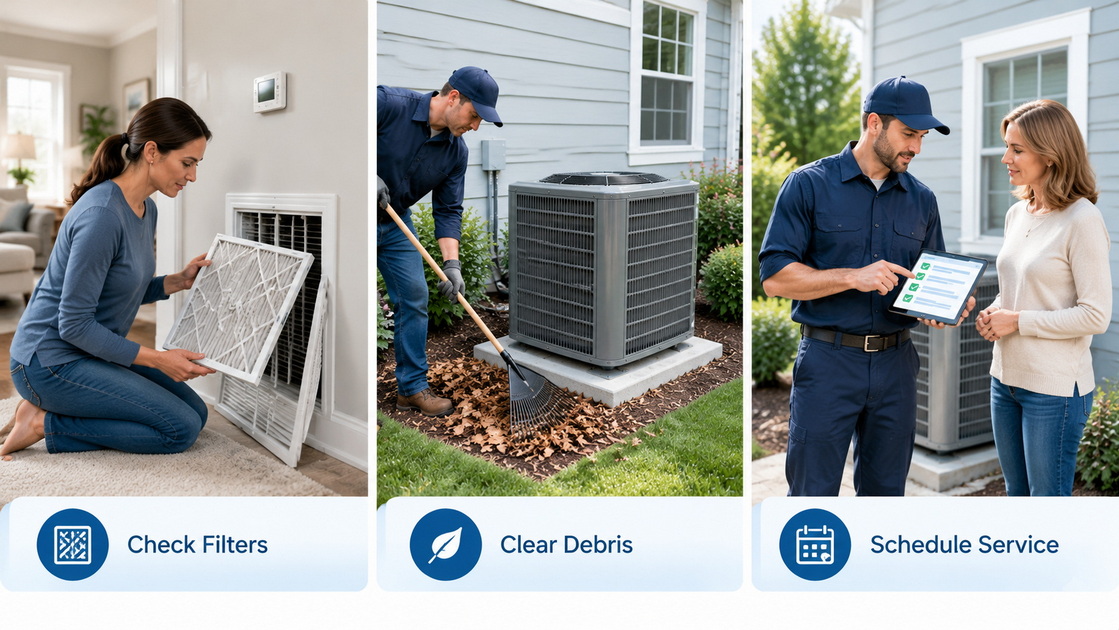
The following sequence also provides a practical checklist for evaluating a contractor's plan.
Look for disconnected joints, damaged metal, crushed flexible ducts, deteriorated supports, staining, and wet insulation.
Identify unfamiliar older materials before disturbing them. Suspected asbestos-containing insulation requires specialist assessment.
Reconnect and secure damaged sections. Correct restrictions and support problems where needed.
Insulating a defective air pathway does not make it perform properly.
Use duct mastic or approved tape suitable for the duct material and application. Ordinary cloth-backed duct tape is not a durable substitute.
Pay particular attention to plenums, branch connections, elbows, and register boots. Follow product requirements for surface preparation and curing.
Measure and cut according to the manufacturer's instructions. Maintain the required installed thickness without excessive compression.
Cover the intended duct surfaces continuously, including awkward fittings that are easy to overlook.
Seal seams, ends, and penetrations with compatible materials. A loosely overlapped jacket does not provide the same moisture protection as a properly sealed assembly.
Check for gaps, crushed sections, exposed fittings, and torn facing. Preserve required equipment access and clearances.
Where appropriate, ask for leakage testing or operating checks rather than relying solely on photographs of finished wrap.
Stop and seek qualified help when you encounter:
- Suspected asbestos-containing materials.
- Wet or visibly moldy insulation.
- Unsafe attic temperatures or unstable access.
- Extensive duct damage.
- Nearby electrical hazards.
- Uncertainty about appliance venting or required clearances.
Supply and return ducts are not the same as furnace flues or combustion vents. Do not apply ordinary duct wrap to a venting system without confirming the applicable requirements.
Homes with combustion appliances may also need safety evaluation when duct repairs change pressure relationships.
The goal is not simply to finish the insulation. It is to improve the air-distribution system without introducing another risk.
Compare scopes, not just totals. Two proposals can describe very different work even when both say "duct insulation."
| Quote item | What to ask |
|---|---|
| Inspection findings | Which defects were observed, and where? |
| Repairs | Are damaged sections and supports included? |
| Air sealing | Which joints and connections will be sealed? |
| Insulation | What product and installed R-value are specified? |
| Moisture correction | What happens if wet material is discovered? |
| Completion checks | Will you receive photos, testing, or operating checks? |
| Exclusions | What could require additional authorization? |
Avoid assuming duct cleaning is a necessary part of every insulation project. It addresses a different issue and should have its own documented justification.
Before work begins, record which rooms feel uncomfortable and under what conditions. Afterward, compare performance during reasonably similar weather and operating schedules.
Ask the contractor to document completed repairs and explain any remaining limitations.
Utility bills provide useful context, but weather, thermostat settings, and household habits affect consumption. One lower bill does not isolate the benefit of duct insulation.
If a room remains uncomfortable, further diagnosis may reveal an airflow, equipment, or building-envelope problem that wrapping alone cannot solve.
Bare attic ducts, recurring condensation, and deteriorated insulation deserve assessment before another heating or cooling season puts them under stress.
Contact Mega Services Heating & Cooling to schedule a heating and cooling system evaluation. Tell us where you notice uneven temperatures, visible moisture, or damaged duct coverings.
Ask us to help identify whether duct condition, insulation, airflow, or equipment performance needs attention—and discuss the appropriate next steps. Our priority is helping your family make informed decisions about safer, more dependable home comfort.
It is usually a lower priority for reducing heat transfer because the surrounding air is already conditioned. However, condensation risk, local requirements, or specific design conditions may still justify insulation.
Yes. Seal accessible leaks and repair defective connections first. Insulation does not provide an airtight repair and can hide leaks after installation.
Sometimes, but only after assessing the existing material. Wet, visibly moldy, damaged, or suspect older insulation should not simply be covered. Added layers also require careful moisture-control detailing.
Not necessarily. It may help when exposed ducts gain heat, but restricted airflow, duct sizing, solar heat gain, and equipment problems can produce similar symptoms. Diagnose the cause before choosing a repair.
Both should be evaluated when they pass through unconditioned spaces. The appropriate treatment depends on location, existing insulation, system design, and applicable requirements.
No. Exterior insulation work does not automatically require interior cleaning. Visible contamination or other specific findings may justify a separate assessment, but routine cleaning should not be presented as a prerequisite.
1.Original article used to assess topic coverage and identify opportunities for clearer savings claims, moisture troubleshooting, and project evaluation.
2.Supports the distinction between duct leakage and insulation, the 20%–30% air-loss estimate, sealing materials, and the recommendation against ordinary duct tape.
3.Homeowner guidance on sealing connections and insulating ducts in unconditioned spaces, including R-6-or-higher guidance.
4.Technical basis for exterior duct insulation, vapor-retarder continuity, thermal control, and approved sealing materials.
5.Additional context for higher-performance insulation and R-8 specifications in unconditioned spaces; not presented here as a universal requirement for existing homes.
6.Safety guidance on avoiding disturbance of suspect materials and obtaining trained professional assistance when needed.
7.Supports condition-based cleaning decisions, replacement of wet or moldy insulation, and precautions around asbestos-containing HVAC materials.


