
Views: 222 Author: Mega Services Publish Time: 2026-08-19 Origin: Site


Content Menu
● Why Air Conditioning Maintenance Matters in Arlington
● How to Choose an Air Conditioning Maintenance Company
>> Licensing and Professional Qualifications
>> Written Scope and Transparent Pricing
>> Long-Term Service Availability
● Air Conditioning Service Company Comparison
● Mega Services Heating & Cooling
● What a Thorough Maintenance Visit Should Include
>> Air Filter and Airflow Review
>> Indoor and Outdoor Coil Inspection
>> Electrical Component Inspection
>> Thermostat and Operating Sequence Review
>> Refrigerant-Related Assessment
● The Most Overlooked Air Conditioning Issue
>> Choosing Only by Promotional Price
>> Replacing Equipment Without a Full Evaluation
>> Comparing Incomplete Replacement Quotes
>> Ignoring Permit Requirements
>> Accepting Unverifiable Credentials
>> 1. How often should an air conditioning system be maintained?
>> 2. Does an air conditioner need refrigerant every year?
>> 3. Can a dirty filter cause air conditioning problems?
>> 4. Should I repair or replace my existing air conditioning system?
>> 5. How can I verify that an HVAC contractor is properly licensed?
>> 6. Why does my upstairs stay warmer than the rest of the house?
Arlington homeowners depend on their air conditioning systems during periods of high heat and humidity. When a system loses cooling performance, leaks water, cycles repeatedly, produces unusual noise, or drives up utility bills, the underlying issue may be more complex than a dirty filter or a low refrigerant charge.
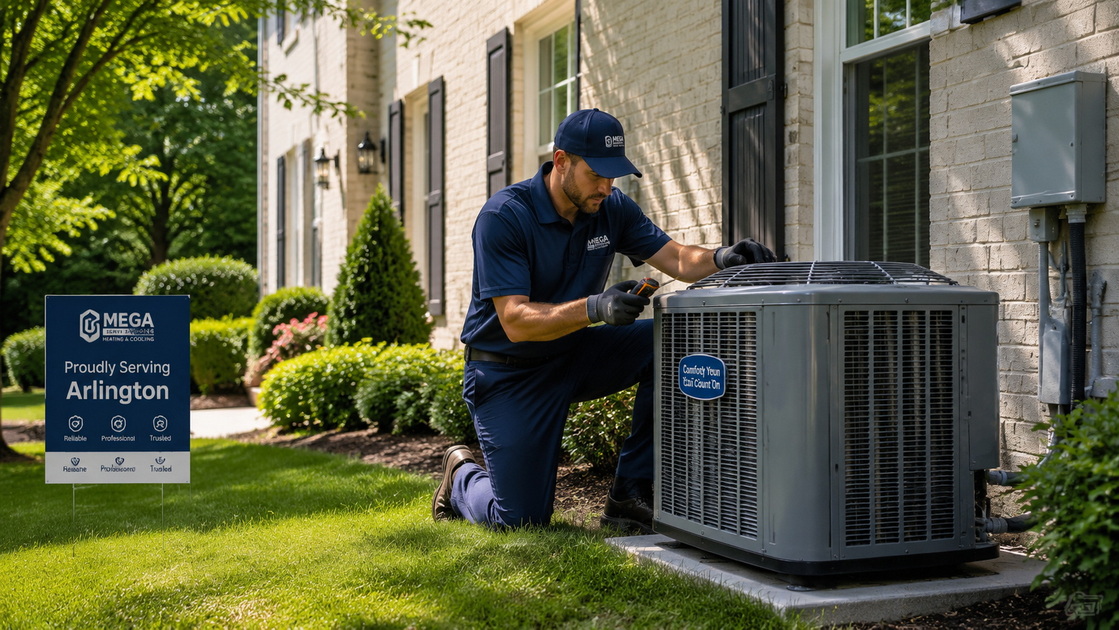
Choosing an air conditioning maintenance provider should therefore involve more than comparing promotional prices. The right partner can help protect indoor comfort, reduce avoidable breakdowns, improve operating efficiency, support warranty requirements, and identify issues before they become costly emergency repairs.
Mega Services Heating & Cooling is one of the Arlington-area companies homeowners can consider for air conditioning maintenance, repair, replacement, heating, heat pump, and indoor air quality needs. The company focuses on helping households maintain safe, comfortable, and energy-conscious indoor environments through practical system care and clear service communication.
Air conditioning systems operate under demanding conditions. High outdoor temperatures, humidity, clogged filters, dirty coils, drainage restrictions, electrical wear, and inconsistent airflow can all affect cooling performance.
A system may still turn on and produce some cool air while operating inefficiently. Over time, this can lead to longer cooling cycles, poor humidity control, uneven room temperatures, higher electricity use, and added strain on major components such as the compressor, blower motor, capacitor, and contactor.
Routine maintenance helps identify these issues early. A well-structured visit should not consist only of changing a filter or visually inspecting the outdoor unit. It should include a broader review of airflow, drainage, electrical components, coil condition, thermostat operation, refrigerant-related symptoms, and overall system performance.
For homeowners, the goal is simple: reduce surprise failures, maintain comfort, and make better decisions about repairs or replacement.
The strongest air conditioning service companies typically combine technical capability, transparent communication, proper licensing, and dependable follow-up support.
Before scheduling service, homeowners should evaluate the following factors.
A qualified HVAC contractor should be properly licensed for the work being performed. In Virginia, homeowners can verify contractor licensing through the Virginia Department of Professional and Occupational Regulation.
For any work involving refrigerant, technicians should also hold the appropriate EPA Section 608 certification. Refrigerant handling is regulated because improper recovery, charging, or disposal can create environmental and safety concerns.
Do not rely only on a website badge, vehicle decal, or verbal assurance. Ask for the company's legal business name, license information, and an explanation of which technician will perform refrigerant-related work.
A reliable technician should explain what was inspected, what was found, and what the recommended next step is.
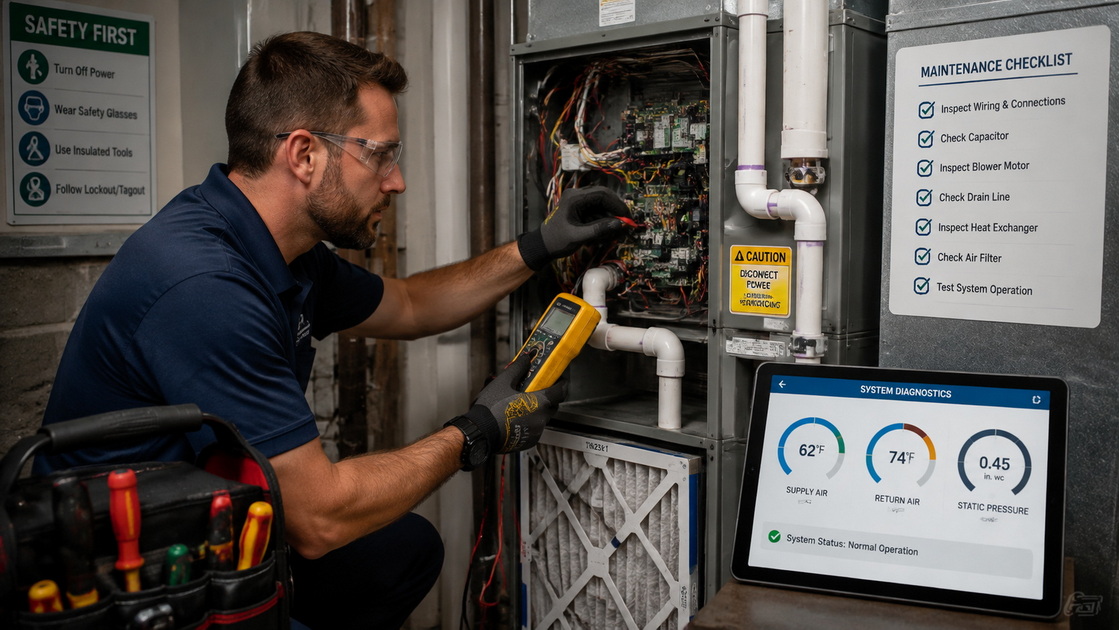
For example, if your system is not cooling properly, a thorough assessment may include:
- Checking the air filter and return-air condition
- Reviewing thermostat settings and operating sequence
- Measuring supply and return temperature differences
- Inspecting indoor and outdoor coil condition
- Checking condensate drainage and safety switches
- Evaluating blower performance and airflow
- Inspecting electrical connections, capacitors, and contactors
- Looking for signs of refrigerant leakage
- Checking unusual vibration, noise, or short cycling
A technician who recommends a major repair or replacement should be able to explain the supporting evidence in plain language.
A professional estimate should show more than a final dollar amount. It should clearly define the equipment, labor, parts, installation work, exclusions, warranty coverage, permit responsibility, and possible additional charges.
For maintenance visits, request a checklist that explains what is included. For system replacement, request the equipment manufacturer, model numbers, efficiency ratings, thermostat options, electrical work, ductwork changes, refrigerant line work, old-equipment removal, and warranty terms.
This makes it easier to compare service proposals fairly.
Air conditioning is not a one-time purchase. Systems need seasonal maintenance, occasional repair, filter changes, drainage checks, and support during periods of extreme weather.
A company that can provide ongoing support may be more valuable than one that simply offers the lowest initial price. Consider whether the provider can maintain service records, help with manufacturer warranty questions, respond to future repair needs, and communicate consistently over the life of the system.
The following comparison is designed to help Arlington homeowners understand different HVAC service models. It is not a ranking of every company in the area, nor is it based on unverified claims about market share, pricing, or service volume.
| Company or Service Type | Best Fit For | Typical Strengths | What to Verify Before Hiring |
|---|---|---|---|
| Mega Services Heating & Cooling | Homeowners seeking maintenance, repair, replacement, heat pump, and indoor air quality support from one provider | Broad residential service coverage, clear communication, multi-brand service capability, and long-term system support | License status, maintenance scope, refrigerant certification, model numbers, permit requirements, and written warranty terms |
| Large regional HVAC provider | Households with multiple properties or customers who prefer standardized service procedures | Larger scheduling capacity, service-plan options, and broader dispatch coverage | Who will complete the work, what the estimate includes, and whether recommended upgrades are necessary |
| Local independent HVAC contractor | Homeowners who value direct communication and a consistent technician relationship | Personalized service, local familiarity, and potentially flexible scheduling | Insurance, license status, emergency availability, replacement-part access, and warranty support |
| Heat pump and electrification specialist | Homes considering heat pump upgrades or energy-focused system replacements | Greater familiarity with heat pump sizing, electrical planning, and comfort balancing | Load calculation, electrical-panel capacity, backup heating approach, and system commissioning plan |
| Indoor air quality and duct diagnostic provider | Homes with humidity, airflow, dust, odor, or uneven-temperature concerns | Focus on airflow, filtration, humidity, ventilation, and duct performance | Whether recommendations are supported by measurements rather than product sales pressure |
Mega Services Heating & Cooling is a practical option for homeowners who want a single provider for air conditioning, heating, heat pump, maintenance, repair, replacement, and indoor air quality services.
The company's approach is centered on residential comfort, safety, system reliability, and energy-conscious operation. Rather than treating every service call as a replacement opportunity, the goal should be to assess the current system, identify the actual cause of the issue, explain the available options, and help the homeowner make an informed decision.
Mega Services Heating & Cooling can be especially suitable for homeowners who value:
- Clear explanations before work begins
- Flexible support for maintenance, repair, and replacement needs
- Service for common residential HVAC equipment and system configurations
- Help with air conditioning, heating, heat pumps, humidification, dehumidification, and air quality concerns
- Straightforward estimates for system replacement projects
- Long-term service relationships rather than one-time emergency repairs
- Support for multiple common HVAC brands, including Carrier, Bryant, Lennox, Goodman, Ruud, Ducane, and Daikin ductless systems
For homeowners replacing an existing system, it is important to confirm the specific equipment configuration, warranty registration requirements, included labor coverage, installation scope, and permit responsibilities before signing a contract.
A good replacement recommendation should account for more than the size of the old system. Home size, insulation, sun exposure, window conditions, ductwork, occupancy, room-by-room comfort concerns, humidity levels, and electrical capacity can all influence the right solution.
A meaningful air conditioning maintenance service should produce more than a verbal statement that the system "looks good." Homeowners should receive a clear explanation of the system condition, completed work, observed risks, and recommended next steps.
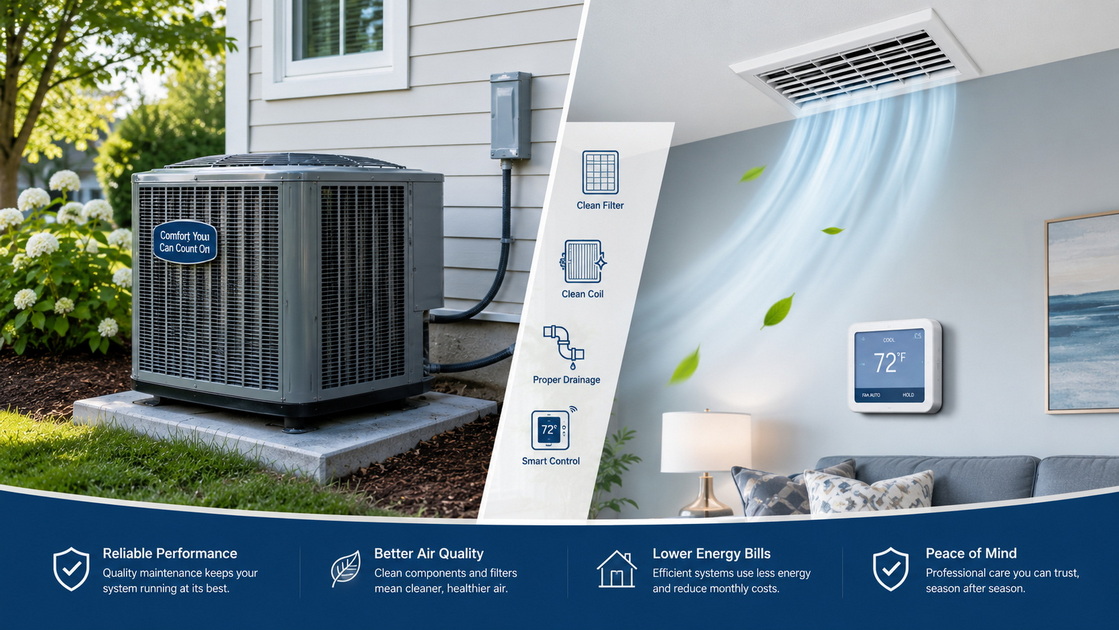
A thorough maintenance visit may include the following items.
The technician should inspect the filter's size, condition, installation direction, and compatibility with the system.
An overly restrictive filter can reduce airflow and increase strain on the blower system. A neglected filter can allow dust to accumulate on the indoor coil, reduce cooling efficiency, and contribute to inconsistent temperatures.
Homes with pets, allergy concerns, frequent occupancy, or high dust levels may need more frequent filter checks than homes with lighter usage.
The evaporator coil inside the home absorbs heat from indoor air. The condenser coil outside releases that heat outdoors. When either coil becomes dirty, the system must work harder to move heat.
Outdoor coils can become blocked by grass clippings, leaves, landscaping, lint, pollen, and debris. Indoor coils can collect dust when filters are neglected or when return-air pathways are poorly maintained.
Coil condition should be assessed carefully because improper cleaning methods can damage delicate coil fins.
Air conditioning removes moisture from indoor air. That moisture must flow safely through the condensate system.
A clogged drain line can cause water leaks, ceiling damage, mold concerns, system shutdowns, or overflow from the drain pan. During maintenance, the drain line, pan, trap, float switch, and nearby drainage components should be inspected.
Many cooling problems begin with electrical wear rather than a major mechanical failure.
The technician may inspect wiring connections, capacitors, contactors, disconnects, circuit protection, and signs of overheating. Weak capacitors and worn contactors can contribute to hard starts, intermittent operation, short cycling, or failure to start.
The thermostat is the control center for the system. Incorrect settings, loose wiring, sensor issues, battery problems, communication faults, or compatibility concerns can affect the entire system.
The technician should confirm that the system starts, runs, cycles, and shuts down properly. If the home has zoning, a smart thermostat, a heat pump, or auxiliary heating, those controls should also be reviewed.
Refrigerant is not a product that should need routine refilling in a properly sealed system. If a system repeatedly needs refrigerant, there may be a leak or another underlying performance issue.
A responsible diagnosis considers the full operating condition of the equipment. This may include airflow, temperature readings, coil condition, electrical performance, and refrigerant measurements when appropriate.
One of the most common misunderstandings in residential air conditioning service is assuming that "the refrigerant pressure is normal" means the system is operating correctly.
Pressure readings alone do not tell the whole story.
A system can have an airflow problem, dirty indoor coil, blocked return path, failing blower motor, drainage issue, thermostat problem, incorrect equipment sizing, or duct leakage while refrigerant pressures appear close to expected values. Likewise, adding refrigerant without identifying the reason for a low charge can temporarily improve cooling while leaving the root cause unresolved.
When a company recommends refrigerant service, ask the following questions:
- What signs suggest that refrigerant is the cause of the problem?
- Was airflow checked before refrigerant adjustments were recommended?
- Were the indoor and outdoor coils inspected?
- Is there evidence of a leak?
- What measurements were taken during the diagnosis?
- What should be monitored after the repair?
- Does the recommendation include leak detection, repair, or only refrigerant addition?
A service provider that can answer these questions clearly is more likely to be using a complete diagnostic process.
A low-cost maintenance offer may include only a basic visual inspection. Coil cleaning, drain treatment, electrical testing, troubleshooting, refrigerant diagnostics, and repair labor may be billed separately.
Before booking, ask for a written maintenance checklist and clarify which work is included in the advertised price.
Older equipment may eventually need replacement, but age alone does not prove replacement is the only reasonable option.
Ask for a comparison of repair and replacement choices. This should include the diagnosed issue, repair cost, expected system condition after repair, estimated future risks, replacement equipment options, warranty coverage, and installation scope.
A quote for "a new air conditioning system" is not detailed enough to compare accurately.
A complete estimate should identify the outdoor unit, indoor coil or air handler, furnace compatibility when applicable, thermostat, efficiency rating, refrigerant type, electrical changes, drainage work, duct modifications, equipment removal, permits, warranty registration, labor coverage, and excluded work.
Mechanical permits may apply when air conditioning equipment, ventilation components, ductwork, or related systems are added, moved, removed, or altered. Some like-for-like replacements may have different requirements, while work involving gas equipment or larger changes may require additional review.
Before authorizing installation, ask the contractor:
- Does this project require a permit?
- Who will submit the permit application?
- Is the permit fee included in the quote?
- Will an inspection be scheduled if required?
- Will the final installation documents be provided to the homeowner?
A professional company should be willing to provide licensing information, insurance details, certification information relevant to the work, and written terms for the project.
Do not rely only on online ratings. Reviews can be helpful, but they should not replace documentation, clear scope of work, technical explanation, and proper local compliance.

A dependable air conditioning maintenance company should help homeowners understand their system, prevent avoidable breakdowns, maintain safe operation, and make informed repair or replacement decisions.
For Arlington homeowners, the strongest choice is usually a provider that combines professional qualifications, clear diagnostic practices, transparent written estimates, appropriate permit handling, and ongoing service support.
Mega Services Heating & Cooling is well positioned for homeowners seeking practical, responsive support for air conditioning maintenance, repair, replacement, heating, heat pump, and indoor air quality needs. By focusing on system condition, comfort concerns, service transparency, and long-term performance, homeowners can make decisions that protect both their indoor environment and their household budget.
If your air conditioning system is struggling to cool properly, making unusual noises, leaking water, cycling too often, causing uneven temperatures, or nearing replacement age, schedule a professional system evaluation with Mega Services Heating & Cooling to better understand the condition of your equipment and the options available.
Most residential systems benefit from professional maintenance at least once each year, ideally before the primary cooling season. Homes with older systems, pets, heavy use, high dust levels, humidity concerns, or recurring performance issues may benefit from more frequent checks.
No. A properly sealed air conditioning system should not require annual refrigerant addition. If refrigerant is low, the system may have a leak or another issue that should be diagnosed rather than repeatedly refilled.
Yes. A severely clogged or incorrect filter can restrict airflow, reduce cooling performance, increase energy use, strain the blower system, contribute to coil freezing, and create uneven temperatures throughout the home.
The answer depends on the age of the system, nature of the problem, repair cost, refrigerant type, efficiency level, maintenance history, availability of parts, comfort concerns, and expected remaining service life. A qualified technician should explain both options rather than presenting replacement as the only path.
Ask for the contractor's legal business name and license number, then verify the information through the Virginia Department of Professional and Occupational Regulation. Confirm that the company name matches the name on the contract and invoice.
Common causes include inadequate return airflow, duct leakage, poor insulation, sun exposure, thermostat location, blocked vents, insufficient system capacity, zoning issues, or improper balancing. Replacing the air conditioner alone may not solve the problem unless the airflow and building conditions are evaluated.
- Mega Services Heating & Cooling – About Us:
https://www.megaservices.org/about-us.html
- U.S. Environmental Protection Agency – Section 608 Technician Certification Requirements:
https://www.epa.gov/section608/section-608-technician-certification-requirements
- U.S. Environmental Protection Agency – Section 608 Technician Certification:
https://www.epa.gov/section608/section-608-technician-certification
- Arlington County – Mechanical Permit Requirements:
https://www.arlingtonva.us/Government/Programs/Building/Permits/Mechanical
- Arlington County – Find a Contractor Resources:
https://www.arlingtonva.us/Government/Programs/Sustainability/AIRE/Arlington-Home-Energy-Hub/Find-a-Contractor
- Virginia Department of Professional and Occupational Regulation:
https://www.dpor.virginia.gov/
- U.S. Department of Energy – Energy-Efficient Residential Central Air Conditioners:
https://www.energy.gov/cmei/femp/purchasing-energy-efficient-residential-central-air-conditioners


