
Views: 211 Author: Mega Services Publish Time: 2026-08-07 Origin: Site


Content Menu
● How the Air Conditioner Drain Line Works
● Warning Signs of a Clogged AC Drain Line
● Why Air Conditioner Drain Lines Get Clogged
● Safety Steps Before Working on the Drain Line
● Step‑by‑Step Guide: Clearing a Clogged Drain Line
>> Inspect and Empty the Drain Pan
>> Find the Drain Line Access Points
>> Use a Wet/Dry Vacuum at the Drain Outlet
>> Flush the Line With Vinegar
● Practical Advice From Real‑World Service Calls
● Ongoing Maintenance to Prevent Drain Line Clogs
● When Professional Help Is the Smart Choice
● Impact on Comfort and Indoor Air Quality
● FAQs
When your air conditioner drain line is clogged, it usually doesn't begin with a dramatic failure. It starts with small clues: a faint musty smell, a damp spot near the indoor unit, or the system turning off on a hot afternoon for no obvious reason. Over years of working in attics, basements, and utility closets, one pattern has been very clear—blocked condensate drain lines are one of the most common and preventable causes of AC leaks and shutdowns.
This guide walks you through how to recognize a clogged drain line, the safest ways to clear it, and habits that help homeowners keep their systems draining properly. If at any point something feels unsafe or beyond your comfort level, it is always better to stop and bring in a trained technician.
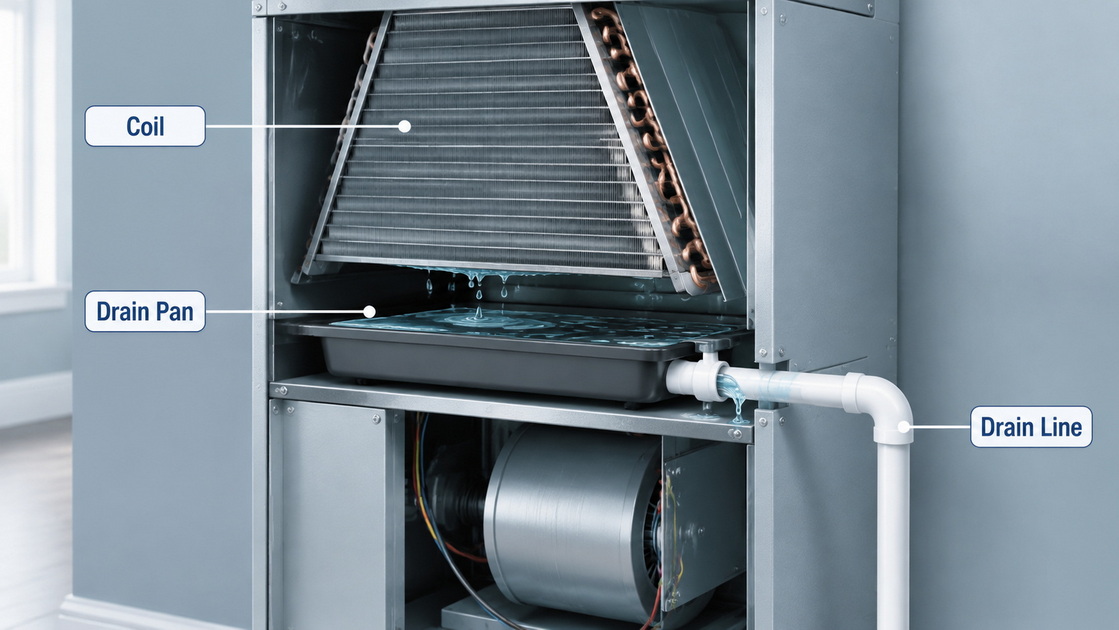
Every central air conditioner removes moisture from indoor air. As warm air passes over the cold evaporator coil, water vapor condenses and drips into a condensate drain pan beneath the coil. From there, water flows into a PVC drain line and exits the home at a discharge point outside or into a suitable drain.
When everything is working properly, this process is quiet and invisible. When the drain line becomes blocked, water accumulates in the drain pan instead of flowing out. If the system has a safety float switch, it may shut the unit down. If it does not, the pan can overflow and cause ceiling stains, damaged drywall, warped flooring, and mold growth.
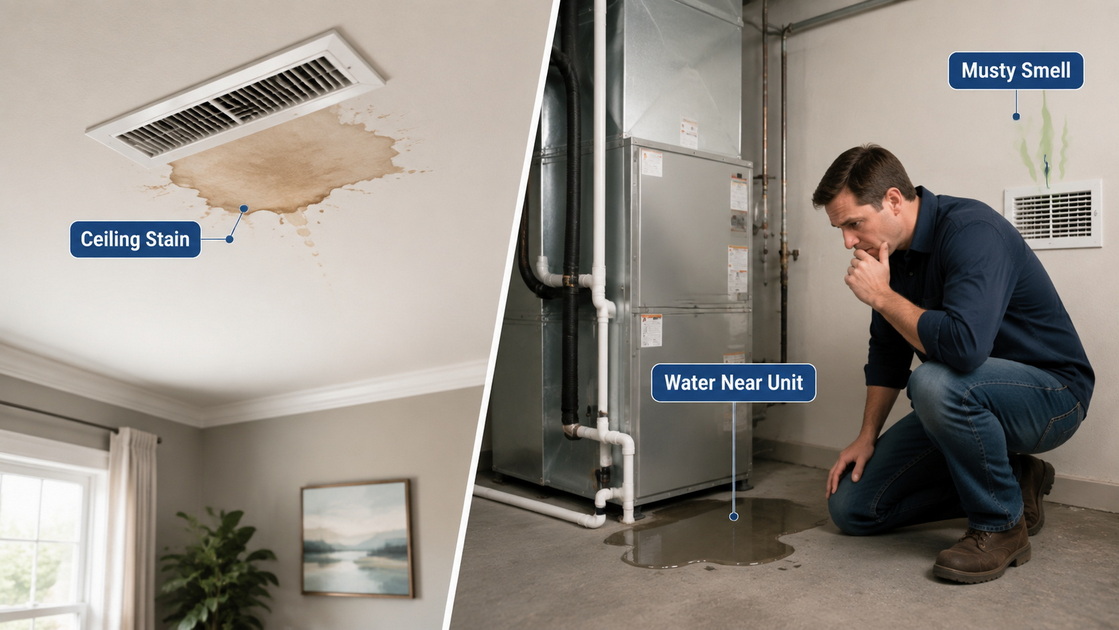
You do not need technical training to spot early warning signs. Pay attention to these clues around your indoor air handler and living spaces:
- Water around the indoor unit
Puddles or damp spots near the air handler in the attic, closet, basement, or utility room.
- Ceiling stains or discoloration
Brown rings or wet patches on ceilings below the AC unit or duct chase.
- Musty or moldy odors
Persistent smells near supply vents or the indoor unit, especially when the system first turns on.
- AC shutting off unexpectedly
The system stops and will not restart even though the thermostat is still calling for cooling, often due to a triggered float switch.
- Visible standing water in the drain pan
When you remove the access panel, you can see water sitting in the pan under the evaporator coil.
If you catch a clog when it is only causing a small drip at the drain outlet, you can often fix it with minimal effort and cost. Ignoring these signs often leads to more serious repairs.
In day‑to‑day service work, several causes of condensate drain clogs appear repeatedly. Understanding them helps you prevent future problems.
Dust, dirt, and filter issues
When air filters are dirty, not properly sized, or poorly installed, dust and debris reach the coil. Mixed with condensate, this forms sludge that enters the drain pan and line. Over time, it can build a dense blockage that restricts water flow.
Mold, algae, and biofilm growth
Cool, dark, and damp conditions inside the drain line allow algae, mold, and mildew to grow. These organisms form thick layers on the inner surface of the pipe, narrowing the passage and generating odors.
Improper slope or installation
If the drain line is not sloped correctly, water cannot flow freely. Low spots can trap water, encouraging buildup and repeated clogs even when the line has been cleaned.
Outdoor obstructions at the outlet
The discharge point outside the home can be blocked by soil, mulch, insects, or even spider webs. A partially blocked outlet forces water to back up into the system instead of draining away.
In practice, many "mysterious" AC leaks are simply the result of these straightforward issues that have been building up for months or years.
Before attempting any cleaning or unclogging, it is important to take simple precautions that protect both you and your equipment:
1. Turn off power to the air conditioner.
Switch the system off at the thermostat and, if possible, shut off the breaker that serves the indoor unit. Working near water and electrical components requires caution.
2. Locate the indoor unit and drain pan.
Find the air handler in the attic, closet, basement, or utility room. The drain pan sits directly under the evaporator coil.
3. Prepare the area.
Place towels, a shallow tray, or plastic sheeting under the unit if you suspect any overflow, especially in finished spaces.
Taking a few minutes to prepare avoids common mistakes, such as touching live wiring, spilling dirty water onto finished surfaces, or pushing a clog deeper into the line.
If you are comfortable with basic home maintenance and have the right tools, you can often clear a clogged air conditioner drain line yourself. The steps below are based on common field practices and homeowner‑friendly methods.
- Remove the access panel on the indoor unit.
- Look for standing water in the drain pan beneath the coil.
- Use a wet/dry shop vacuum to remove the water from the pan.
- Clean the pan with mild detergent and warm water to remove sludge or algae, then dry it thoroughly.
If the pan is cracked, rusted through, or shows signs of long‑term overflow, this points to a problem that has been developing over time and may need professional repair.
Most systems have two key locations you will use:
- Indoor drain line clean‑out
Usually a PVC T fitting with a removable cap near the drain pan or coil. This allows you to pour cleaning solution into the line.
- Outdoor drain line outlet
A small PVC pipe that discharges condensate outside the home, often near the foundation or close to the outdoor unit.
Remove the indoor clean‑out cap and use a flashlight to check for obvious debris or growth near the opening.
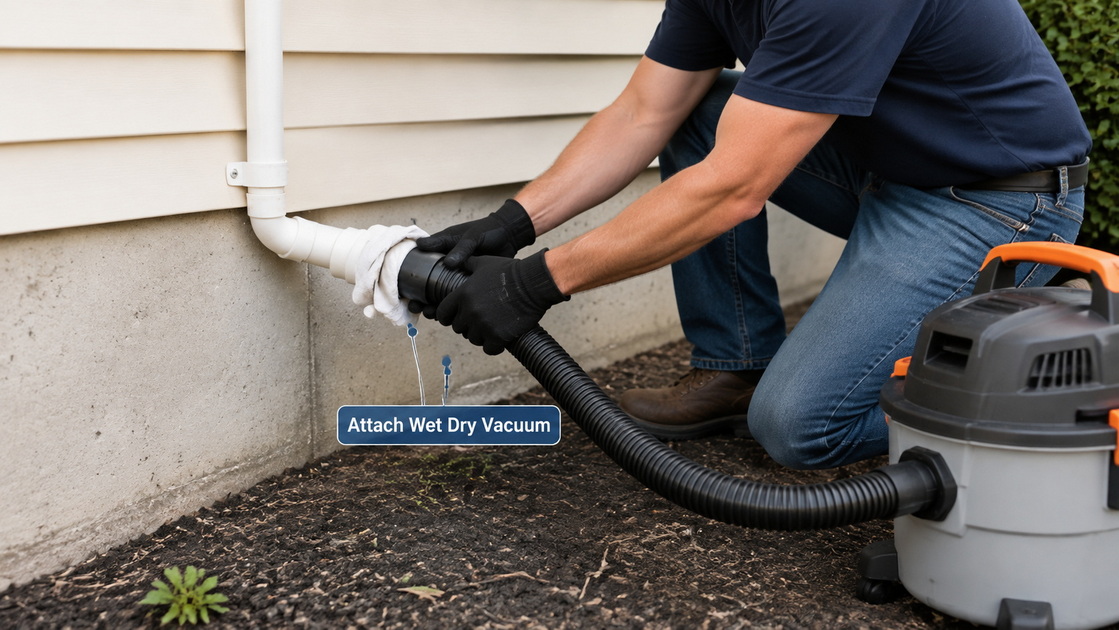
For many homeowners, the simplest and most effective method is to use suction:
- Go to the outdoor drain line outlet.
- Place the shop vac hose over the PVC pipe. Because the hose is larger than the pipe, wrap a cloth or rag around the joint to create a tighter seal.
- Remove the paper filter from the vacuum if recommended by the manufacturer, so water does not damage it.
- Turn on the vacuum and run it for 20–90 seconds. Listen for a change in sound when the blockage breaks free.
When the clog clears, you may see dirty water and debris entering the vacuum. This method removes most common obstructions without forcing them deeper into the system.
Once water flows freely:
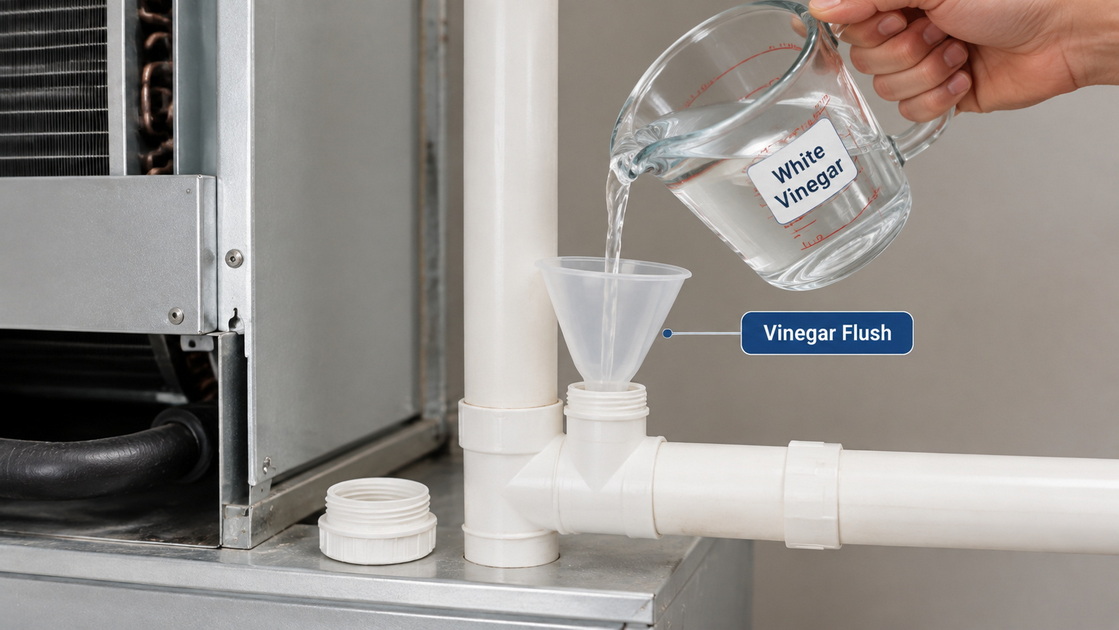
- Use a funnel to pour ¼–1 cup of plain white vinegar into the indoor clean‑out.
- Let it sit in the line for 30 minutes or longer to break down remaining biofilm and help control algae and mold.
- If desired, flush the line with plain water afterward to carry loosened material out through the outlet.
Vinegar is widely used because it is effective against organic buildup and gentle on PVC. Bleach is sometimes used in specific contexts, but many professionals warn that spilled bleach can damage metal drain pans and should be avoided for routine homeowner maintenance.
Spending time on actual service calls reveals patterns that are not always obvious from diagrams and manuals. Several lessons stand out:
- Most clogs start at the outlet or low points.
It is common to find mud, mulch, or insect activity near the outdoor outlet, along with sludge gathering at low spots in the line. Clearing these points solves many issues quickly.
- Repeated clogs often signal an underlying design problem.
If the drain line clogs several times a year despite regular cleaning, it is worth checking the slope, the length of the run, and whether there are unnecessary bends that trap water.
- Condensate pumps can hide clogs in plain sight.
In some homes, the system uses a condensate pump to move water upward and out. A dirty or failing pump can mimic a drain line clog; inspecting and cleaning the pump reservoir is crucial in these setups.
Learning from these patterns helps homeowners focus on the underlying cause instead of treating each clog as an isolated incident.
Preventive maintenance is more convenient and less costly than emergency repairs. Simple routines keep air conditioner drain lines clear and help the entire system run more smoothly.
Regular flushing with vinegar
Pouring a small amount of white vinegar into the clean‑out several times per year helps control algae and bacterial growth inside the line. Many contractors recommend doing this three to four times a year.
Visual inspections
Occasionally check the indoor drain pan and the outdoor outlet. Look for buildup, discoloration, or damp spots that suggest restricted flow.
Air filter replacement
Changing filters on schedule reduces dust and debris reaching the evaporator coil and drain pan. Clean filters also support consistent airflow and comfortable temperatures.
Professional system checks
A yearly visit from a qualified technician allows for deeper cleaning, slope verification, inspection of safety devices, and early detection of rust, cracks, or hidden leaks.
These habits form a simple, practical routine that most homeowners can follow without specialized tools or knowledge.
Even for confident homeowners, there are clear moments when hands‑on experience, specialized tools, and training make a difference:
- The drain pan overflows repeatedly despite cleaning.
- The system shuts off frequently due to high water, indicating float switch or control issues.
- There are signs of mold or water damage on surrounding drywall, framing, or insulation.
- The drain line runs through walls or ceilings in a way that makes it difficult to access or trace.
- The system uses a pump or complex drain configuration and you are unsure how to service it safely.
Bringing in a technician at the right time can protect structural materials, preserve equipment, and prevent a simple clog from becoming a larger renovation project.
A clogged drain line does more than cause puddles. It also influences comfort and the overall environment inside the home:
- Comfort and performance
When water sits in the drain pan or on the coil, microbial buildup can interfere with heat transfer. The system may need to run longer to reach the same temperature, and cooling may feel less consistent.
- Indoor air quality
Standing water and microbial growth contribute to musty odors and potential airborne contaminants. In sensitive households, this can aggravate respiratory symptoms or allergies.
Maintaining clear drain lines contributes to a cleaner, more comfortable indoor space, beyond simply preventing leaks.
Clogged air conditioner drain lines are common, but they do not have to be complicated. By recognizing early warning signs, following safe steps for inspection and cleaning, and building simple maintenance routines into the cooling season, homeowners can prevent leaks, odors, and unexpected system shutdowns.
The key is to act early, treat recurring clogs as a sign of deeper issues, and involve a trained technician when drainage problems are persistent, hard to access, or connected to electrical or structural concerns. A clear drain line supports reliable comfort, protects your home from hidden water damage, and keeps the system running the way it was designed.
1. How can I tell if my AC drain line is clogged?
Common indicators include water around the indoor unit, ceiling stains, musty odors near vents, frequent system shutdowns, and visible standing water in the drain pan. Checking both the indoor pan and the outdoor outlet often confirms the issue.
2. What is the easiest way for a homeowner to clear a clogged drain line?
For many homeowners, using a wet/dry shop vacuum at the outdoor outlet is the most straightforward method. Creating a tight seal with a rag around the pipe and running the vacuum until the blockage breaks free often restores drainage quickly.
3. Is vinegar safe to pour into the drain line?
Plain white vinegar is widely used to dissolve organic buildup and inhibit algae and mold inside PVC drain lines. Pouring a small amount into the indoor clean‑out several times a year is a simple, low‑cost maintenance habit.
4. Why do drain lines keep clogging even after cleaning?
Repeated clogs often point to underlying problems such as improper slope, long horizontal runs with low spots, poor filter maintenance, or a condensate pump that needs service. Identifying and correcting these factors reduces the chance of future blockages.
5. Do I always need a technician to fix a clogged drain line?
Not always. Many homeowners can safely handle basic inspection, pan cleaning, vacuuming at the outlet, and vinegar flushing. However, if there is structural damage, persistent clogs, electrical issues, or complex plumbing and pump configurations, professional help is the safest and most effective option.
1. Carrier – *How to Clean AC Drain Line*
[https://www.carrier.com/us/en/residential/hvac-resources/air-conditioners/how-to-clean-ac-drain-line/]
2. Trane – *AC Condensate Drain Line Clogged? Get Expert Help*
[https://www.trane.com/residential/en/resources/troubleshooting/air-conditioners/ac-drain-line-clogged/]
3. Lennox – *What To Do When You Have A Clogged AC Drain Line*
[https://www.lennox.com/residential/lennox-life/consumer/ac-drain-line-clogged]
4. Aire Serv – *Clean & Unclog Your AC Drain Line*
[https://www.aireserv.com/about/blog/diy-tips-to-cleaning-your-ac-units-drain-tube/]
5. Terry's AC & Heating – *DIY: Condensate Drain Line Maintenance*
[https://terrysacandheating.com/diy-condensate-drain-line-maintenance/]
6. Drainiv – *4 Reasons Why Your AC Drain Line Keeps Clogging*
[https://drainiv.com/why-does-my-ac-drain-line-keep-clogging/]
7. Beckett – *HVAC Condensate Drain Lines: Importance, Problems and Maintenance*
[https://beckettus.com/articles/hvac-condensate-drain-lines-importance-problems-and-maintenance/]
8. John Moore Services – *How to Clean Your AC Condensate Drain Line*
[https://www.johnmooreservices.com/how-to-clean-your-ac-condensate-drain-line/]
9. HomeServe – *What Is a Condensate Drain Line?*
[https://www.homeserve.com/en-us/blog/home-improvement/condensate-drain-line/]
10. Reddit – *My AC Keeps Clogging, I Think I Need a Second Opinion*
[https://www.reddit.com/r/fixit/comments/vcm1q/my_ac_keeps_clogging_i_think_i_need_a_second/]


