
Views: 213 Author: Mega Services Publish Time: 2026-09-25 Origin: Site


Content Menu
● Is 14 SEER the Same as 14 SEER2?
● SEER vs. SEER2 vs. EER2 vs. HSPF2
● Why SEER2 Gives a More Realistic Picture
● What Does 14 SEER2 Mean for Homeowners?
● Current Efficiency Requirements for Air Conditioners
● Why a Higher SEER2 Rating Does Not Automatically Mean Lower Bills
>> System Size
● How to Compare 14 SEER2 Air Conditioners
● When a Higher SEER2 System May Be Worth It
● The Importance of Proper Sizing
● A Real-World Comfort Example
● Questions to Ask Before Replacing Your AC
● Final Thoughts: Choose the Whole Comfort System
>> 1. Is 14 SEER the same as 14 SEER2?
>> 2. Is a 14 SEER2 air conditioner good?
>> 3. Will a higher SEER2 rating reduce my energy bills?
>> 4. What is the difference between SEER2 and EER2?
>> 6. Should I replace or repair my old air conditioner?
>> 7. Do I need new ductwork when I replace my HVAC system?
>> 8. Why does my home have hot and cold rooms?
If you are comparing a 14 SEER vs. 14 SEER2 air conditioner, do not assume the two ratings mean the same thing. SEER2 is the current efficiency measurement used for new residential air conditioners and heat pumps, and its testing method is more demanding than the former SEER standard.
For homeowners, this difference matters. A system with a 14 SEER2 rating is not directly equivalent to an older 14 SEER system. Understanding the rating, your home's cooling needs, duct condition, and installation quality can help you choose equipment that delivers reliable comfort, better humidity control, and more manageable energy use.
At Mega Services Heating & Cooling, we help families create safer, more comfortable, and more energy-efficient homes through professional heating and air conditioning installation, repair, and maintenance. We believe the right HVAC decision should be based on the entire home—not just a number printed on an equipment label.
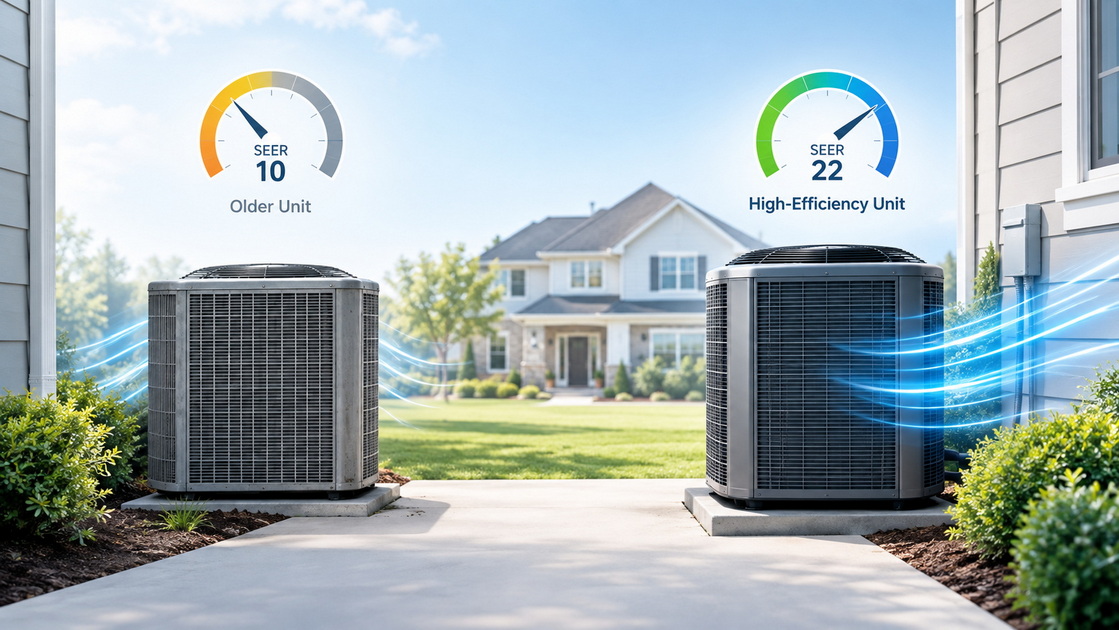
SEER stands for Seasonal Energy Efficiency Ratio. It was the standard rating used for many years to measure the seasonal cooling efficiency of central air conditioners and heat pumps.
In simple terms, SEER compares the amount of cooling a system produces during a typical season with the electricity it uses to create that cooling.
A higher SEER number generally meant the equipment could provide more cooling for each unit of electricity consumed under the older testing method.
For example, homeowners often compared systems by asking:
- Is a 16 SEER air conditioner better than a 14 SEER system?
- Will replacing my old 10 SEER unit lower my utility bills?
- Is a high-efficiency air conditioner worth the higher upfront cost?
- How much can I save by upgrading my existing HVAC system?
These are important questions. However, newer residential equipment is now rated using SEER2 rather than the former SEER measurement.
SEER2 stands for Seasonal Energy Efficiency Ratio 2. It is the updated efficiency rating used for newly manufactured residential central air conditioners and heat pumps.
Like the previous SEER rating, SEER2 estimates seasonal cooling efficiency. It compares the amount of heat removed from a conditioned space during the cooling season with the electricity required to operate the system.
The main difference is the way the equipment is tested.
SEER2 uses more demanding test conditions that better reflect the resistance an HVAC system encounters in a real home. Air must move through filters, return ducts, supply ducts, indoor coils, registers, and other components before it reaches living spaces. These parts create resistance, and that resistance affects how efficiently the system operates.
Because SEER2 testing accounts for more realistic system pressure, it provides homeowners with a stronger basis for comparing modern HVAC equipment.
No. A 14 SEER air conditioner and a 14 SEER2 air conditioner should not be viewed as equal-efficiency systems.
The numbers may look similar, but they come from different test procedures. SEER2 ratings are based on stricter testing conditions. As a result, a unit rated 14 SEER2 represents a higher performance level than an older unit rated 14 SEER under the former testing method.
This is one reason homeowners may feel confused when reviewing old brochures, online product listings, contractor proposals, or equipment labels.
You may see:
- Older systems identified by SEER ratings
- Current systems identified by SEER2 ratings
- Heat pumps listed with both cooling and heating ratings
- Proposals that include SEER2, EER2, and HSPF2
- Marketing materials that have not been updated to reflect the new standards
The most important rule is simple: do not compare a SEER rating directly with a SEER2 rating.
Homeowners replacing a heating and cooling system may see several efficiency measurements. Each rating provides a different piece of the performance picture.
| Rating | What It Measures | Why It Matters |
|---|---|---|
| SEER | Seasonal cooling efficiency under the former testing method | Useful when comparing older equipment or reviewing legacy documents |
| SEER2 | Seasonal cooling efficiency under the current testing method | The primary cooling-efficiency rating for new residential systems |
| EER2 | Cooling efficiency under higher-load conditions | Helpful for understanding performance during very hot weather |
| HSPF2 | Seasonal heating efficiency for heat pumps | Important when selecting a heat pump for year-round heating and cooling |
A new air conditioner may have a SEER2 rating and an EER2 rating. A heat pump may include SEER2, EER2, and HSPF2 ratings because it provides both cooling and heating.
When comparing systems, ask for the complete set of ratings associated with the exact equipment combination being quoted.
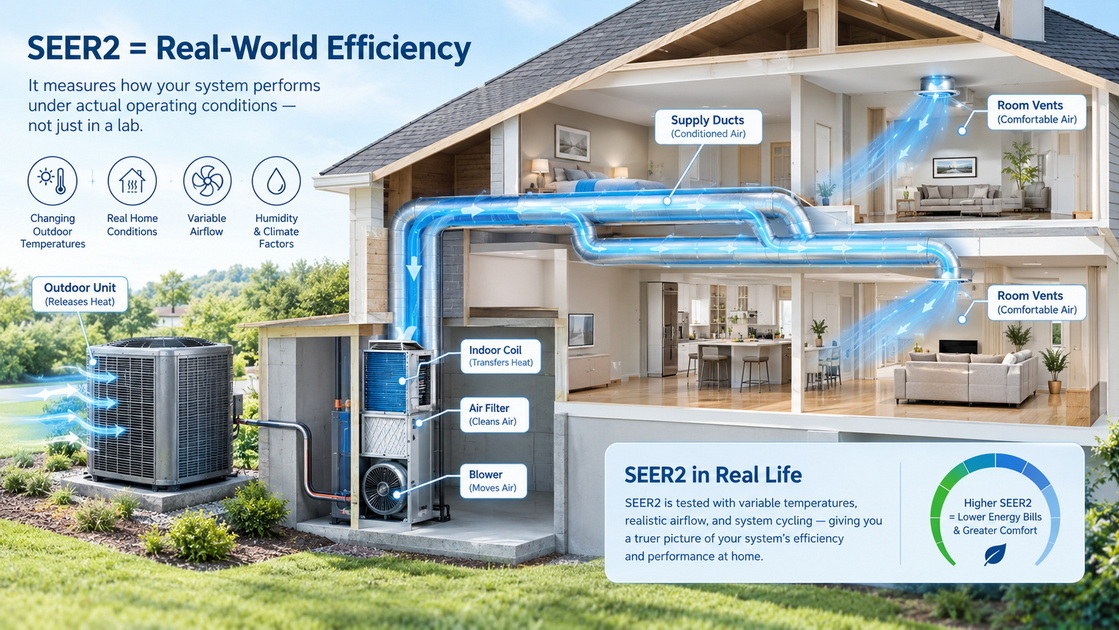
An air conditioner does not operate by itself. It functions as part of a complete comfort system.
The outdoor unit, indoor coil, blower motor, thermostat, air filter, ductwork, electrical components, and refrigerant lines all affect performance. If air cannot move freely through the system, the equipment may work harder, use more energy, and provide less consistent comfort.
SEER2 testing uses higher external static pressure than the earlier method. This change better reflects the resistance created by common components such as ducts, filters, and indoor coils.
That does not mean every system will perform exactly as it does in a laboratory. Homes vary widely in insulation, duct design, air leakage, window exposure, equipment maintenance, and thermostat use.
However, the newer rating helps homeowners make a more meaningful comparison between current models.
A 14 SEER2 system is often a practical option for homeowners who need reliable cooling, want to replace an aging unit, and need to balance upfront cost with ongoing operating expenses.
It may be a suitable choice when:
- Your existing air conditioner is old, unreliable, or expensive to repair
- You want a system that meets applicable efficiency requirements
- You are working within a defined replacement budget
- Your home has moderate cooling demand
- You plan to improve ductwork, airflow, insulation, or maintenance practices
- You want dependable comfort without paying for features you may not need
A 14 SEER2 system may not always be the best fit for every household. In a home with high electricity costs, long cooling seasons, severe humidity concerns, or a plan to remain in the home for many years, a higher-efficiency system may offer better long-term value.
The right decision depends on the total comfort system, not only the rated efficiency number.
Minimum efficiency requirements for new HVAC equipment can vary by region, equipment type, and system capacity.
For many residential split-system air conditioners under 45,000 BTU per hour, the current minimum cooling requirement is commonly:
| Region | General Minimum Requirement |
|---|---|
| Northern region | 13.4 SEER2 |
| Southeastern region | 14.3 SEER2 |
| Southwestern region | 14.3 SEER2 plus applicable EER2 requirements |
Heat pumps have separate cooling and heating requirements. A common minimum for many split-system heat pumps is 14.3 SEER2 and 7.5 HSPF2.
These requirements can change based on the product type, cooling capacity, location, and applicable regulations. Your contractor should confirm that the proposed equipment is appropriate for your home and compliant with requirements in your service area.
A higher SEER2 rating can improve cooling efficiency, but it does not guarantee a specific dollar amount in savings.
Your actual energy use depends on several factors beyond the equipment label.
An oversized air conditioner can cool the thermostat area too quickly and shut off before it runs long enough to remove sufficient humidity. This pattern, often called short cycling, may lead to uneven temperatures, excess moisture, unnecessary wear, and reduced comfort.
An undersized system may operate continuously during extreme heat and still struggle to maintain the desired indoor temperature.
The correct system size should be based on a professional load calculation that considers:
- Home size and layout
- Ceiling height
- Insulation levels
- Window size and orientation
- Air leakage
- Number of occupants
- Appliances and internal heat sources
- Local weather conditions
- Desired comfort settings
Selecting equipment based only on square footage or the size of the old HVAC unit can lead to comfort problems.
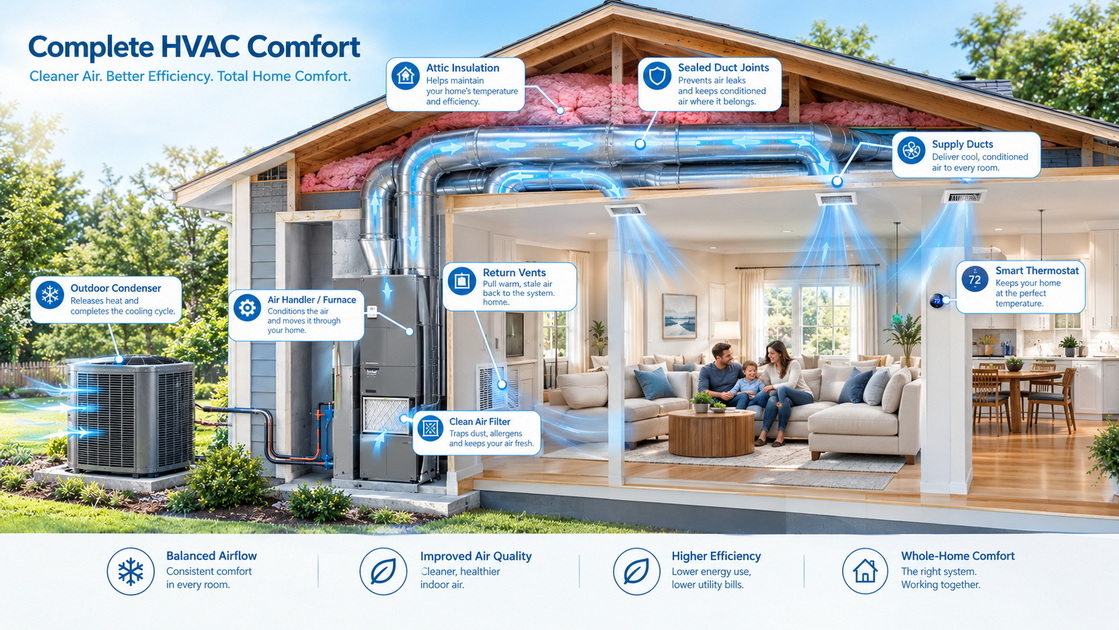
Your air conditioner relies on ductwork to distribute cooled air throughout the home. If ducts leak, are poorly insulated, disconnected, crushed, undersized, or restricted, the system may lose conditioned air before it reaches the rooms where it is needed.
Common airflow problems include:
- Leaky duct connections in attics, crawl spaces, garages, or wall cavities
- Dirty air filters
- Undersized return-air pathways
- Closed or blocked supply vents
- Improper blower settings
- Dirty indoor coils
- Damaged flexible duct runs
- Inadequate duct insulation
A new high-efficiency air conditioner cannot fully overcome serious airflow problems. Before replacing equipment, it is wise to inspect the duct system and identify issues that could reduce comfort and performance.
Installation quality has a major effect on how a heating and cooling system performs.
A complete installation should include careful attention to:
- Refrigerant charge
- Electrical wiring and safety connections
- Condensate drainage
- Indoor airflow
- Duct connections
- Temperature split
- Static pressure
- Outdoor-unit leveling and clearances
- Thermostat setup
- System controls
- Equipment commissioning
A system with improper refrigerant levels or restricted airflow may consume more electricity, provide less cooling, and experience avoidable component strain.
Mega Services Heating & Cooling approaches each project as a complete home comfort solution. Our goal is not simply to replace equipment. Our goal is to help the equipment perform as intended in your specific home.
Regular maintenance protects efficiency, reliability, and indoor comfort.
Homeowners can support system performance by:
- Replacing or cleaning air filters regularly
- Keeping supply and return vents open and unobstructed
- Removing leaves, grass, and debris from around the outdoor unit
- Watching for unusual sounds, water leaks, weak airflow, or temperature changes
- Scheduling seasonal professional maintenance
- Addressing small issues before they become major repairs
Professional maintenance can identify dirty coils, loose electrical connections, drainage problems, blower concerns, airflow restrictions, and other issues that may reduce performance over time.
Your HVAC system must work against the heat and moisture entering your home.
Air leaks around doors, windows, attic openings, plumbing penetrations, recessed lights, and duct connections can increase cooling demand. Poor insulation, direct sun exposure, aging windows, and unsealed attic spaces can also make rooms harder to cool.
Improving the home envelope may reduce the burden placed on your HVAC system and improve comfort in rooms that have historically felt too warm or too cold.
Do not compare air conditioners based only on the outdoor condenser model or the lowest price in a proposal.
Ask for the complete matched-system information. The outdoor unit, indoor coil, air handler or furnace, blower motor, and controls must work together.
Before making a final decision, ask for:
1. The exact outdoor-unit model number
2. The exact indoor-coil or air-handler model number
3. The certified SEER2 rating for the complete equipment combination
4. The EER2 rating for high-load cooling performance
5. The HSPF2 rating if you are considering a heat pump
6. A recommendation based on a professional load calculation
7. An inspection of ductwork and airflow conditions
8. Details about warranty coverage
9. Information about maintenance requirements
10. A clear explanation of the expected comfort benefits and operating considerations
A reliable proposal should explain why a particular system is recommended for your home, rather than simply presenting the highest available rating.
A higher-efficiency system may make sense if your home has long, hot cooling seasons or if your electricity costs are high.
It may also be worthwhile when you value additional comfort features, such as quieter operation, better humidity management, improved temperature consistency, or variable-speed airflow.
Consider a higher SEER2 option if:
- You plan to stay in your home for many years
- Your air conditioner runs heavily during the summer
- You have high utility costs
- You are concerned about humidity
- Certain rooms are consistently warmer than others
- You want quieter indoor or outdoor operation
- You are interested in two-stage or variable-capacity equipment
- You may qualify for applicable rebates or financial incentives
- You want improved control over indoor comfort
A higher rating alone is not the only benefit. Many higher-efficiency systems also use advanced compressors, blower motors, and controls that can improve temperature stability and reduce noticeable swings between cycles.
One of the most common misconceptions in HVAC replacement is that a larger system will cool a home better.
In reality, bigger is not always better.
An oversized system may cool quickly but fail to run long enough to remove adequate humidity. This can make a home feel cool but damp. It may also cause frequent starting and stopping, which can increase mechanical wear.
A properly sized system runs in a more controlled manner. It can maintain steadier temperatures, manage humidity more effectively, and reduce stress on system components.
Professional sizing should consider the entire home, including insulation, windows, sun exposure, air leakage, duct condition, occupancy, and layout.
For this reason, replacing an old 3-ton system with another 3-ton system is not always the correct answer. The old unit may have been improperly sized from the beginning, or changes to the home may have altered its heating and cooling needs.
Imagine two homeowners replacing old air conditioning systems.
The first homeowner installs a new system with an attractive equipment rating but does not repair leaking attic ducts or address a restricted return-air pathway. The new equipment may still struggle to deliver even cooling to distant rooms.
The second homeowner installs a correctly sized system, seals major duct leaks, improves return airflow, verifies refrigerant charge, and schedules regular maintenance. Even if the equipment ratings are similar, this homeowner is more likely to experience consistent comfort, better humidity control, and more reliable long-term performance.
The lesson is simple: the best HVAC investment is not always the system with the highest number. It is the system that is properly selected, installed, and maintained for the home.
Before approving an HVAC replacement, ask your contractor these questions:
1. What is the certified SEER2 rating for this exact matched system?
2. What is the EER2 rating, and why does it matter for my climate?
3. Will you perform a room-by-room load calculation before selecting equipment?
4. Will you inspect my ductwork for leakage, restrictions, or insulation problems?
5. How will you verify airflow and refrigerant charge after installation?
6. Is this a single-stage, two-stage, or variable-capacity system?
7. How will this system help with humidity and uneven room temperatures?
8. What labor and equipment warranties are included?
9. What maintenance schedule do you recommend?
10. Are there any currently available equipment incentives that may apply?
A clear answer to these questions can help you understand the difference between a basic equipment quote and a complete home comfort recommendation.
When comparing 14 SEER and 14 SEER2, remember that SEER2 is the newer efficiency measurement and should not be directly compared with the older SEER rating.
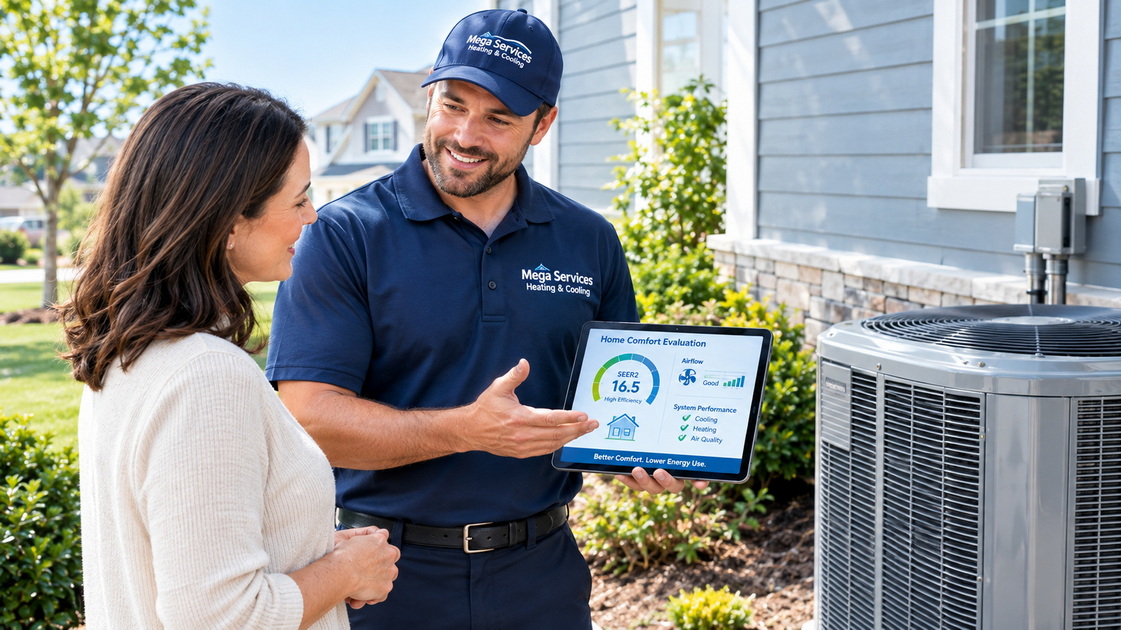
However, the equipment label is only one part of the decision. System sizing, ductwork, airflow, installation quality, maintenance, insulation, and household comfort needs all affect real-world results.
The right HVAC system should help your family enjoy dependable cooling, balanced temperatures, healthy airflow, controlled humidity, and energy-conscious operation throughout the year.
Mega Services Heating & Cooling is ready to help you evaluate your existing system, understand your replacement options, and select a heating and cooling solution designed around your home, lifestyle, and comfort priorities.
Contact Mega Services Heating & Cooling to schedule a professional home comfort evaluation and receive a clear recommendation for your next heating or cooling project.
No. They are based on different testing procedures. SEER2 uses more demanding testing conditions, so a 14 SEER2 system should not be considered equal to an older 14 SEER system.
A 14 SEER2 air conditioner can be a good choice for many homes. It may be especially suitable for homeowners who want dependable cooling, reasonable upfront costs, and an efficiency level that meets applicable requirements. The best option depends on your climate, energy costs, ductwork, comfort expectations, and budget.
A higher SEER2 rating may reduce cooling energy use compared with a lower-rated system. However, actual savings depend on installation quality, system size, duct condition, maintenance, local weather, utility rates, thermostat settings, and household usage.
SEER2 measures seasonal cooling efficiency across a range of conditions. EER2 measures cooling efficiency during a higher-load operating condition. EER2 can be especially relevant in locations that experience very hot outdoor temperatures.
HSPF2 stands for Heating Seasonal Performance Factor 2. It is used to measure the seasonal heating efficiency of a heat pump. A higher HSPF2 rating generally indicates more efficient heating performance.
Replacement may be worth considering if your air conditioner needs frequent repairs, has declining performance, produces unusually high energy bills, uses outdated refrigerant, or is approaching the end of its expected service life. A professional evaluation can help you compare the cost of repair with the benefits of replacement.
Not always. However, your existing ducts should be inspected before installing new equipment. Leaks, damaged sections, inadequate insulation, restricted airflow, and undersized returns can reduce comfort and limit the performance of a new system.
Uneven temperatures can be caused by duct leakage, poor airflow, blocked vents, inadequate return-air pathways, insulation problems, window exposure, improper equipment size, thermostat placement, or aging HVAC components. A complete comfort evaluation can identify the likely cause.
1. U.S. Department of Energy.
2. Air-Conditioning, Heating, and Refrigeration Institute.
3. ENERGY STAR.
4. Internal Revenue Service.
5. ENERGY STAR.
6. Logan Services.


