
Views: 213 Author: Mega Services Publish Time: 2026-08-10 Origin: Site


Content Menu
● Does an AC System Need Refrigerant Replacement?
● Refrigerant Recharge vs. Leak Repair
● 7 Signs Your AC May Have a Refrigerant Leak
>> 2. Cooling Cycles Are Longer Than Usual
>> 3. Ice Forms on the Refrigerant Line or Coil
>> 4. You Hear Hissing or Bubbling Sounds
>> 5. Indoor Air Feels More Humid
>> 6. Your Energy Costs Increase Unexpectedly
>> 7. You See Oily Residue Near Refrigerant Components
● What to Check Before Scheduling Service
● Why a Simple Refrigerant Top-Off May Not Solve the Problem
● Why Refrigerant Work Requires Professional Service
● Understanding R-22, R-410A, and Newer Refrigerants
>> What This Means for Your Home
● A Complete Approach to Low Refrigerant Concerns
● Keep Your Home Comfortable With the Right Repair
>> 1. How often should AC refrigerant be replaced?
>> 2. Can I run my AC when refrigerant is low?
>> 3. Does warm air from vents always mean low refrigerant?
>> 4. Can an R-22 system use R-410A instead?
>> 5. Is refrigerant included in regular AC maintenance?
>> 6. Should I repair or replace an AC system with a refrigerant leak?
Most homeowners ask when they need to replace AC refrigerant after their system begins blowing warm air, running longer, or struggling to cool the home. The answer is usually simple: a properly operating air conditioner should not use up refrigerant or require regular refills.
Your air conditioner circulates refrigerant through a sealed loop. It absorbs heat inside your home, moves that heat outdoors, and repeats the cycle. If the refrigerant level becomes low, there is usually a leak, an incorrect original charge, or another system issue that should be professionally diagnosed.
At Mega Services Heating & Cooling, we help homeowners look beyond temporary fixes. A complete inspection can identify the cause of poor cooling, protect important system components, and help restore a safe, comfortable, and energy-conscious home.
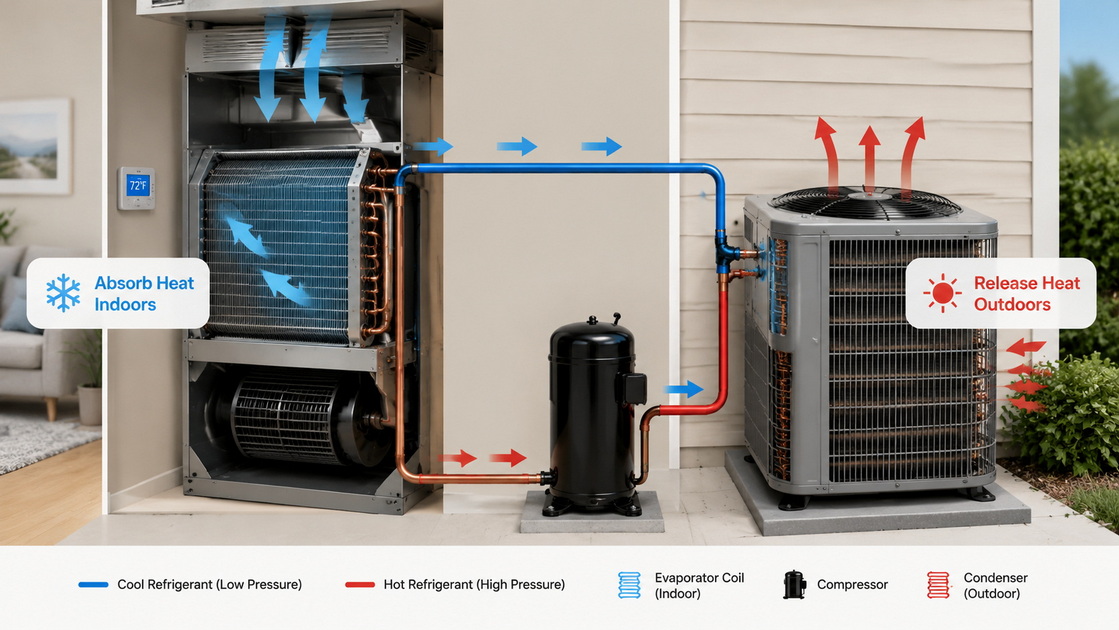
Under normal conditions, no. Refrigerant is not a consumable product like fuel, motor oil, or car coolant. It remains inside the air-conditioning system and continues circulating for the life of the equipment.
A system may need refrigerant service when one of the following issues occurs:
- A refrigerant line, coil, connection, or valve develops a leak.
- The system was not charged correctly during installation.
- Refrigerant was removed during a repair and must be restored to the manufacturer's required level.
- Corrosion, vibration, age, or physical damage affects the sealed refrigerant circuit.
- A component failure causes the system to lose pressure or operate outside normal conditions.
A refrigerant recharge may improve cooling temporarily, but it should not be treated as the complete repair when a leak is present. The key question is not only how much refrigerant is missing, but also why it became low.
A refrigerant recharge means restoring the appropriate amount of refrigerant to the system. A leak repair involves locating and correcting the point where refrigerant escaped.
These are different services. Adding refrigerant without investigating the cause can create a repeating cycle of weak cooling, rising utility bills, and avoidable service calls.
| Situation | What It May Mean | Recommended Next Step |
|---|---|---|
| AC cools normally with no previous low-charge issue | Refrigerant level is likely normal | Continue seasonal maintenance |
| Air from vents feels warm | Could involve refrigerant, airflow, electrical components, or thermostat settings | Schedule a complete system inspection |
| Ice appears on the indoor coil or refrigerant line | Low refrigerant or restricted airflow may be present | Turn the system off and arrange service |
| Refrigerant has been added more than once | A leak or charging issue is likely | Request leak detection before another recharge |
| Older equipment has a major leak | Repair costs may be significant | Compare repair and replacement options |
Low refrigerant cannot be confirmed by symptoms alone. Many heating and cooling problems can create similar warning signs. Still, the following changes should prompt a closer inspection.
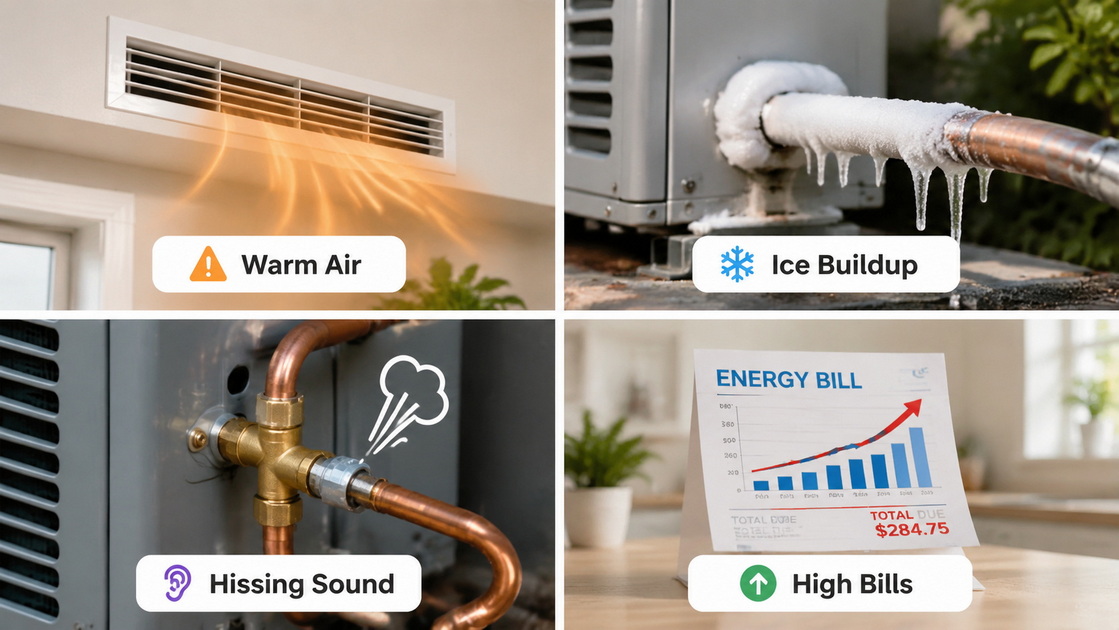
Warm air coming through supply vents is one of the most common signs homeowners notice. When refrigerant is low, the evaporator coil may not absorb enough heat from the indoor air.
However, warm air does not always mean a refrigerant problem. A dirty filter, blocked return vent, thermostat malfunction, dirty coil, failed capacitor, duct leakage, or compressor issue can also affect cooling performance.
If your home is not reaching the temperature set on the thermostat, it is best to have the whole system evaluated rather than assuming it simply needs more refrigerant.
An air conditioner with a low refrigerant charge may run for extended periods because it cannot remove heat efficiently. You may notice that the system runs almost continuously during the afternoon or repeatedly starts and stops without reaching the desired indoor temperature.
Long run times may also result from high outdoor temperatures, insufficient insulation, poor duct performance, undersized equipment, or excessive indoor heat gain. A trained technician can distinguish between these causes through a full performance check.
A sudden change in system behavior is often more important than the exact number of minutes the equipment runs.
Ice or frost on the large insulated refrigerant line, indoor evaporator coil, or outdoor equipment is a warning sign that deserves prompt attention. Low refrigerant can cause coil temperatures to fall too low, allowing moisture in the air to freeze.
Restricted airflow can cause the same issue. A heavily clogged filter, dirty evaporator coil, blocked return grille, or blower problem may reduce airflow enough for ice to develop.
If you see ice, turn the cooling system off. Do not continue operating it, and do not attempt to chip ice off the coil. Allowing the system to run while frozen may increase the risk of equipment damage.
A noticeable hissing sound near refrigerant lines, the indoor unit, or the outdoor condenser can sometimes indicate refrigerant escaping through a leak. Bubbling or gurgling sounds may also occur when refrigerant and compressor oil move through a damaged section of tubing.
Not every unusual sound confirms a leak. Condensate drainage, duct expansion, normal refrigerant movement, and loose panels can create noises as well.
A professional inspection can determine whether the sound is normal operation, an airflow issue, a drainage concern, or evidence of a refrigerant leak.
Your air conditioner lowers both temperature and humidity. As warm household air passes over the cold evaporator coil, moisture condenses and drains away from the system.
When the equipment is not operating properly, your home may feel cool but damp. You may notice sticky indoor air, musty odors, or discomfort even when the thermostat shows a normal temperature.
Humidity problems can be linked to refrigerant charge, but they can also result from oversized equipment, short cycling, drainage issues, duct leakage, or inadequate airflow. Identifying the source is essential before deciding on repairs.
A system that cannot cool efficiently often runs longer to achieve the same result. This extra operation can increase electricity use while comfort declines.
Before assuming refrigerant is the cause, compare utility bills from similar weather periods. Consider rate changes, heat waves, thermostat adjustments, home occupancy, insulation condition, and equipment age.
An inspection is especially worthwhile when higher energy use appears together with warm airflow, excessive cycling, ice buildup, or uneven room temperatures.
Refrigerant itself may not always leave an obvious visible trace, but compressor oil can sometimes appear near a leak location. Small oily spots around refrigerant lines, fittings, coils, or the outdoor unit may give a technician a useful starting point.
Do not touch damaged pipes, open electrical panels, or service valves. Simply note what you see and share the details during the service visit.
A technician can use appropriate leak-detection methods and equipment to determine whether a refrigerant leak exists and where it is located.
Homeowners can safely rule out a few common issues before arranging a professional visit. These steps do not replace diagnosis, but they can identify simple airflow problems and provide helpful information.
1. Confirm that the thermostat is set to cooling mode and the selected temperature is below the current room temperature.
2. Check the air filter. Replace it if it is visibly dirty, damaged, or overdue for replacement.
3. Make sure supply registers and return grilles are open and not blocked by furniture, rugs, curtains, or storage items.
4. Check that the outdoor unit has open space around it. Remove loose leaves, grass clippings, and lightweight debris from the surrounding area.
5. Look for visible ice, water near the indoor unit, unusual noises, or obvious damage to refrigerant-line insulation.
6. Note when the issue began, whether it happens every day, and whether some rooms are affected more than others.
7. Turn the system off if it is frozen or producing warm air continuously, then arrange an inspection.
These observations help create a clearer picture of what the system is doing before testing begins.
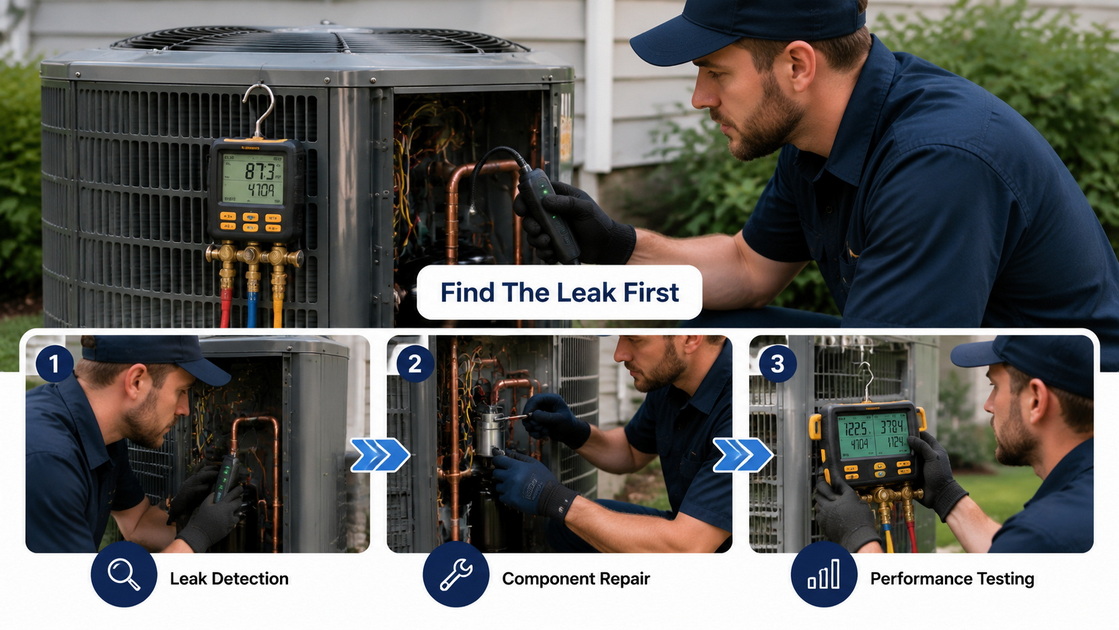
Many homeowners still use the term "Freon" when referring to AC refrigerant. While the term is common, residential systems can use different refrigerant types depending on their age and design.
The more important point is that refrigerant should not regularly disappear. Repeatedly adding refrigerant without repairing the leak may offer short-term cooling but does not correct the source of the problem.
A thorough refrigerant service commonly includes:
- Checking air filters, blower operation, and overall airflow.
- Inspecting indoor and outdoor coils.
- Evaluating thermostat function and electrical components.
- Looking for signs of refrigerant leakage.
- Performing leak detection when needed.
- Repairing the identified leak when practical.
- Restoring the system to the required refrigerant charge.
- Confirming operating temperatures and overall cooling performance.
This process helps avoid unnecessary refrigerant use and gives homeowners a more reliable answer than a quick refill alone.
Air-conditioning refrigerant is handled under pressure and works alongside electrical components, moving parts, and specialized equipment. Incorrect handling can damage the system, create safety hazards, and lead to poor cooling performance.
Proper diagnosis also requires more than a single pressure reading. Refrigerant performance is affected by airflow, outdoor temperature, indoor conditions, coil cleanliness, system design, and manufacturer specifications.
A trained professional evaluates these factors together. This helps prevent incorrect charging, protects the compressor, and supports long-term equipment reliability.
The refrigerant type used in your air conditioner is listed on the equipment data plate, usually found on the outdoor condenser unit. This information is important when planning repair or replacement decisions.
Older systems may use R-22. Many newer legacy systems use R-410A. These refrigerants are not interchangeable because they operate at different pressures and require different components, oils, and equipment designs.
New residential cooling systems are also moving toward lower-global-warming-potential refrigerants. This transition affects the type of refrigerant used in newly manufactured equipment, but it does not automatically mean that a working existing system needs immediate replacement.
If your R-410A air conditioner is operating reliably, there is no reason to replace it only because newer systems use a different refrigerant. Maintenance, repair history, cooling performance, energy use, system age, and future repair costs should guide the decision.
For an older R-22 system with a significant leak, replacement may become a more practical long-term consideration. Refrigerant availability, equipment condition, repair scope, and comfort needs all matter.
Mega Services Heating & Cooling can help homeowners compare the likely value of repair with the benefits of a properly sized new air conditioner or heat pump.
A low refrigerant concern should be viewed as a whole-system performance issue. The goal is not simply to restore cold air for the day, but to understand why comfort changed and what will provide a dependable solution.
A complete inspection should consider:
- Refrigerant charge and potential leaks.
- Filter condition and airflow.
- Evaporator and condenser coil cleanliness.
- Drainage and moisture-control performance.
- Electrical connections and capacitor condition.
- Thermostat settings and temperature response.
- Blower operation and duct airflow.
- System age, maintenance history, and repair history.
This approach supports better comfort, more consistent humidity control, and a clearer understanding of your equipment's condition.

If your air conditioner is blowing warm air, forming ice, running excessively, making unusual sounds, or needing refrigerant repeatedly, the system should be inspected before the problem grows.
Mega Services Heating & Cooling is ready to help identify the cause, explain your options clearly, and restore dependable cooling for your home. A timely inspection can protect your comfort, reduce unnecessary strain on the system, and help you make a confident repair decision.
A properly sealed air-conditioning system should not need routine refrigerant replacement. If the refrigerant level is low, a leak, incorrect initial charge, or system problem is usually involved.
It is not recommended to ignore the issue. Low refrigerant can reduce cooling performance, increase operating time, contribute to coil icing, and place added stress on major equipment components.
No. Warm airflow can also result from a dirty filter, thermostat issue, airflow restriction, dirty coil, electrical failure, duct problem, or compressor concern. A full inspection is the best way to identify the cause.
No. R-22 and R-410A are different refrigerants with different operating pressures and equipment requirements. An R-22 system cannot be converted by simply adding R-410A.
Maintenance visits may include checking cooling performance and identifying possible refrigerant concerns. A refrigerant recharge is generally needed only when the system has lost refrigerant or was incorrectly charged.
The best option depends on the leak location, repair cost, equipment age, refrigerant type, system condition, energy performance, and history of previous repairs. A professional evaluation can help compare the practical long-term value of each option.
1. One Hour Heating & Air Conditioning.
2. U.S. Department of Energy.
3. ENERGY STAR.
4. U.S. Environmental Protection Agency.
5. U.S. Environmental Protection Agency.
6. U.S. Environmental Protection Agency.
7. U.S. Environmental Protection Agency.


