
Views: 215 Author: Mega Services Publish Time: 2026-08-13 Origin: Site


Content Menu
● What Is Freon in an Air-Conditioning System?
● Why Is R-22 Freon So Expensive?
>> R-22 Is No Longer Produced or Imported
>> Older Systems Still Depend on It
>> Refrigerant Loss Usually Indicates a Leak
● Does Your Air Conditioner Have a Refrigerant Leak?
>> Common Signs of Low Refrigerant
● Why Recharging an AC Is Not Always the Best Solution
● Should You Repair or Replace an R-22 Air Conditioner?
>> When a Repair May Be a Good Choice
>> When Replacement May Be the Better Long-Term Decision
● Why You Cannot Simply Use a New Refrigerant in an Old R-22 System
● What a Professional AC Refrigerant Assessment Should Include
● How Installation Quality Affects Comfort and Energy Use
● How Homeowners Can Help Protect Their AC System
>> Practical Steps for Better AC Performance
● Make an Informed Decision About Your AC System
>> 1. Is it illegal to use an air conditioner that uses R-22?
>> 2. Why does my AC need refrigerant every year?
>> 3. Can I put R-410A into an R-22 air conditioner?
>> 4. Will low refrigerant make my electric bill higher?
>> 5. How do I know whether to repair or replace my older AC system?
>> 6. Can a refrigerant leak be repaired?
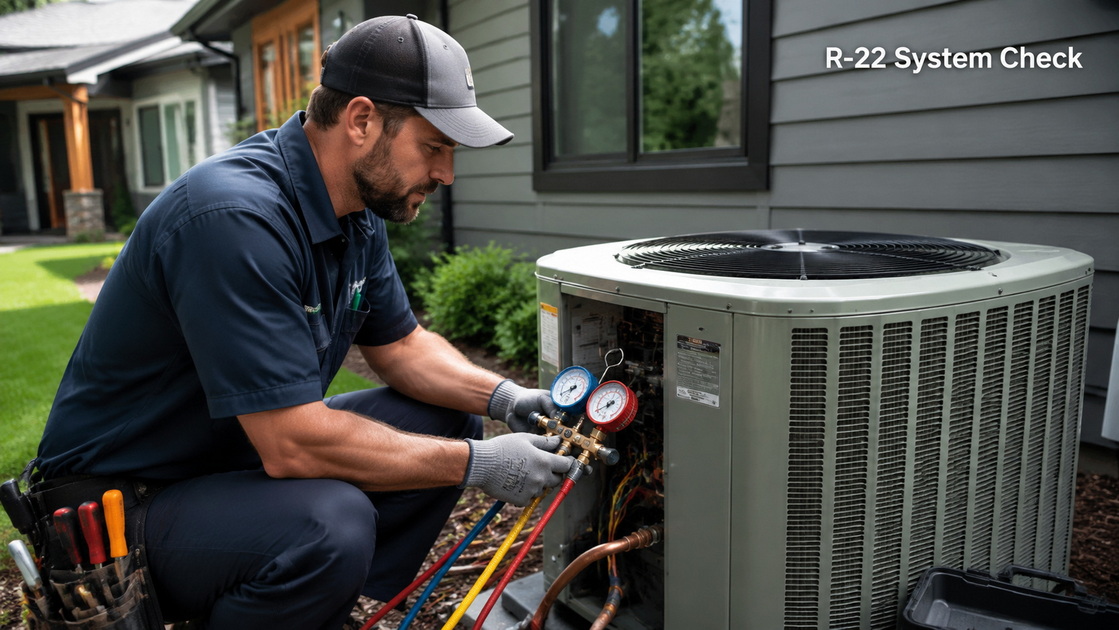
If your air conditioner is running but your home still feels warm, you may hear that the system is “low on Freon.” For many homeowners, that diagnosis raises an immediate concern: why is the refrigerant cost so high?
For older air-conditioning systems, the answer often involves R-22, a refrigerant commonly referred to as Freon. R-22 is no longer manufactured or imported in the United States, so the available supply is limited. That limited availability can make repair estimates significantly higher than homeowners expect.
However, refrigerant cost is only one part of the decision. A properly working central air-conditioning system is sealed. It should not need refrigerant added regularly. If your AC is low on refrigerant, there is usually a leak or another issue that needs professional attention.
At Mega Services Heating & Cooling, we help homeowners understand the condition of their equipment, the cause of the problem, and the realistic options available. The goal is not simply to add refrigerant. The goal is to restore safe, dependable, and efficient comfort in your home.
“Freon” is a term many homeowners use when talking about air-conditioner refrigerant. Technically, Freon is a brand name historically associated with several refrigerants. In many older home cooling systems, the refrigerant people mean is R-22, also called HCFC-22.Refrigerant is essential to the cooling process. It does not create cold air. Instead, it transfers heat.Inside your home, the evaporator coil absorbs heat from indoor air. The refrigerant carries that heat to the outdoor unit, where the condenser coil releases it outside. The cooled air then circulates back into your living space.This cycle repeats continuously while your system runs.When refrigerant levels are correct, your AC can remove heat and moisture effectively. When refrigerant is low, the system may struggle to cool your home, run longer than usual, freeze up, or experience excessive wear.
The high cost of R-22 is primarily connected to supply restrictions, aging equipment, and the specialized work required to repair a refrigerant system correctly.
R-22 was once one of the most common refrigerants used in residential central air conditioners. It was gradually phased out because of its ozone-depleting properties.Although homeowners can continue using an existing R-22 air-conditioning system, new R-22 is no longer produced or imported in the United States. Service providers must rely on previously produced, recovered, recycled, or reclaimed refrigerant supplies.This creates a limited market. As older systems continue to need service, available R-22 can become harder and more expensive to obtain.
Many homes still have AC systems designed specifically for R-22. These units cannot simply be filled with a newer refrigerant without considering the equipment’s design, operating pressures, compressor, oil type, expansion components, and manufacturer specifications.A refrigerant change is not as simple as swapping one container for another. Using an incompatible refrigerant can reduce performance, damage expensive components, and create future service problems.
An AC system should not “use up” refrigerant during normal operation.If a technician finds that your system is low on R-22, it may mean there is a leak in a refrigerant line, fitting, valve, indoor coil, or outdoor coil. Adding refrigerant without locating or addressing the leak may restore cooling temporarily, but the issue can return.That is why an accurate repair estimate often includes more than refrigerant. It may also involve diagnostic testing, leak detection, repair labor, refrigerant recovery, system evacuation, charging, and performance verification.
A home that feels warm does not automatically mean the AC has low refrigerant. Dirty filters, blocked airflow, thermostat problems, electrical issues, dirty coils, duct leakage, and failing components can cause similar symptoms.Still, several warning signs may indicate a refrigerant problem.
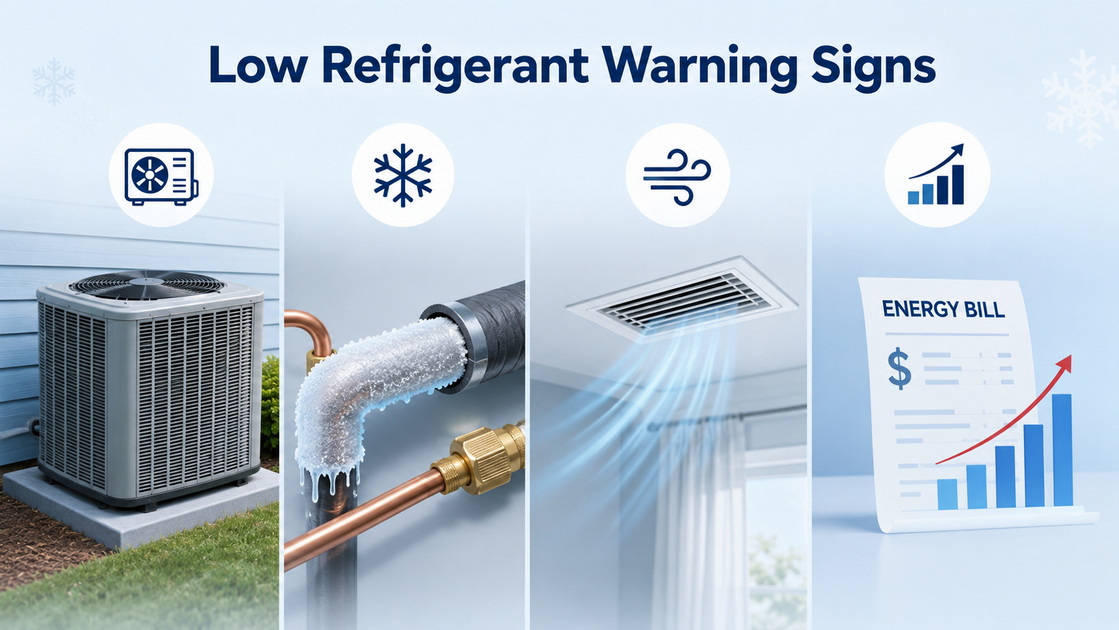
- Warm air from supply vents while the system is running
- Long cooling cycles without reaching the thermostat setting
- Ice on refrigerant lines or the indoor evaporator coil
- Higher energy bills without a clear change in weather or household use
- Weak airflow or uneven temperatures between rooms
- Hissing or bubbling sounds near refrigerant lines
- Poor humidity control inside the home
- Repeated refrigerant recharges over multiple seasons
Ice buildup is particularly important to address quickly. When airflow or refrigerant levels are incorrect, the evaporator coil can become too cold and freeze. Continuing to run the system in that condition may increase the risk of additional damage.
Homeowners sometimes ask for an AC recharge as if it were standard seasonal maintenance. In most cases, it is not.A recharge may be appropriate after a confirmed repair or when a technician has evaluated the system carefully. But if the refrigerant level is low because of an active leak, adding more refrigerant without resolving the cause may only postpone the same problem.A professional assessment should answer several questions:
1. Where is the refrigerant leak located?
2. Is the leak accessible and repairable?
3. Is the repair likely to be durable?
4. Is the indoor coil, outdoor coil, or compressor showing signs of deterioration?
5. Has the system required refrigerant service before?
6. What will the total repair cost be, including the refrigerant and labor?
7. Would replacement provide more dependable comfort and lower future risk?
The right answer depends on the complete condition of the system, not only on the refrigerant level.
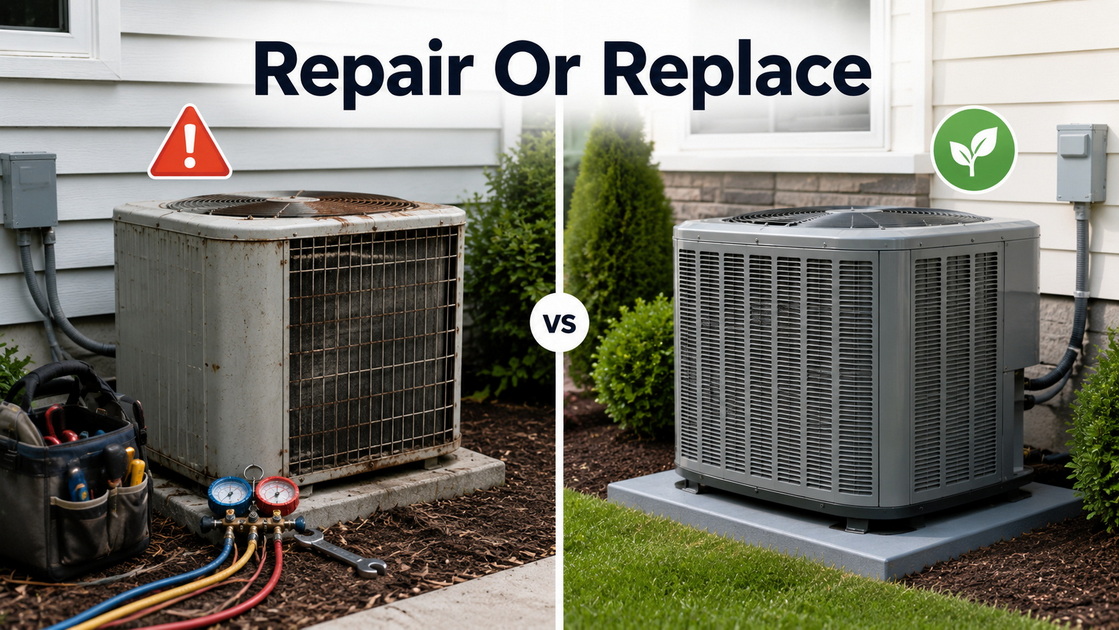
There is no single recommendation that works for every household. Some older systems can be repaired successfully and continue operating for years. Other systems may have multiple signs of age, repeated refrigerant loss, or costly component failures that make replacement more practical.The table below can help homeowners begin the conversation.
| Consideration | Repair May Be Reasonable | Replacement May Be More Practical |
|---|---|---|
| System reliability | The unit has been dependable with limited repair history | The unit has required frequent repairs |
| Leak condition | The leak is accessible and can be repaired effectively | The leak is in a difficult or costly location |
| Refrigerant history | This is the first known refrigerant issue | The system has needed repeated recharges |
| Major components | Compressor, coils, and electrical parts are in good condition | Compressor, coil, or multiple components show wear |
| Home comfort | Cooling is generally even and effective | Hot rooms, humidity, and uneven temperatures persist |
| Budget planning | A short-term solution is necessary | You prefer predictable long-term operating costs |
| Equipment age | The system is relatively early in its service life | The system is approaching or beyond its expected service life |
Repair may be reasonable when the system is otherwise in good condition, the leak is small and accessible, and there is no pattern of repeated refrigerant loss.For example, a homeowner may have a well-maintained older unit with a single repairable fitting leak. If the compressor, coils, electrical components, airflow, and overall performance are still strong, a targeted repair may provide a sensible solution.
Replacement becomes more compelling when an older R-22 system has a major coil leak, repeated repairs, declining cooling performance, compressor concerns, or expensive refrigerant requirements.A new system can also provide an opportunity to address issues that a simple repair will not solve, such as poor equipment sizing, aging ductwork, uneven airflow, excessive indoor humidity, or rooms that never seem comfortable.The most useful recommendation is a clear comparison of both options. Homeowners should understand the immediate repair cost, the likely limitations of that repair, and what a replacement would involve before making a decision.
It is a common misconception that any modern refrigerant can replace R-22. In reality, residential air-conditioning systems are designed around specific refrigerants and components.Different refrigerants have different pressure ranges, capacity characteristics, lubrication requirements, and safety considerations. R-410A, for example, is not a direct replacement for R-22. It operates under substantially different pressures and requires equipment designed specifically for it.Mixing refrigerants or using an unapproved substitute can lead to poor cooling, system damage, unreliable operation, and complicated future service.Modern cooling equipment is also changing as manufacturers transition toward refrigerants with lower environmental impact. For homeowners, the best choice is not simply the newest refrigerant name. It is a properly selected system that is compatible with the home, correctly installed, and supported by qualified service.
A thorough HVAC visit should provide more than a quick statement that your system “needs Freon.” It should give you a practical understanding of the problem.At Mega Services Heating & Cooling, a complete air-conditioning evaluation may include:- Checking thermostat operation and cooling demand - Inspecting filters, blower components, and airflow conditions - Examining refrigerant lines, coils, valves, and connections - Looking for signs of corrosion, oil residue, or refrigerant leakage - Measuring system temperatures and operating pressures - Checking electrical components and compressor performance - Inspecting condensate drainage and indoor-coil condition - Evaluating outdoor-unit cleanliness and condenser airflow - Reviewing equipment age, repair history, and general condition - Explaining repair and replacement options in plain language A correct diagnosis protects homeowners from paying for a temporary solution when the system needs deeper attention.
Replacing an older AC system can improve comfort, but the equipment itself is only part of the result. Proper installation matters just as much.An air conditioner should be selected based on the actual needs of the home. Factors such as square footage, insulation, window placement, ceiling height, climate, ductwork, occupancy, and sun exposure all influence the right equipment size.A system that is too small may run constantly and struggle during extreme heat. A system that is too large may cool the home too quickly, turn on and off frequently, and remove less humidity.A quality installation should include:- A home-specific cooling load evaluation - Equipment sizing based on the home’s characteristics - Ductwork inspection and airflow assessment - Correct matching of indoor and outdoor components - Refrigerant-charge verification - Electrical and drainage checks - Startup testing and final performance review Properly installed equipment can provide more consistent temperatures, improved humidity control, quieter operation, and more dependable cooling performance.
No maintenance routine can prevent every HVAC problem, but simple habits can reduce strain and help identify issues earlier.
1. Change or clean your air filter regularly.
A clogged filter can restrict airflow and reduce comfort.
2. Keep the outdoor unit clear.
Remove leaves, grass, and debris from around the condenser.
3. Keep supply and return vents open.
Closed vents can disrupt airflow and pressure balance.
4. Schedule routine maintenance.
Seasonal service helps identify coil, drainage, electrical, and airflow issues.
5. Keep records of repairs.
Service history can reveal whether a problem is isolated or recurring.
6. Ask questions before approving a recharge.
Understand the cause of the refrigerant loss and the expected durability of the repair.
An R-22 air conditioner does not automatically need to be replaced. But when refrigerant costs are high and a system has an ongoing leak or multiple aging components, it is important to evaluate the complete picture.The best decision balances your immediate budget, your comfort needs, the condition of the existing equipment, and the expected reliability of the repair.Mega Services Heating & Cooling is committed to helping homeowners create safer, more comfortable, and more energy-conscious living environments. Our team can assess your air-conditioning system, explain what is causing the problem, and help you understand the available repair and replacement paths.
A clear professional assessment can help you protect your home comfort, avoid unnecessary surprises, and plan confidently for the seasons ahead.

No. Existing R-22 air-conditioning systems can continue operating. The restriction applies to the production and import of new R-22, not to the use of properly functioning older equipment.
A central air-conditioning system should not need refrigerant added every year. Repeated recharging usually suggests a leak or an unresolved system issue. A technician should identify the cause before adding more refrigerant.
No. R-410A is not a direct replacement for R-22. The refrigerants operate differently and require compatible equipment. Using the wrong refrigerant can damage the system and reduce cooling performance.
It can. Low refrigerant may cause your AC to run longer while delivering less cooling. However, high energy bills can also result from dirty coils, duct leakage, poor insulation, airflow restrictions, or aging equipment.
Consider the system’s age, repair history, leak location, refrigerant needs, performance, comfort issues, and condition of major components. A written comparison of repair and replacement options can make the decision easier.
Yes, many refrigerant leaks can be repaired. The best solution depends on the location and severity of the leak, the condition of the affected component, and the overall condition of the air-conditioning system.
1. One Hour Heating & Air Conditioning.
2. U.S. Environmental Protection Agency.
3. U.S. Environmental Protection Agency.
4. U.S. Environmental Protection Agency.
5. U.S. Environm


