
Views: 211 Author: Mega Services Publish Time: 2026-08-04 Origin: Site


Content Menu
● Why This Situation Is Urgent
● What the Inspection Revealed
● What Homeowners Should Do First
● How We Helped the Customer Decide
● Why Brand Choice Should Come After Safety
● When Replacement Makes Sense
● Why Mega Services Heating & Cooling Focuses on Options
● FAQ
>> 1. What should I do if my carbon monoxide alarm sounds at night?
>> 2. Can a cracked heat exchanger be used a little longer?
>> 3. Does a carbon monoxide alarm always mean there is CO in the air?
>> 4. How often should CO alarms be tested?
>> 5. Should I repair or replace a furnace with a cracked heat exchanger?
When a carbon monoxide alarm sounds at night, it should never be treated as a minor HVAC issue. In the case you shared, the furnace inspection found a cracked heat exchanger, which is a serious safety concern and a reason to stop using the system until it is properly evaluated and corrected.

A carbon monoxide alarm is designed to warn you about a potentially dangerous condition, and the correct response is to move to fresh air and get help right away. Carbon monoxide is dangerous because it is colorless and odorless, so people often do not notice it until symptoms appear or the alarm sounds. A cracked heat exchanger can allow combustion gases to escape in ways that compromise home safety, which is why trained technicians treat it as a shutdown-level issue rather than a normal repair item.
In this case, the inspection made the problem clear: the furnace heat exchanger had cracked. That matters because a heat exchanger is not a cosmetic part or a simple efficiency component; it is part of the system that keeps combustion gases separated from indoor air. Once that barrier is compromised, the right next step is not to "push through" another heating season, but to review replacement or other safe corrective options.
If your carbon monoxide alarm goes off, the safest sequence is straightforward:
1. Leave the home and move to fresh air immediately.
2. Make sure everyone in the home is accounted for.
3. Call emergency services or your local fire department from a safe location.
4. Do not restart the furnace until a licensed professional has inspected it and cleared it for use.
A good rule is simple: never assume it is "just a sensor problem" until the system has been checked by a qualified technician.
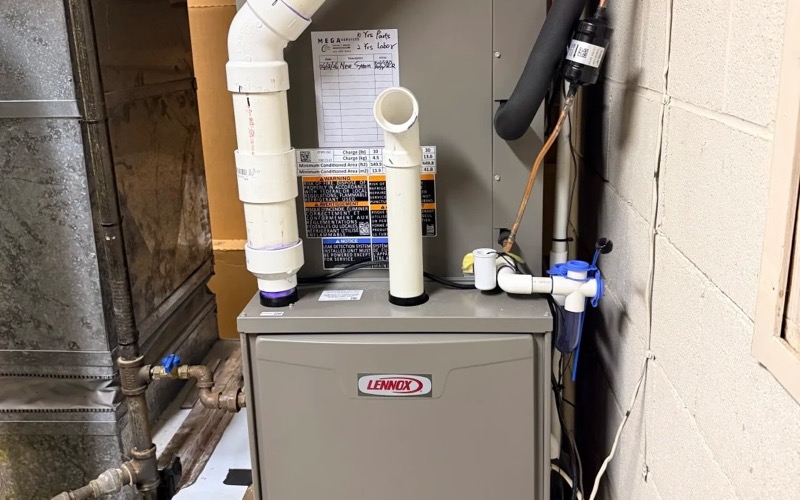
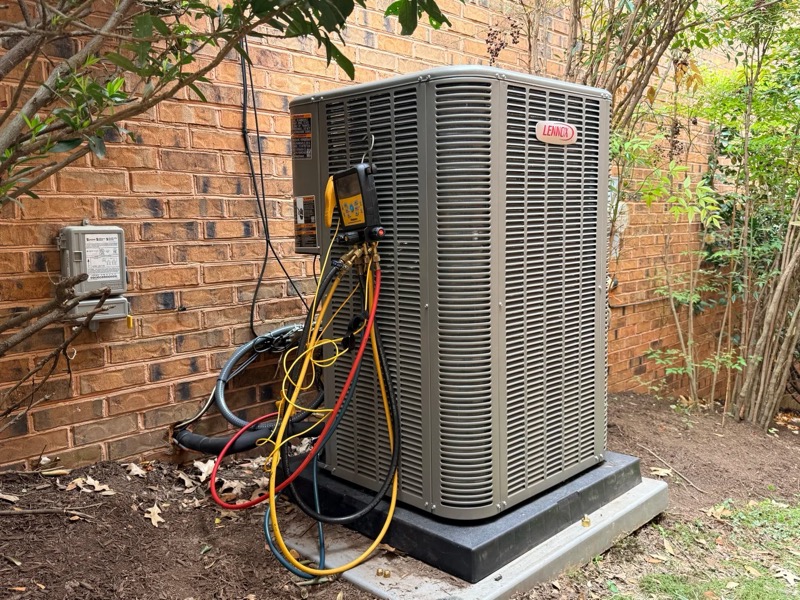
Instead of pushing one brand, the service approach was to explain the options clearly and honestly. That included comparing different brands, budget levels, and system configurations so the homeowner could choose based on safety, comfort, and long-term value. In this case, the customer selected a Lennox system because it fit the budget and offered a more stable, reassuring solution for the home.
When a furnace has a cracked heat exchanger, the first question is not "Which brand is best?" The first question is what keeps the home safe right now. After that, brand, performance, and price become part of a practical decision.
| Decision Factor | What Matters Most | Why It Matters |
|---|---|---|
| Safety | Shut down unsafe equipment | Prevents further exposure risk |
| Comfort | Proper heating capacity | Keeps the home livable during cold weather |
| Budget | Upfront and long-term cost | Helps balance replacement choices |
| Reliability | Stable system performance | Reduces future disruptions |
| Efficiency | Lower energy waste | Supports lower operating costs |
From a technician's perspective, the biggest mistake is waiting too long after a CO alarm. The alarm itself is already a warning that something in the home needs attention, and a cracked exchanger increases the seriousness of the situation. Another practical point is that CO alarms should be tested regularly and installed in the right locations so they can do their job when it matters most.
A few preventive habits can reduce risk:
- Test CO alarms every month.
- Replace alarms according to the manufacturer's instructions.
- Keep vents clear of snow and debris in cold weather.
- Have combustion equipment inspected regularly by a qualified professional.
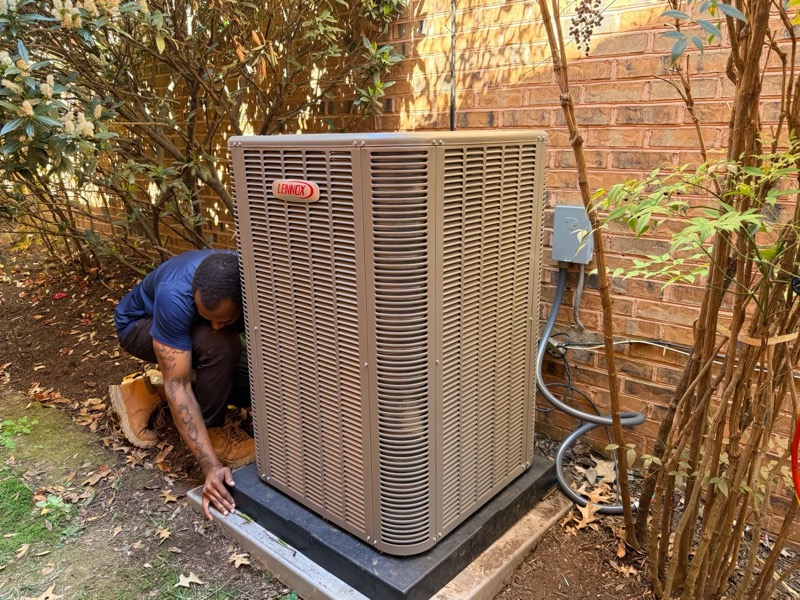
Sometimes a repair is not the safest or most economical choice. If the furnace has a cracked heat exchanger, the system may need replacement rather than a temporary fix, especially when age, repair cost, and overall reliability are considered together. In that situation, replacement gives homeowners a cleaner path forward: a safer system, clearer budgeting, and fewer surprise breakdowns.
For households in Maryland and nearby areas, it is also worth knowing that carbon monoxide alarm requirements apply in certain dwelling types and situations, which makes alarm placement and maintenance especially important. That adds another layer of protection for families relying on gas heat or other fuel-burning appliances.
The best service experience is not about selling the most expensive system. It is about explaining the risks, clarifying the trade-offs, and helping the homeowner make a safe decision with confidence. That is especially important in emergency situations, where stress is high and the wrong choice can lead to avoidable problems.
For homeowners dealing with a CO alarm, the priority should always be safety first, then repair or replacement planning. A trustworthy HVAC team will explain the situation plainly, present multiple system options, and help you choose a solution that matches your home and budget.
Leave the home immediately, move to fresh air, and call emergency services or the fire department from a safe location.
No. A cracked heat exchanger is treated as a serious safety issue, and the furnace should not continue running until it has been properly inspected and addressed.
Not always, but it does mean the situation needs immediate attention. The alarm is a life-safety warning and should never be ignored.
They should be tested at least once a month, and batteries or the device itself should be replaced according to the manufacturer's instructions.
That depends on the furnace's age, condition, and overall cost of repair, but replacement is often the safer and more practical option when the exchanger is cracked.
1. Structure Tech. "Q&A: Heat Exchanger Cracks and Carbon Monoxide Myths." [https://structuretech.com/qa-heat-exchanger-cracks-and-carbon-monoxide-myths/]
2. Lennox. "Heating & Cooling HVAC Systems." [https://www.lennox.com/residential/products/heating-cooling]
3. Maryland People's Law Library. "Carbon Monoxide Alarms." [https://www.peoples-law.org/carbon-monoxide-alarms]
4. YouTube: Checking a Furnace Heat Exchanger. [https://www.youtube.com/watch?v=_dM17_VhnDE]
5. Columbia Gas of Maryland. "Know the dangers of carbon monoxide." [https://www.columbiagasmd.com/safety/home-safety/carbon-monoxide]
6. NFPA. "Carbon Monoxide safety." [https://www.nfpa.org/education-and-research/home-fire-safety/carbon-monoxide]


