
Views: 214 Author: Mega Services Publish Time: 2026-08-21 Origin: Site


Content Menu
● How to Tell Whether You May Have Mold in Your Air Vents
>> A Safe Homeowner Inspection
● Why Mold Can Grow in HVAC Vents and Ductwork
>> Dirty Evaporator Coils and Restricted Airflow
>> Uninsulated or Leaking Ductwork
>> Wet or Contaminated Duct Insulation
● What to Do If You Suspect Mold in Your Air Vents
>> Step 1: Avoid Spreading Suspected Contamination
>> Step 2: Document What You Find
>> Step 3: Do Not Rely on Air Fresheners or Surface Sprays
>> Step 4: Schedule a Professional HVAC Inspection
>> Step 5: Know When Specialized Remediation May Be Needed
● Can You Clean Mold From Vent Covers Yourself?
>> Basic Cleaning Steps for a Removable Metal Vent Cover
>> When DIY Cleaning Is Not Enough
● How to Prevent Mold From Returning to Air Vents
>> Maintain Healthy Humidity Levels
>> Keep the Condensate System Clean
>> Keep Up With Seasonal Maintenance
● A Practical Example: Why Cleaning Alone May Not Work
● Protect Your Home's Comfort and Indoor Environment
>> 1. Is black dust around an air vent always mold?
>> 2. Can air conditioning cause mold in vents?
>> 3. What humidity level helps prevent mold in a home?
>> 4. Should air ducts be cleaned every few years?
>> 5. Can I spray bleach inside my air vents?
>> 6. Why does my home smell musty when the AC turns on?
>> 7. Does wet duct insulation need to be replaced?
>> 8. Can a dirty HVAC filter cause mold?
If you see suspected mold in air vents, notice dark spotting around registers, or smell a persistent musty odor when your heating or cooling system runs, do not treat it as a simple cleaning task. Mold in HVAC vents is often a warning sign of excess moisture, poor drainage, duct condensation, or an unresolved leak.
At Mega Services Heating & Cooling, we help homeowners maintain safer, more comfortable, and more energy-efficient indoor environments. From an HVAC service perspective, the most important principle is straightforward: remove the moisture source, not only the visible growth.
Mold can return quickly when humidity, drainage, airflow, or duct insulation issues remain unresolved. A thorough approach helps protect your HVAC system, improve comfort, and reduce the risk of recurring indoor air concerns.
> If you suspect mold inside your vents, ductwork, air handler, or cooling system, arrange a professional HVAC inspection to identify the source of moisture and determine the appropriate next steps.
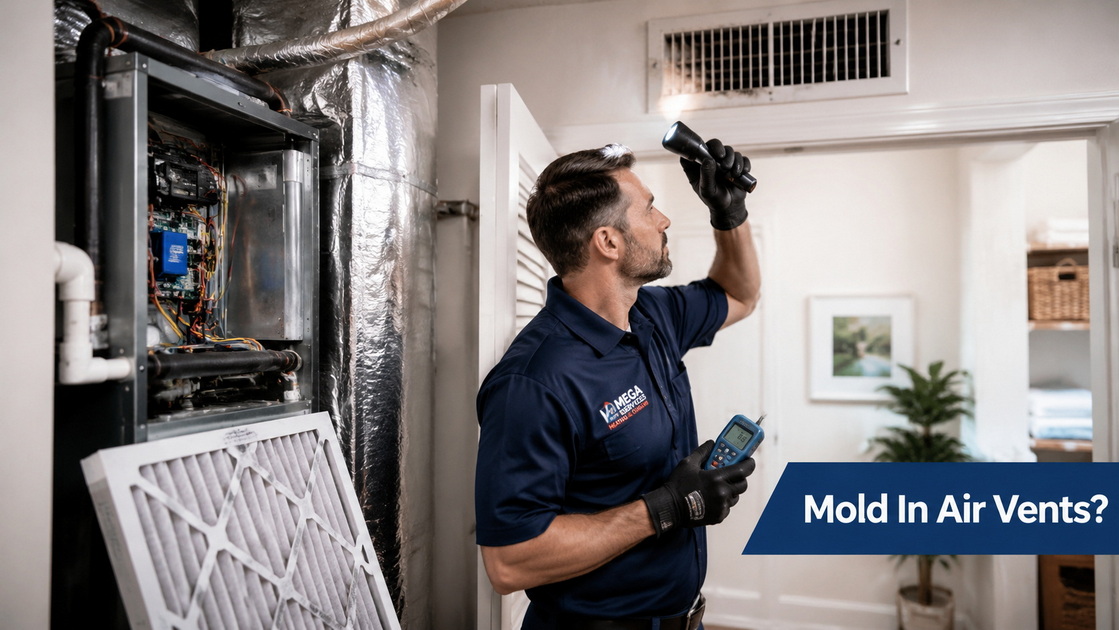
The term "mold in air vents" can describe several different conditions. In some homes, dark residue around a vent may be ordinary dust, soot, insulation particles, or filter bypass. In other cases, it may be actual microbial growth caused by moisture.
Appearance alone cannot always confirm whether a substance is mold. However, homeowners should pay close attention when discoloration appears alongside moisture, a musty smell, poor airflow, or recurring buildup.
Common warning signs include:
- Dark, greenish, gray, or white spotting on vent covers, registers, return grilles, or nearby walls
- A persistent musty, damp, or earthy odor when the HVAC system starts
- Condensation forming around supply vents, ductwork, refrigerant lines, or the air handler
- Water stains near HVAC equipment, ceilings, walls, or ducts
- A clogged condensate drain line or standing water in the drain pan
- Wet, warped, or unusually dirty HVAC filters
- Mold-like growth that returns shortly after cleaning
- A home that feels humid, clammy, or poorly ventilated
A small amount of dust on a register does not automatically indicate a serious issue. But if moisture is present or odors appear when your air conditioner, furnace, heat pump, or blower runs, the system should be inspected.
Homeowners can remove a vent cover and inspect the immediately visible opening with a flashlight. Avoid pushing tools, cleaning products, brushes, or household vacuums into the ductwork.
Do not scrape or disturb suspected growth deep inside vents. This can spread particles, damage duct materials, and make it harder to identify the original source of the problem.
Take photos of any visible discoloration, water stains, wet insulation, rust, or pooling water. Clear photos can help an HVAC technician evaluate the issue more efficiently.
Mold needs moisture to grow. HVAC systems can create or collect moisture through normal cooling operation, but that moisture should be drained and controlled properly.
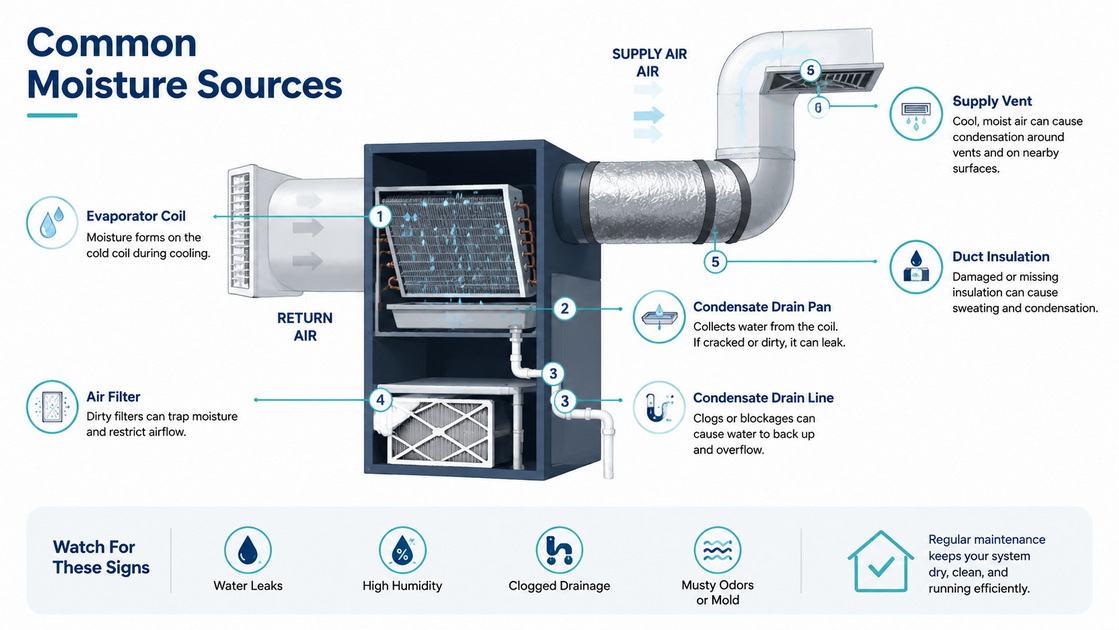
When humidity is too high, condensation forms on cold surfaces. When drainage systems clog, water may collect around coils, pans, duct connections, or insulation. When ducts leak in humid spaces, warm moist air can enter the system and create condensation.
Maintaining indoor relative humidity between 30% and 50% is generally helpful for comfort and moisture control. Indoor humidity should remain below 60% whenever possible.
Air conditioning systems remove heat and moisture from indoor air. If a home remains humid even when the AC is operating, the system may not be managing moisture effectively.
High indoor humidity can result from:
- An oversized air conditioner that cools too quickly and shuts off before removing enough moisture
- Short cycling caused by equipment problems, thermostat placement, or improper system sizing
- Dirty filters or restricted airflow
- Leaking ductwork
- Poor ventilation in bathrooms, kitchens, laundry areas, or basements
- Crawl-space or basement moisture
- Plumbing leaks, roof leaks, window leaks, or foundation moisture
- Frequent indoor drying of clothes without adequate ventilation
A home may feel cool but still feel uncomfortable if humidity remains high. That clammy feeling can be an early sign that moisture control needs attention.
Air conditioners and heat pumps create condensate as they remove moisture from indoor air. That water should move from the evaporator coil into a drain pan, through a condensate line, and safely away from the HVAC system.
A clogged drain line can cause water to back up inside the air handler. Over time, standing water can contribute to musty odors, damage nearby materials, and create conditions that support mold growth.
Common condensate issues include:
- Algae or debris clogging the drain line
- A cracked or rusted drain pan
- Improper drain line slope
- A blocked condensate trap
- A failed condensate pump
- Loose drain connections
- Overflow caused by a frozen evaporator coil
If you see water around your indoor unit, notice a drain pan overflow, or experience repeated drain line clogs, schedule service promptly.
The evaporator coil is a key part of the cooling process. It absorbs heat and moisture from indoor air before the conditioned air moves through the ductwork.
When HVAC filters are not replaced regularly, dust and debris can accumulate on the coil. This restricts airflow and may reduce the system's ability to cool and dehumidify properly.
Restricted airflow can contribute to:
- Uneven temperatures
- Higher energy use
- Frozen evaporator coils
- Excess condensate
- Musty odors
- Reduced comfort
- Shortened equipment life
A dirty coil does not automatically mean mold is present. However, a neglected coil can contribute to moisture problems that make mold more likely.
Ducts installed in attics, garages, crawl spaces, or other unconditioned areas may be exposed to heat and humidity. When cold air travels through poorly insulated ducts, condensation can develop on the exterior or inside the duct system.
Duct leaks can make the problem worse. Leaks may allow humid outdoor air to enter ducts, especially in hot and humid climates. That moisture can collect on cooler duct surfaces and contribute to recurring mold-like buildup.
Common ductwork concerns include:
- Torn or compressed flex ducts
- Missing or damaged insulation
- Loose duct connections
- Air leaks at joints and boots
- Wet duct wrap
- Condensation near supply vents
- Damaged duct liner
- Ducts installed too close to roof leaks or plumbing leaks
Metal ductwork may sometimes be cleaned when contamination is limited and the underlying moisture problem has been corrected. However, wet, damaged, or moldy duct insulation may be much more difficult to restore.
Porous materials can hold moisture and allow contamination to remain below the surface. In some cases, replacement may be more appropriate than attempting to clean damaged duct insulation.
A careful response helps prevent a small problem from becoming a larger repair or indoor air concern. The goal is not just to clean a vent cover. The goal is to identify what created the moisture and correct it.
If there is visible suspected mold inside the HVAC system, strong musty odor from the air handler, or obvious water damage near the equipment, avoid disturbing the area unnecessarily.
Do not run the system continuously if you believe it may be spreading a strong mold-like odor through the home. A qualified technician can inspect the equipment and help determine whether the system should remain off until repairs or remediation are completed.
Before cleaning or removing materials, take photos of:
- Vent covers and register openings
- Discoloration inside accessible ducts
- Water stains around the HVAC unit
- Standing water in or near the drain pan
- Wet insulation or duct wrap
- Damaged flexible ducts
- Dirty or damp filters
- Water stains on ceilings, walls, or floors
Photos help identify whether the problem may be related to an HVAC issue, a plumbing leak, roof damage, building moisture, or ventilation problems.
Air fresheners may cover odors temporarily, but they do not solve moisture or mold problems. Spraying chemicals inside vents may also create unwanted odors, leave residues, or affect sensitive system components.
The focus should remain on:
- Removing visible contamination appropriately
- Correcting the moisture source
- Cleaning or replacing damaged materials when necessary
- Improving airflow and drainage
- Controlling indoor humidity
A clean-looking vent cover does not guarantee that the HVAC system or ductwork is free from moisture-related issues.
A proper inspection should look beyond the vent cover. It should assess the HVAC system as a whole and determine whether moisture is coming from the cooling process, drainage, ductwork, building leaks, or indoor humidity.
A detailed HVAC inspection may include:
- Checking the evaporator coil area
- Inspecting the drain pan and condensate line
- Clearing or testing condensate drains
- Inspecting the condensate pump
- Evaluating airflow and filter condition
- Checking for duct leakage
- Looking for damaged duct insulation
- Identifying signs of condensation
- Inspecting accessible supply and return ducts
- Evaluating humidity-control performance
- Checking for system short cycling or oversized equipment
This approach helps avoid unnecessary work and focuses on the actual cause of the problem.
Some mold-related situations extend beyond HVAC repair. A larger moisture problem may involve drywall, flooring, attic insulation, crawl spaces, walls, ceilings, or other building materials.
Professional remediation may be appropriate when:
- Visible growth covers a large area
- Water damage followed a flood, roof leak, plumbing failure, or sewage backup
- Mold appears inside walls, ceilings, or insulation
- Duct insulation is wet or visibly contaminated
- Musty odors return after HVAC service
- The home has repeated moisture intrusion
- Occupants have health concerns that require extra caution
- There is uncertainty about the scope of contamination
An HVAC professional can address system-related moisture and airflow concerns, while a qualified remediation specialist may be needed for significant building-material contamination.
A removable metal vent cover with a small amount of surface residue may be cleaned carefully after the moisture source is addressed. However, cleaning the cover alone will not solve a problem inside the ductwork, air handler, drain pan, or building structure.
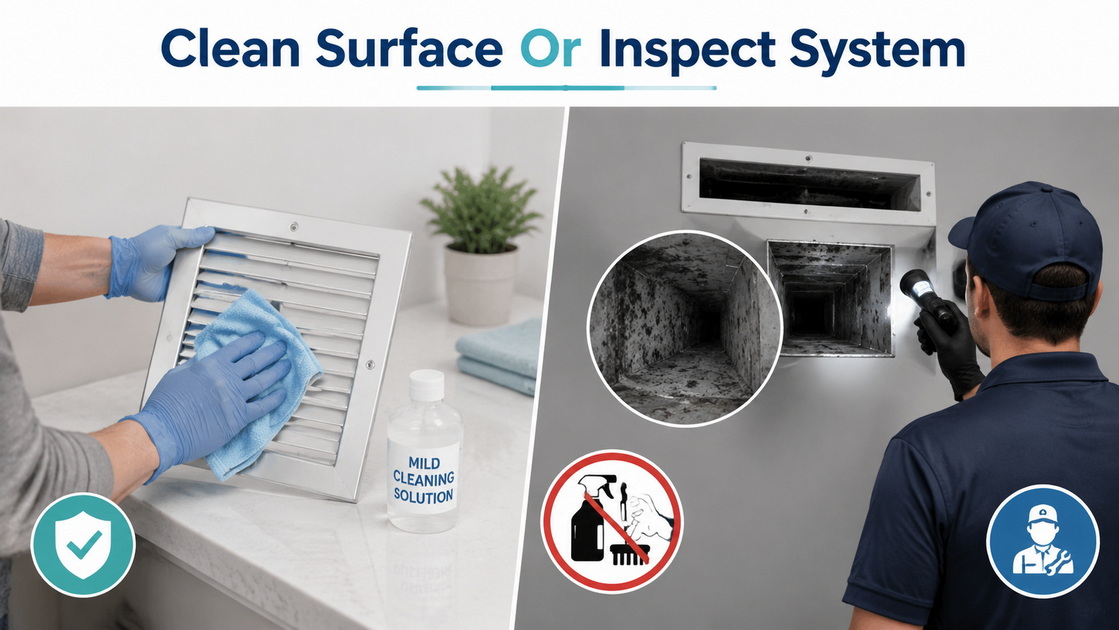
1. Turn off the heating or cooling system before removing the vent cover.
2. Put on gloves and eye protection.
3. Remove the cover gently to avoid spreading dust and debris.
4. Clean the non-porous metal surface with water and detergent or a suitable cleaning product used according to its label.
5. Dry the cover completely before reinstalling it.
6. Inspect the nearby vent opening for moisture, staining, or visible debris.
7. Replace the HVAC filter if it is dirty, damp, or overdue.
8. Monitor the area for returning odors, condensation, or discoloration.
Never mix household cleaning products. Combining bleach with ammonia or other cleaners can create hazardous fumes.
| Situation | Recommended Next Step |
|---|---|
| Suspected growth is visible inside ductwork | Arrange a professional HVAC inspection |
| The air handler or coil area has a musty odor | Inspect drainage, coil condition, and airflow |
| Duct insulation is wet or visibly contaminated | Evaluate replacement of affected materials |
| Water is collecting around the indoor unit | Address condensate drainage immediately |
| Mold-like spotting returns after cleaning | Identify humidity, airflow, or moisture problems |
| The affected area is large or widespread | Consider professional remediation |
| A flood or major water event occurred | Inspect HVAC components and building materials |
| Household members have heightened health concerns | Use added caution and seek appropriate guidance |
Preventing mold in air vents requires regular HVAC maintenance and ongoing moisture control. The strongest prevention strategy is to keep the system clean, dry, properly drained, and capable of managing indoor humidity.
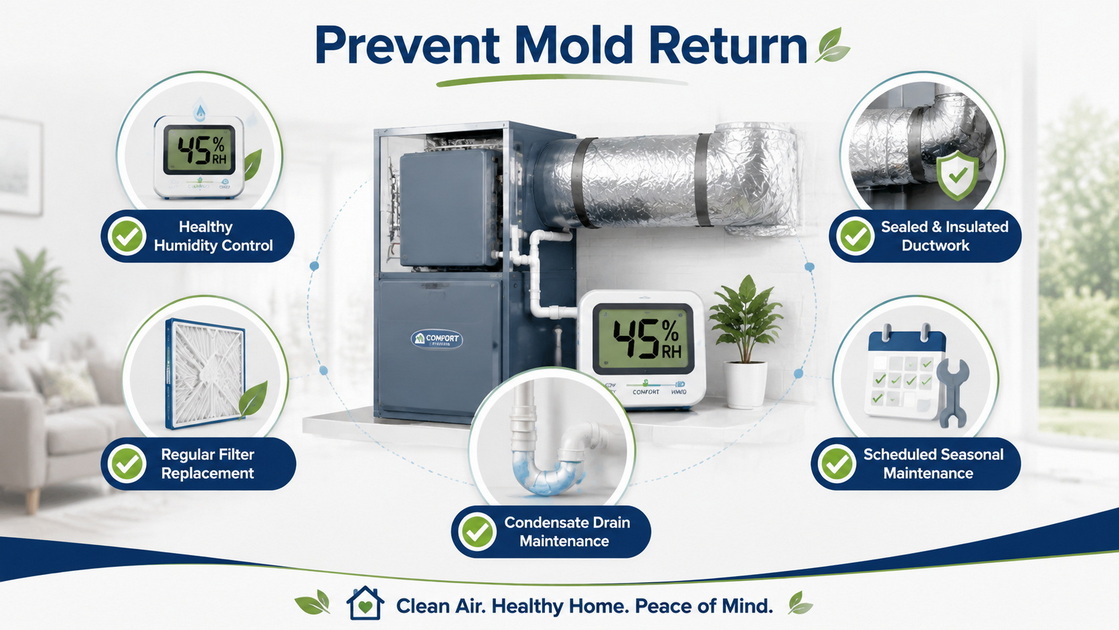
Use a hygrometer to monitor indoor humidity, especially during humid weather. Place one in areas that commonly retain moisture, such as basements, bathrooms, laundry rooms, and bedrooms with limited airflow.
Helpful humidity-control steps include:
- Run bathroom exhaust fans during showers and for a period afterward
- Use kitchen ventilation when cooking
- Repair plumbing leaks promptly
- Use a dehumidifier in damp basements or crawl spaces
- Keep windows and doors closed during very humid weather when air conditioning is running
- Ensure clothes dryers vent outdoors
- Avoid blocking return vents and supply registers
- Address water intrusion around windows, roofs, walls, and foundations
A clean filter supports proper airflow and protects internal HVAC components from dust buildup. The correct filter replacement schedule depends on the home, system, filter type, pets, allergies, and local conditions.
A filter should be checked regularly and replaced when it is visibly dirty or according to the manufacturer's recommendations.
Signs that a filter may need attention include:
- Reduced airflow from vents
- Dust buildup around registers
- Longer cooling or heating cycles
- A musty or stale smell when the system starts
- Increased utility bills
- A filter that looks gray, clogged, warped, or damp
Condensate drainage is one of the most important parts of mold prevention in an air conditioning system.
During routine maintenance, a technician can inspect the drain pan, drain line, trap, and pump. Early service can help prevent clogs, overflow, water damage, and moisture accumulation near the air handler.
Ducts should be properly sealed, insulated, and supported—especially when they run through hot attics, humid crawl spaces, garages, or other unconditioned areas.
Improving duct insulation and sealing can help reduce:
- Condensation
- Energy loss
- Uneven temperatures
- High indoor humidity
- Dust infiltration
- HVAC strain
- Mold-supporting moisture conditions
Routine maintenance gives technicians an opportunity to spot problems before they become major repairs. During a maintenance visit, an HVAC professional can inspect components that homeowners may not be able to access safely.
Seasonal service can help identify:
- Drainage issues
- Dirty coils
- Loose electrical connections
- Refrigerant concerns
- Airflow restrictions
- Duct leakage
- Filter problems
- Blower performance issues
- Humidity-control limitations
- Signs of condensation or water damage
Imagine a homeowner who notices dark spotting around a bedroom supply vent every summer. They remove the vent cover, clean it, and reinstall it. A few weeks later, the spotting returns.
The recurring issue may not be caused by the vent cover itself. The actual problem could be a cold supply duct passing through a hot attic with damaged insulation. Humid attic air may be contacting the cold duct surface, creating condensation. The condensation then supports repeated moisture-related buildup near the register.
In that situation, cleaning the vent cover is only a temporary step. The long-term solution may involve inspecting the duct connection, sealing air leaks, replacing damaged insulation, and controlling attic or indoor moisture.
This is why identifying the underlying cause matters. A lasting solution should improve system performance while reducing the conditions that allow mold to return.
Mold in air vents should never be ignored, but it also should not lead to unnecessary panic. Many concerns begin with manageable issues such as high humidity, a clogged drain line, dirty filters, duct condensation, or poor airflow.
The key is to respond early, avoid masking the problem, and correct the moisture source. A well-maintained HVAC system can support cleaner airflow, better comfort, more reliable performance, and a more energy-efficient home.
Mega Services Heating & Cooling is here to help homeowners identify HVAC-related moisture concerns and restore confidence in their heating and cooling system. Whether you have a musty odor, water around your indoor unit, suspected mold near vents, or recurring humidity problems, a professional inspection can provide clear answers and practical solutions.
No. Black or dark residue around an air vent may be dust, soot, insulation particles, pet-related debris, or material caused by filter bypass. If the residue appears with moisture, a musty odor, condensation, or recurring staining, the HVAC system should be inspected.
Air conditioning does not automatically cause mold. However, cooling systems produce moisture through condensation. If the drain line clogs, the drain pan overflows, ducts sweat, airflow is restricted, or indoor humidity stays high, the conditions may support mold growth.
Indoor relative humidity should generally stay between 30% and 50% for comfort and moisture control. It is best to keep humidity below 60% whenever possible.
Duct cleaning is not automatically necessary on a fixed schedule for every home. It may be appropriate when there is visible contamination, excessive dust blowing from vents, pest activity, moisture damage, or a confirmed HVAC-related issue.
It is not recommended to spray bleach or other household chemicals deep into ductwork. Chemicals may not remove the underlying cause, may leave odors or residues, and may not be appropriate for all HVAC materials.
A musty odor may come from a dirty evaporator coil, a clogged condensate drain, standing water, damp filters, wet insulation, duct contamination, or high indoor humidity. A professional inspection can identify where the odor is coming from.
Wet or visibly contaminated duct insulation may need replacement because porous materials can retain moisture and may be difficult to clean thoroughly. The appropriate solution depends on the material type, amount of damage, and source of moisture.
A dirty filter does not directly create mold, but it can restrict airflow and allow more dust to collect on HVAC components. Reduced airflow can contribute to coil issues, humidity problems, and moisture conditions that increase the risk of mold.
1. U.S. Environmental Protection Agency.
2. U.S. Environmental Protection Agency.
3. U.S. Environmental Protection Agency.
4. U.S. Environmental Protection Agency.
5. U.S. Environmental Protection Agency.
6. U.S. Environmental Protection Agency.
7. National Air Duct Cleaners Association.
8. National Environmental Health Association.
9. One Hour Heating & Air Conditioning.


