
Views: 208 Author: Mega Services Publish Time: 2026-08-29 Origin: Site


Content Menu
● Heating and Cooling Is About More Than Temperature
● Air Conditioning Repair That Addresses the Real Problem
>> Common Signs You Need Air Conditioning Repair
>> Why Prompt AC Repair Matters
● Heating and Furnace Repair for Reliable Winter Comfort
>> Heating Problems That Should Not Be Ignored
>> Carbon Monoxide and Home Heating Safety
● Preventive HVAC Maintenance Helps Protect Your System
>> What Happens During an HVAC Maintenance Visit?
>> A Simple Seasonal Maintenance Schedule
● Repair or Replace: How to Make a Confident Decision
>> System Size Matters More Than Many Homeowners Realize
● Practical Ways to Reduce HVAC Strain at Home
● Clear Communication Makes HVAC Service Easier
● A More Comfortable Home Begins With Reliable HVAC Care
>> 1. How often should I schedule heating and air conditioning maintenance?
>> 2. How often should I replace my HVAC air filter?
>> 3. Why is my air conditioner running but not cooling?
>> 4. Why does my furnace turn on and off repeatedly?
>> 5. Should I repair or replace my air conditioner?
>> 6. What should I do if my carbon monoxide alarm goes off?
>> 7. Can HVAC maintenance help reduce energy bills?
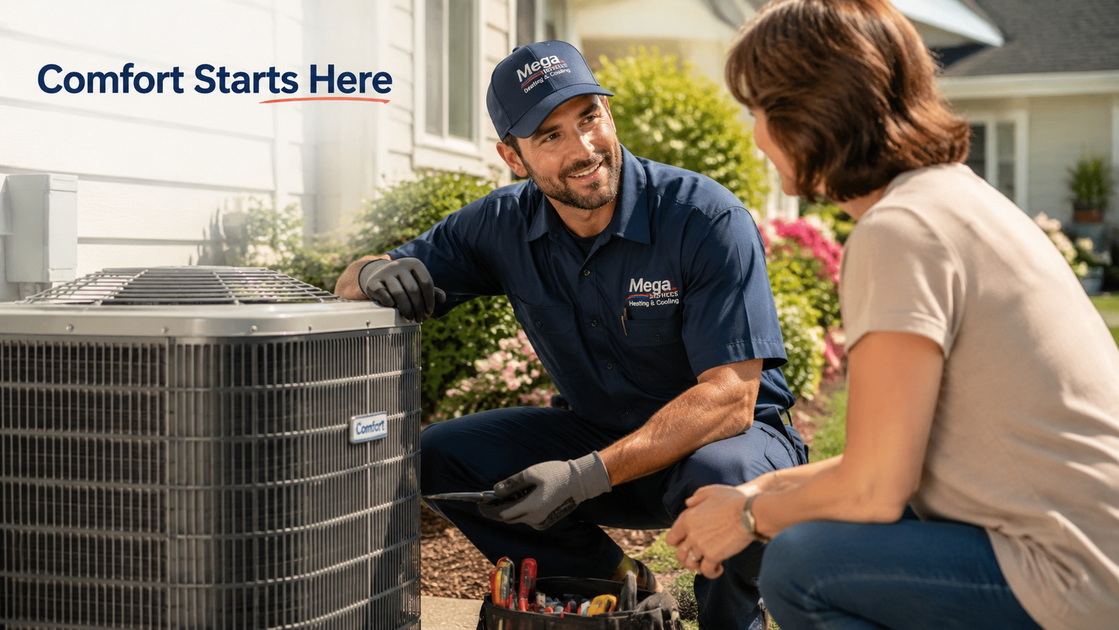
A reliable heating and cooling system does more than control indoor temperature. It helps protect your family's comfort, supports healthier indoor air, reduces unnecessary energy waste, and gives you peace of mind throughout the year.
At Mega Services Heating & Cooling, we provide air conditioning installation, AC repair, furnace repair, heating service, and preventive maintenance for homeowners who want dependable comfort without unnecessary confusion. Our approach focuses on careful diagnosis, clear communication, quality workmanship, and solutions that fit the needs of your home.
Whether your air conditioner is blowing warm air, your furnace is making unusual noises, or your system is simply due for seasonal maintenance, our team is here to help you make informed decisions about your home comfort.
Your HVAC system affects how your home feels every day. When it performs properly, it helps maintain steady temperatures, improve airflow, manage humidity, and support more efficient energy use.
When it does not perform as it should, even a small issue can make daily life uncomfortable. You may notice hot and cold rooms, high utility bills, poor airflow, excessive dust, frequent cycling, or unexpected system failures.
A professional HVAC company should look beyond the immediate complaint. The best solution often requires evaluating the entire comfort system, including:
- Heating and cooling equipment
- Thermostat settings and controls
- Airflow and ductwork
- Filters and indoor coils
- Electrical components
- Condensate drainage
- Insulation and air leakage
- Ventilation and safety systems
At Mega Services Heating & Cooling, we believe every home deserves a thoughtful approach. A system may appear to be running, but that does not always mean it is operating safely, efficiently, or comfortably.
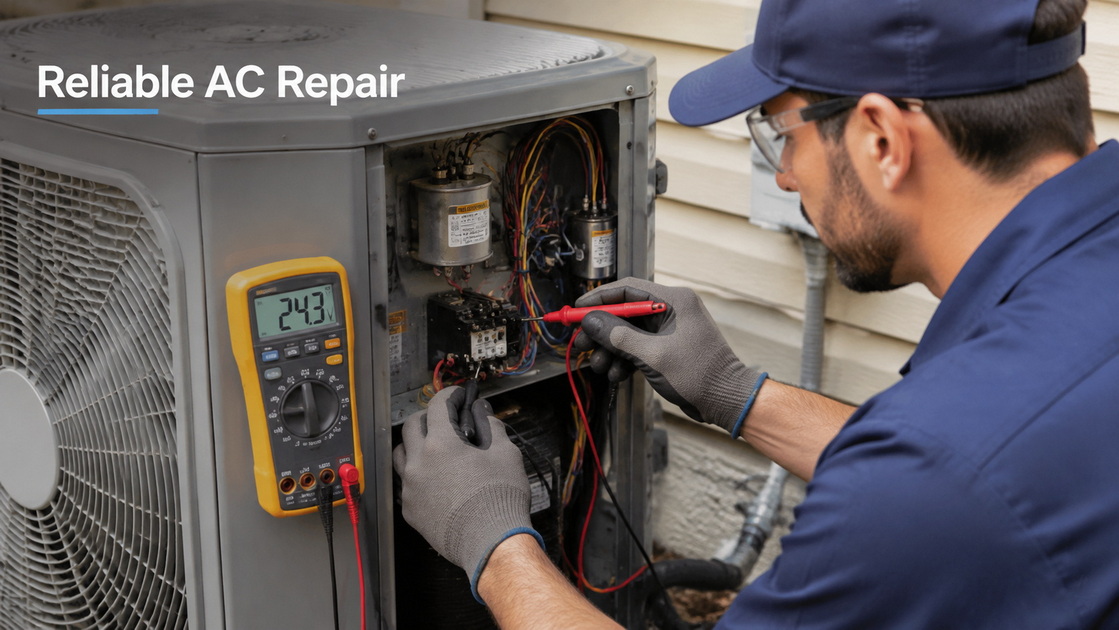
Few things are more frustrating than an air conditioner that stops cooling during warm weather. However, a lack of cool air does not always mean the entire system needs replacement.
Many AC problems have several possible causes. Proper repair starts with identifying the source of the issue rather than treating only the visible symptom.
You may need professional AC service if you notice:
- Warm air coming from supply vents
- Weak or inconsistent airflow
- Unusual rattling, buzzing, banging, or grinding sounds
- Water around the indoor air handler
- Ice on refrigerant lines or equipment
- An AC system that turns on and off repeatedly
- Sudden increases in your electric bill
- Rooms that remain hot even when the system is running
- Unpleasant or musty odors from vents
A technician may inspect the thermostat, electrical controls, condenser, indoor coil, blower system, drainage line, airflow, and other key components. This helps determine whether the issue involves a dirty filter, blocked airflow, a worn electrical part, a drainage problem, or another mechanical concern.
Delaying a repair can allow a manageable issue to become more serious. For example, restricted airflow can place added strain on system components. A drainage issue can lead to water damage or system shutdown. A failing electrical component can eventually prevent the unit from starting at all.
Early diagnosis gives homeowners more control over the repair process and can reduce the chance of a complete loss of cooling during peak weather.
A heating system should provide dependable warmth without creating safety concerns. If your furnace is struggling to start, producing inconsistent heat, making unusual noises, or shutting off unexpectedly, it is important to schedule an inspection.
Heating problems may involve thermostat settings, ignition components, electrical controls, airflow restrictions, blower performance, venting, or other mechanical issues. For fuel-burning equipment, professional inspection is particularly important because heating performance and household safety are closely connected.
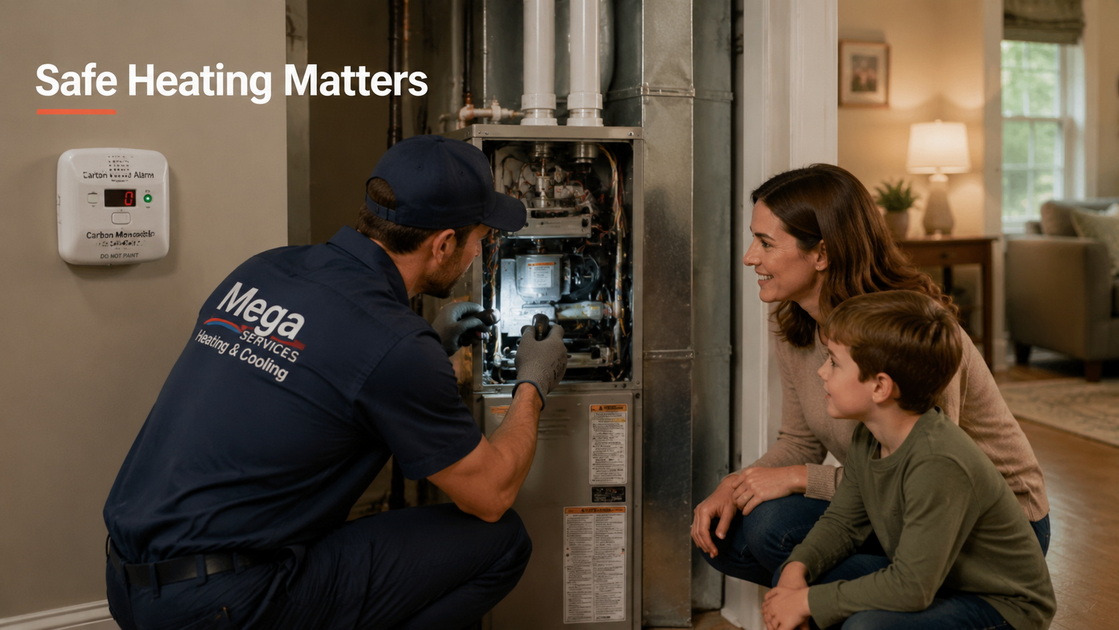
Schedule professional heating repair if you experience:
- A furnace that will not turn on
- Cold air coming from vents
- Repeated starting and stopping
- Loud noises during operation
- Unusual burning or gas-like odors
- Visible rust, moisture, or corrosion around equipment
- Weak airflow from heating vents
- Rooms that stay cold despite thermostat adjustments
- A carbon monoxide alarm activation
A heating system should never be treated as "good enough" simply because it still produces some heat. Inconsistent performance can signal a developing issue that deserves professional attention.
Homes with furnaces, boilers, fireplaces, water heaters, or other fuel-burning appliances should have working carbon monoxide alarms. These alarms should be installed on each level of the home and near sleeping areas.
If a carbon monoxide alarm sounds, leave the home immediately and contact emergency services. Do not stay inside to locate the source of the problem. Do not re-enter the home until it has been confirmed safe.
Homeowners can also support safer heating operation by:
1. Testing carbon monoxide alarms regularly.
2. Keeping furnace rooms and vents clear of boxes, stored items, and debris.
3. Scheduling seasonal heating inspections.
4. Addressing corrosion, water leaks, unusual odors, or visible vent damage promptly.
5. Never using ovens, grills, or generators as indoor heat sources.
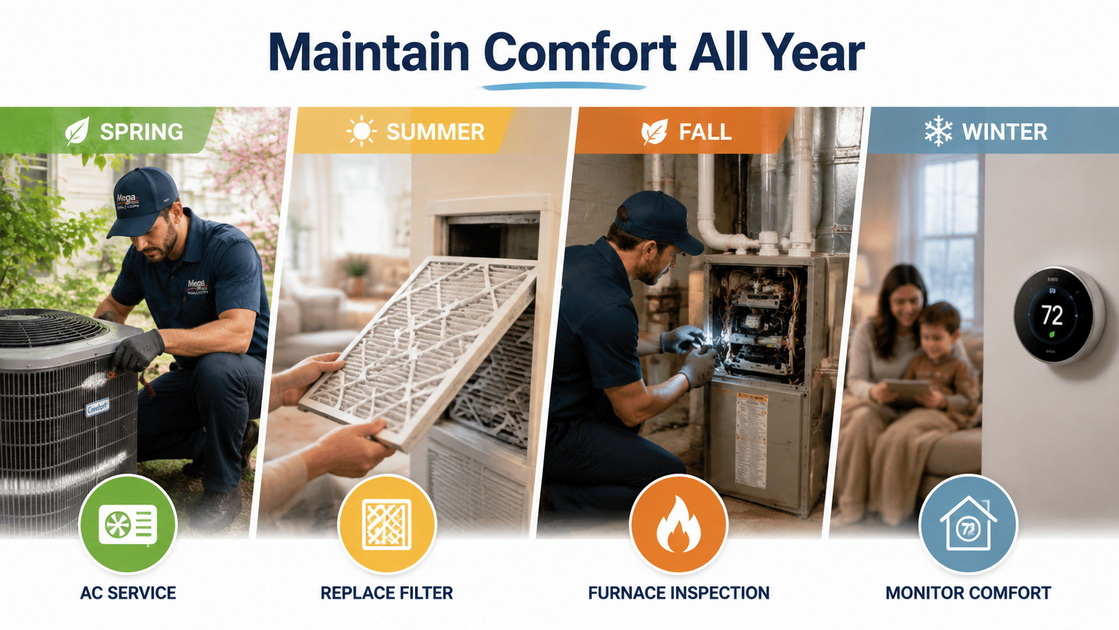
Routine maintenance is one of the most practical ways to protect your heating and cooling equipment. A seasonal tune-up helps identify small concerns before they become expensive repairs or unexpected breakdowns.
Like a vehicle, an HVAC system includes moving parts, electrical components, controls, filters, drainage systems, and safety mechanisms that need periodic inspection. Systems that receive professional care are easier to evaluate, more likely to operate reliably, and less likely to surprise homeowners during extreme weather.
The scope of work depends on your equipment, its condition, and the season. A thorough service visit may include:
- Inspecting thermostat operation and system controls
- Checking air filters and airflow conditions
- Inspecting electrical connections
- Evaluating indoor and outdoor coils
- Checking condensate drainage and safety switches
- Reviewing blower motor performance
- Testing heating operation and safety controls
- Inspecting visible ductwork and insulation concerns
- Checking accessible vents and airflow pathways
- Reviewing the system's overall performance
Maintenance also creates an opportunity for homeowners to ask questions. If you have noticed a noisy system, a room that never feels comfortable, unusually high bills, or changing humidity levels, mention those concerns during the visit.
| Season | Recommended Service Focus |
|---|---|
| Spring | Air conditioner inspection, coil condition, drainage, thermostat function, and cooling performance |
| Summer | Filter checks, outdoor unit clearance, airflow monitoring, and prompt repair of unusual performance |
| Fall | Furnace or heating-system inspection, safety controls, ignition, venting, and carbon monoxide protection |
| Winter | Filter checks, consistent heating performance, unusual sounds, and indoor comfort concerns |
One of the most common questions homeowners ask is whether to repair an existing system or install a replacement. The right answer depends on more than the system's age.
An older system may still be a reasonable candidate for repair if the issue is limited, the equipment has been well maintained, and the repair restores dependable operation. On the other hand, replacement may deserve consideration when repairs are frequent, comfort problems continue, or the system can no longer meet the household's heating and cooling needs.
| Repair May Be Appropriate When | Replacement May Be Worth Considering When |
|---|---|
| The problem is clearly identified and limited | Repairs have become frequent or increasingly costly |
| The system has otherwise performed reliably | The system regularly fails to maintain comfort |
| Replacement parts are available | The equipment has major wear or repeated component failures |
| The repair restores safe operation | Significant efficiency or reliability problems remain |
| The equipment is compatible with your home's needs | The system is poorly sized for the home or has persistent airflow concerns |
A good recommendation should be based on the equipment's condition, repair history, performance, installation quality, and your long-term comfort goals.
Replacing HVAC equipment is not only about selecting a newer unit. The system must be appropriate for the home.
An oversized air conditioner may cool too quickly and cycle off before properly managing humidity. An undersized system may run for long periods and still struggle during high outdoor temperatures. Ductwork, insulation, window exposure, occupancy, thermostat location, and room layout can all affect comfort.
Before a new installation, homeowners should ask:
- Has the home's heating and cooling load been evaluated?
- Will airflow and ductwork be reviewed?
- Is the current system correctly sized?
- Will the thermostat location be considered?
- Will the new equipment be tested after installation?
- What ongoing maintenance will be recommended?
The goal is not simply to replace equipment. The goal is to create more dependable, balanced, and efficient comfort throughout the home.
Professional service is essential, but daily habits also affect system performance. Small steps can reduce unnecessary strain, improve airflow, and help identify issues early.
1. Check your filter regularly. Replace or clean it according to the manufacturer's recommendation and your household conditions.
2. Keep vents clear. Do not block supply or return vents with furniture, rugs, curtains, or storage.
3. Keep the outdoor unit accessible. Clear leaves, grass clippings, branches, and stored items from around the equipment.
4. Use thermostat settings consistently. Avoid frequent, extreme temperature changes that place extra demand on the system.
5. Watch for air leaks. Gaps around doors, windows, and utility penetrations can allow conditioned air to escape.
6. Pay attention to changing comfort. Uneven temperatures, humidity changes, and new noises are worth reporting early.
7. Schedule maintenance before peak seasons. Spring and fall appointments can help prepare equipment for heavier use.
These steps do not replace professional inspection, but they can help homeowners maintain better conditions between service visits.
Heating and cooling equipment can be complicated, but the service experience should not be. Homeowners deserve clear explanations of what was found, what it means, and which options are available.
A professional HVAC visit should answer practical questions such as:
- What caused the issue?
- Is it affecting safety, comfort, reliability, or energy use?
- Does the repair need to happen now?
- What can be monitored or planned for later?
- What should be done to prevent the issue from returning?
- When should replacement be considered?
At Mega Services Heating & Cooling, we believe clear communication is part of quality service. Our team works to explain recommendations in straightforward language so you can make decisions with confidence.
Your heating and cooling system is one of the most important systems in your home. It supports your family's comfort through hot days, cold nights, changing seasons, and everyday routines.
Regular maintenance, timely repairs, properly planned installation, and attention to safety can make a meaningful difference in how your home feels and how confidently you rely on your equipment.
Mega Services Heating & Cooling is committed to helping homeowners maintain safer, more comfortable, and more energy-conscious living spaces. Whether your system needs routine care, a detailed diagnosis, repair support, or replacement planning, our goal is to provide dependable service and practical guidance for every stage of your home comfort journey.
Most homes benefit from professional maintenance twice per year: once before the cooling season and once before the heating season. Older systems, heavily used equipment, homes with pets, and fuel-burning heating systems may require more specific recommendations.
The correct schedule depends on the filter type, household size, pets, allergies, dust levels, and system use. Check the filter regularly and replace it when it looks dirty or restricted. Always follow the manufacturer's guidance for the specific filter.
Possible causes include a dirty filter, restricted airflow, thermostat issues, electrical component problems, drainage safety shutoffs, dirty coils, or other equipment concerns. A professional inspection can identify the actual cause and recommend the appropriate repair.
Frequent cycling may be related to airflow restrictions, thermostat placement, overheating, a dirty filter, control problems, or an incorrectly sized system. Repeated cycling should be inspected because it can increase wear on the equipment.
Consider the repair cost, repair history, system performance, comfort concerns, equipment condition, and long-term plans for the home. A qualified technician can help compare both options based on your specific system and household needs.
Leave the home immediately and contact emergency services. Do not attempt to identify the source while remaining inside. Do not re-enter until the home has been evaluated and confirmed safe.
Maintenance can support better system performance by helping address restricted airflow, dirty components, drainage problems, and mechanical issues. Actual energy use also depends on insulation, ductwork, thermostat habits, climate, equipment efficiency, and household usage.
1. Air Conditioning Contractors of America (ACCA).
2. U.S. Energy Information Administration.
3. U.S. Federal Trade Commission.
4. U.S. Environmental Protection Agency.
5. ENERGY STAR.


