
Views: 248 Author: Mega Services Publish Time: 2026-08-08 Origin: Site


Content Menu
● Real Case: Replacing a 20-Year-Old Air Conditioning System in Maryland
● Why Replacing an Old HVAC System Often Makes More Sense
>> 1. Aging Components Become Unreliable
>> 2. Spare Parts Are Hard to Source
>> 3. Rising Energy Consumption
>> 4. Repair Costs Add Up Quickly
>> 5. Warranty Advantage with New Systems
● Key Benefits of the Carrier Performance Series System
● New Insight: Understanding SEER2 and Why It Matters
>> Why homeowners should care:
● Cost vs Value: A Practical Comparison
● When Should You Replace Your HVAC System?
● Installation Matters More Than You Think
● Customer Experience: What Homeowners Are Saying
● Hidden Costs of Delaying Replacement
● Maintenance Tips to Extend Your New System's Life
● Service Areas and Local Expertise
● Ready to Upgrade Your HVAC System?
● FAQs
>> 1. How long does an HVAC system typically last?
>> 2. Is it better to repair or replace my air conditioner?
>> 3. What is SEER2 and why is it important?
>> 4. How much can I save with a new HVAC system?
>> 5. Can I use my existing thermostat with a new system?
When it comes to HVAC system replacement, air conditioning installation, and heating system upgrades, homeowners in Maryland and the DMV area often face a critical decision: repair the old system or invest in a new one. Drawing from real service experience at Mega Services Heating & Cooling, this article breaks down a recent Carrier Performance series upgrade, combining technical insight, field observations, and homeowner considerations to help you make a confident decision.

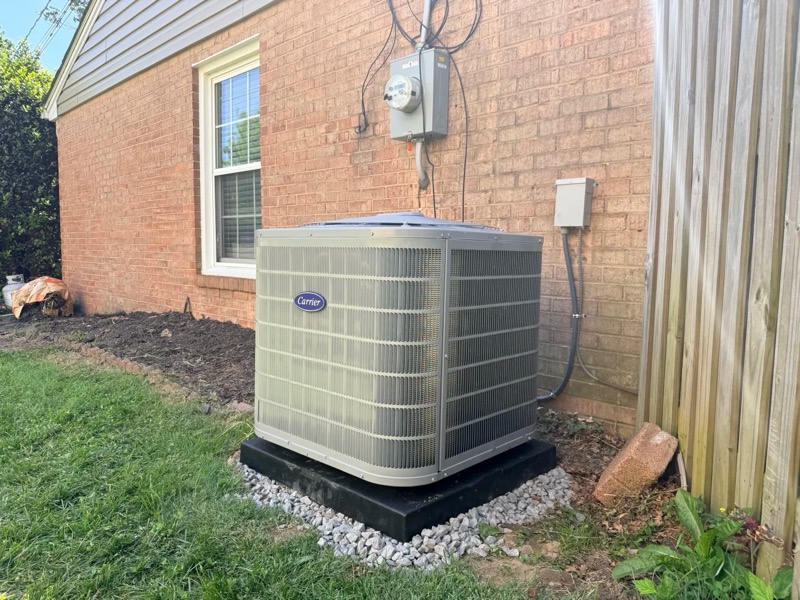
In a recent project, we completed a full HVAC system replacement for a homeowner whose air conditioning unit had been running for nearly 20 years.
The system showed clear signs of decline:
- Severely corroded outdoor condenser
- Aging control board with intermittent failures
- Increasing frequency of repairs
- Noticeable drop in cooling performance
After a detailed on-site evaluation, the homeowner chose to upgrade to a Carrier Performance Series system, a decision based on both cost efficiency and long-term reliability.
From a technician's perspective, systems older than 15–20 years enter a stage where repairs become less practical. Here's why replacement is often the smarter investment:
- Parts wear out unevenly
- Failures occur more frequently
- Older systems lack modern diagnostic capabilities
- Discontinued models lead to limited availability
- Higher costs for compatible or refurbished components
- Older systems operate at lower efficiency (often below SEER 10)
- Increased monthly electricity bills
- Repeated service calls
- Major component replacements (compressor, control board)
- New systems like Carrier Performance offer up to 10-year parts warranty
- Reduced unexpected expenses
Expert Insight: In most cases, if repair costs exceed 30–40% of a new system's price, replacement becomes the more economical choice over time.
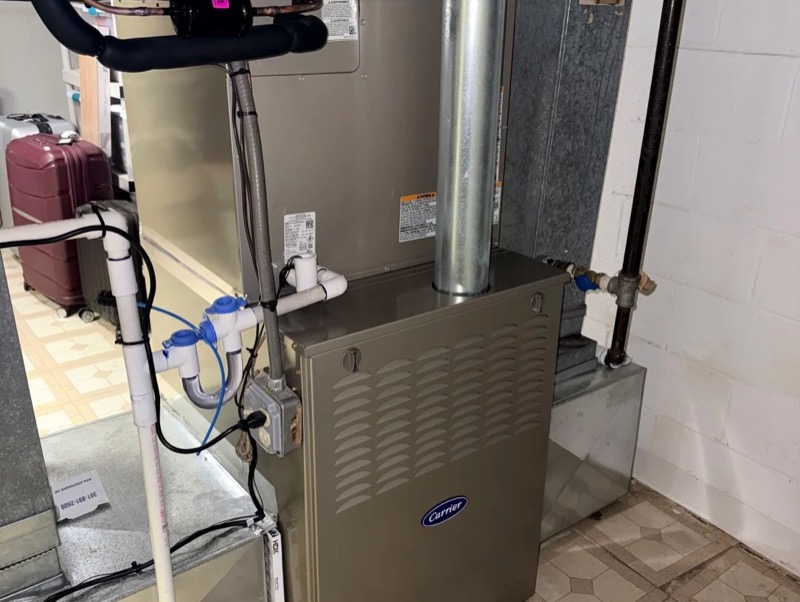
The Carrier Performance line is designed for homeowners seeking balanced performance, durability, and energy efficiency.
- Quieter Operation
Advanced sound insulation reduces outdoor noise levels significantly.
- Higher SEER2 Efficiency Ratings
Meets updated energy standards, improving cooling efficiency.
- Reliable Compressor Technology
Designed for long-term durability and stable performance.
- Improved Dehumidification
Especially beneficial for humid climates like Maryland and Virginia.
- Smart Thermostat Compatibility
Works seamlessly with Nest, Ecobee, and similar systems
SEER2 (Seasonal Energy Efficiency Ratio 2) is the latest standard for measuring HVAC efficiency.
- Reflects real-world operating conditions
- Helps estimate actual energy savings
- Required for compliance in many U.S. regions
Example Comparison:
- Old unit (SEER 10): Higher energy use
- New Carrier unit (SEER2 14–16): Up to 30% improved efficiency
This translates directly into lower monthly utility bills and reduced environmental impact.
| Factor | Repair Old System | Replace with New System |
|---|---|---|
| Initial Cost | Lower | Higher upfront |
| Long-Term Cost | High (frequent repairs) | Lower |
| Energy Efficiency | Poor | High |
| Reliability | Decreasing | Stable |
| Warranty | Limited or none | Up to 10 years |
Conclusion: While replacement requires a higher initial investment, it delivers better long-term value and peace of mind.
Based on industry experience and field data, consider replacement if:
- Your system is 15+ years old
- You experience frequent breakdowns
- Energy bills are steadily increasing
- Your home has uneven cooling or humidity issues
- Major components (compressor, coil) fail
Pro Tip: Planning your upgrade before peak summer helps avoid emergency costs and limited availability.
Even the best HVAC system will underperform if installed incorrectly.
At Mega Services Heating & Cooling, our installation process includes:
1. Load calculation (Manual J assessment)
2. Proper system sizing
3. Ductwork inspection and optimization
4. Refrigerant charge calibration
5. Airflow balancing
This ensures:
- Maximum efficiency
- Longer system lifespan
- Consistent indoor comfort
From real feedback and service interactions, homeowners who upgraded reported:
- Noticeably quieter indoor and outdoor operation
- Faster and more consistent cooling
- Reduced humidity levels
- Lower monthly utility bills within the first season
One homeowner noted that the new system made their home feel "consistently comfortable without constantly adjusting the thermostat."
Many homeowners delay replacement to save money, but this often leads to higher total costs.
- Emergency repair fees during peak season
- Temporary cooling solutions (portable units)
- Increased electricity usage
- Potential damage to other system components
Industry Observation: Emergency replacements often cost 10–20% more due to urgency and limited scheduling flexibility.
After installation, proper maintenance is essential.
- Replace air filters every 1–3 months
- Schedule annual professional tune-ups
- Keep outdoor unit clear of debris
- Monitor thermostat settings for efficiency
A well-maintained system can last 15–20 years with consistent performance.
Mega Services Heating & Cooling proudly serves:
- Maryland
- Virginia
- Washington, D.C. (DMV area)
We specialize in:
- Air conditioning installation
- HVAC system replacement
- Heating system repair
- Preventive maintenance
Our team combines hands-on experience with modern HVAC technology, ensuring every installation meets high performance standards.
If your current system is aging or struggling to keep up, now is the time to act. Avoid unexpected breakdowns and rising energy costs by planning your upgrade in advance.
Contact Mega Services Heating & Cooling today for a professional evaluation and customized recommendation tailored to your home.
Most systems last 15–20 years, depending on usage, maintenance, and installation quality.
If your system is over 15 years old and repair costs are high, replacement is usually more cost-effective.
SEER2 measures energy efficiency under real conditions. Higher ratings mean lower energy consumption.
Homeowners can save 20–30% on energy bills, depending on the efficiency of the new system.
Yes, most modern systems are compatible with smart thermostats like Nest and Ecobee.
1. U.S. Department of Energy – Air Conditioner Efficiency Standards https://www.energy.gov/energysaver/air-conditioning
2. Carrier Official Website – Performance Series https://www.carrier.com/residential/en/us/products/air-conditioners/performance-series/
3. ENERGY STAR – Heating & Cooling Guidelines https://www.energystar.gov/products/heating_cooling
4. HVAC.com – When to Replace Your HVAC System https://www.hvac.com/expert-advice/when-to-replace-your-hvac-system/
5. ASHRAE (American Society of Heating, Refrigerating and Air-Conditioning Engineers) https://www.ashrae.org


