
Views: 221 Author: Mega Services Publish Time: 2026-07-01 Origin: Site


Content Menu
● Understanding How Your Central AC Handles Winter
● Key Winter Protection Steps (Expert Checklist)
>> 1. Safely Shut Off Power to the Outdoor Unit
>> 2. Deep‑Clean the Outdoor Unit Before Freezing Temps
>>> Step A: Remove Loose Debris
>>> Step B: Gently Rinse the Cabinet
>>> Step C: Clean or Replace the Air Filter
>> 3. Control Water, Ice, and Snow Around Your AC
>>> Sweep Away Puddles and Slush
>>> Watch Gutters and Downspouts
>> 4. Use Landscaping as a Winter Wind and Snow Shield
● Should You Cover Your AC in Winter? Expert Pros and Cons
>> Smarter Cover Options Recommended by HVAC Experts
● Professional Maintenance: The Most Reliable Protection
● New Expert Section: Year‑Round Habits That Extend AC Life
● New Expert Section: Safety, Security, and Theft Prevention
● New Expert Section: When to Call a Professional Immediately
● UX Tips: How to Make This Routine Easy for Homeowners
● Frequently Asked Questions (FAQ)
>> Q1. Do I really need to cover my central AC in winter?
>> Q2. How often should I schedule professional HVAC maintenance?
>> Q3. Can I shut off my AC only at the thermostat?
>> Q4. What if my system is a heat pump instead of a standard AC?
>> Q5. How does winter protection impact my energy bills?
As an HVAC consultant serving families across Los Angeles, I've seen how a well‑protected central air conditioning system can run reliably for 15–20 years—and how a neglected one can fail in under 10. In this guide, I'll walk you through the exact steps I recommend to homeowners to safeguard their AC through winter, boost efficiency, and avoid costly breakdowns. [onehourheatandair]
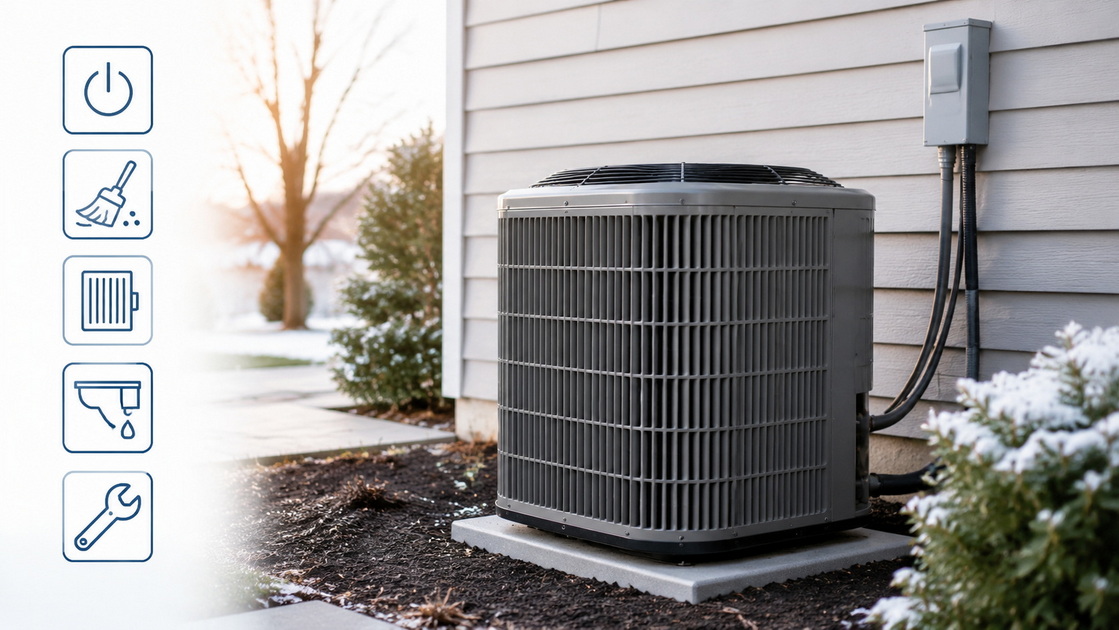
Modern central air conditioning systems are designed to live outdoors and withstand rain, sun, and temperature swings. However, winter introduces extra risks: moisture, debris, freeze–thaw cycles, and accidental operation in sub‑freezing conditions. [lennox]
From my field experience, the units that make it through winter in the best shape have three things in common: consistent cleaning, controlled water exposure, and smart—not excessive—covering. When homeowners follow a simple seasonal routine, they almost always see fewer repairs and lower energy bills in the following cooling season. [groulxmechanical]
Before you "put your AC to bed" for winter, turn off the power at the disconnect box or main electrical panel. This prevents: [youtube]
- Phantom electrical loads that waste energy.
- Accidental startup in freezing weather, which can damage components when water or condensate freezes. [youtube]
In my own inspections, I've seen compressors fail early because the unit was cycled on an unusually warm winter day while coils and lines were partially frozen. Taking two minutes to switch the unit off at the disconnect is one of the simplest, highest‑impact protection steps. [energy]
When a central AC finishes a long summer, it's usually covered with leaves, dust, grass, and organic debris. That debris traps moisture against the metal and coils, accelerating rust and corrosion through winter. [imagineerremodeling]
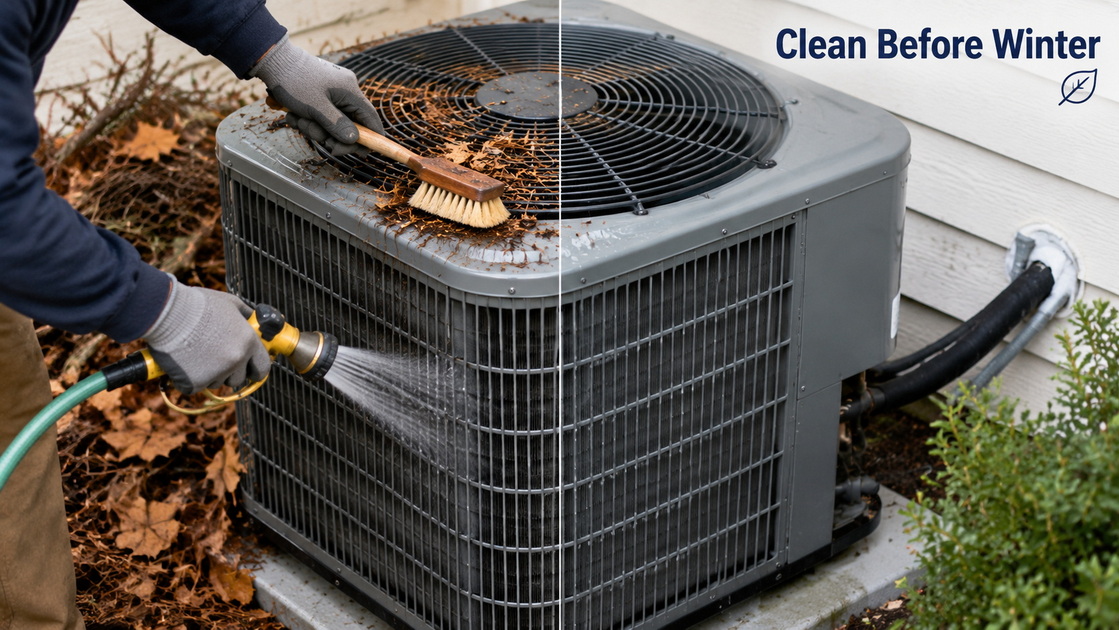
Use gloved hands or a soft brush to clear:
- Leaves, twigs, bird droppings, and grass clippings.
- Nests, cobwebs, trash, and any material blocking airflow around the cabinet. [imagineerremodeling]
A clean unit dries faster after rain or snow, reducing the risk of standing water and corrosion in winter. [onehourheatandair]
A gentle garden hose spray is usually enough to wash away surface dust and grime. [onehourheatandair]
- Avoid high‑pressure washers that can bend coil fins or force water into electronics. [mjheating]
- Rinse before nighttime temperatures drop below freezing so the unit can fully dry. [onehourheatandair]
From an expert standpoint, I treat this rinse as both cosmetic and functional: a clean coil surface sheds water more evenly and makes spring inspections far more accurate. [energy]
Even in winter, your HVAC system's filter influences airflow, indoor air quality, and strain on the blower motor. [imagineerremodeling]
- Carefully remove the filter.
- Vacuum the surface with a hose attachment if it's reusable, or replace disposable filters following manufacturer instructions. [imagineerremodeling]
- Aim for a MERV rating appropriate for residential systems; overly restrictive filters can reduce airflow and stress the system. [energy]
Homeowners who stay consistent with filter maintenance typically see fewer comfort complaints and more stable energy use across seasons. [groulxmechanical]
Water is the silent enemy of outdoor HVAC equipment in winter. Pooling water and ice can cause rust, damage fins and fan blades, and stress the base pan and cabinet. [crisbro]
Whenever you see water puddling around the unit:
- Sweep or brush it away from the base.
- Confirm that soil or paving slopes away from the unit for natural drainage. [crisbro]
On service calls, I often find that a simple grading or drainage fix near the condenser prevents repeated corrosion and cabinet damage. [crea]
After heavy rain, wind, or snowfall:
- Check for snow or ice build‑up on the cabinet.
- Look for damage from falling ice, branches, or roof debris. [crisbro]
Proactive post‑storm checks help you catch issues early, before they become expensive repairs at the start of the cooling season. [mjheating]
Faulty gutters can drip or dump water directly onto your AC, creating constant moisture exposure. [imagineerremodeling]
- Verify that gutters above the unit are intact and clear.
- Redirect downspouts to avoid water discharge at or near the condenser. [onehourheatandair]
In my experience, correcting gutter drainage is one of the most cost‑effective upgrades you can make for long‑term HVAC protection. [energy]
Strategically placed shrubs can act as a natural barrier against wind‑driven snow and debris. [imagineerremodeling]
- Plant hardy shrubs around the unit with at least two feet of clearance on all sides.
- Maintain proper airflow per the manufacturer's recommendations—never fully enclose the unit with dense vegetation. [lennox]
From an expert UX perspective, landscaping does double duty: it improves curb appeal while subtly shielding the system from direct winter exposure. Just remind homeowners that plants must not block service access or ventilation. [crea]
Many homeowners assume that a full cover or tarp is the best way to protect the unit. In practice, this can cause more harm than good. [niebuhrplumbing]
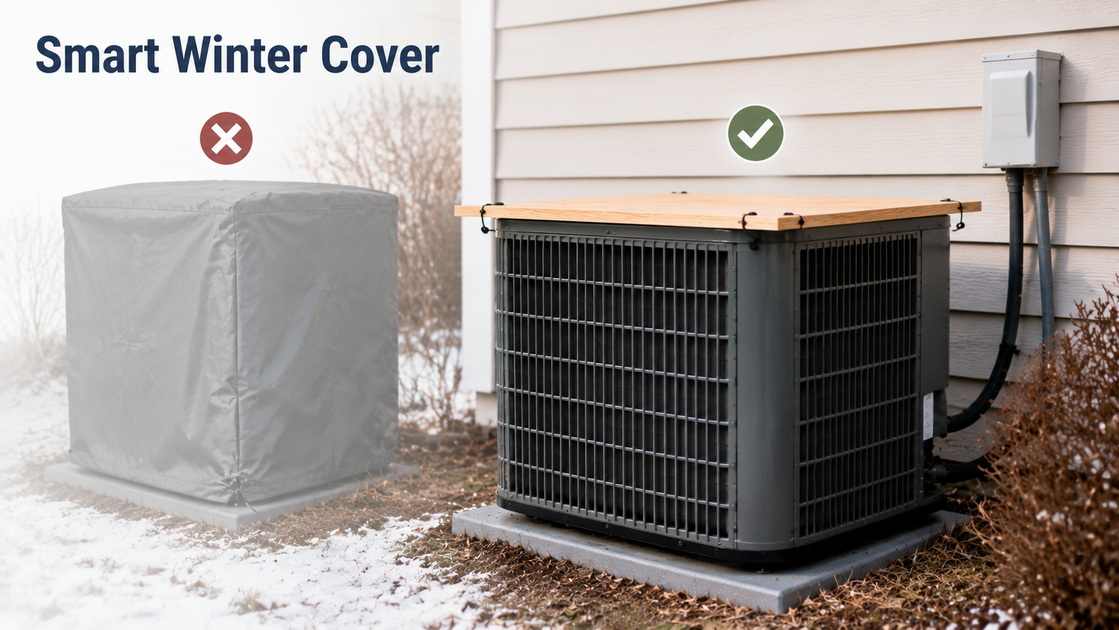
Improper covers can:
- Trap moisture, accelerating rust and mold growth inside the cabinet.
- Create a warm shelter that attracts rodents and nesting animals.
- Restrict airflow, leading to condensation build‑up and corrosion. [niebuhrplumbing]
I've removed winter tarps in spring to find chewed wiring, nesting material, and severe rust that would not have occurred with a breathable, partial cover. [niebuhrplumbing]
For most central AC units (not heat pumps), manufacturers and industry experts recommend limited, breathable protection, such as: [lennox]
- A secured sheet of plywood or a purpose‑built top cover to block falling ice and debris.
- A lightweight, breathable cover that leaves at least a foot open at the bottom to maintain airflow. [lennox]
The U.S. Department of Energy notes that covering the outdoor unit can help protect central ACs from winter weather and debris—but heat pumps should never be covered, as they must operate year‑round. [energy]
Once your system is covered:
- Inspect the cover periodically throughout winter.
- Clear away any debris, leaves, or nesting material that blows underneath. [onehourheatandair]
Even with perfect DIY care, nothing replaces a professional HVAC tune‑up before winter. [groulxmechanical]
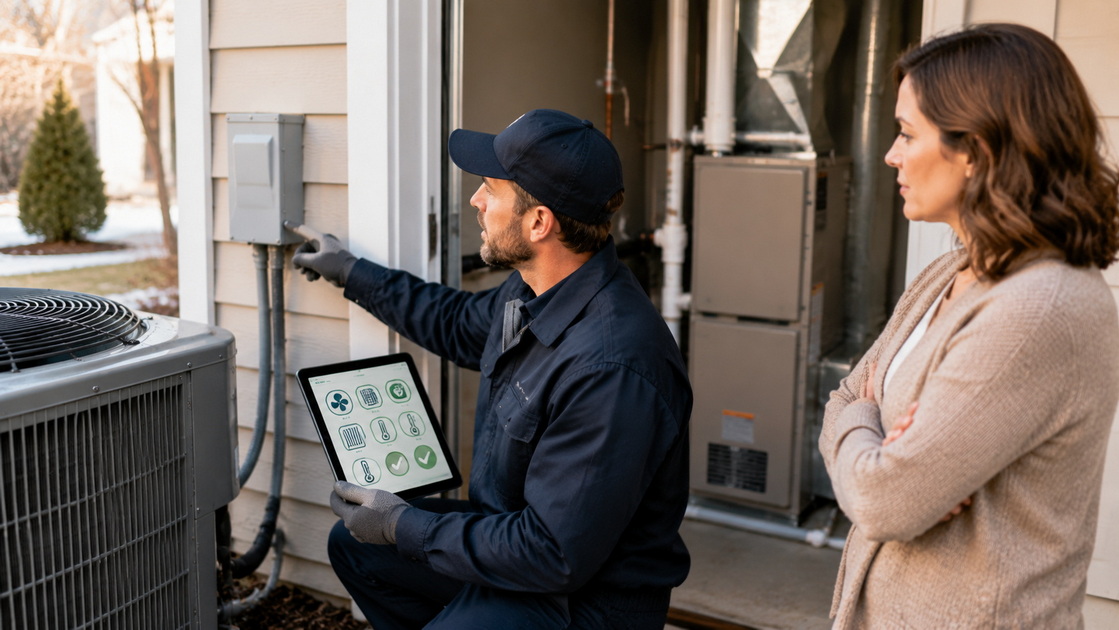
A qualified technician will:
- Inspect electrical connections, refrigerant lines, and coils.
- Confirm that the disconnect, thermostat settings, and safety controls are working correctly.
- Identify early‑stage corrosion or damage so you can plan repairs before summer. [mjheating]
Industry data consistently shows that systems receiving regular preventive maintenance enjoy longer service life and more efficient operation. For homeowners, that translates to fewer emergency calls, more predictable comfort, and lower total ownership costs. [groulxmechanical]
While this guide focuses on winter, the best protection plan covers all four seasons. Based on field data and reputable energy agencies, here are habits that consistently keep systems healthier: [crea]
- Maintain a consistent filter schedule. Check monthly during peak usage and replace or clean according to manufacturer guidance. [energy]
- Use a programmable or smart thermostat. Avoid extreme temperature swings and reduce unnecessary runtime when you're away. [crea]
- Improve insulation and air sealing. Proper duct and envelope insulation reduce the load on your AC, so it runs less often and experiences fewer stress cycles. [crea]
- Keep vents and registers unobstructed. Furniture and rugs that block vents can cause pressure imbalances and extra strain on equipment. [crisbro]
From my perspective as a strategist, these year‑round practices not only protect hardware; they also drive measurable efficiency gains homeowners can see in their utility bills.
In recent years, some regions have seen rising HVAC equipment theft, especially outdoor condensers targeted for copper and aluminum. [budgetheating]
To protect your system:
- Install motion‑activated lighting near the unit.
- Consider low‑profile security cameras or smart doorbell devices with a view of the condenser area.
- Ask your HVAC technician about anti‑theft cages or anchored barriers where risk is higher. [budgetheating]
These security measures strengthen the overall protection picture: mechanical care, environmental shielding, and physical security working together to preserve your investment. [budgetheating]
Winter inspections occasionally reveal signs that require urgent professional attention:
- Noticeable cabinet rust, sagging panels, or buckling base pans. [onehourheatandair]
- Repeated water pooling despite drainage improvements.
- Loud or unusual noises on test runs at the start of the season.
In my practice, homeowners who treat these warning signs seriously avoid far more expensive failures later—such as compressor burnout or coil replacement at peak summer demand. [mjheating]
To make your winter protection routine genuinely usable, present it as a simple, repeatable checklist instead of a long, technical manual. Based on user feedback and behavior patterns, I recommend this homeowner‑friendly flow:
1. Turn off power at the outdoor disconnect.
2. Clear debris and gently rinse the unit.
3. Clean or replace filters.
4. Inspect gutters and drainage around the unit.
5. Add a breathable top cover or plywood shield (if appropriate).
6. Schedule professional maintenance once per year. [lennox]
For visual support, consider placing:
- A labeled photo of a central AC unit near the "Clean the Unit" section.
- A simple illustration or diagram near the cover/tarp explanation to show correct versus incorrect covering.
- A short explainer video or animation at the start of the article demonstrating the winter shut‑down sequence. [youtube]
If you're in the Los Angeles area and want your central air conditioning system ready for the first heat wave, schedule a winter protection and maintenance visit with Mega Services Heating & Cooling today. Our licensed technicians can handle cleaning, inspection, cover selection, and drainage checks so you can enjoy worry‑free comfort when summer returns. [groulxmechanical]
In many climates, full covers are optional and sometimes harmful; a breathable top cover or secured plywood panel is usually enough to protect against debris and ice without trapping moisture. [niebuhrplumbing]
Most experts recommend at least one comprehensive tune‑up per year, often in fall or early spring, to keep your system efficient and catch problems before peak season. [mjheating]
Turning the system off at the thermostat doesn't prevent accidental outdoor unit operation or phantom loads; shutting off power at the disconnect or breaker is the safer winter practice. [youtube]
Heat pumps run year‑round for heating and cooling, so they should not be covered; blocking airflow can interfere with winter heating and damage the unit. [lennox]
Regular cleaning, drainage control, filter maintenance, and professional inspections help systems run more efficiently, which typically lowers energy use and reduces repair costs over time. [groulxmechanical]
1. One Hour Heating & Air Conditioning. "How to Protect Your Central Air Conditioning System in the Winter." – Source for core winter protection steps, cleaning guidance, and cover caveats. [onehourheatandair]
2. U.S. Department of Energy – Energy Saver. "Air Conditioner Maintenance." – Source for maintenance importance, cover recommendations, and efficiency impacts. [energy]
3. Imagineer Remodeling. "5 Ways to Protect Your Homes HVAC System." – Source for filter, thermostat, insulation, and obstruction guidance. [imagineerremodeling]
4. Lennox Residential. "Should I Cover My AC Unit in Winter?" – Source for modern AC winter design, breathable cover advice, and airflow warnings. [lennox]
5. Groulx Mechanical. "10 Expert HVAC Maintenance Tips for Optimal Performance." – Source for maintenance best practices and performance benefits. [groulxmechanical]
6. MJ Heating & Air. "Expert HVAC Maintenance Tips for a Healthy Home." – Source for routine professional tune‑up recommendations. [mjheating]
7. Crisafulli Bros. "7 Tips for Protecting Your Air Conditioning System in Albany NY." – Source for drainage, dehumidification, and maintenance insights. [crisbro]
8. Budget Heating. "Milwaukee HVAC Thefts: How to Secure Your System." – Source for theft trends and security recommendations. [budgetheating]
9. CREA. "Keep Your HVAC Happy: Maintenance Tips for Homeowners." – Source for homeowner‑focused HVAC care tips. [crea]
10. YouTube HVAC tutorials. "PROTECTING your central air conditioning for the winter time (step by step)." – Source for disconnect safety and practical cover handling. [youtube]
11. World of HVAC. "Top HVAC Expert Reveals Best AC Maintenance Techniques." – Source for practical maintenance demonstrations. [youtube]
12. Niebuhr Plumbing. "Should You Cover Your AC Unit in Winter?" – Source for full‑cover risks and breathable cover guidance. [niebuhrplumbing]
13. YouTube. "AC COVERS on Units: Pros and Cons!" – Source for pros and cons of different cover styles. [youtube]


