
Views: 213 Author: Mega Services Publish Time: 2026-08-09 Origin: Site


Content Menu
● Why Many Homes Are Moving Beyond Window Units
● Common Drawbacks of Window Air Conditioners
>> Seasonal Installation and Safety Concerns
>> Rising Energy Costs with Multiple Units
>> Uneven Cooling and Limited Air Circulation
● Best Alternatives to Window Air Conditioners
>> Central Air Conditioning for Homes with Ductwork
>>> Key Advantages of Central Air
>> Ductless Mini‑Split Systems for Homes Without Ducts
>>> What Is a Ductless Mini‑Split?
>>> Benefits of Ductless Systems
>> High‑Efficiency Heat Pumps as All‑Season Solutions
>>> Why Heat Pumps Are Gaining Popularity
>> Portable Air Conditioners and Evaporative Coolers as Temporary Options
● Comparative Overview of Cooling Options
>> Window AC vs. Central Air vs. Ductless Mini‑Split
● Practical Steps to Choose the Right Alternative
>> Step 1 – Review Your Home's Existing Setup
>> Step 2 – Clarify Your Comfort Priorities
>> Step 3 – Balance Upfront Cost and Long‑Term Value
>> Step 4 – Schedule a Professional Assessment
● Maintenance Tips for Long‑Lasting Performance
>> Keeping Your System in Top Shape
If you have ever lifted a heavy window unit in the middle of summer, you know that it rarely feels like a long‑term solution. A single window air conditioner might cool one room, but it often struggles to keep an entire home comfortable, especially during the hottest weeks of the year.

Homeowners frequently describe the same issues:
- Uneven temperatures from room to room
- High energy bills when multiple units run at once
- Constant noise from fans and compressors
- Blocked windows and reduced natural light
- Security concerns when a unit creates gaps or weak points
Over time, many households look for options that are more permanent, more efficient, and less intrusive. Central air conditioning, ductless mini‑split systems, and high‑efficiency heat pumps have become popular alternatives because they provide whole‑home comfort without the seasonal hassle.
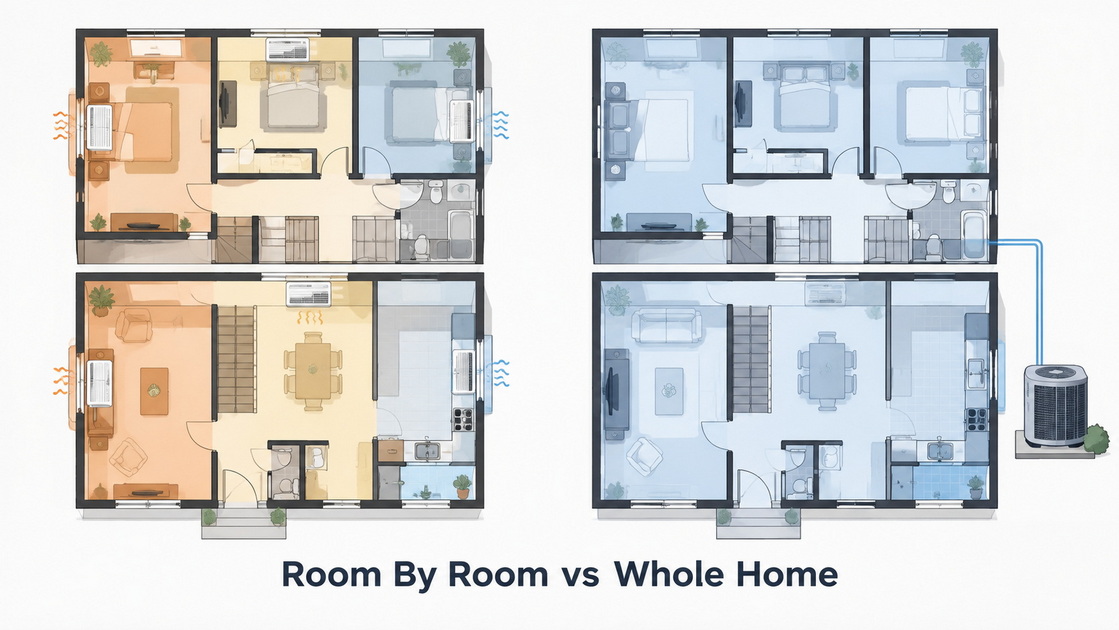
Window air conditioners are designed to be removable, which means:
- They must be installed and taken down each year
- They often require lifting and balancing in a window opening
- They may rely on temporary brackets, foam, or panels to stay in place
If a unit is not properly supported and sealed, it can:
- Allow warm or humid air to leak into the home
- Introduce water leaks that damage walls and window frames
- Create a potential safety risk if the unit is unstable
Many households eventually decide that wrestling with heavy units every summer and winter is not worth the effort, especially when they want a solution that can stay in place all year.
One window unit might be manageable, but many households end up installing:
- One unit in the living room
- Another in a primary bedroom
- Additional units in children's rooms or home offices
Running three or four units at once can significantly increase monthly utility bills. Each unit cools one area in isolation, so there is no shared system to manage energy use efficiently across the entire home.
By contrast, a well‑designed whole‑home system can be sized specifically for the home, helping to cool more effectively while using energy more efficiently over time.
Window units usually blow cool air into a single room. This often leads to:
- Cold spots near the unit
- Warm areas in corners or adjacent rooms
- Hallways and upper levels that remain uncomfortably hot
Because the air is not moving through a central system:
- There is limited whole‑home filtration
- Indoor air quality can vary from room to room
- Moisture may build up if drainage is not handled properly
For households with allergies, pets, or humidity concerns, this can be a major drawback compared with systems that circulate and filter air throughout the home.
If your home already has ductwork for a furnace, central air conditioning is often the most straightforward and effective upgrade from window units.
A central system:
- Uses an outdoor unit to release heat from the home
- Uses an indoor coil connected to the furnace blower
- Distributes cooled air through the existing duct network
This approach allows one system to cool every room connected to the ducts, instead of relying on separate units in each space.
- Whole‑home comfort with more even temperatures
- Cleaner look, with no equipment sitting in windows
- Improved filtration, since air passes through a central filter
- Quieter operation, as most noise is outdoors
For many homeowners, central air transforms the home from a patchwork of cool rooms and hot hallways into a consistently comfortable environment on every floor.
If your home does not have ductwork—or if adding ducts would be difficult—ductless mini‑split systems are one of the most flexible and efficient alternatives to window air conditioners.
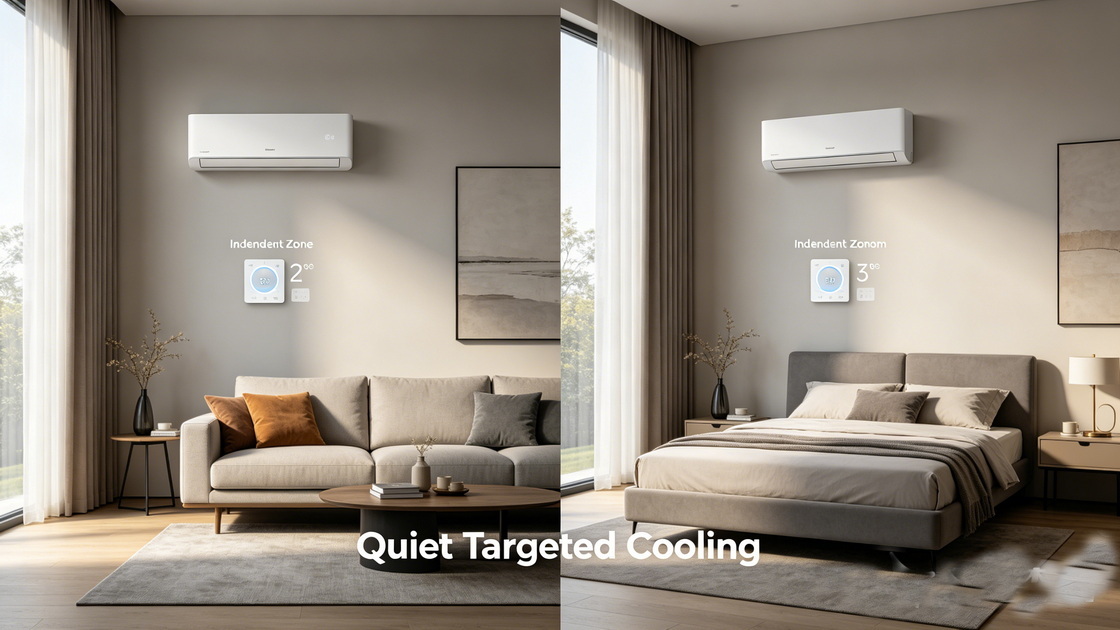
A typical ductless system includes:
- An outdoor unit mounted on a wall or slab
- One or more indoor units mounted high on interior walls or ceilings
- A small line set connecting indoor and outdoor components through a modest wall opening
Many ductless systems can both cool in summer and heat in winter, offering year‑round comfort.
- No ductwork required, ideal for older homes or additions
- Zoned comfort: each indoor unit can have its own temperature setting
- High efficiency, especially with modern inverter technology
- Quiet operation, which is important for bedrooms and home offices
Ductless systems work particularly well for:
- Homes without existing ducts
- Finished attics, sunrooms, and additions
- Multi‑story homes with hot second floors
- Households that want targeted control in specific rooms
A high‑efficiency heat pump can provide both cooling and heating using the same equipment. This makes it a compelling alternative for homeowners who want to simplify their systems.
In summer, a heat pump functions similarly to a central air conditioner, moving heat out of the home. In cooler seasons, the process reverses, bringing heat from the outside air into the home.
Modern systems are designed to operate effectively across a broad range of temperatures, especially when paired with good insulation and weatherization.
- Single system for both heating and cooling
- Potential for lower long‑term energy use compared with separate systems
- Consistent comfort, with smooth, even temperature control
- Compatibility with ducted or ductless configurations
For homeowners ready to replace both old window units and outdated heating equipment, a heat pump can be a comprehensive upgrade.
Some households cannot install permanent systems immediately due to building rules, budget, or timing. In these cases, portable air conditioners and evaporative coolers can serve as interim solutions.
Portable units:
- Typically sit on the floor and vent hot air through a window kit
- Can be moved from room to room
- Are often less efficient than window units or permanent systems
They are most useful for:
- Renters with restrictions on window or wall modifications
- Short‑term cooling in specific rooms
- Homes waiting for permanent systems to be installed
Evaporative coolers:
- Use water evaporation to reduce air temperature
- Work best in dry climates, where humidity is low
- Typically use less electricity than traditional refrigeration systems
They are less effective in humid regions, where the air already holds a great deal of moisture, but can be appealing in arid areas where energy savings are a priority.
To help visualize the differences between common options, the table below highlights typical characteristics. Exact performance depends on equipment selection, installation quality, and home design.
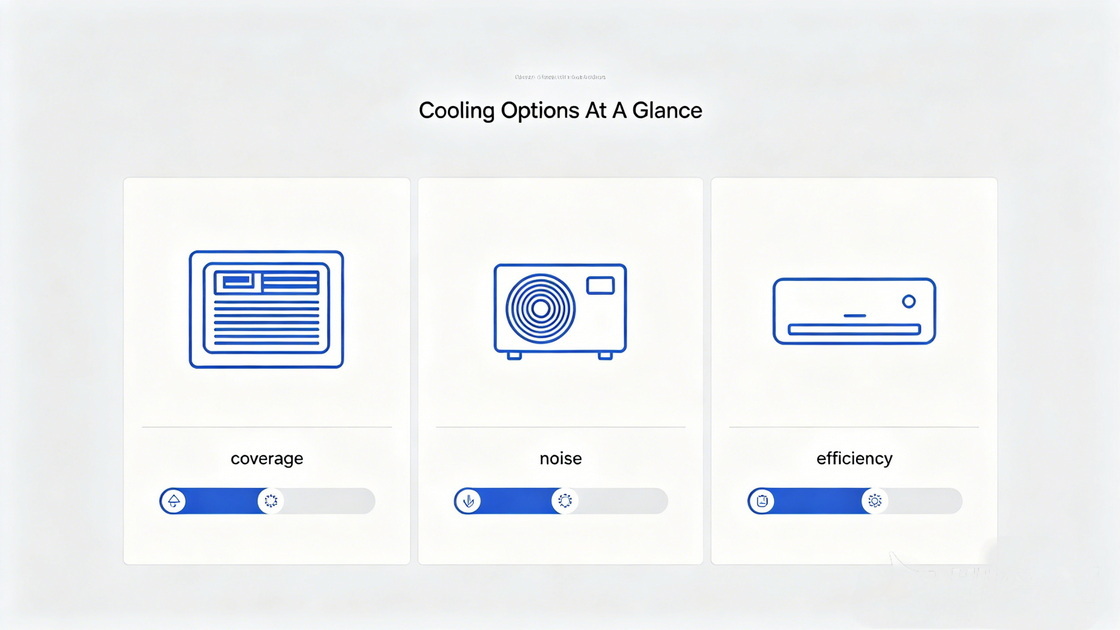
| System Type | Typical Coverage | Installation Style | Relative Efficiency | Noise Level | Best Use Case |
|---|---|---|---|---|---|
| Window AC | Single room | Window opening, removable | Moderate | Moderate to high | Short‑term, single‑room cooling |
| Central Air Conditioning | Whole home (with ductwork) | Professional, duct‑based | High | Mostly outdoors | Homes with existing ducts |
| Ductless Mini‑Split | One or multiple zones | Professional, wall‑mounted | High to very high | Very low indoors | Homes without ducts or with targeted zones |
| Portable AC | Single room | Floor unit with vent | Moderate to low | Medium | Renters and temporary setups |
| Evaporative Cooler | Single room or open area | Floor or window unit | High in dry climates | Low to medium | Dry climates with low humidity |
Start by examining how your home is built:
- If you already have ductwork, central air or a ducted heat pump may be the most direct path.
- If you do not have ducts, consider whether you need whole‑home coverage or targeted zones, which often points toward ductless systems.
A professional evaluation can clarify whether your current ducts are in good condition or if repairs or modifications are needed.
Think about how you use your home every day:
- Do you want even temperatures on all floors?
- Are bedrooms and home offices especially important?
- Is quiet operation a major priority at night?
- Do you or family members have allergies or respiratory concerns?
Your answers shape whether a whole‑home system or a zoned configuration will deliver the best experience.
While window units and portable systems have lower purchase prices, they may not offer the best long‑term value. When comparing options, consider:
- Number of units needed to keep the home comfortable
- Expected lifespan of each type of system
- Energy consumption over several years
- Potential rebates or incentives for high‑efficiency equipment
Central and ductless systems usually require a higher initial investment, but they often provide more consistent comfort and can help manage energy use more effectively over time.
A thorough assessment includes:
- Calculating the cooling load for your home based on size, layout, insulation, and windows
- Reviewing electrical capacity, placement options for equipment, and access routes
- Discussing your budget and timeline
This process helps ensure that any system you choose is properly sized and correctly installed, which is critical for both comfort and reliability.
Regardless of which alternative you choose, good maintenance habits are essential.
- Replace or clean filters regularly to maintain airflow and indoor air quality
- Schedule annual inspections to check refrigerant levels, electrical connections, and overall performance
- Keep outdoor units clear of plants, debris, and clutter to ensure proper airflow
- Listen for unusual noises or changes in performance, and address them promptly
Simple steps like these can extend system life, reduce the risk of unexpected breakdowns, and help keep operating costs under control.
Making the switch from window air conditioners to a more permanent solution can feel like a big step, but the benefits are often immediate. Instead of juggling multiple units, dealing with inconsistent comfort, and managing seasonal installation, you gain:
- More even temperatures across your home
- Quieter operation and a cleaner look
- Better long‑term value, especially when energy use is considered
By understanding your options—central air conditioning, ductless mini‑splits, high‑efficiency heat pumps, and temporary alternatives—you can select a system that fits your home, lifestyle, and budget. A thoughtful, well‑planned upgrade can transform hot, uneven rooms into consistently comfortable spaces for years to come.
1. Carrier. "Mini Split Installation Cost | Ductless AC Prices & Factors."
https://www.carrier.com/us/en/residential/hvac-resources/ductless-mini-splits/ductless-mini-split-installation-cost/
2. Bryant. "Mini Split Cost: Prices, Installation & Factors."
https://www.bryant.com/en/us/products/ductless-systems/mini-split-cost/
3. Filterbuy. "Best Alternatives to Window AC Units for 2026."
https://filterbuy.com/resources/mini-splits/energy-efficiency/alternatives-to-window-ac-units/
4. The New York Times Wirecutter. "The Best Air Conditioners."
https://www.nytimes.com/wirecutter/reviews/best-air-conditioner/
5. Consumer Reports. "Best Window Air Conditioners of the Year."
https://www.consumerreports.org/appliances/air-conditioners/best-window-air-conditioners-of-the-year-a1095244181/


