
Language
Views: 216 Author: Mega Services Publish Time: 2026-09-15 Origin: Site


Content Menu
● What Does CFM per Ton Mean for a Heat Pump?
● Heat Pump CFM per Ton Reference Table
● Is 400 CFM per Ton the Right Airflow Setting?
● Why Proper Heat Pump Airflow Matters
>> Heating Comfort and Airflow
>> Cooling Performance and Humidity Control
>> Energy Use and Equipment Wear
● Why a Blower Setting Does Not Guarantee Correct Airflow
● How Heat Pump Airflow Is Selected
>> Load Calculation for the Home
>> Static Pressure Measurement
● Common Signs of Heat Pump Airflow Problems
● A Real-World Airflow Example
● How Homeowners Can Support Better Airflow
>> Keep Registers and Returns Open
>> Pay Attention to New Comfort Changes
● Summary
>> 1. What is the normal CFM per ton for a heat pump?
>> 2. How many CFM does a 3-ton heat pump need?
>> 3. Is 450 CFM per ton better than 400 CFM per ton?
>> 4. Can low airflow cause a heat pump coil to freeze?
>> 5. Does lower airflow improve humidity control?
>> 6. Why is my heat pump loud after a new installation?
>> 7. Should I close air vents in unused rooms?
When a heat pump leaves some rooms too warm, produces weak airflow, makes loud duct noises, or seems to run longer than expected, the issue is not always the outdoor unit. In many homes, the real concern is airflow.
Understanding the correct CFM per ton for a heat pump can help homeowners make better decisions about installation, repair, and maintenance. CFM means cubic feet per minute, which measures the volume of air moving through the heating and cooling system. Proper airflow supports steady indoor temperatures, humidity control, quiet operation, energy efficiency, and dependable equipment performance.
A common starting point is 400 CFM per ton. However, that number is not a universal setting for every heat pump or every home. Some heat pump systems may perform best closer to 450 CFM per ton, especially during heating operation. The correct airflow depends on the equipment manufacturer's specifications, the home's heating and cooling load, ductwork condition, static pressure, humidity needs, and system design.
At Mega Services Heating & Cooling, we believe a heat pump should be evaluated as a complete comfort system. The right equipment matters, but so do the ducts, return air pathways, filters, blower settings, refrigerant performance, and room-by-room airflow balance.
CFM stands for cubic feet per minute. It describes how much air the blower moves through the HVAC system each minute.
A "ton" in HVAC refers to cooling capacity rather than physical weight. One ton of cooling capacity equals 12,000 Btu per hour. For example, a nominal 3-ton heat pump is designed to provide approximately 36,000 Btu per hour of cooling capacity under rated conditions.


These figures are useful for planning, but they do not replace professional measurement. A blower may be programmed for a particular airflow level, yet the installed duct system may prevent it from delivering that airflow in real operating conditions.
| Nominal Heat Pump Size | Approximate Airflow at 400 CFM per Ton | Approximate Airflow at 450 CFM per Ton |
|---|---|---|
| 1.5 tons | 600 CFM | 675 CFM |
| 2 tons | 800 CFM | 900 CFM |
| 2.5 tons | 1,000 CFM | 1,125 CFM |
| 3 tons | 1,200 CFM | 1,350 CFM |
| 3.5 tons | 1,400 CFM | 1,575 CFM |
| 4 tons | 1,600 CFM | 1,800 CFM |
| 5 tons | 2,000 CFM | 2,250 CFM |
Important: This table provides a general reference only. The correct airflow for a specific heat pump must remain within the approved range for the matched indoor and outdoor equipment.
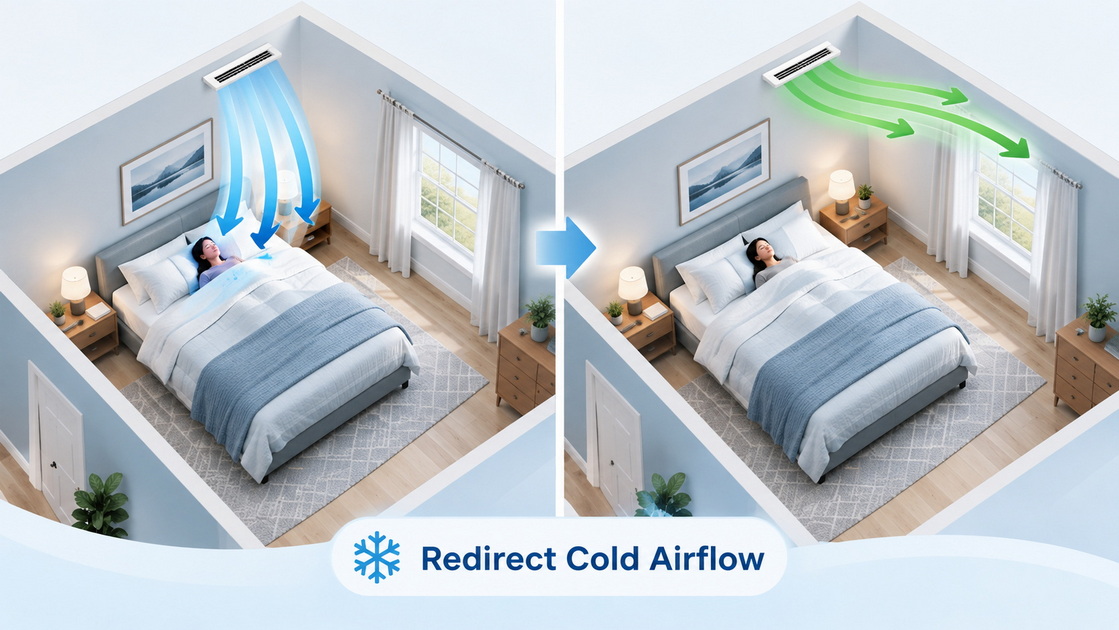
400 CFM per ton is a starting point, not a universal rule.
This airflow level is often used as a practical baseline for cooling applications. However, a heat pump operates in both cooling and heating modes. The airflow needs of the system can change based on outdoor conditions, indoor comfort needs, humidity levels, equipment design, and the homeowner's priorities.
For many systems, an airflow range between 400 and 450 CFM per ton may be appropriate. The final setting should be selected based on the performance information supplied by the equipment manufacturer and confirmed through on-site testing.
In general:
- Lower airflow, often near 350 to 400 CFM per ton, may support stronger moisture removal during cooling operation when humidity is a major concern.
- Moderate airflow, often around 400 CFM per ton, can provide a practical balance between cooling comfort, airflow noise, and energy use.
- Higher airflow, often near 450 CFM per ton, may support heat pump heating performance when the equipment and ductwork are designed to handle it.
- Excessively high airflow can lead to loud registers, uncomfortable drafts, duct noise, and unnecessary blower energy consumption.
- Excessively low airflow can reduce capacity, create uneven temperatures, increase equipment stress, and contribute to indoor coil freezing during cooling operation.
The best answer is not simply "more air" or "less air." The best answer is balanced, measured airflow that supports year-round comfort.
Airflow affects nearly every part of heat pump performance. A heat pump transfers heat between indoor and outdoor spaces. The indoor blower must move enough air across the coil to allow that heat transfer to happen efficiently.
When airflow is too low or too high, comfort and equipment performance can suffer.
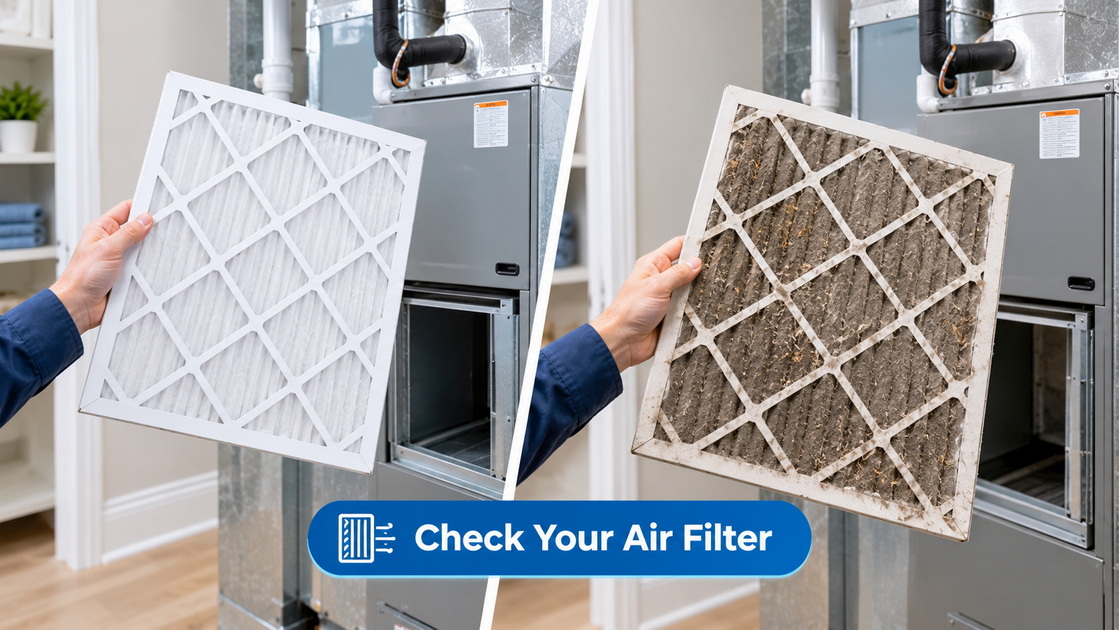
During heating operation, adequate airflow helps distribute warm air throughout the home. If airflow is restricted, some rooms may feel cold while others become overly warm. Homeowners may also notice longer heating cycles, louder blower sounds, or reduced comfort near supply registers.
A properly designed airflow setting can help the heat pump deliver heat more evenly and reduce unnecessary strain on the system.
During cooling operation, airflow influences both temperature reduction and moisture removal.
A heat pump removes heat from indoor air, but it can also remove moisture when humid air passes over the cold indoor coil. If airflow is reduced slightly within the equipment's approved operating range, the coil may stay colder for longer and remove more moisture from the air.
However, reducing airflow too much can create problems. The coil may become too cold, and moisture on the coil can freeze. Frozen coils reduce airflow even further and can lead to system shutdowns, water leaks after thawing, and potential damage.
Balanced airflow helps the system provide comfortable temperatures without leaving the indoor air damp or clammy.
Poor airflow can increase energy consumption because the system must work harder to deliver the same comfort result. A restricted return duct, clogged filter, dirty coil, or undersized supply duct can force the blower to operate against excessive resistance.
This condition is commonly described as high static pressure.
High static pressure can contribute to:
- Higher electrical use.
- Reduced airflow at registers.
- Excessive blower noise.
- Uneven room temperatures.
- Longer heating and cooling cycles.
- Increased wear on blower motors and electrical components.
- Reduced overall system life.
A heat pump does not need the highest possible airflow. It needs the airflow level that matches its design and the home's actual duct capacity.
[Image suggestion: Insert a comparison graphic here with three columns: "Low Airflow," "Balanced Airflow," and "High Airflow." Compare comfort, humidity control, noise, energy use, and equipment stress.]
Many modern air handlers and furnaces allow technicians to select blower airflow through dip switches, control boards, communicating controls, or variable-speed programming. These settings are valuable, but they do not guarantee that the system is delivering the intended CFM.
The duct system must be able to support the requested airflow.
For example, a technician may configure a nominal 3-ton heat pump for 1,350 CFM. If the return duct is too small, the filter is restrictive, the evaporator coil is dirty, or flexible ductwork is crushed in the attic, the blower may not be able to move 1,350 CFM effectively.
Instead, the system may operate with high static pressure, noisy airflow, reduced delivered CFM, and lower comfort.
This is why professional airflow evaluation includes more than checking the thermostat or selecting a fan-speed setting. It should include inspection, measurement, and verification.
A dependable heat pump installation begins before the equipment arrives. The process should consider the home's unique characteristics rather than relying only on the size of the previous system.
A home's heating and cooling requirements depend on more than square footage. A professional load calculation considers the factors that affect how quickly a home gains or loses heat.
These factors can include:
- Home size and layout.
- Ceiling height.
- Window size and orientation.
- Insulation levels.
- Attic and wall construction.
- Air leakage.
- Local weather conditions.
- Number of occupants.
- Appliance and lighting heat.
- Room-by-room comfort needs.
- Shade, sun exposure, and exterior surfaces.
A properly sized heat pump is more likely to maintain steady comfort, run efficiently, and manage indoor humidity effectively.
The outdoor heat pump, indoor coil, air handler or furnace, blower, refrigerant metering device, and controls should be selected as a matched system.
A high-efficiency outdoor unit cannot deliver its intended performance if it is paired with an incompatible indoor component. Proper matching helps ensure that the system can operate within approved airflow, capacity, and efficiency ranges.
Before installation, homeowners should understand what equipment is being installed and how the components work together.
Ductwork is the pathway that delivers conditioned air to each room and returns air to the equipment. It is one of the most important parts of home comfort, yet it is often overlooked during equipment replacement.
A professional duct evaluation may include:
- Return duct size and condition.
- Supply trunk and branch sizing.
- Flexible duct routing and compression.
- Air leaks at joints and connections.
- Register and grille sizing.
- Return grille placement.
- Filter size and filter resistance.
- Indoor coil condition.
- Duct insulation.
- Damper position and zoning controls.
- Evidence of damaged, disconnected, or deteriorated ducts.
Even an advanced heat pump cannot compensate for a duct system that restricts airflow or leaks conditioned air into an attic, crawl space, garage, or wall cavity.
Static pressure measures the resistance that the blower must overcome to move air through the system. It is one of the most useful measurements for identifying airflow restrictions.

High static pressure may be caused by:
- An undersized return duct.
- A heavily loaded air filter.
- A filter with excessive resistance.
- A dirty indoor coil.
- Closed or blocked supply registers.
- Ducts that are too small.
- Crushed flexible ducts.
- Improperly installed transitions.
- Excessive duct length or sharp turns.
- A restrictive zone damper arrangement.
Measuring static pressure helps identify whether the system is operating within a reasonable range for the equipment. It also helps technicians determine whether airflow concerns are related to the blower, filter, coil, ductwork, or other system components.
[Video suggestion: Insert a short technician-led video here showing how static pressure is measured at the return and supply sides of a heat pump air handler.]
Homeowners may not know the exact CFM moving through their system, but they can often recognize symptoms that deserve attention.
Common signs include:
- Weak airflow from one or more supply vents.
- Rooms that are consistently too hot or too cold.
- Loud rushing, whistling, rattling, or banging sounds.
- High indoor humidity during cooling season.
- A heat pump that runs for long periods without reaching the thermostat setting.
- Ice on the indoor coil, refrigerant line, or outdoor unit.
- A filter that becomes dirty unusually fast.
- Frequent system cycling.
- Higher-than-normal utility bills.
- Hot or cold rooms after a new heat pump installation.
- Airflow that changes noticeably when doors are closed.
- A strong draft near one register but little airflow in another room.
These signs can be caused by several issues. Airflow is one possibility, but refrigerant charge, equipment sizing, thermostat settings, insulation, electrical performance, and outdoor-unit condition can also affect comfort.
A thorough evaluation looks at the complete system before recommending repairs or adjustments.
Consider a home with a nominal 3-ton heat pump. The system is programmed to deliver 1,350 CFM, based on 450 CFM per ton. On paper, that may sound like a reasonable airflow target.
However, the home has a small return grille, an undersized return duct, a restrictive one-inch filter, and a crushed flexible duct section in the attic. The blower is asked to move more air, but the duct system creates too much resistance.
The homeowner experiences:
- Loud return-air noise.
- Reduced airflow in bedrooms.
- Uneven temperatures between floors.
- High blower noise.
- Longer system run times.
- Reduced comfort despite a recently installed heat pump.
Increasing the blower speed again would not solve the underlying issue. The better solution may involve improving return-air capacity, correcting damaged duct sections, selecting an appropriate filter arrangement, sealing duct leaks, balancing supply airflow, and confirming the final static pressure.
The key lesson is simple: CFM per ton is a performance target, not a universal switch setting.
Some airflow concerns require professional testing and duct modifications. However, homeowners can take practical steps to help keep the system operating properly between service visits.
Check the filter regularly and replace or clean it according to the manufacturer's instructions. Homes with pets, renovation dust, smokers, allergies, or heavy system use may need more frequent filter checks.
A clogged filter can restrict return airflow and increase static pressure.
Avoid closing multiple supply registers to force more air into another room. Closing too many vents can raise duct pressure and reduce total system airflow.
Keep return grilles open and clear of furniture, curtains, storage bins, rugs, and other obstructions.
Keep leaves, vegetation, grass clippings, and debris away from the outdoor heat pump unit. Good outdoor airflow helps the system exchange heat effectively.
Maintain clear space around the unit according to the equipment manufacturer's requirements.
Call for service if you notice new noises, reduced airflow, ice, water leaks, unusual odors, uneven temperatures, or unexpectedly high energy use. Early attention can prevent smaller airflow restrictions from becoming larger equipment problems.
The correct CFM per ton for a heat pump depends on far more than a standard rule of thumb. Although 400 CFM per ton is a common starting point, many heat pump systems may operate within a range of approximately 400 to 450 CFM per ton when the equipment, ductwork, comfort goals, and operating conditions support it.
The final airflow setting should be based on the matched equipment's approved data, the home's heating and cooling load, humidity needs, duct design, filter resistance, and measured static pressure.
The most effective heat pump system is not simply the largest system or the system with the highest blower setting. It is the system that delivers safe, balanced, measured airflow throughout the home.
Mega Services Heating & Cooling is committed to helping homeowners create a more comfortable, reliable, and energy-conscious indoor environment through professional heat pump installation, repair, maintenance, and airflow evaluation.
A common starting point is 400 CFM per ton. Many heat pump systems may be designed within an airflow range of approximately 400 to 450 CFM per ton. The correct setting depends on the equipment manufacturer's approved data, duct capacity, static pressure, climate, indoor humidity requirements, and heating or cooling mode.
A 3-ton heat pump may use approximately 1,200 CFM at 400 CFM per ton or 1,350 CFM at 450 CFM per ton. These are planning estimates. A technician should verify actual airflow and static pressure after installation.
Not in every situation. Higher airflow may support heat pump heating performance, but it can also create duct noise, drafts, or higher blower energy use if the duct system is restrictive. The best airflow is the one that fits the matched equipment and can be delivered safely and efficiently through the ducts.
Yes. Low airflow can cause the indoor coil to become too cold during cooling operation. Moisture on the coil can freeze, which further restricts airflow and reduces cooling performance. A frozen coil should be evaluated by a qualified HVAC technician.
Lower airflow may increase moisture removal during cooling operation when it remains within the manufacturer's approved range. However, airflow should not be reduced excessively, because very low airflow can cause poor comfort, reduced capacity, coil freezing, and equipment stress.
A new heat pump may sound loud if the blower airflow is too high for the duct system, the return duct is undersized, the filter is restrictive, a duct is damaged, or registers are too small. Static pressure and airflow measurements can help identify the source of the noise.
Closing multiple vents is usually not recommended. It can increase static pressure, reduce total airflow, and make the system work harder. If certain rooms are uncomfortable, a professional airflow and duct evaluation is often a better solution.
1. Air Conditioning Contractors of America.
2. Air-Conditioning, Heating, and Refrigeration Institute.
3. Trane Residential.
4. Housecall Pro.
5. Mega Services Heating & Cooling.


