
Views: 222 Author: Mega Services Publish Time: 2026-08-27 Origin: Site


Content Menu
● Why R-454B Matters for New HVAC Systems
>> What This Means for Your Home
● Why R-454B Availability Has Been Uneven
>> Factors That Can Affect Availability
● Can R-410A, R-32, or Another Refrigerant Replace R-454B?
>> Risks of Using the Wrong Refrigerant
● Is R-454B Safe for Residential HVAC Systems?
>> Safe Installation Depends on the Whole System
● Should You Repair Your R-410A System or Replace It?
>> Replacement May Make Sense When
● Questions to Ask Before Approving HVAC Work
>> Questions for Repair Service
>> Questions for a New HVAC Installation
● How to Prepare for an HVAC Service Visit
● Protecting Your Comfort Through Seasonal Maintenance
>> Homeowner Maintenance Checklist
● Choose a Properly Matched HVAC Solution
>> 1. Is R-454B the same as R-410A?
>> 2. Can R-410A be used in an R-454B air conditioner?
>> 3. Does an R-454B shortage mean I cannot replace my air conditioner?
>> 4. Is R-454B safe for a home?
>> 5. Should I replace my working R-410A system now?
>> 6. What should I ask before installing a new air conditioner or heat pump?
>> 7. How can I help my HVAC system last longer?
If you are planning an air conditioner or heat pump installation, you may be hearing more about the R-454B refrigerant shortage. At Mega Services Heating & Cooling, we believe homeowners deserve clear answers—not pressure, confusion, or unsafe shortcuts—when choosing a system for a safer, more comfortable, and energy-conscious home.
The HVAC industry is moving from R-410A to lower-global-warming-potential refrigerants such as R-454B. This transition has created supply-chain pressure in some markets, but it does not mean homeowners should accept mismatched equipment, refrigerant substitutions, or rushed installation decisions. The right solution begins with a qualified HVAC professional who verifies the system label, uses manufacturer-approved components, and follows current safety and code requirements.
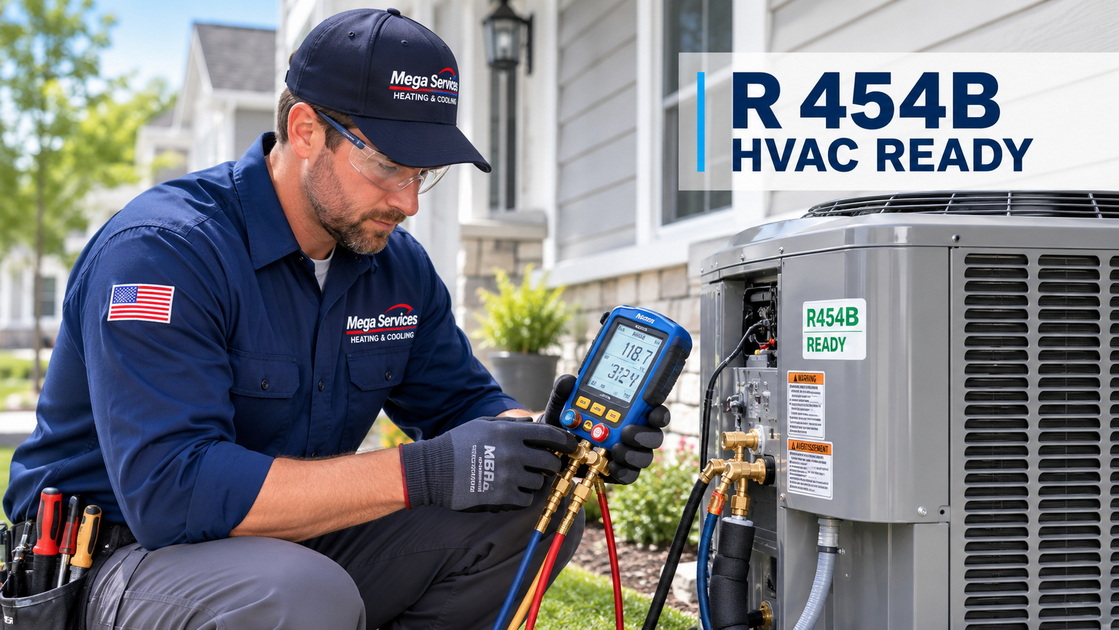
R-454B is a newer refrigerant used in many next-generation residential air-conditioning and heat-pump systems. It is part of the industry's move away from high-global-warming-potential refrigerants and toward lower-impact alternatives.
For homeowners, the most important point is straightforward: refrigerant changes affect newly manufactured equipment, but they do not make an existing R-410A system automatically unsafe, illegal, or unusable.
A properly maintained R-410A system may continue to operate for years. However, homeowners considering a new installation may see more systems designed around R-454B or another approved lower-GWP refrigerant.
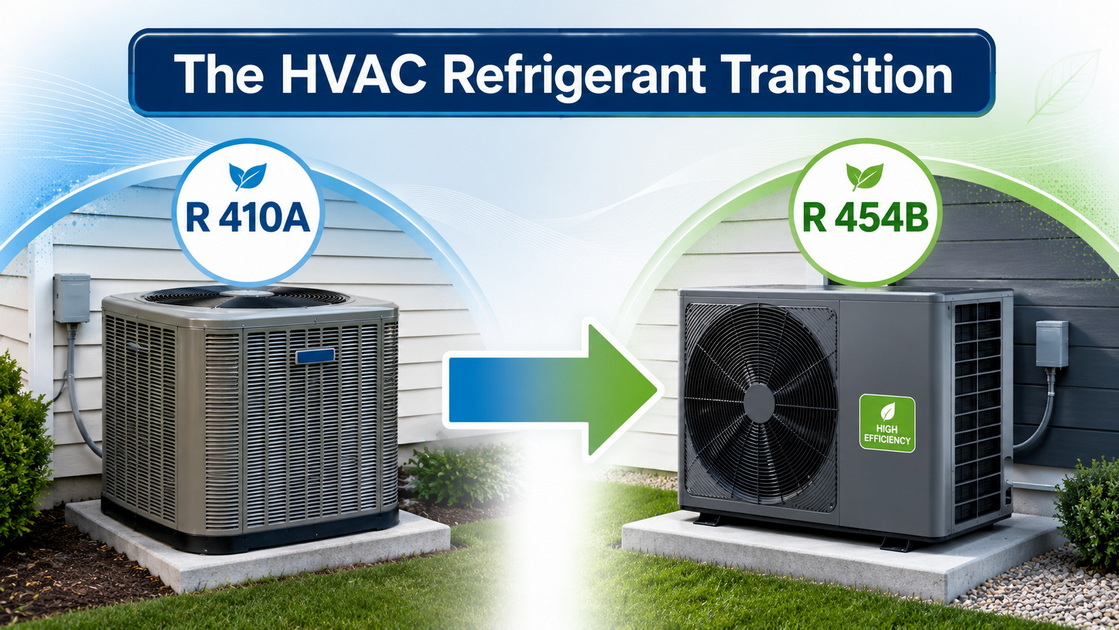
- A functioning R-410A air conditioner does not need to be replaced only because newer refrigerants are available
- New HVAC equipment may use R-454B or another approved refrigerant
- A system must use the refrigerant stated on its manufacturer label
- The outdoor unit, indoor coil, controls, line set, and accessories must be compatible
- New refrigerant systems require installation procedures specific to the equipment manufacturer
The refrigerant is only one part of the decision. Proper system sizing, airflow, ductwork condition, electrical capacity, humidity control, insulation, and installation quality have a major impact on comfort and operating costs.
The transition to R-454B happened quickly across the residential HVAC market. Manufacturers, distributors, contractors, and service teams needed to adjust equipment inventories, refrigerant supply, training, tools, transportation practices, and installation procedures.
In some markets, this created temporary availability challenges. Refrigerant cylinders, compatible tools, matched equipment, and safety-related components may not always arrive at the same pace.
- Rapid demand for new R-454B equipment
- Limited early refrigerant production and cylinder supply
- Distribution delays between manufacturers, wholesalers, and contractors
- Increased demand during hot-weather installation seasons
- Different refrigerant choices among HVAC manufacturers
- Local permitting and inspection schedules
- Availability of matched indoor and outdoor equipment components
Availability can vary significantly by location, equipment brand, system size, and distributor inventory. A professional contractor should verify equipment details before setting firm installation expectations.
No. A refrigerant should never be substituted simply because it is easier to obtain.
R-410A, R-32, and R-454B are different refrigerants. They have different operating characteristics, system requirements, safety considerations, charging procedures, and approved components.
The equipment label tells a technician which refrigerant the system is designed to use. That label is part of the system's approved design—not a recommendation that can be changed based on market conditions.
| System Area | What Can Go Wrong |
|---|---|
| Compressor | Overheating, mechanical damage, reduced service life |
| Cooling performance | Weak cooling, poor humidity removal, uneven temperatures |
| Safety controls | Fault codes, shutdowns, or improper protective responses |
| Warranty coverage | Possible manufacturer warranty problems |
| Inspection requirements | Installation may not meet applicable equipment or safety requirements |
| Future service | Diagnostics become more difficult and recovered refrigerant may be contaminated |
A low initial price is not a true saving if the system is improperly installed, performs poorly, loses warranty protection, or requires major correction later.
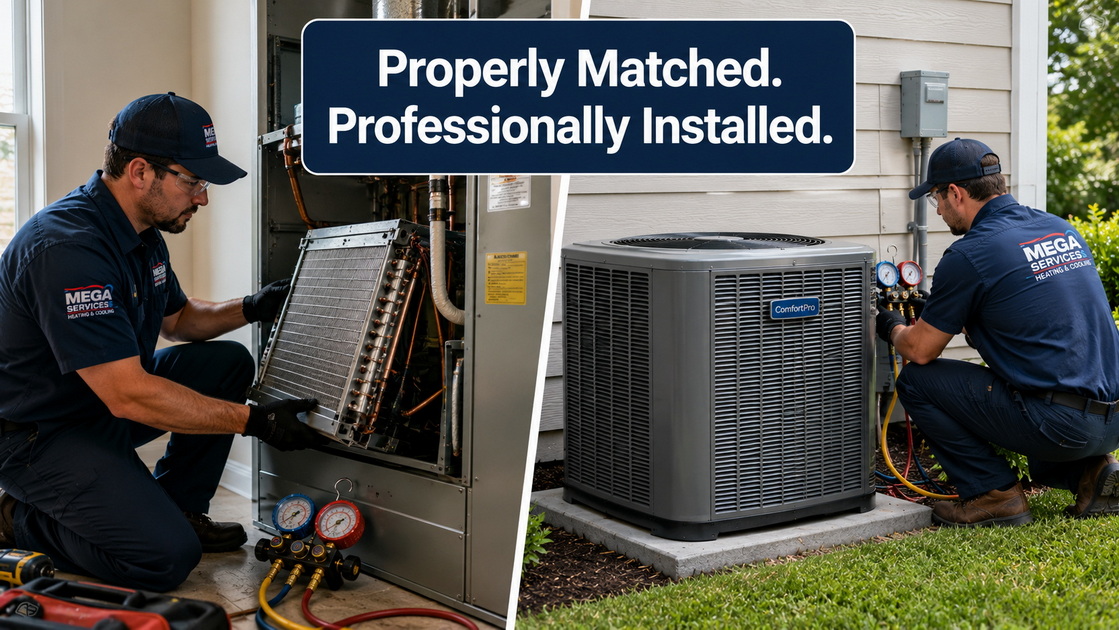
R-454B is classified as an A2L refrigerant. In this classification, "A" refers to lower toxicity and "2L" refers to lower flammability. The "L" indicates low burning velocity.
This does not mean safety requirements can be ignored. It means the equipment, tools, installation practices, and service procedures must be appropriate for the refrigerant involved.
Modern systems designed for R-454B may include safety-oriented features such as refrigerant detection, controls, or shutdown strategies. The exact design can vary by manufacturer and equipment configuration.
A safe HVAC installation is not simply about adding refrigerant. It requires an approved system design, proper workmanship, and thorough testing.
At Mega Services Heating & Cooling, our approach includes:
1. Confirming the equipment match
The outdoor unit, indoor coil or air handler, controls, and accessories must be approved to work together.
2. Reviewing manufacturer specifications
Model numbers, refrigerant type, electrical requirements, clearances, and startup instructions should be verified before installation begins.
3. Inspecting the installation environment
The location must provide proper access, drainage, ventilation, service clearance, and safe equipment placement.
4. Using proper service procedures
Technicians should follow manufacturer instructions and refrigerant-specific practices throughout installation and repair.
5. Testing before final startup
Pressure testing, evacuation, leak testing, airflow verification, and electrical checks should be completed before the system is placed into normal operation.
6. Documenting system performance
A complete startup includes checking thermostat operation, temperature performance, airflow, drainage, and equipment response.
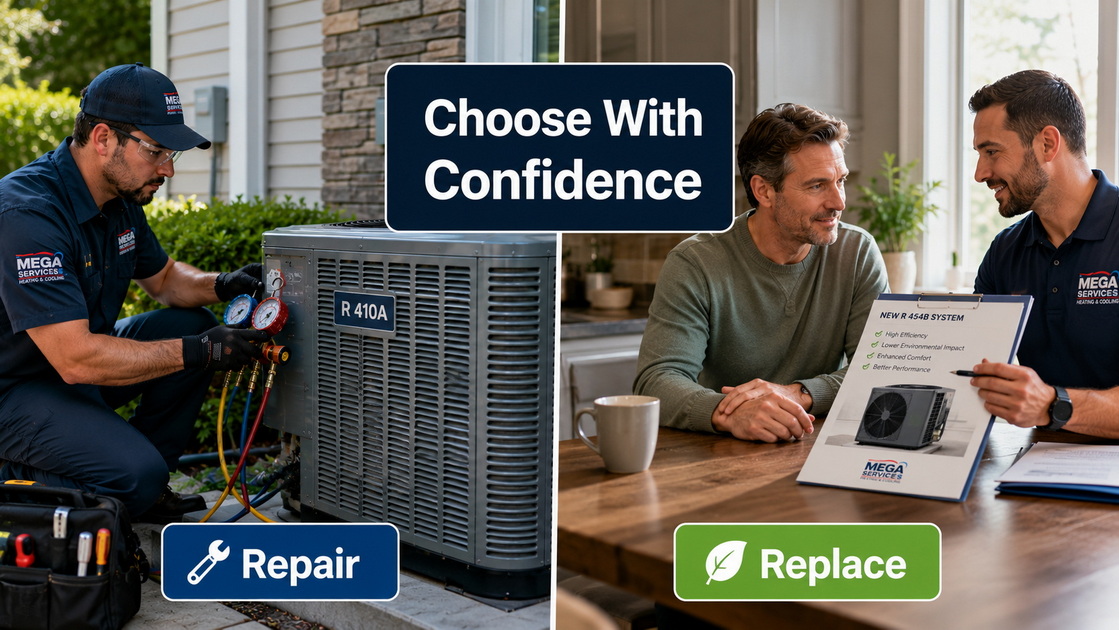
The answer depends on your system's condition—not just the refrigerant it uses.
An existing R-410A system may still be a good candidate for repair if it is relatively young, reliable, and well maintained. A new refrigerant transition does not automatically mean replacement is the best financial or comfort decision.
However, replacement may make sense when a system becomes unreliable, inefficient, costly to repair, or unable to provide dependable indoor comfort.
- The system is relatively new
- The problem is minor and clearly identified
- The equipment has been dependable
- Cooling and heating performance remain acceptable
- The repair cost is reasonable compared with replacement
- The system has not needed frequent service
- Repairs are becoming frequent or expensive
- The compressor, coil, or another major component has failed
- Your home has uneven temperatures or excessive indoor humidity
- Energy bills have risen without another clear explanation
- The system is nearing the end of its expected service life
- A new system could improve comfort, efficiency, reliability, or indoor air quality
A professional assessment should identify the exact issue, explain the repair options, and provide a clear comparison between repairing the current system and installing a properly matched replacement.
Homeowners should feel comfortable asking detailed questions before approving a repair or installation. A professional contractor should be ready to explain the system, the work process, and the available options in plain language.
- What is causing the problem?
- Which component has failed or needs attention?
- Does the system have a refrigerant leak?
- Can the repair be completed safely and reliably?
- What is the expected life of the system after repair?
- What maintenance could help prevent a similar issue?
- What refrigerant does the proposed system use?
- Are the outdoor and indoor components approved as a matched system?
- Is the equipment properly sized for my home?
- Will the installation include permits and required inspections?
- How will you verify airflow, drainage, electrical operation, and refrigerant performance?
- What warranty coverage applies to the equipment and workmanship?
- Which maintenance steps will help protect the new system?
If a contractor cannot explain the refrigerant type, equipment match, installation steps, or safety procedures, homeowners should consider obtaining another opinion.
A little preparation can make a service visit more efficient and help the technician diagnose the issue accurately.
Before the appointment:
- Locate the model and serial numbers on your indoor and outdoor equipment
- Write down unusual noises, odors, leaks, error codes, or comfort changes
- Note when the issue began and whether it happens at certain times
- Check or replace the air filter if it is safe and accessible
- Clear stored items away from the indoor and outdoor equipment
- Keep children and pets away from the work area
- Gather any previous repair records or warranty information
For a replacement consultation, it is also helpful to identify what matters most to your household. You may prioritize lower energy use, quieter operation, improved humidity control, better air filtration, smart thermostat compatibility, reduced hot and cold spots, or predictable maintenance costs.
Routine maintenance remains one of the best ways to support HVAC performance, regardless of the refrigerant in your equipment.
A maintenance visit can help identify developing issues before they become disruptive or expensive. It also provides an opportunity to inspect airflow, filters, electrical connections, drainage, thermostat operation, outdoor equipment condition, and overall system performance.
- Replace or clean air filters on the schedule recommended for your home
- Keep the outdoor unit clear of leaves, weeds, and stored items
- Make sure supply and return vents remain open and unobstructed
- Monitor for unusual sounds, water leaks, ice buildup, or weak airflow
- Schedule professional heating and cooling maintenance before peak seasons
- Avoid attempting refrigerant repairs or electrical work without qualified service
Regular care cannot prevent every breakdown, but it can reduce avoidable strain on the system and help preserve reliable year-round comfort.
The R-454B transition is changing how new air-conditioning and heat-pump systems are sourced, installed, and serviced. But one principle remains unchanged: a dependable HVAC system must be properly sized, manufacturer-matched, safely installed, thoroughly tested, and maintained over time.
Mega Services Heating & Cooling helps homeowners make informed decisions about heating repair, air-conditioning service, routine maintenance, and system replacement. Our team focuses on clear communication, careful workmanship, safe installation practices, and practical comfort solutions for every season.
For help evaluating an R-454B system, repairing an existing R-410A unit, or planning a heating and cooling replacement, Mega Services Heating & Cooling is ready to provide a professional system evaluation.
No. R-454B and R-410A are different refrigerants. Each requires equipment designed and approved specifically for that refrigerant.
No. Only the refrigerant identified on the equipment label should be used. Using another refrigerant can damage the system, affect safety controls, reduce performance, and create warranty or inspection concerns.
Not necessarily. Availability depends on local inventory, equipment brand, system size, and distributor supply. A qualified contractor can verify available options and recommend a properly matched system.
R-454B is an A2L refrigerant, meaning it is classified as lower toxicity and lower flammability. It still requires equipment designed for its use and technicians who follow proper installation and service procedures.
Not automatically. A functioning, reliable R-410A system may still be worth maintaining or repairing. Replacement should be based on age, repair cost, reliability, comfort concerns, efficiency, and the condition of major components.
Ask about the refrigerant type, system sizing, indoor-outdoor equipment match, safety features, permits, installation process, performance testing, warranty coverage, and recommended maintenance plan.
Replace filters regularly, keep outdoor equipment clear, maintain open airflow through vents, monitor for unusual symptoms, and schedule professional maintenance before major heating and cooling seasons.
1.Air Conditioning Contractors of America (ACCA): Expert Answers to Your R-454B Shortage Questions
2.U.S. Environmental Protection Agency: Technology Transitions Program
3.AAON: Understanding the Safety Classification of R-454B Refrigerant
4.Johnson Controls: Navigating the R-454B Refrigerant Transition
5.U.S. Environmental Protection Agency: American Innovation and Manufacturing Act


